

A VERSATILE ARTIST
Sakina MANAFOVA: "Restorers are like doctors: they follow the principle 'do no harm'."
Author: Tatiana IVANAYEVA
It is an indisputable fact that the mission of restorers is to return works of fine art and objects of everyday life with historical value to their original form for display in contemporary museums. Yet the main tool of a restorer is not their hands, no matter how skilful they may be, but their mind.
The professionalism of a restorer demands profound knowledge, refined artistic taste, virtuoso skill and intuition — qualities that enable them to make the right decisions upon which the fate of a sculpture, painting or icon depends.
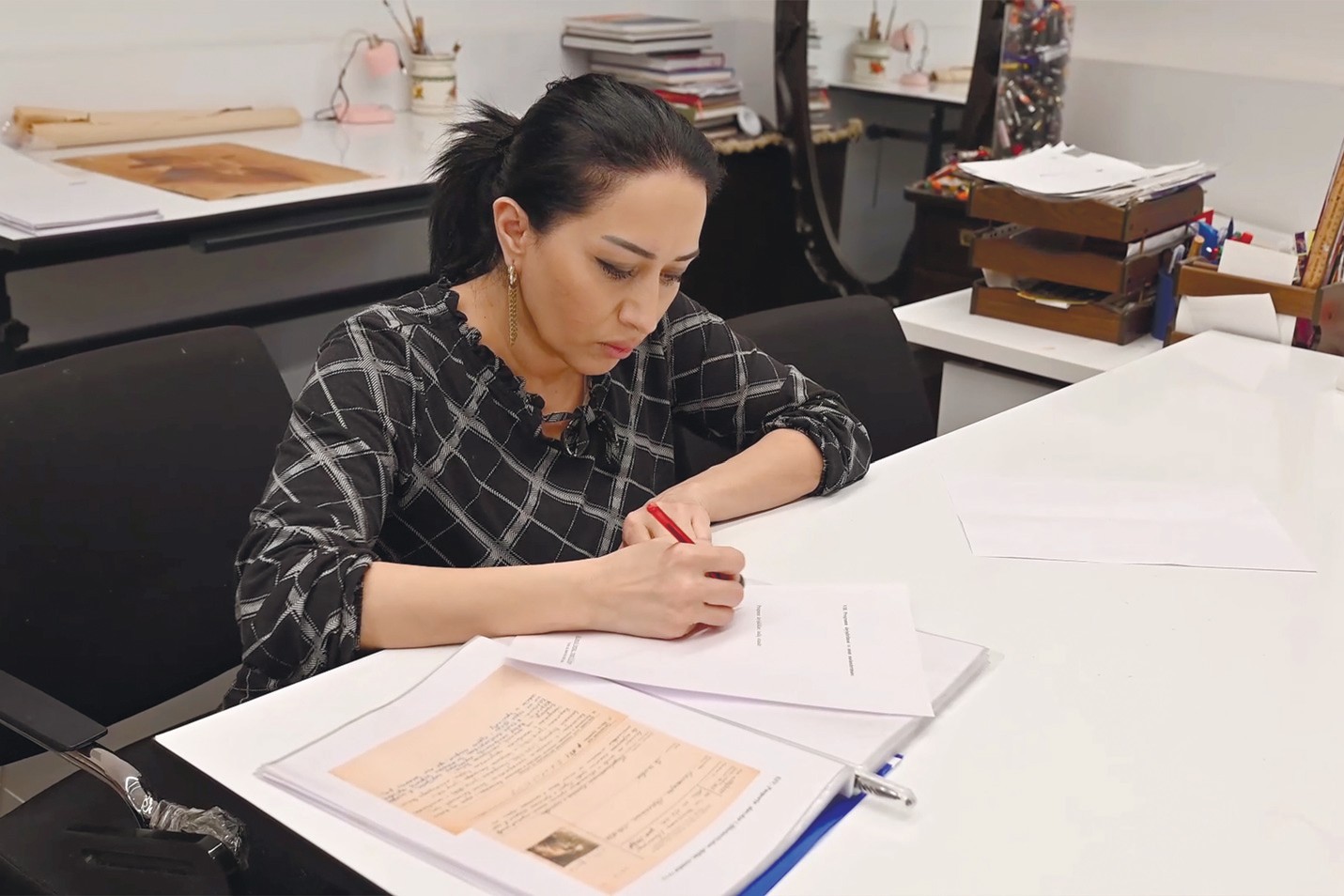
Sakina Manafova, chief researcher at the Azerbaijan State Museum of Fine Arts, stresses that the principle of "do no harm" must, without exaggeration, be regarded as the cornerstone of the complex and highly responsible work of restorers. Every historical object of decorative and applied art, or exhibit connected with musical mechanics, is a fragile organism layered with centuries of history. Therefore, before any interference with its structure, one must first ensure that such intervention is justified. At the same time, it is essential to understand that, although restoration involves a degree of creativity, it is above all an interdisciplinary science requiring knowledge across a wide spectrum of fields during training: chemistry, physics, archaeology, history, and more. A restorer must internalise all of this, organise it systematically, and apply it simultaneously in their work.
"Everything has its starting point..."
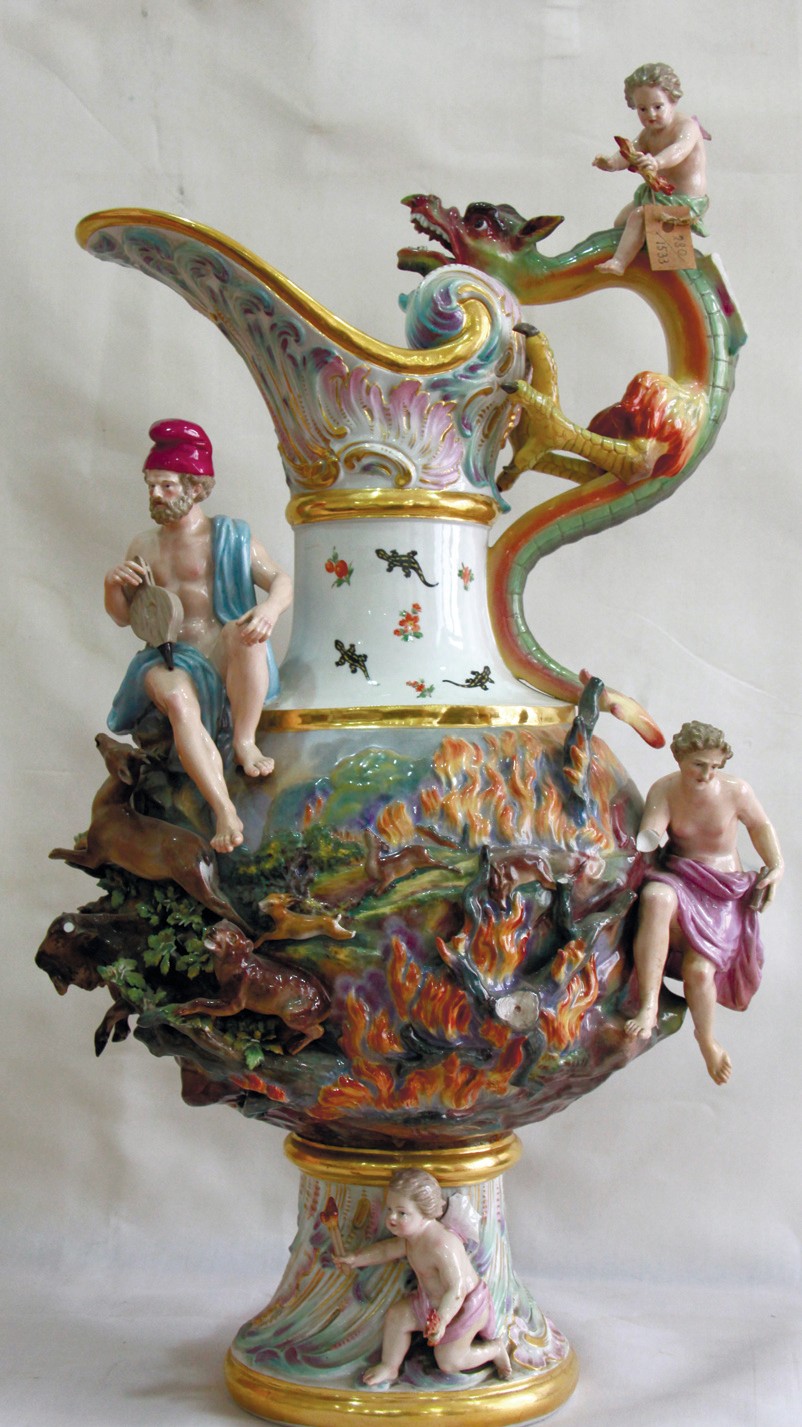
"My path, which has been shared by nearly all artists in Azerbaijan, began at the Azim Azimzade Art School. After graduating in 2005, I entered the Azerbaijan State Academy of Arts. At the first, I studied painting; at the second, I mastered sculpture. This dual training provides me with a considerable advantage. Paintings, sculptures, porcelain, textiles and similar forms differ only in dimension and surface. I am familiar with the structure and materials of each, having studied and practised them in depth. My understanding of their processes gives me an advantage in terms of the time required for restoration. For instance, when working with porcelain, I know precisely where and how to apply the paint to achieve the desired effect at once."
"But then..."
"I had heard of this profession, yet I knew little about its specifics. My first true encounter came in the classes of Natig Safarov — a distinguished artist-restorer, expert in antiques, honoured artist of Azerbaijan, member of the Union of Artists of Azerbaijan and of the Association of Restorers of the CIS. His lessons were captivating. Long before that, whenever I visited the Azerbaijan National Museum of Art, I always dreamt of working within its walls. When that dream came true, I felt deeply inspired. The profession of a restorer is an endless journey of discovery. In our work, we encounter the individual characteristics of an artist, acquaint ourselves with techniques particular to different periods, and, in practice, we devise new solutions..."
"Could you give an example?"
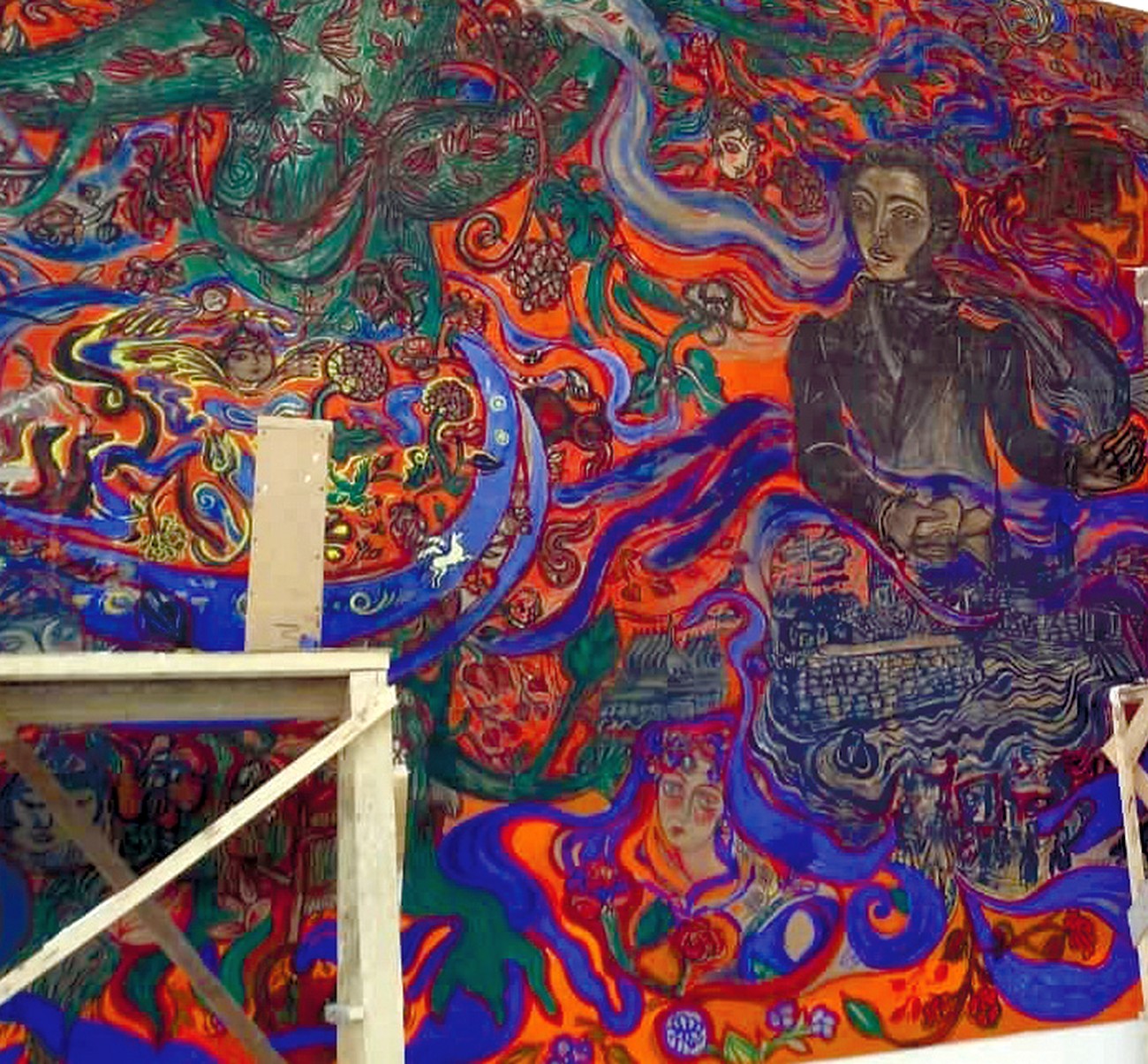
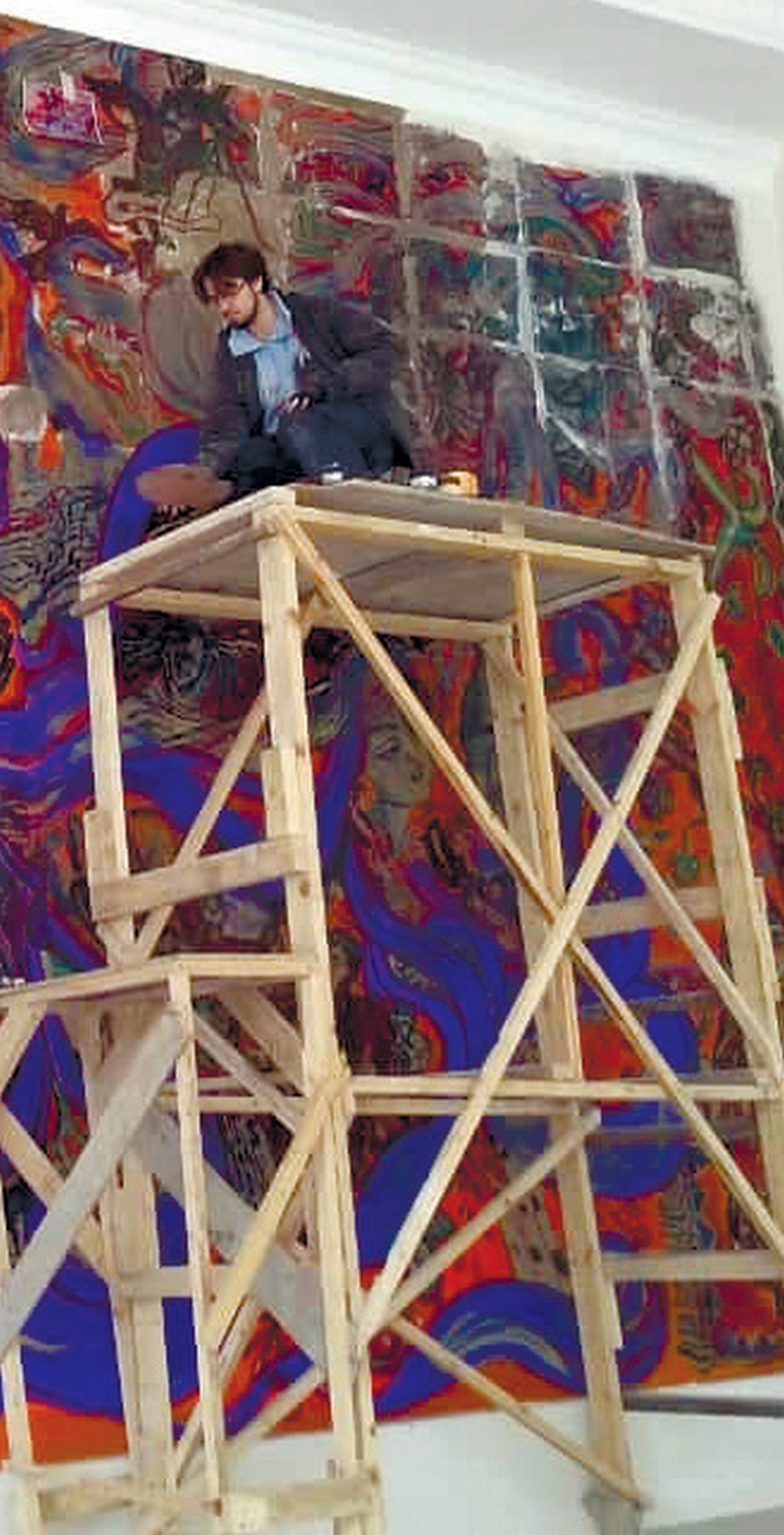
"Work on the fresco 'Nizami-Pushkin' by Toghrul Narimanbayov at the A. S. Pushkin Library in Ganja, housed in the Huseyniya Mosque during the Soviet era, was both fascinating and challenging. The fresco not only spanned three entire walls but was also in poor condition. On top of that, we faced specific engineering challenges: transferring the fresco to a specially prepared wall, changing its original U-shape into a flat surface. Moreover, parts of the fresco had disintegrated and been lost, requiring us to reconstruct the image. We employed an extraordinary method — dismantling the paint layer and preserving it for later transfer. Nothing like this had ever been attempted before! I will never forget how, in the stifling summer heat and with no proper working or living conditions, our team painstakingly removed the paint layer piece by piece, laying it out on the floor like a mosaic. It was then reassembled on a new surface, restoring it to its former glory. When the work was complete and the fresco had found its new 'home', I felt like a magician, able to conjure beauty from fragments. Today, Narimanbayov's fresco delights both residents of Ganja and visitors alike within the gallery of the Ganja State Philharmonic. Incidentally, during the restoration we discovered that, unlike in his paintings, the artist used different pigments for the murals, which had endured despite the appalling conditions of the room. This was because he knew the specific techniques of mural painting, using, among other materials, blue pigment and a solution of brilliant green."
"What do you gain from discovering such interesting details?"
"From my very first steps in the profession, I understood that a restorer must first of all be an artist. At the same time, I must stress that in our work we engage with paintings, graphic works, sculptures, metal, ceramics, porcelain, textiles and more. In global practice, each of these areas is entrusted to a specialist dedicated to that field. In Azerbaijan, however, owing to historical circumstances, restorers are trained as broad-spectrum specialists. Therefore, anyone considering this career must be ready to work across many fields. There is, indeed, a great deal to learn — and most importantly, one must first learn to be an artist..."
"Could you be more specific, please..."
"I will draw on my own experience. Today, most students see a kind of romantic aura in our profession. I do not deny that such an impression exists among those who are unacquainted with its realities. But... in practice, restoration demands knowledge in many areas, some quite distant from the visual arts. I must acknowledge that young people often lack even the basic 'settings' of our field. For example, sculpture requires knowledge of anatomy, an understanding of form, and the ability to convey it — at least to sculpt competently. Painting requires an understanding of pigments. Frequently, paintings are so extensively damaged that much of the surface must be restored to something close to its original state. For this, one must master the techniques of recreating the palette. It is also vital to know which paints were used during a given period and how to mix modern pigments and solutions to achieve the proper colour range. During training, it is essential to practise the widest variety of visual arts. Later, these experiences reveal themselves in the restoration process, while additional skills are cultivated. This is what makes a future restorer into a true professional. It is impossible to 'make do' with theory alone. That is why, after receiving their diplomas, prospective restorers require at least two more years of practical training in the fundamentals of our craft. Yet I am firmly convinced that without artistic talent, no one can truly become a restorer."
"Today, you are already teaching yourself. What do you focus on?"
"It is evident that at the initial stage of training, all students study the classics. However, I always encourage them to find their own colours and develop their own technique. As a restorer, I can say that selecting a colour scheme for a particular work is a long and technologically complex process. Even the author himself cannot predict what the final palette will be. We therefore work with great care to select the most appropriate colours. I recall that, following the X-ray analysis of Sattar Bahluluzade's paintings, it became evident that he had decided on his palette from the outset. This approach is evident in his works, which typically feature clearly delineated colour strokes, eschewing the conventional mixture of colours typically seen in traditional art.
"The selection of a palette is a personal choice. It is not possible to replicate the experience in its exact form. Even if I provide a student with a step-by-step "recipe". We perceive colour and shade differently; there is no such thing as an absolutely pure colour in nature. The development of these shades marks the commencement of our creative endeavours. It is possible to approach the palette and technique of artists of the past in such a way that they are recognisable, which is important for a restorer. This is achieved through continuous practice and learning from the techniques used by the great painters of that era to achieve their desired effects. For instance, the distinctive yellow colour in Mikayil Abdullayev's paintings is achieved through the application of a first layer (not yellow, I should add) that, when reflected by a ray of light, imparts a unique shade to the second layer. This technique was also employed by Rembrandt in his portraits. At one time, I developed a serious interest in this topic, and I read a lot and watched relevant videos. Fortunately, the internet provides a wealth of information. Self-education is an integral component of our professional development. I regularly share this insight with my students."
"Do you need to have a dialogue with the exhibit before you start working on it?"
"During my training, my teachers frequently emphasised the importance of truly immersing oneself in the painting process, emphasising the necessity of transferring one's observations and interpretations onto the canvas with authenticity and passion. In any case, it is evident that the author must have a fondness for the landscape or still life genre. It is my conviction, based on experience, that artists, even those at the beginning of their careers, must feel a connection to their work when they start painting. It is imperative to develop a strong passion for your chosen profession. Once a choice has been made, a person is dedicated to their chosen path, investing significant amounts of time, energy, expertise and, in some cases, their physical well-being. All patients referred to you can expect to receive the highest standard of care and attention. This approach enables the works to recover and begin to breathe again."
"It is said that each exhibit possesses its own unique 'character'".
"Absolutely! I can assure you that this is evident throughout the entire period of "communication". However, I have developed my own methodology. As you are no doubt aware, our restoration services are not limited to museum exhibits. People bring us items from their personal archives, and at such moments my attention is focused on their owners. It is important to understand that any object absorbs the energy of its owner. The results were positive in some aspects and negative in others. Please be advised that this will also have an impact on the restoration work. It has been demonstrated that even the most straightforward tasks can present challenges when the owner adopts a negative outlook. The most challenging damage can be restored "in one go" when the item aligns with the owner's worldview. This is particularly evident in paintings. It is not an empty claim that paintings carry the energy of the person who painted them. I will not name names, but there are artists whose works present a challenge for me to work on, as I can feel the emotional turmoil, even aggression, of the author so strongly. Upon studying the artist's life and oeuvre, it becomes evident that his paintings serve as a visual articulation of his personality and spirit. For instance, our museum's collection includes Leonid Zhodayko's Portrait of a Young Woman, which invariably moves me to tears; such humility is written in her gaze. History tells us that this girl died some time after the portrait was painted... Or Friedrich Kaulbach's "Portrait of the Grand Duchess", which I adore. I could stand in front of it for hours, absorbing the light it carries, associated with the personality of Yelizaveta Fyodorovna, a woman with a tragic fate. Have you ever wondered why people love landscapes so much? The answer is simple: the artist who painted the picture was relaxing at that moment! Working on landscapes, and indeed on still lifes, is not associated with deep philosophy, but conveys the peacefulness of nature, even if the subject matter is based on its turbulent manifestations. Landscape painters were, to some extent, engaged in a kind of meditation on nature, which these works still preserve today. I will also touch on the period of socialist realism, which is ambiguous, but that does not diminish its significance in art. Yes, it was subject to ideological constraints, which are reflected in the paintings. But even in this case, true painters used a variety of methods to create works of art. I understand this because in my own practice, there is an aspect of commissioned work that allows me to remain professional rather than being led by personal impulses."
"Are there occasions when personal inclination takes precedence over professional obligations?"
"Such occurrences are, of course, inevitable. While this issue is initially addressed through museum exhibits, there is an opportunity for third-party requests. First and foremost, I consider the individual who has approached me. It is not uncommon for individuals to encounter information online that leads them to believe they have a comprehensive understanding of restoration work. This can sometimes result in attempts to impose their understanding on professionals in the field. I would like to be transparent about the fact that this situation is causing me some concern, which may have a bearing on my final decision regarding the job offer. However, in most cases, professionalism and a genuine concern for the object prevail. I can assure you that I chose this profession and place of work with my heart and soul, and I am prepared to accept the financial consequences. My ambition was to become an artist-restorer. I am confident in my abilities and have no reservations about my capacity to complete the task to the highest standard."
"Even when handling fragile objects?"
"Even when I work with porcelain. The field of restoration is highly specialised and there are few professionals with this level of expertise. It is a highly specialised material that demands unique skills. I would describe my professional development as a gradual process of accumulation. Furthermore, it is imperative that the materials used are of a special nature. Initially, I encountered some challenges when starting my role at the museum. However, I was able to identify the most effective format through careful consideration. My Aries personality was evident in my ability to pause and reflect for a moment. This is not driven by fear, but rather to establish a preliminary plan. A restorer must be able to take calculated risks and correctly navigate the situation of "saving the exhibit." Please be aware that any mistake could potentially have far-reaching and irreversible consequences. In this regard, expertise in technology and materials can be a significant asset. In my case, I prefer to gain knowledge through practical experience. I am interested in exploring various compositional approaches. Today, our department has unique developments in porcelain that no one else has. These findings were obtained through experimental research. Natig Safarov and I have spent the last four years developing a base of local materials that can be used safely in our work. This has enabled us to complete tasks independently and without reliance on other suppliers. This commitment to restoration began eighteen years ago. From the outset, I have been interested in the composition of the materials used in the restoration of various exhibits, their capabilities and methods of application. I closely monitored how various materials, including metal, ceramic, porcelain, paintings and textiles, reacted to them. I am pleased to report that I have even used nail care products on porcelain. I am always on the lookout!"
"It is fair to say that in almost 15 years of professional activity, practically all of the items in the Azerbaijan National Museum of Art's collection have passed through your hands."
"Almost 80% of them have passed through Natig Safarov's and my hands. I can provide full histories for each of them, including dates. This is despite the fact that my memory is not generally strong. However, when it comes to museum exhibits, it is as if a specific computer program is activated. Our department has undergone significant expansion since its inception, with the initial team consisting of just two members. I was fully engaged in the care of the exhibits. Therefore, I am able to supervise younger specialists more efficiently in the current professional environment. Consequently, the responsibility entrusted to them also increases significantly. After all, I am entrusted with handling assets of the same significance as our country's gold and foreign exchange reserves. I have visited museums in various countries, and I can assure you that our museum's collection is of an equivalent standard to those I have seen. This product is both luxurious and diverse, and it is rare to find such a concentrated range of products in a single space. Allow me to provide an example. I recently had the opportunity to restore a painting by the Italian Renaissance artist Carletto Caliari. I found the theme of the crucifixion in the classical genre appealing, and I selected it for my master's thesis defence.
"In 2023, I became the second master's student specialising in the restoration of paintings at the University of the Arts. I was intrigued by this painting due to its composition, colour scheme, lighting solutions and its suitability for restoration work. In addition, I was interested to learn about the history of the work itself and its author, who I discovered to be the son of Paolo Veronese. He is not as well known to the public as his father. The three surviving works by Carlotto are large in size, and one of them is kept in our museum's collection. The defence was successful, and I was awarded a red diploma. The painting remained in our department for some time, where it was seen by British painting conservation expert Rupert Fetherstone, who was conducting training at our museum as part of a joint project between the Azerbaijan National Museum of Art and the British Council for Scientific Research and Conservation of Artworks in the United Kingdom. He was surprised that the painting was not part of the permanent exhibition, as there are very few works by this artist. Upon learning that I had carried out the restoration, he asked many questions to clarify the details. I can confirm that the Briton received comprehensive answers to all of the questions. I recall some surprise among the guests present, who did not expect Azerbaijan to have specialists of such a high calibre."
"In my professional opinion, the restoration process incorporates a certain element of magic."
"And why not?! From the outside, visitors can observe us engaged in a variety of activities, including the mixing, cooking and application of various substances, and occasionally engaging in dialogue with the exhibit. It is a commonly held belief that it is essential to be in the right frame of mind to commence work. A work of art, especially one with a history, is very sensitive to emotional moods. As with medical professionals, restorers must possess a certain level of expertise. As restorers adhere to the principle of "do no harm", it is not uncommon for me to abstain from approaching an exhibit for several days. Perhaps the issue lies in my dual role as both an artist and a restorer. As always, the inspiration must come from within, or in my case, from my team. I must cultivate an irresistible desire to dedicate myself fully to a particular task. And once I have mustered the courage, there will be no stopping me."
RECOMMEND:
 287
287

