

DESPERATE DIALOGUE
Meetings without results: negotiations in the shadow of a territorial conflict
Author: Samir VELIYEV
August 2025 marked a significant development in the diplomatic dynamics surrounding the war in Ukraine. In the past week, two significant events have occurred, each of which has reflected the balance of forces and highlighted the particulars of the negotiation process. The Anchorage summit on August 15–16, with the participation of the presidents of the US and Russia, and the meeting in Washington on August 18–19, to which Vladimir Zelensky and European leaders were invited, demonstrated that diplomacy is returning to an active phase. At the same time, it was made clear that there are still some inconsistencies that are having a negative effect on the progress being made towards peace.
The resolution of territorial issues remains the key priority, and it is here that a clear vision for a possible compromise is yet to be formulated. Russia insists on consolidating control over the occupied regions and on Ukraine's legal renunciation of claims, which would effectively amount to recognition of a new geopolitical reality. Ukraine and its Western allies, by contrast, view any concessions as an erosion of the principle of inviolability of borders and as creating a dangerous precedent for Europe as a whole. European capitals, especially Berlin and Paris, consider this a red line, as any breach would challenge the entire post-war order in Europe.
Putin stepping out of the shadows?
Anchorage represented a significant symbolic breakthrough for Moscow. Vladimir Putin's visit to the US was his first since the start of the war, and his first visit to a Western country in many years. For the Donald Trump administration, the meeting provided an opportunity to signal a shift from a policy of isolation to direct dialogue. The American side displayed a clear commitment to openness, as demonstrated by the red carpet reception, the escort, and the joint ride in the presidential limousine, which created an atmosphere of "parity" and respect. For Putin, the image was of key significance, as it enabled him to demonstrate to the Russian domestic audience that the president had re-established his position as a key player on the global stage. For the US, it represented a move towards a change in rhetoric, but no further. Following a series of closed-door talks, the parties involved were unable to reach a ceasefire or a framework agreement. Trump described the meeting as "productive", but also stated that "there is no deal yet". Putin also confined his comments to acknowledging the respectful atmosphere.
The Ukrainian issue became the primary subject of discussion, and it was at this point that opinions diverged. Russia made clear its expectations of Ukraine, including a renunciation of NATO membership and recognition of the current territorial status quo. These conditions are not acceptable to Kiev or Western countries. Trump effectively shifted the initiative onto Zelensky, emphasising that the situation is now in his hands. This emphasis has been a cause for concern, as it has been perceived as a potential indication that Washington might be willing to accept a bilateral agreement with Moscow. For Ukraine, this means there is a risk of its role being diminished in the negotiation process. Europe's response was equivocal. Germany and France have stated that Russia must not dictate the terms of Ukraine's membership of the EU or NATO, while Hungary, Slovakia and Italy have welcomed the initiation of dialogue. Anchorage was a diplomatic success for Moscow, a gesture towards flexibility for the US, a worrying sign for Ukraine and another factor of division for Europe.
Europe behind Zelensky
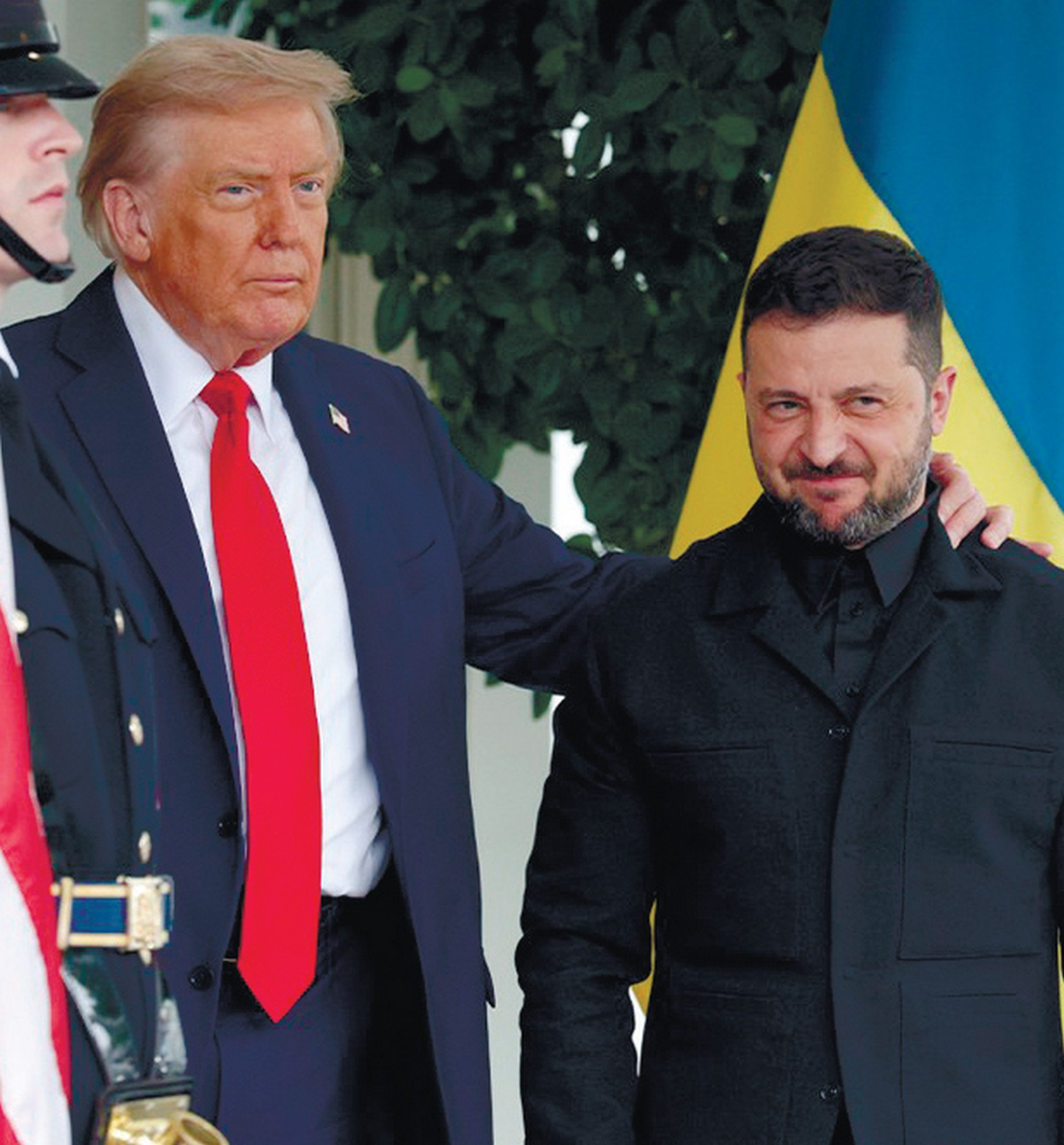
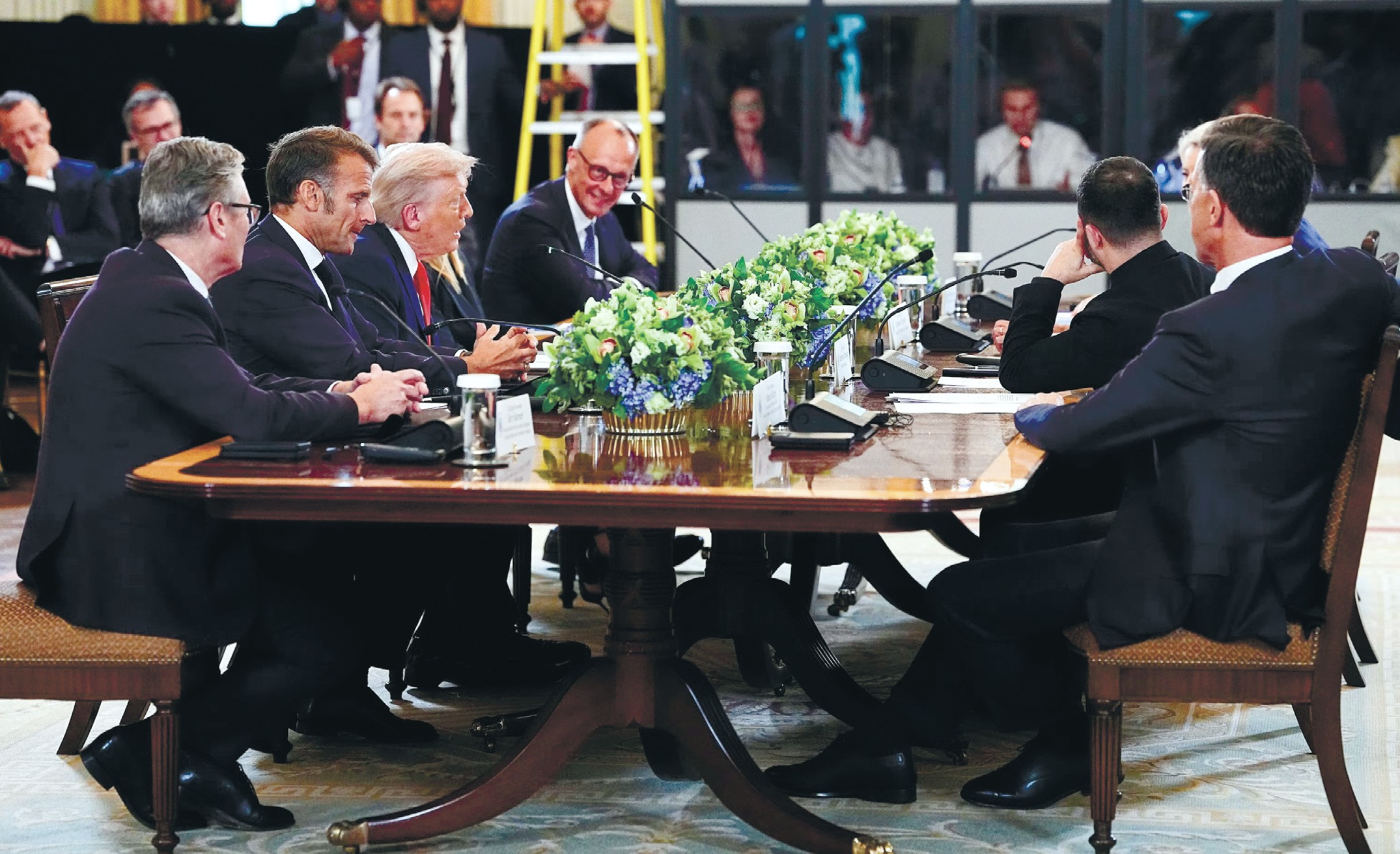
A meeting was held in Washington a few days later, with Donald Trump, Vladimir Zelensky and several European leaders in attendance. In contrast to Anchorage, Ukraine was the focal point of this event. The tone of the talks differed from previous meetings between Zelensky and Trump, which sometimes took place amid mutual reproaches. In response, the Ukrainian president adopted a diplomatic stance, expressing gratitude to the American leader for their support and indicating a willingness to engage in dialogue. For President Trump, the meeting represented a valuable opportunity to present himself as a mediator and to strengthen his reputation as a politician who can successfully resolve significant military conflicts in Europe.
The primary focus of the discussions in Washington centred on security guarantees. The US has expressed its readiness to consider multilateral commitments that differ from NATO mechanisms but provide concrete measures to protect Ukraine. The defence package under discussion had an estimated value of $90 billion, and included air-defence systems and modern aircraft. A separate line of discussion was the US purchase of Ukrainian drones, which signals Washington's desire to integrate the Ukrainian defence industry into its own supply chains. This underscores the significance of Ukraine's security, which is not only a matter of foreign policy but also of US domestic interest.
European leaders — Emmanuel Macron, Keir Starmer, Friedrich Merz and others — adopted a firm stance, asserting that a ceasefire must precede political arrangements, and that any territorial concessions are unacceptable. This demonstrated the EU's position being consolidated, although the negotiation rhythm was effectively set by the American side. Trump emphasised the potential for organising a direct meeting between Zelensky and Putin, mediated by the US, as a possible highlight of the diplomatic initiative. From a strategic standpoint, Europe was more inclined to follow the proposed course than to set its own agenda.
For Kiev participation in the Washington meeting was a way to strengthen its position and to embed the country's security in US interests. Zelensky seeks to make support for Ukraine not a voluntary gesture but a strategic obligation. That is why ideas of multilateral guarantees are being actively discussed, designed to complicate any future US administration's refusal to help. Kiev also hopes for institutionalised cooperation in defence technologies. In this context Ukraine's strategy appears pragmatic: the country seeks not only military aid but long-term integration into Western defence chains.
The weakest point of the negotiation process
Nevertheless, the primary issue of contention remains unresolved. Russia continues to insist on consolidating control over the occupied territories, a position that is rejected by Ukraine and the West. European capitals consider this issue to be of the utmost importance. The lifting of these sanctions is a prerequisite for the establishment of a stable peace. Washington was unable to secure a cessation of hostilities. The proposal for a meeting between Zelensky and Putin was not yet a done deal.
A comparison of the two events reveals a contradictory dynamic. Anchorage was a diplomatic success for Putin, enabling him to break out of isolation. For the US, it was a symbolic gesture of tonal change, but one which did not have any practical results. For Ukraine, this represented a regression, as its interests were addressed without its involvement. In contrast, the Washington meeting placed Kiev at the core of the negotiations, signalling US and European readiness to assume new commitments. However, it also produced no concrete decisions on a ceasefire.
The current situation is unique in that the negotiation process is taking place in two dimensions simultaneously. Symbolically, Russia has returned to the international arena, the US has demonstrated its capacity for dialogue, and Europe has found a balance between solidarity and division. Practically speaking, Ukraine is working to strengthen its strategic partnership with Washington and is seeking to establish formal security guarantees. However, there has been no progress on the key issue of territorial boundaries. It is important to note that, while negotiations will continue, their effectiveness will remain limited.
The viability of the peace process hinges on Washington's ability to assume the role of principal mediator and incorporate support for Ukraine into its own national security strategy. It is already evident that Moscow stands to benefit from this. Putin's return to the global political arena has been characterised by a reluctance to make significant concessions. For Europe, the pressing issue is to preserve unity in the face of internal disagreements. For Ukraine, it is imperative to ensure that the US maintains its position as an indispensable ally.
Heat autumn approaching
Following the August meetings, it is clear that the peace talks between Russia and Ukraine have made a symbolic advance, but there have been no tangible results so far. In the near future, there is a possibility of the following developments: the institutionalisation of Western guarantees for Ukraine and further US-led mediation attempts. However, the absence of compromise on territorial integrity has led to a significant delay in the prospect of peace. As negotiations continue, the formation of a parallel security architecture will evolve, with Ukraine anchored in American interests, Europe maintaining pressure on Moscow, and Russia using any format to legalise its presence in world politics. This sets the parameters for the future: diplomacy will continue, but it will take the form of searching for temporary solutions and demonstrating political activity, while a final peace will remain out of reach until fundamental contradictions are addressed.
The autumn months are set to be a period of significant diplomatic engagement. In the coming months, a series of contacts at different levels can be expected, ranging from bilateral meetings to multilateral summits. The Ukrainian question is set to be a key point of discussion at these events. The US, having secured the role of main mediator, will seek to turn August initiatives into practical mechanisms, including discussion of military and economic aid packages for Kiev and development of multilateral guarantees. Despite internal disagreements, Europe will be compelled to maintain a unified public line, balancing Paris and Berlin's hard stance with the more flexible approaches of Budapest and Rome. In turn, Russia will seek to exploit the created space for manoeuvre to cement the effect of its return to the international arena and to demonstrate readiness for negotiations while maintaining its core demands.
Therefore, the ongoing diplomatic activities this autumn will primarily determine whether the contacts established in August represented the commencement of a genuine process or merely symbolic gestures. There is a strong possibility that we will see a resurgence in the idea of a direct meeting between Zelensky and Putin, facilitated by the US. However, unless there is progress regarding the territorial question, this initiative may be perceived as a political gesture. Concurrently, pressure on Kiev to adopt a more flexible approach to negotiation formats will increase, while Ukraine will continue to pursue the institutionalisation of American support and integration into Western defence chains.
If we consider this line of thinking, it is possible that the autumn months could see an increase in diplomatic activity. Organisations will be eager to demonstrate their openness to dialogue, utilise meetings to strengthen their positions, and communicate with both domestic and international audiences. However, it is unlikely that any significant progress towards resolving the conflict will be made. It is likely that the diplomatic process will unfold as a series of intensive consultations that do not lead to key results, but rather sustain the illusion of forward motion.
RECOMMEND:
 256
256

