

A BRIDGE INSTEAD OF BARRICADES
A transport agreement as the basis for lasting peace
Author: Ilgar VELIZADE
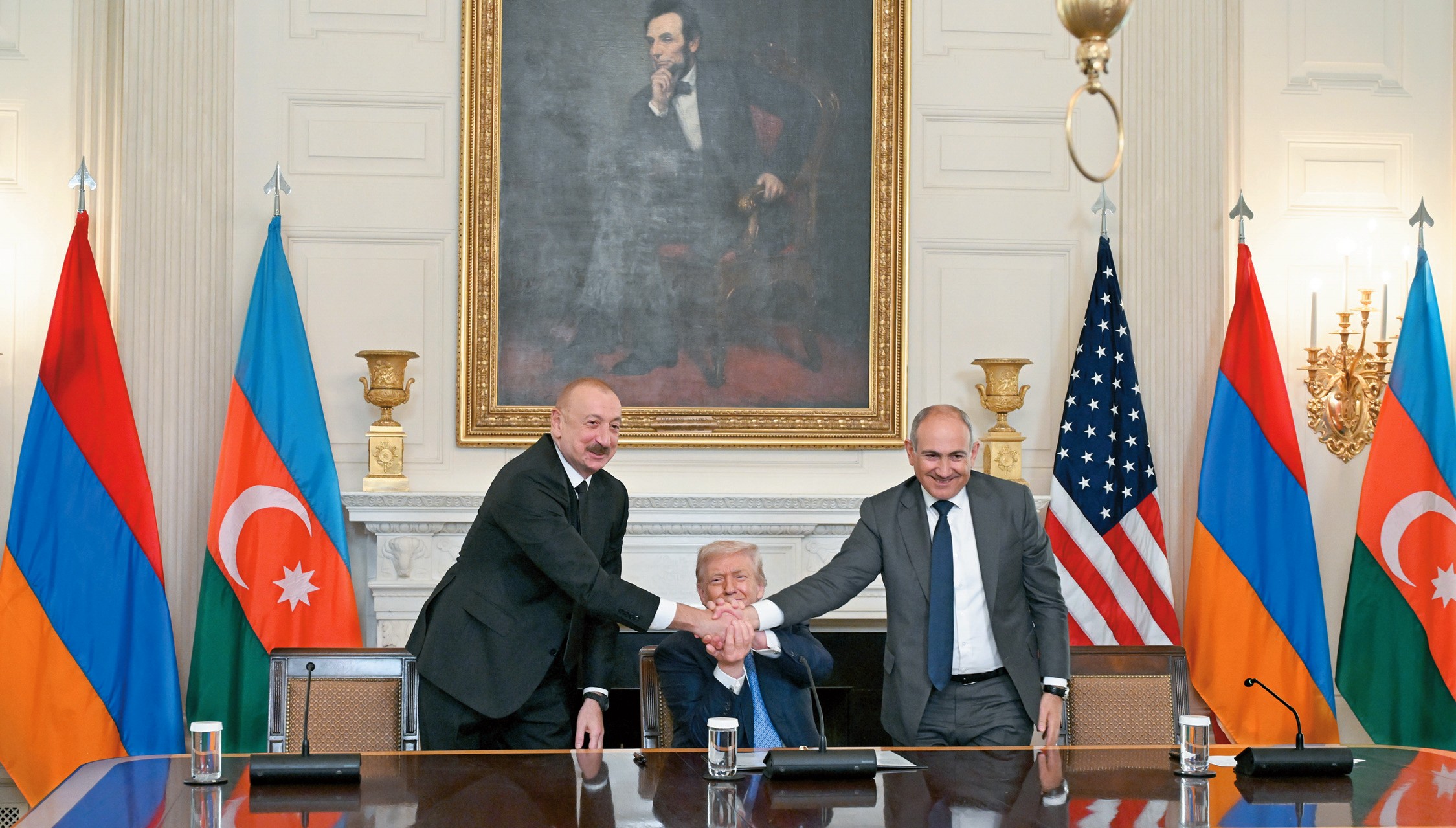
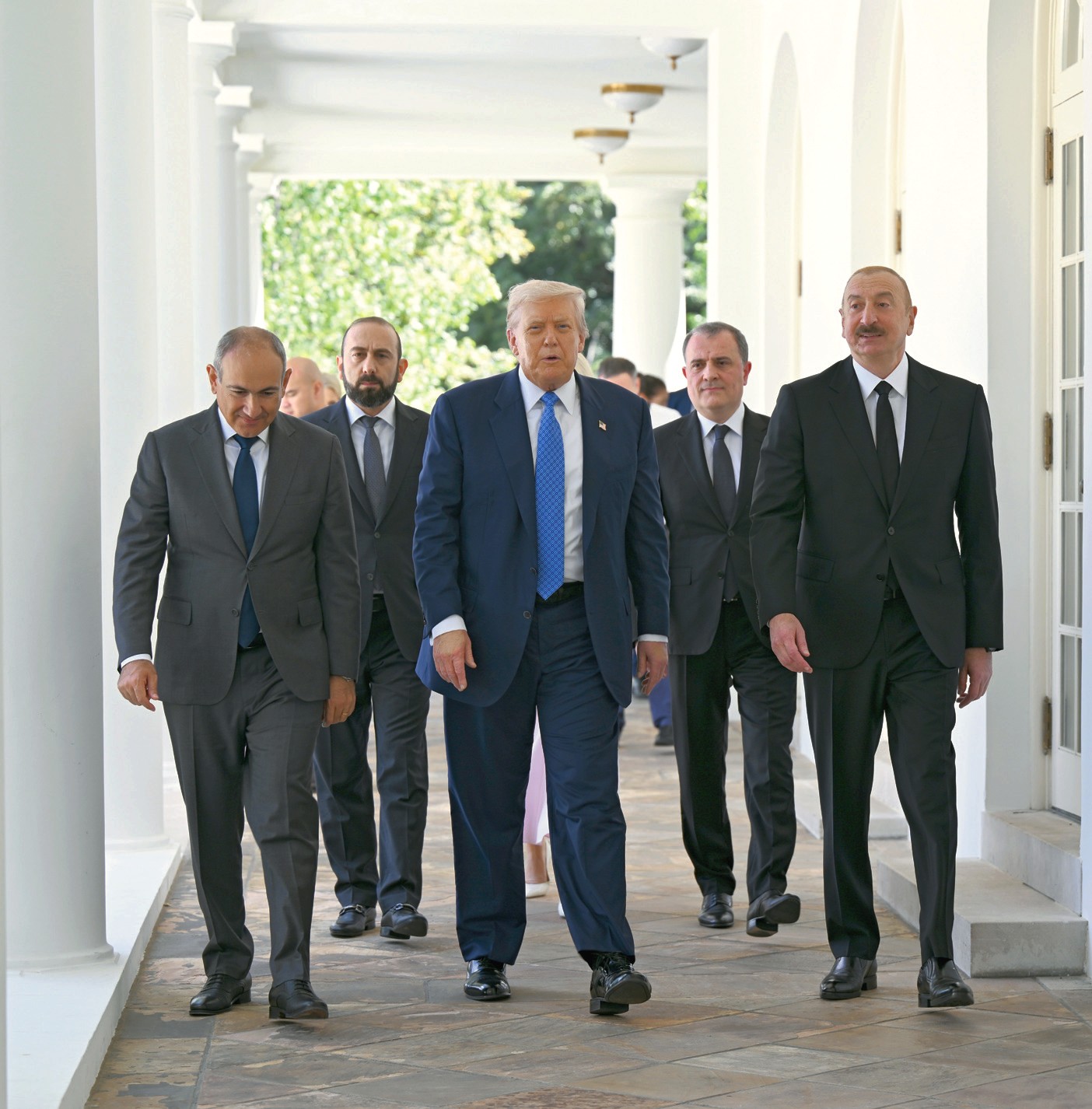
August 2025 became a turning point in the history of the South Caucasus. After years of confrontation and a period of chronic instability, on August 8 in Washington, with mediation by US President Donald Trump, texts of a peace agreement between Azerbaijan and Armenia were initialled. This fact became symbolic confirmation of the two states' readiness to move from confrontation to a final settlement of relations and to form a fundamentally new political reality in the region. The agreement, known as the Washington one, defines the framework for establishing stable interstate ties, abandoning the practice of mutual claims and moving toward systemic cooperation.
The Zangezur Corridor revisited
One of the central elements of the agreement was the Zangezur Corridor — a transport route connecting mainland Azerbaijan with the Nakhchivan Autonomous Republic via Armenian territory. A compromise was found under which Armenia retains sovereignty over the territory through which the route runs, and the corridor's management is carried out under its legislation. At the same time Azerbaijan achieves its main objective — ensuring unhindered communication with its exclave — and the US obtains a 99-year concession to operate the route as part of the TRIPP project (Trump Route for International Peace and Prosperity), which turns the corridor into an international infrastructure asset and simultaneously reduces the risks of bilateral pressure. Thus, a key issue that for years provoked sharp confrontation was transferred to the plane of international legal regulation, with the United States acting as mediator and guarantor.
President of Azerbaijan Ilham Aliyev, commenting on the initialling, described it as the end of the confrontation and the final settlement of Azerbaijani-Armenian relations. In his view, Azerbaijan ensured that all the country’s strategic interests were reflected in the document, and the process itself demonstrated Baku's readiness for dialogue provided the principles of equality and respect for international obligations are observed. The head of state also emphasised that a real settlement is possible only if revanchist references are removed from the Armenian constitution. In particular, this concerns provisions that contain claims on Azerbaijani lands. In this regard Ilham Aliyev directly stated the necessity of constitutional changes in Armenia, linking them to further normalisation of bilateral relations.
Prime Minister of Armenia Nikol Pashinyan called the initialling the beginning of a "new era" for his country and the whole region. He stressed that the decision to abandon the previous policy of mutual claims is a difficult but necessary step that will allow Armenia to move to systemic modernisation, strengthen sovereignty and escape international isolation. In his words, final settlement of Azerbaijani-Armenian relations is impossible without changing the country's political and legal framework, which implies amendments to the constitution. This process should take place in the form of a national referendum scheduled after the parliamentary elections of 2026. Pashinyan also noted that Armenia's key priority becomes participation in new transport and energy projects that create conditions for economic revival and strengthen regional integration.
A test by Washington
Despite leaders' statements, the reality remains complicated. The agreement, although initialled, has not yet come into force. The main obstacle remains constitutional reform in Armenia. The opposition criticises Pashinyan's plans, accusing him of concessions, and plans, with the help of external forces, domestic provocations. However, the prime minister insists that such changes are the only path to final settlement and consolidation of peace. In Baku this discussion is perceived as a test of Yerevan's readiness for real steps, not just declarations.
Alongside Armenia's internal challenges there remain questions about implementing specific points of the agreement. Among them are the mechanism for operating the Zangezur Corridor, customs procedures, ensuring traffic security and distribution of economic benefits. Experts note that most of these issues have been left outside the signed document and must be resolved at subsequent stages of the negotiation process — through joint efforts of the parties with active US participation.
Regional reaction to the Washington agreements is also telling. Russia, previously considered the main mediator, has been pushed to the periphery. For Moscow this is a serious blow to its positions in the South Caucasus. Iran, traditionally treating Zangezur as part of its sphere of influence, also expressed concern, viewing American presence in the corridor as a pressure factor. At the same time the European Union welcomed the agreement, seeing in it a chance to reduce tensions and open new routes as part of a policy to diversify transport links. Türkiye, for its part, gained an opportunity to deepen interaction with Azerbaijan through its Nakhchivan exclave, which strengthens its regional position and raises the importance of the Organization of Turkic States.
The United States, becoming the main beneficiary of the agreement, secured for itself the role of guarantor and mediator. Donald Trump presented the reached compromise as a personal diplomatic success, promoting it as a model of settlement "through direct dialogue and fair deals". Moreover, he used this result in domestic politics, presenting it as proof of his ability to secure peaceful solutions where other institutions failed. In response Ilham Aliyev expressed gratitude to the US and even publicly stated support for nominating Trump for the Nobel Peace Prize.
A new chance for the South Caucasus
It is well understood that without the victories won by the Azerbaijani army on the battlefields, and without the factor of military-political pressure from Azerbaijan on Armenia, there would not have been the Washington agreement.
In broader terms the Washington agreement opens a new stage in the development of the South Caucasus. If it is implemented, the region will have a chance to form a stable system of interaction where former lines of division are replaced by transport and economic links. For Armenia this is a chance to exit isolation and strengthen internal stability. For Azerbaijan it is an opportunity to consolidate its strategic gains and become a key transit hub. For external actors it is a platform to implement projects that increase their influence, provided they accept the realities created by Baku.
At the same time a high degree of uncertainty remains. Constitutional changes in Armenia may trigger an internal crisis, and implementation of the corridor may face technical and political problems. Attempts by external actors — Russia and Iran — to influence the process cannot be ruled out. All this makes the path to a final settlement of Azerbaijani-Armenian relations difficult.
Nevertheless the key conclusion is that the process has entered a qualitatively new phase. After the initialling of the Washington agreements we are not dealing with temporary arrangements but with a fundamental change in the entire architecture of regional relations. For the first time in decades Azerbaijan and Armenia have embarked on a trajectory toward final settlement, and although many obstacles remain ahead, the very fact of this step already changes the balance of power and prospects for the South Caucasus.
Moving toward TRIPP
Meanwhile Türkiye has taken important practical steps to implement the Zangezur Corridor — moving toward TRIPP. In particular Ankara has begun construction of the Kars-Igdir railway, which will become the link to Nakhchivan and, in the long term, reach Azerbaijani territory through the Zangezur Corridor. This project is seen as a core element of a future transport artery capable of connecting Türkiye with Central Asia and China along the Middle Corridor. Unlike routes passing through Russia or Iran, the Kars-Igdir line has a distinct geopolitical dimension: it forms Ankara and Baku's own logistics axis, minimising dependence on external actors.
Leading Turkish infrastructure contractors, including Cengiz Holding, Kolin İnşaat and the state railway operator TCDD Taşımacılık, have been engaged in implementing the railway project. In parallel joint working groups of Türkiye and Azerbaijan operate, involving representatives of transport ministries, financial institutions and the private sector. Their task is to synchronise construction schedules, harmonise technical standards and develop a unified tariff regime.
The prospects of this line go far beyond a regional project. In Ankara it is linked to the Middle Corridor initiative, which should provide an alternative freight route from China to Europe via the Caspian and the South Caucasus. Moreover the Kars-Igdir railway is positioned as part of a new political architecture for the South Caucasus.
The region is gradually moving away from the logic of blockades and isolation that for decades defined relations among neighbours, and is beginning to become a transit space integrated into broader Eurasian chains. Türkiye, having bet on practical realisation of infrastructure projects, consolidates its role as a leading regional player, while Azerbaijan gains an instrument to transform military-political successes into long-term economic form. The United States, acting as mediator and guarantor, formalises its presence in the region in an international legal format, thereby displacing Russia and Iran to the periphery of processes. Armenia faces a choice: either to fully integrate into this new system of connectivity by carrying out internal reforms and abandoning a revanchist agenda, or to find itself at the margins of transformation, where political disputes will be overtaken by real economic flows.
Thus the new architecture of the South Caucasus is slowly taking shape as a system where former lines of division are replaced by transport routes, and the balance of power is determined not so much by military might as by the capacity to control and integrate key regional corridors into one’s interests.
RECOMMEND:
 303
303

