

CATCHING ON THE INVESTMENT WAVE
Green energy, transport, innovative industry — the three pillars of Azerbaijani–Chinese economic ties
Author: Aghasaf NAJAFOV
Cooperation between Azerbaijan and China in recent years has taken on the character of a strategic partnership focused on expanding trade and economic ties. This effort has been supported by numerous meetings and negotiations between Azerbaijan’s President Ilham Aliyev and the Chinese Chairman of the State Council Xi Jinping.
At a briefing in Baku, China’s ambassador Lu Mei noted that the meeting of the leaders of the two friendly states set the direction for the next stage of this partnership’s development. The emphasis is on accelerating implementation of joint initiatives in industry, logistics and transport, IT technologies, “green” energy, and on strengthening the investment component.
Main component
Azerbaijani–Chinese business cooperation rests on a solid foundation of trade and transport agreements: for many years our country has been the largest trading partner of the Middle Kingdom in the South Caucasus — Azerbaijan accounts for just under half of the region’s total trade with China. Last year the two countries increased trade by 21%, reaching $3.7 billion. This positive trend continued in January–July 2025, when trade turnover reached $2.5 billion, 26.7% higher than in the first half of last year. Over the same reporting period, Azerbaijani exports to China grew 4.5 times.
At the same time, one must note Azerbaijan’s importance as a key link for implementing the “Belt and Road” initiative, including transit on the Middle Corridor routes.
“The Middle Corridor is a reliable and secure route connecting China and Central Asia with Europe through Azerbaijan. Since 2022, freight traffic on the Middle Corridor through Azerbaijan has grown by almost 90%,” Ilham Aliyev said at a SCO-plus meeting. “The Zangezur corridor will soon become another important segment of the Middle Corridor, benefiting neighbours close and far to the east, west, north and south of Azerbaijan’s borders.”
Alongside expanding trade and transport initiatives, Baku and Beijing emphasize the investment component and formation of joint ventures. About 275 companies with Chinese capital are registered in our country, and Chinese investment in Azerbaijan has reached $942 million. At the same time, Azerbaijani investments in China, including funds from the State Oil Fund, amount to about $2.1 billion.
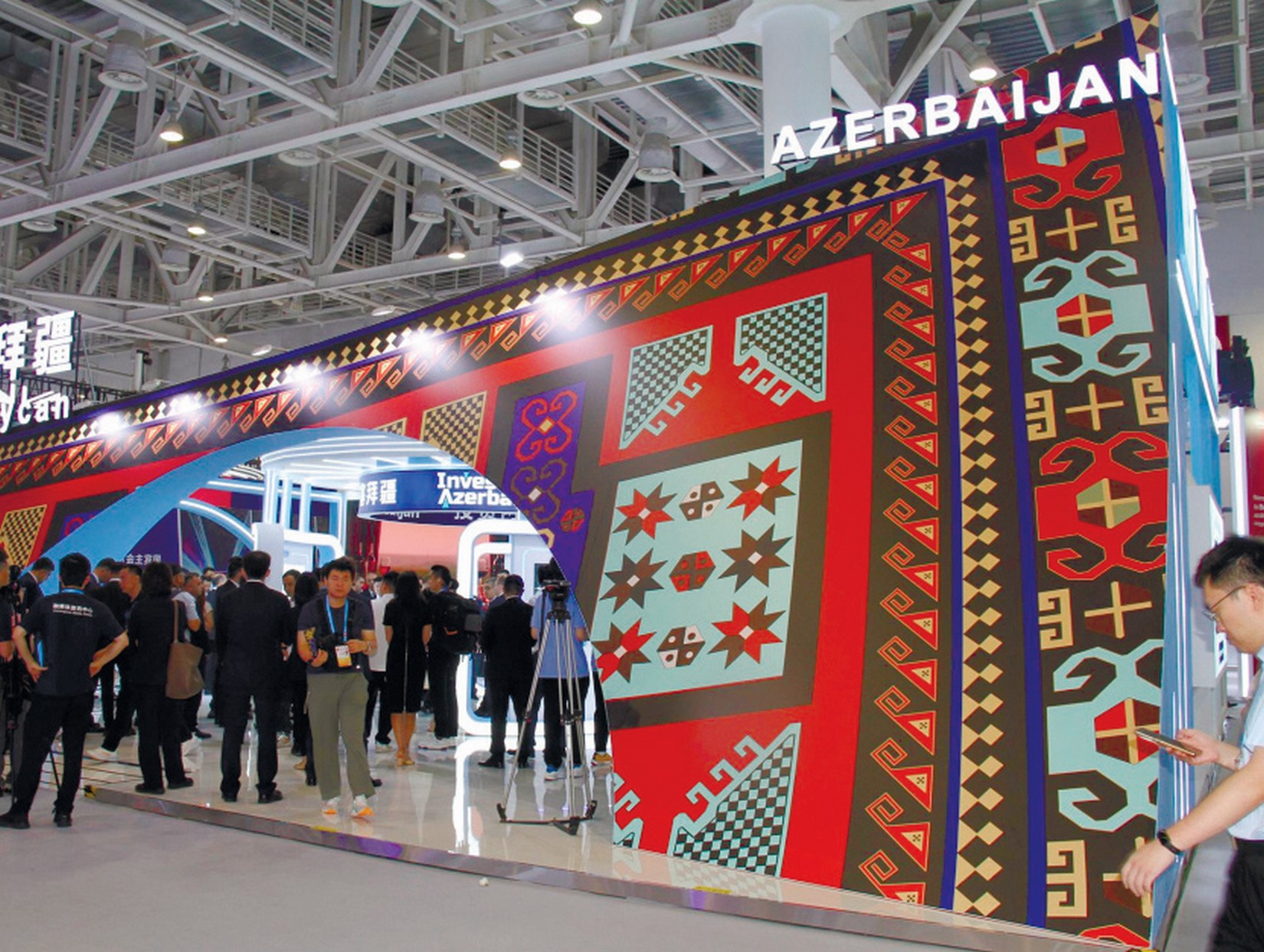
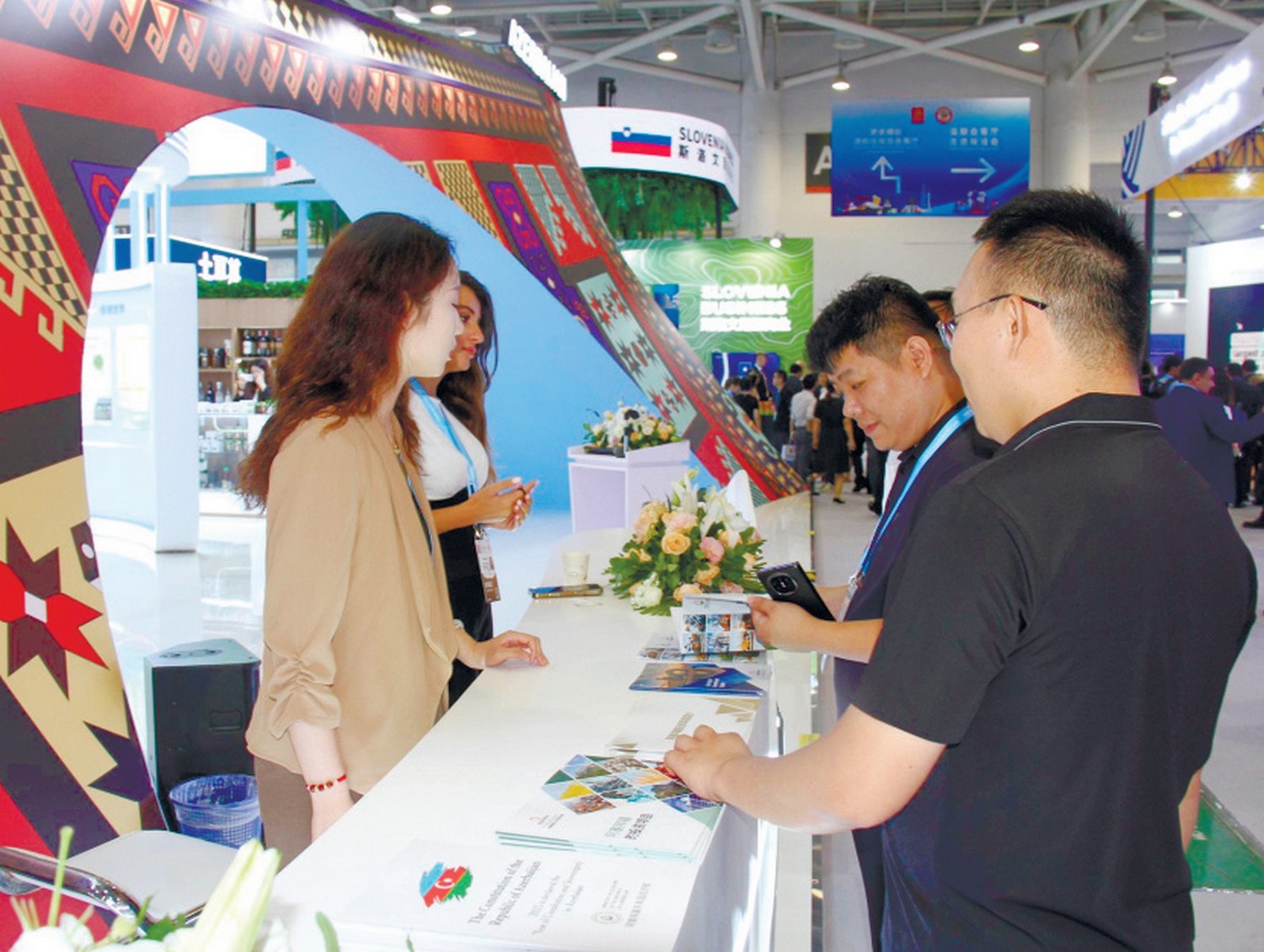
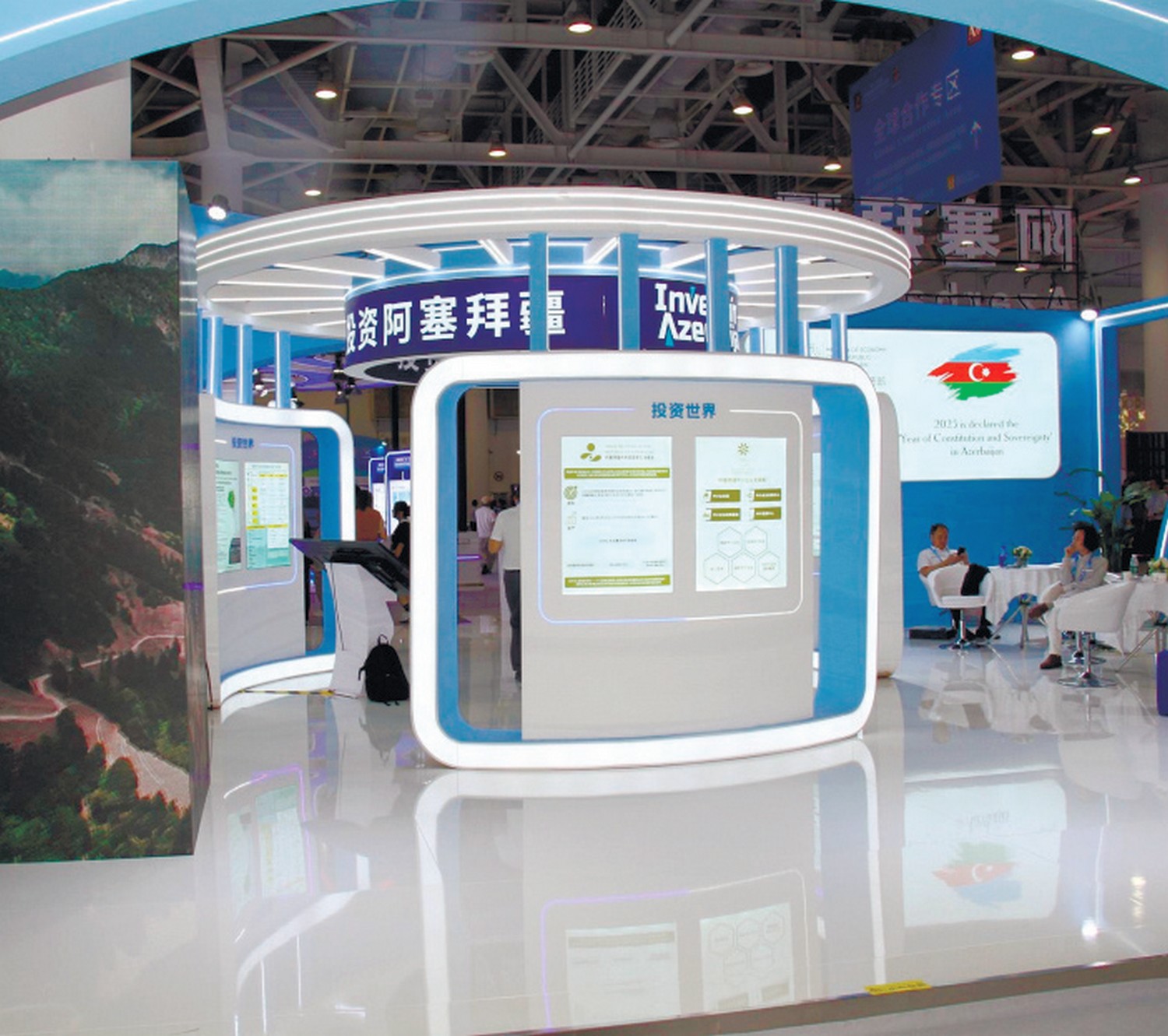
Today the two states plan to expand investment potential. Opportunities for joint manufacturing cooperation were discussed at the 25th China International Fair for Investment & Trade (CIFIT 2025) in Xiamen, where Azerbaijan was presented with a single national pavilion, Invest in Azerbaijan. A bilateral China–Azerbaijan investment promotion event was also held.
“Relations between Azerbaijan and China have entered a new stage of development, and the establishment of an all‑round strategic partnership has given a strong boost to trade and investment cooperation. The sustainability of this positive trend is also linked to our countries’ active and joint participation in the ‘Belt and Road’ initiative,” said Deputy Prime Minister Shahin Mustafayev, who attended CIFIT 2025 and co-chairs the Azerbaijan–China intergovernmental commission on trade and economic cooperation.
A similar message came from Lin Qi, Vice Minister of Commerce of China and co-chair of the intergovernmental commission, who emphasized that Azerbaijani–Chinese economic ties are on an upward trajectory.
Energy efficiency as a priority
One of the most effective tracks of Azerbaijani–Chinese partnership has been cooperation in renewable energy (RE). “Combining Azerbaijan’s solar and wind energy potential with China’s advanced technologies creates conditions for successful joint projects and will further expand partnership in the energy transition,” said Deputy Minister of Energy of the Republic, Elnur Soltanov, a participant in the investment forum.
Chinese companies indeed show strong interest in Azerbaijani “green” energy projects. In total, RE developments with a combined capacity of 2 GW are planned. Chinese contractors are already involved in the construction of the Fuzuli solar power plant (160 MW). Chinese firms are also engaged in building the country’s largest wind farm, Khizi-Absheron (240 MW); construction of the Gobustan solar power plant (100 MW) — the first renewable project in Azerbaijan implemented following an auction with direct Chinese investment participation — will begin soon.
Negotiations are also underway with Sichuan Sunsync Photovoltaic Technology, which plans to establish a solar panel manufacturing facility in the Alat SEZ with potential for partial export. Cooperation in RE underpins collaboration between China Energy Engineering Corporation Limited and SOCAR. Prospects are being studied for offshore wind farms and floating photovoltaic installations in Azerbaijan’s water reservoirs, wastewater treatment, processing and reuse, and optimization of water-resource management operations.
Chinese companies also act as key contractors and equipment suppliers for conventional thermal generation. As an example, note the 8 November TPP in Mingachevir (1,880 MW), commissioned in June this year.
As part of efforts to improve energy efficiency in transport, an agreement with China’s BYD Company Limited was reached on procuring electric buses and localizing their assembly in Sumgayit.
Attracting Chinese know‑how and capital to the non‑oil sector, high technology and innovation, industrial digitalization and the agri‑sector, and cooperation on artificial intelligence are also seen as important parts of the partnership.
The industrial vector is not overlooked: in July this year in Beijing, AzerGold JSC’s subsidiary Dashkesan Filizsaflasdirma signed an agreement with Sinosteel Equipment & Engineering Co., Ltd., which will prepare a feasibility study to reassess mineral reserves and develop a new mine‑operation plan in Dashkasan, and to construct an iron‑ore processing plant at that deposit.
Transport and logistics
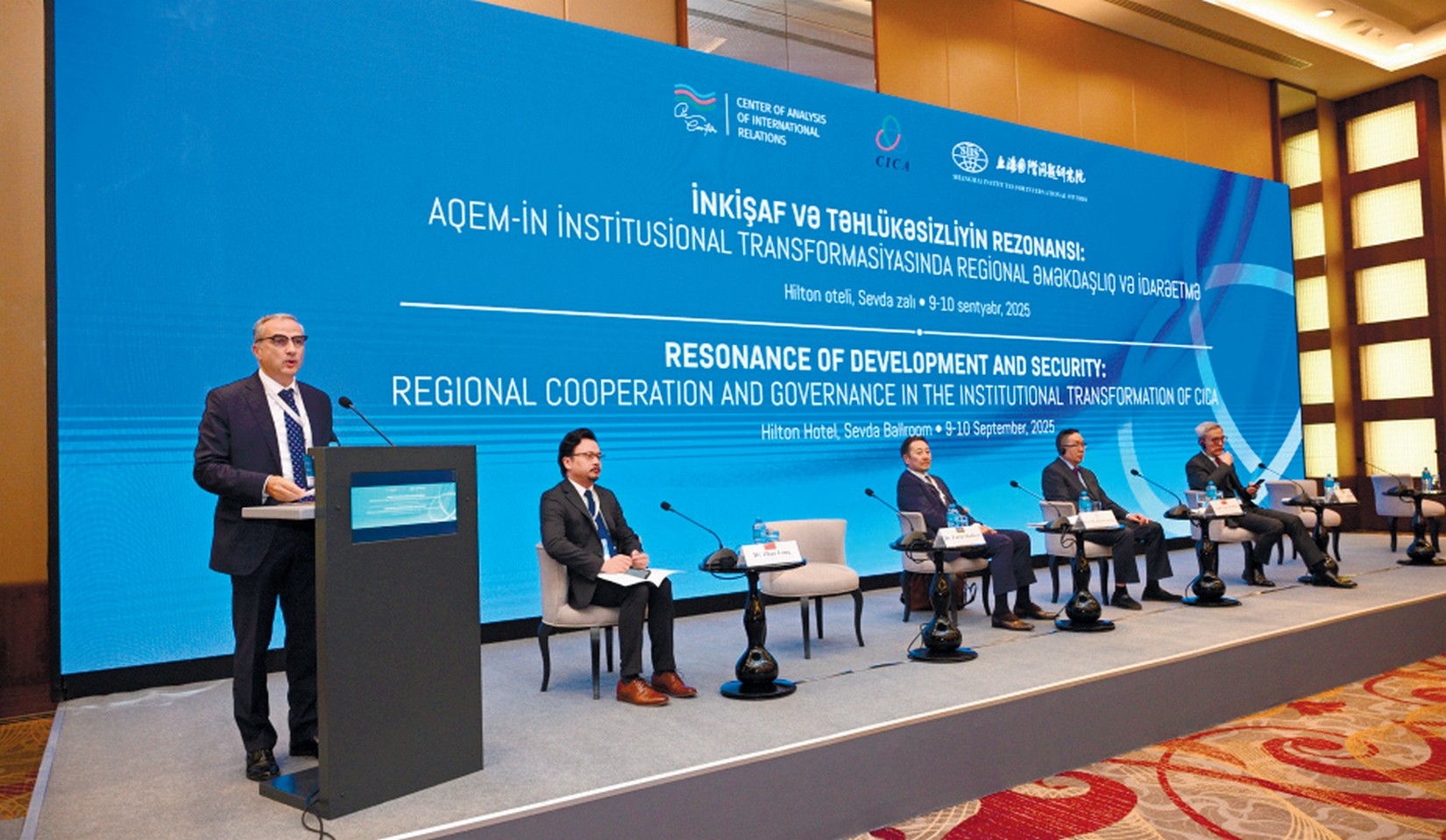
Strengthening Azerbaijani–Chinese partnership in transport and logistics was discussed at a forum in Baku organized by the Center for Analysis of International Relations and the Shanghai Institute for International Studies, titled “Resonance of Development and Security: Regional Cooperation and Governance in the Institutional Transformation of the Conference on Interaction and Confidence‑Building Measures in Asia.”
This topic was also covered at the Absheron Logistics Center, where an event marked the five‑year anniversary of the China–Europe express route and celebrated the arrival of the 237th Yiwu‑Baku block train operating along the Trans‑Caspian International Transport Route (TITR).
Recall that using the TITR the block trains are in transit for 20–25 days, about half the time of shipments from China via the Suez Canal, which take on average 40–50 days. This advantage supports growth in transit traffic from China via multimodal container block trains: last year 358 such trains were sent from China to Europe via the TITR. “This year we plan to send 450 block trains through Azerbaijan to China, and in the medium term that figure could be raised to 1,000 block trains per year. We believe that with the mutual efforts of the two countries this number will be even higher,” Fariz Aliyev, head of the transport policy department at the Ministry of Digital Development and Transport of Azerbaijan, said at the event.
Minister of Digital Development and Transport Rashad Nabiyev also shared meeting outcomes in Baku on X. In particular, a working group has been agreed to establish cooperation on automation and digitization between the Port of Ningbo in Zhejiang province and the Baku International Sea Trade Port. “We met with a delegation led by Zhejiang Province Vice‑Governor Ke Ji Xin, who visited our country, and during the meeting Azerbaijan discussed logistics, development of the Middle Corridor and transport prospects in this direction with China; we also exchanged views on digitizing logistics corridors,” the transport minister emphasized.
Thus Azerbaijani–Chinese partnership is confidently moving beyond traditional trade, becoming a comprehensive strategic platform for investment, “green” energy, transport and innovation. The synergy of the two countries’ potentials suggests further strengthening of Baku’s and Beijing’s positions in the global economy and a shared contribution to sustainable development.
Ukraine and Georgia to restore the Middle Corridor ferry route
Strategic transport and energy projects such as the Middle Corridor and the Caspian-Black Sea-Europe Green Energy Corridor are transforming the seas into a pathway for sustainable regional integration.
According to the report, the Ukrainian Ambassador to Azerbaijan, Yuriy Gusev, made the following statement at the "Black Sea-Caspian Logistics Forum 2025: Corridors, Cargo, Infrastructure" conference in Baku.
"In the contemporary geopolitical landscape, the Black and Caspian Seas have emerged as the border between an assertive control zone and a coalition of nations seeking to transform these waters into conduits for development, integration, and security. Optimising logistics routes is a task of fundamental importance that will simplify bilateral trade and increase transit volumes significantly," the ambassador said.
He confirmed that measures are being taken to restore the ferry route between Ukraine and Georgia as part of the maritime-rail connection between Ukraine and the states of the South Caucasus and Central Asia, as part of the development of the Middle Corridor and the GUAM corridor.
RECOMMEND:
 201
201

