

TRAJECTORY OF INFLUENCE
International experts highlight the need to address five major tasks to accelerate the development of the TITR project

Author: Nurlana GULIYEVA
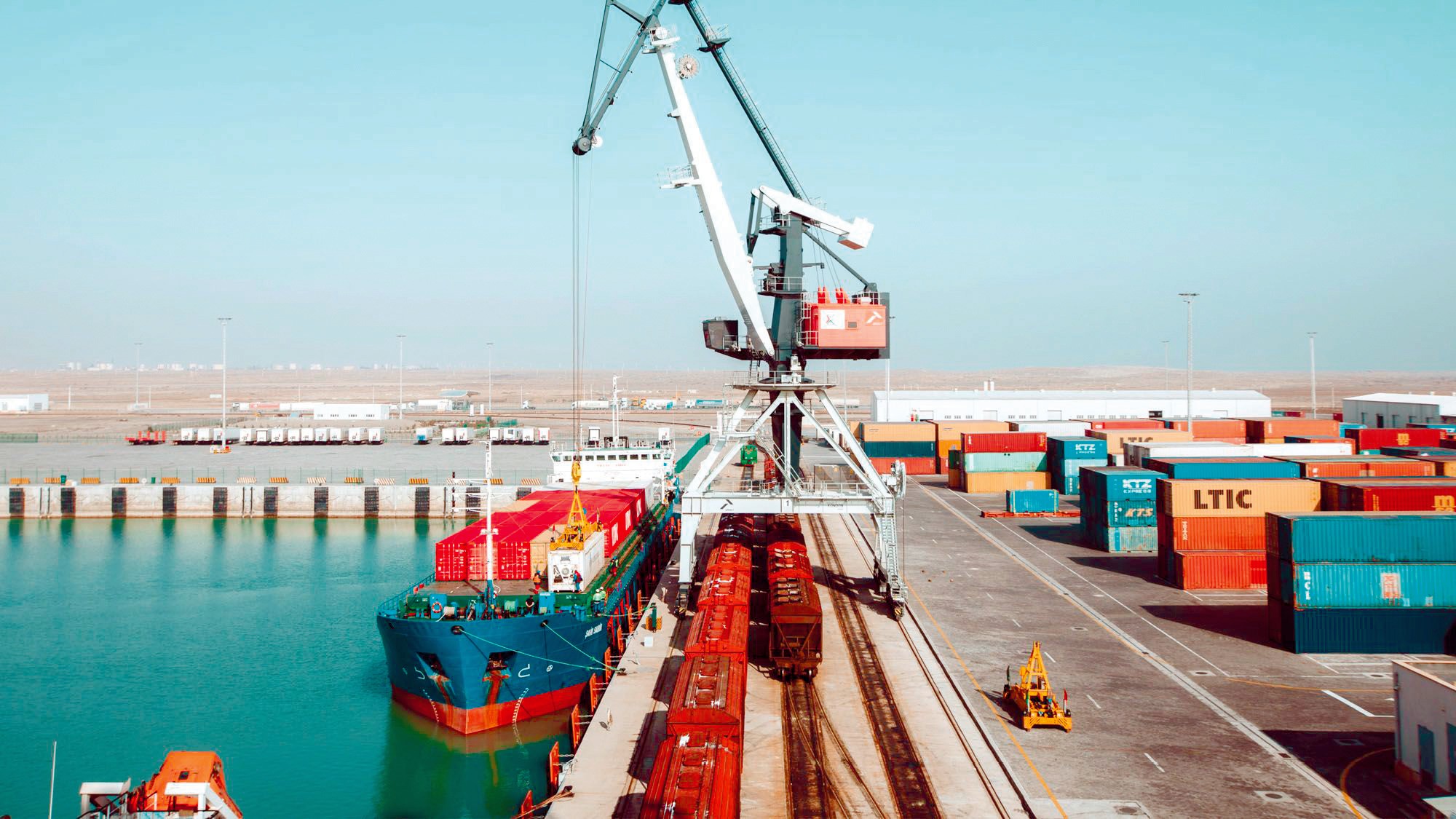
The ongoing geopolitical conflicts are directly impacting global trade and the resilience of supply chains. The blockade of the Red Sea and the escalation of the Russia-Ukraine war have accelerated the search for new routes, with the Middle Corridor (Trans-Caspian International Transport Route, TITR) emerging as a strategic alternative. This corridor connects Central Asia and the Caucasus.
This initiative can be regarded as a contemporary reinterpretation of the historic Silk Road trade route. It connects Türkiye and the Caucasus, traverses the Caspian Sea and, via Kazakhstan and Turkmenistan, extends to China. Its key advantage is the possibility of creating additional trade and transit options for China and regional countries, making it competitive compared with established routes.
Key opportunities
The pivotal role of this route was emphasised at the recent Baku conference "Black Sea–Caspian Logistics Forum‑2025: corridors, cargo, infrastructure". According to Alexandra Ogneva, Head of Projects at Rhenus Logistics for the EECCA region (Türkiye, Central Asia, South Caucasus), the existence of the Middle Corridor as an alternative or supplementary route is highly significant for all European countries.
"It can provide not only new solutions for our clients but value in the form of three key opportunities: establishing new tariffs, expanding capacity and increasing reliability. While this will require time, it is possible to build a new reality for logistics," she noted.
Ogneva emphasised that, for the European Union, reliability is of the utmost importance, as it is in line with the EU's strategy to diversify supply chains. "No more than 65% of all supplies to Europe should pass via a single route. It is therefore vital for all European countries to have the Middle Corridor as an alternative or supplementary direction," added the Rhenus Logistics representative.
The accelerated development of the TITR has also been noted in the latest report by Moody's, the international ratings agency. The agency has noted a rapid increase in transit flows and investment in the route, which is primarily beneficial for Kazakhstan, Azerbaijan and Georgia among the participating countries. Furthermore, the rapid expansion of the transport and logistics sector, which is a key driver of economic growth, is stimulating economic diversification — a particularly important development for countries that are traditionally dependent on hydrocarbon exports.
Moody's has observed that government investment in infrastructure can increase budgetary pressure, but that this is offset by sufficient fiscal space and access to concessional financing.
At the same time, the banking sector's direct participation remains limited. "The high reliance on short-term funding, particularly in Kazakhstan and Azerbaijan, and the high cost of capital, limit banks' direct involvement in infrastructure financing. However, they benefit through lending to subcontractors and adjacent sectors," the report states.
Meanwhile, almost 80% of Kazakh banks' liabilities and approximately 90% of Azerbaijani banks' liabilities are formed from short-term resources. Alongside the elevated borrowing costs, this significantly curtails their capacity for long-term lending. Georgian banks also operate with expensive resources, but about 60% of their market funding is provided by international development financial institutions that offer more stable maturities.
Therefore, the primary sources of investment are states and state-owned enterprises, international development institutions, and private investors.
In light of these developments, both the corporate sector and small businesses stand to benefit from the growth in transit flows. Increased cargo turnover and infrastructure investments support the development of transport, logistics and construction companies, while also opening new export markets for exporters.
All of the above contributes to the strengthening of the sovereign credit quality of countries in the region, which is crucial for the durability of economic development.
Shortcomings and barriers
Despite its dynamic development, the potential of the Middle Corridor is constrained by a range of infrastructural and institutional limitations. As Moody's observes, the most significant obstacles pertain to inadequate railway capacity, obsolete logistics, constrained port facilities, and the heterogeneity of customs procedures and regulatory standards that impede coordinated development.
International experts have highlighted that railway networks are operating at maximum capacity and are facing shortages of rolling stock and ageing signalling systems. Dry ports, warehouses and intermodal terminals are not well integrated with each other or with other transport modes, which results in delays and rising transshipment costs.
Moody's analysts also emphasise that ports in Kazakhstan and Azerbaijan are experiencing shortages of modern equipment, digital solutions and capacity to handle growing volumes of container traffic. These constraints are ultimately exacerbated by the lack of coordination in investment strategies and infrastructure planning between countries. This uncoordinated approach prevents the creation of a unified multimodal transport network.
A further significant challenge is the diversity of customs procedures and regulatory standards, which can result in administrative delays, increased costs and inconsistent delivery times.
The agency has also highlighted the significant financial risks associated with large-scale investment programmes aimed at enhancing railway networks in participating countries, with a view to increasing capacity and improving service quality.
In addition to infrastructural challenges, the route is vulnerable to geopolitical factors. A deterioration in relations between Russia, China and the EU could potentially result in a reduction of transit volumes, a decline in business confidence and an increase in uncertainty surrounding forecasts.
Conversely, new cooperation formats demonstrate potential to mitigate risks. Wan Xu Dong, Chairman of Beijing Trans Eurasia International Logistics, made a statement at the Baku "Black Sea–Caspian Logistics Forum‑2025" emphasising the potential of a joint venture between the railways of China, Kazakhstan, Azerbaijan and Georgia to enhance operational efficiency and service quality within the TITR.
"As participants in the Middle Corridor, we must have the confidence to restore and develop this route. It is clear that infrastructure development, construction and effective coordination are required. In the north, UTOC is responsible for coordinating border matters, document flow and SMGS rules (Agreement on International Goods Traffic). It is imperative that a similar structure is implemented here. As you are aware, a joint venture between the railways of China, Kazakhstan, Azerbaijan and Georgia has already been established. We are optimistic that this joint venture will enhance operational efficiency and elevate service standards on the Middle Corridor," he stated.
He emphasised that optimising freight transport and developing services within the route should be priorities for the countries of the region.
In order for the TITR to realise its potential and become a competitive Eurasian trade route, the region's countries must address five key tasks: ensure long-term investment in infrastructure, agree strategic planning, digitalise and harmonise customs procedures, create regional coordination mechanisms, and align infrastructural and regulatory plans.
Moody's analysts have expressed concerns that the Middle Corridor could remain an expensive and inefficient option, potentially diminishing its strategic significance as an Eurasian trade route.
It is evident that the development of the Middle Corridor will create new opportunities for integration and strengthen the economic potential of the region's countries, generating long-term benefits for the corporate sector and small businesses. Provided the identified shortcomings are overcome, the route can become a full‑fledged alternative to established Eurasian trade paths and raise the TITR’s strategic significance for all participants.
RECOMMEND:
 200
200

