

DIGITS INSTEAD OF STAMPS
The new European entry system for Schengen
Author: Elchin HUSEYNOV
From 12 October 2025, a new border-control system, known as the Entry/Exit System (EES), will be operational in the European Union. This is a large-scale digital reform covering virtually all Schengen-area states. In summary, the primary objective of the innovation is to replace traditional passport stamps with automated registration of crossings of the Schengen external borders by third-country nationals. For the first time in the EU's history, entry and exit data for third-country nationals will be recorded in a unified biometric database. The new system is intended to enhance security, reduce violations of migration rules and facilitate border crossings.
What EES is and what it is for
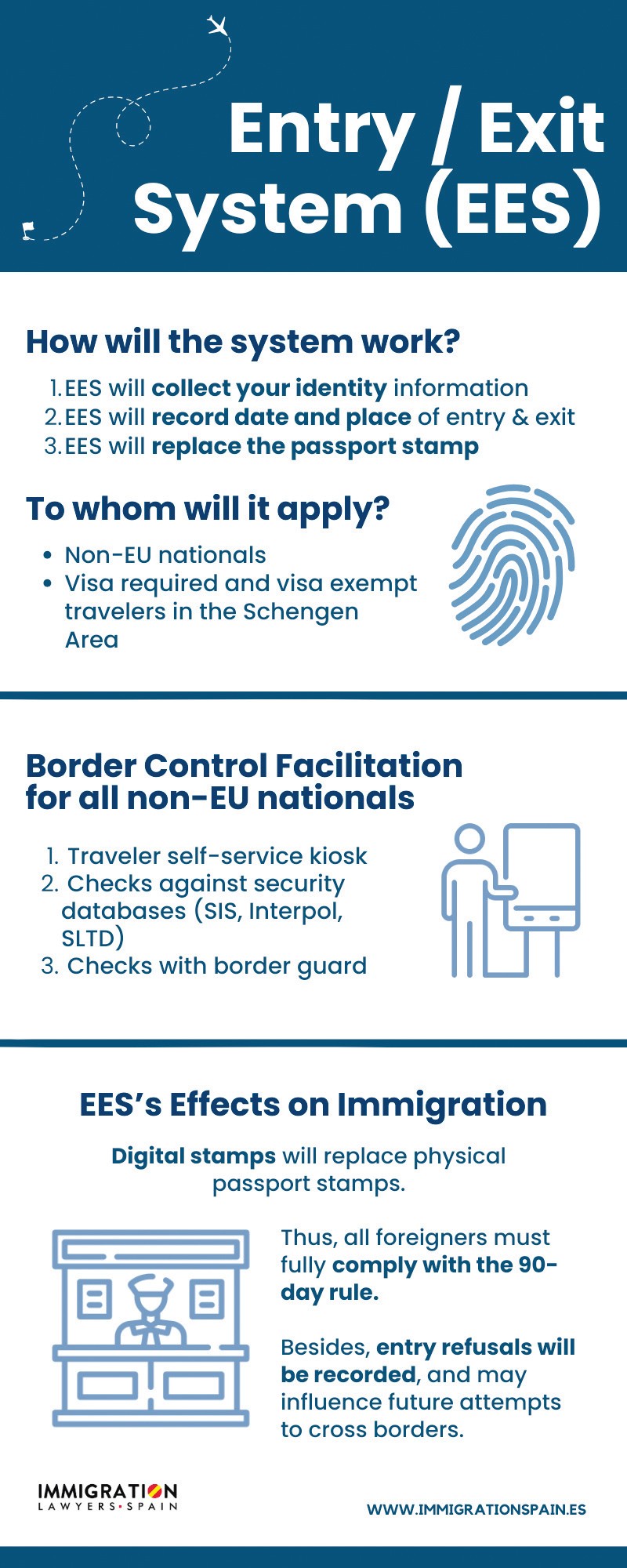
The Entry/Exit System is a centralised information system that will collect and store data on every crossing of the Schengen external border by third-country nationals. Upon first entering the EU, all travellers are required to provide their fingerprints for all ten fingers and a digital image of their face. All data relevant to the passport, including information regarding visas, will be recorded at the same time as details of the exact time and place of border crossing.
In accordance with the established protocol, all information will be stored in the database for a period of up to five years (previously, depending on the source, data were stored for 3–5 years). In the event of a repeat entry, the system will automatically compare the new data with existing data held. Therefore, EES replaces the outdated passport-stamp system and eliminates the possibility of erroneous or repeated unlawful entries. The European Commission has stated that the system will simplify travel for bona fide travellers, speed up checks and minimise queues.
The system will cover 25 EU countries, excluding Cyprus and Ireland, and four Schengen countries that are not EU members — Iceland, Liechtenstein, Norway and Switzerland. Prior to the completion of the reform, scheduled for April 2026, the old and new systems will operate in parallel. Until the full transition to EES is complete, passport stamps will continue to be issued.
Initial deployment points include major international airports, such as Frankfurt, Paris and Amsterdam, as well as selected land and sea checkpoints. Temporary delays and overloads are to be expected in the initial months, particularly during the tourist season.
According to the developers, the primary objective of implementing EES is to enhance migration control, improve the effectiveness of combating visa-regime breaches and bolster security. The system should facilitate the detection of cases of overstaying, document forgery and other forms of abuse.
According to official figures, the EU recorded more than one million cases of overstaying in 2024 alone. The traditional passport-stamp system did not allow for effective tracking of such violations. The introduction of a digital database will enable each EU member state to access accurate information on every border crossing in real time.
Simultaneously, the EES has been developed to facilitate border crossings for legitimate travellers by means of automated control procedures.
The procedure will officially commence upon your first entry into the Schengen zone. It is imperative that travellers go through a biometric registration terminal. The system will record fingerprints, a photograph, passport and visa data. Please note that children under 12 are exempt from fingerprinting. Separate simplified verification procedures are available for those who cannot undergo biometric identification, such as the elderly, disabled people and others in certain circumstances.
Subsequent entries will allow for automated gate passage without the need for interaction with a border officer. Should the system ascertain that there are no violations, passage will be granted within minutes. In the event of technical malfunctions or an alarm signal being triggered, a border officer will be responsible for carrying out manual checks.
Risks, criticism, confidentiality
The European Commission has explained that the gradual launch of the European Emergency Number System (EES) is intended to provide member states with the opportunity to make phased use of the new capabilities, while allowing time for border services, the transport sector and travellers to adapt. "The border represents the EU's primary security perimeter. The new Entry/Exit system will help ensure that third-country nationals comply with the rules. This will make borders safer and controls more effective," said Denmark's Minister for Immigration and Integration, Kaare Dybvad Bek.
Despite the declared objectives, the implementation of EES has drawn criticism from human rights organisations and digital security experts. The primary concerns relate to the volumes of data collected, the storage periods, and the potential risks of personal data leaks.
Independent analysts have highlighted potential risks, including discrimination against vulnerable groups, challenges for individuals with unreadable fingerprints, and the possibility of system errors. There are also concerns about the technical readiness of the infrastructure as a whole. The EES project has been under development since 2013, but has been repeatedly postponed due to technical issues, unprepared airports and integration difficulties with existing databases.
Germany and France have already expressed concerns that the technical infrastructure may not be ready, which could result in delays and chaos at borders.
Incidentally, similar systems have long been in operation in other developed countries. The US operates the US‑VISIT system, which collects biometric data on entry and exit of foreign nationals. Canada, Australia, the United Kingdom and others also use automated border-control platforms that include fingerprint collection, photo capture and prior electronic travel authorisation.
The European Union is implementing EES in order to align with an international trend, by introducing a system with the capacity to process up to 300 million border crossings per year. The key distinguishing features of EES are its scale and real-time data synchronisation.
Any changes to the Schengen visa?
Many may wonder how implementation of the new border rules will affect Schengen-visa issuance. In relation to this issue, EU officials have no novel announcements to make at this time. It is important to note that the Schengen visa, including its acquisition procedure and the many document requirements (application form, insurance, booking, financial guarantees, certificates, etc.), remains unchanged. Please note that the EES has an impact on border control procedures, but not on the issuance of visas.
Citizens of countries subject to an EU visa regime, for example Azerbaijan, will still need to apply to consulates for a visa. Upon first entering the Schengen zone, it is mandatory for individuals to undergo fingerprinting and photographing. Subsequent trips to the EU will become faster thanks to automated terminals — provided visa rules are observed. Please be advised that initial trips may take longer at the border due to the introduction of biometric registration. The system will automatically monitor the duration of stay, ensuring that the permitted limit has not been exceeded. Should the visa regime be violated, it will become considerably more difficult to evade control.
It is therefore recommended that citizens of Azerbaijan familiarise themselves in advance with the new entry rules, especially those who travel frequently on short-term visas and those who have previously violated the visa regime. Please be advised that any violations of this nature will henceforth be documented. Violators may face restrictions on future travel.
An important announcement for 2026
In 2026, the EU plans to introduce another major innovation for foreign visitors — the ETIAS (European Travel Information and Authorisation System). This is an electronic pre-authorisation system for short-term travel (up to 90 days within a 180-day period) to Schengen countries and certain other EU states. This is intended for citizens of visa-free countries with the EU (for example, Ukraine, the USA and the United Kingdom). The European Travel Information and Authorisation System (ETIAS) is not a visa, but an additional authorisation, similar to the American ESTA or Canada's eTA. The full launch is scheduled for the last quarter of 2026, approximately one year after the implementation of EES. Please note that this authorisation will incur a fee. The initial fee was set at 7 euros. However, due to inflation, additional cyber-security costs and technical support, the European Commission later proposed raising it to 20 euros. Admission will be complimentary for children under the age of 18 and for individuals over the age of 70. Please note that family members of EU citizens and some other categories are also exempt.
The move away from passport stamps and towards biometric data represents a new phase in the evolution of the Schengen zone. Travellers may welcome this as a step towards simplifying procedures. However, it will also require attentiveness, technological literacy and a readiness for change.
RECOMMEND:
 206
206

