

NUCLEAR DILEMMA
Europe increases sanctions pressure. Iran at crossroads between hardline rhetoric and a policy of concessions
Author: Ilgar VELIZADE
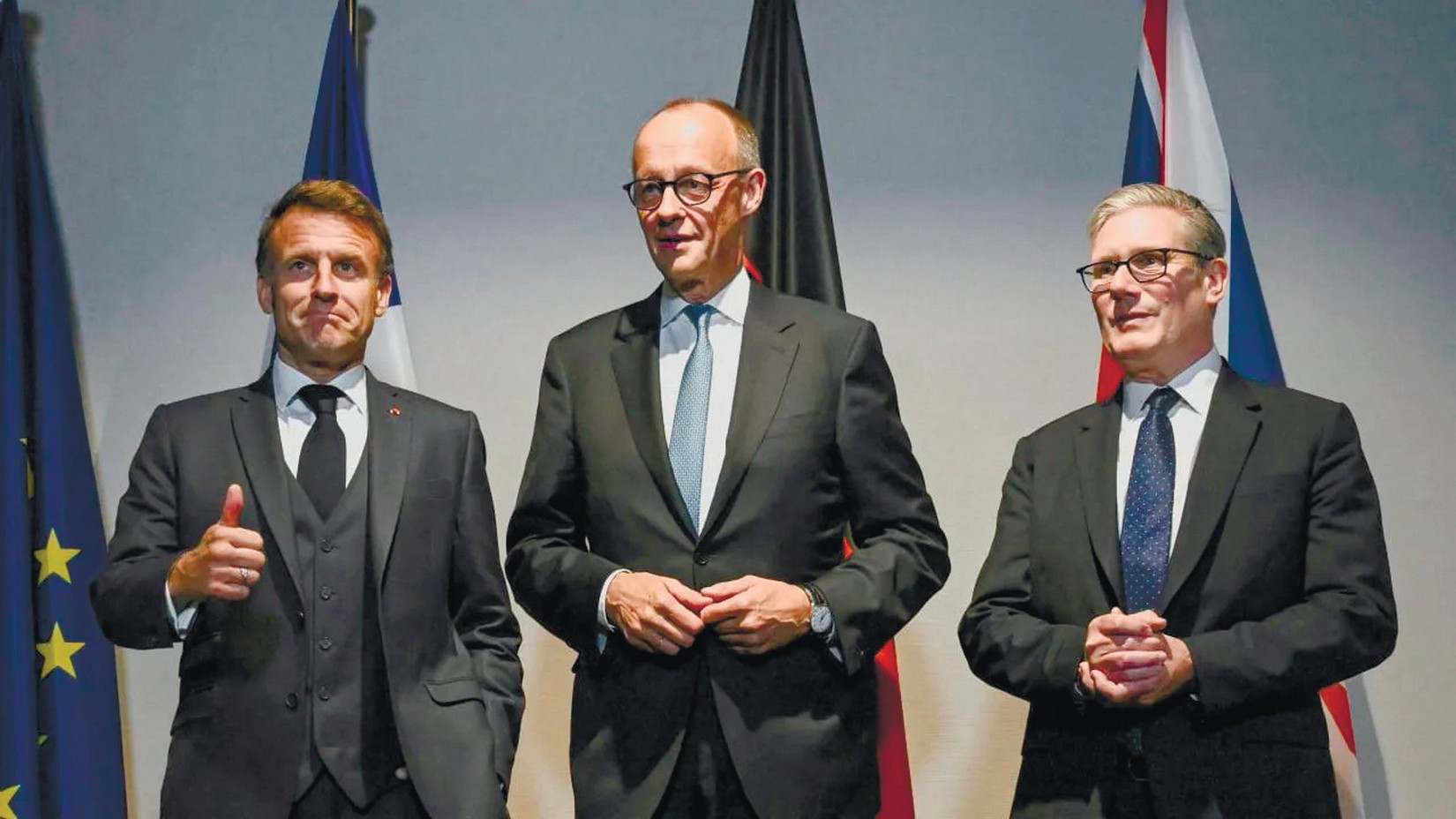
Following the twelve-day conflict between Israel and Iran, diplomatic activity surrounding Iran's nuclear dossier has intensified sharply. The European E3 (EU3)—the United Kingdom, France, and Germany—initiated several rounds of negotiations with Tehran, culminating in a meeting in Geneva on August 26. These consultations were the first attempt by the Europeans to contain Iran's nuclear programme through diplomacy after a new round of Middle Eastern escalation. However, the outcome was predictably negative: the talks did not yield tangible commitments from Tehran. Iran limited itself to general statements about its readiness for dialogue but refused to make specific concessions—whether on reducing its level of uranium enrichment or expanding access for IAEA inspectors.
Battle of interests
Consequently, the E3 decided to activate the snapback mechanism, which effectively initiates the process of restoring UN sanctions. For the Europeans, this was a demonstration that the diplomatic pause had yielded no results. For Iran, it served as further confirmation of its thesis that the West uses talks merely as a cover for pressure. This is precisely why a high-ranking Iranian official, in a conversation with Reuters, called Europe's actions "illegal and regrettable," while also emphasising that "the door to diplomacy remains open." His statement that "Iran will not yield under pressure" demonstrates the characteristic duality of Tehran's position: a willingness to continue negotiations as a form of political theatre, but a categorical refusal to perceive them as a space for real concessions.
Meanwhile, Iran's Minister of Foreign Affairs, Abbas Araghchi, stated in an article published in The Guardian that his country is prepared to accept international controls and limitations on its nuclear programme if sanctions are lifted in return. This suggests, if not flexibility in Tehran's position, then at least a desire to engage in open bargaining with high stakes.
Moscow and Beijing have played no less a role in the developments surrounding Tehran's nuclear programme. According to The New York Times, Russia and China prepared a draft UN Security Council resolution proposing a six-month delay of sanctions against Iran. For Tehran, this was a chance to buy time and demonstrate that it is not alone in the face of Western pressure. However, the fate of this initiative is practically sealed: the Europeans have already stated their readiness to block it with a veto. Thus, the diplomatic "safety cushion" that Moscow and Beijing tried to create is unlikely to save Tehran from increased sanctions pressure.
Nevertheless, this attempt itself is important for understanding the strategic context. It shows that Iran is increasingly relying on support from the East—Russia and China—seeing them as a counterbalance to the West. This enhances the multipolarity of the diplomatic game but simultaneously highlights Iran's vulnerability: it cannot achieve even a temporary pause without the help of external patrons.
In the shadow of negotiations
The context of the Geneva talks is inextricably linked to the aftermath of the Israel-Iran conflict. The short-lived military escalation caused a surge in nationalist mobilisation within the country. Under conditions where society has been unified in the face of an external threat, any concessions at the negotiating table are automatically perceived as betrayal. This has sharply narrowed the room for manoeuvre. Even if there are forces within the elite inclined toward compromise, they are now unable to translate their ideas into foreign policy: the political climate demands a hard line. This is precisely why the Geneva consultations could not have ended in anything other than a diplomatic stalemate.
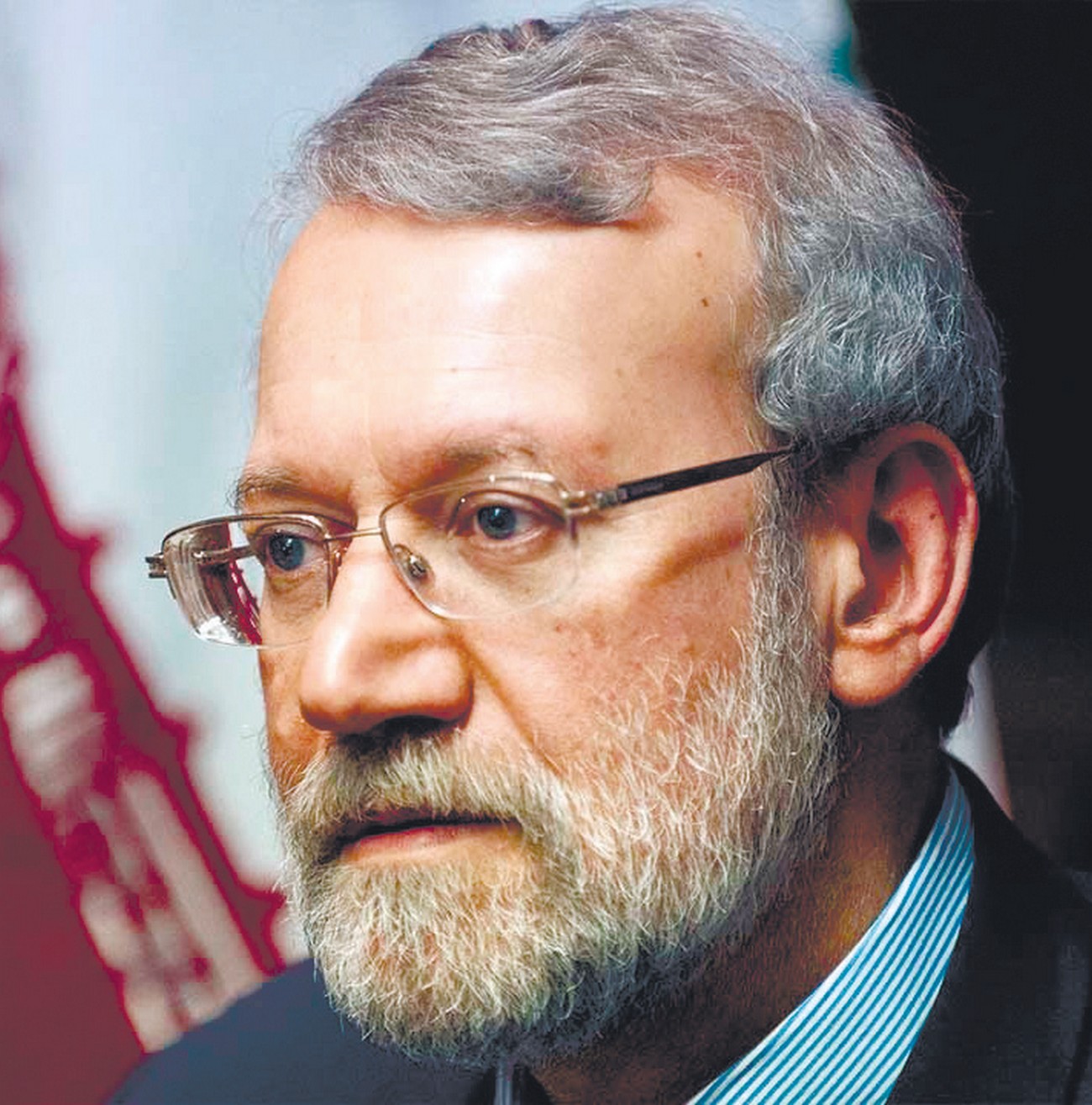
In this situation, the figure of Ali Larijani takes on particular significance. A former parliament speaker and experienced negotiator with direct access to the Supreme Leader, he has long been viewed as one of the few pragmatists capable of managing the nuclear dossier from a position of flexibility. His cautious statements about the possibility of reducing the level of uranium enrichment make it clear that there is an understanding within the Iranian elite that excessive obstinacy threatens complete isolation. But after the conflict with Israel and amid the threat of sanctions, the space for such manoeuvres is extremely limited.
Nonetheless, it is Larijani who remains the figure around whom a "centrist scenario" could form in the future. His experience, connections, and reputation as a moderate pragmatist make him a suitable candidate to act as a unifying link in the post-Khamenei period. In this context, the nuclear programme is not only a tool of foreign policy but also an arena for the struggle over Iran's future leadership. If Larijani manages to preserve even minimal space for negotiation, this will become an argument in favour of his political model.
Simultaneously, internal confrontation is intensifying. Economic crisis, inflation, and corruption are increasingly undermining the position of the reformist wing led by President Pezeshkian. Radical forces are attempting to use the situation to demand a harsher course, while the reformists appeal to the necessity of easing international pressure for the sake of the economy's survival. Ayatollah Khamenei has already condemned the radicals' pressure on the president, making it clear that he seeks to maintain a balance within the system. But his categorical refusal to negotiate with the US shows that the strategic line of resistance remains.
These contradictions are closely intertwined with the question of succession. After Khamenei, the question of who will control the nuclear programme and foreign policy will arise. If the radicals prevail, Iran will move definitively toward a mode of confrontation, resulting in further isolation and economic exhaustion. If a "centrist" scenario, in which Larijani plays a key role, can be strengthened, Iran will be able to employ tactics of flexible manoeuvring, maintaining firmness in rhetoric but avoiding a complete break with the world.
Failure in Geneva - progress in Vienna
Overall, the Geneva round of talks became a telling moment. It revealed Europe's inability to persuade Iran to make concessions, the limitations of support from Russia and China, and Tehran's vulnerability to sanctions pressure. Simultaneously, it demonstrated internal constraints: nationalist mobilisation and elite infighting make compromise politically impossible.
However, Iranian diplomacy would not be itself if it did not agree to "play at concessions." At the very least, the meeting in Vienna between the Iranian delegation and IAEA representatives, with whom dialogue had previously been refused in Tehran, can be seen as an attempt to reach an agreement despite seemingly insurmountable contradictions.
According to the head of Iran's Foreign Ministry, Abbas Araghchi, the meeting went well. The minister noted that the sides "came closer to achieving a new framework for bilateral cooperation." Prior to this, Araghchi had stated that the IAEA and Iran were discussing future cooperation and that the agency agreed on the need to create a new system.
Earlier, IAEA Director General Rafael Grossi had called on Tehran to agree to inspections of nuclear facilities. He noted that the agency would soon attempt to hold another meeting with Iran.
Recall that after the June strikes by the US and Israel on a number of nuclear sites, IAEA inspectors were forced to leave the country, and the Iranian parliament passed a law limiting their mandates and cementing the requirement for each inspection to be approved by the Supreme National Security Council. That is, cooperation with the international agency was practically frozen, which caused serious concern in the West.
Nevertheless, since late August, signs of cautious movement have emerged. Iran allowed a small group of inspectors onto the Bushehr nuclear power plant, albeit in a limited format, which was perceived as a symbolic but important step. Rafael Grossi stated that there is very little time left to reach agreements and that full access to uranium enrichment facilities must be restored within the coming days. In his words, the full resumption of IAEA inspections in Iran would reduce the likelihood of strikes on the Islamic republic's nuclear facilities.
In attempts to break out of isolation
Against the backdrop of these statements, Iranian diplomacy proposed a new formula: Foreign Minister Seyed Abbas Araghchi emphasised his country's readiness to agree to enhanced monitoring and certain limitations in exchange for the lifting of sanctions. In essence, this is a return to the logic of the nuclear deal, but on terms where Iran demands real economic concessions before opening its doors to inspectors.
Thus, the current stage can be characterised as a moment of choice. On one hand, there are signs of diplomatic activity, indicating that both Iran and the international community are seeking common ground. On the other hand, the risks of a breakdown remain extremely high, and without compromise, the situation could again slide into a stalemate followed by the restoration of a harsh sanctions regime.
The prospects for further development depend on whether the sides can find a balance between security demands and economic interests. For Iran, this is a chance to achieve real relief from sanctions pressure; for Europe and the IAEA, it is an opportunity to restore at least partial control over one of the most sensitive nuclear programmes of our time.
The participation of Iran's president in the anniversary session of the UN General Assembly in New York can be viewed as another signal of Tehran's desire to break the diplomatic blockade surrounding the Iranian position on the nuclear programme. This is despite attempts by the US State Department to impose special restrictions on the travel of the Islamic republic's delegation to the UN, which adds to the drama surrounding the issue.
The nuclear programme remains the central field of battle—not only between Iran and the West but also within the Iranian elite. It is an indicator of what Iran will be like after Khamenei: a country moving down the path of confrontation and isolation, or a power capable of combining toughness with pragmatism. This is precisely why the outcome of the current negotiations and the role of figures like Larijani matter far beyond the nuclear dossier—they determine the future of the Iranian political system itself.
RECOMMEND:
 222
222

