

CORRIDOR SYNDROME
Between external diplomacy and internal crisis in Armenia
Author: Namig H. ALIYEV
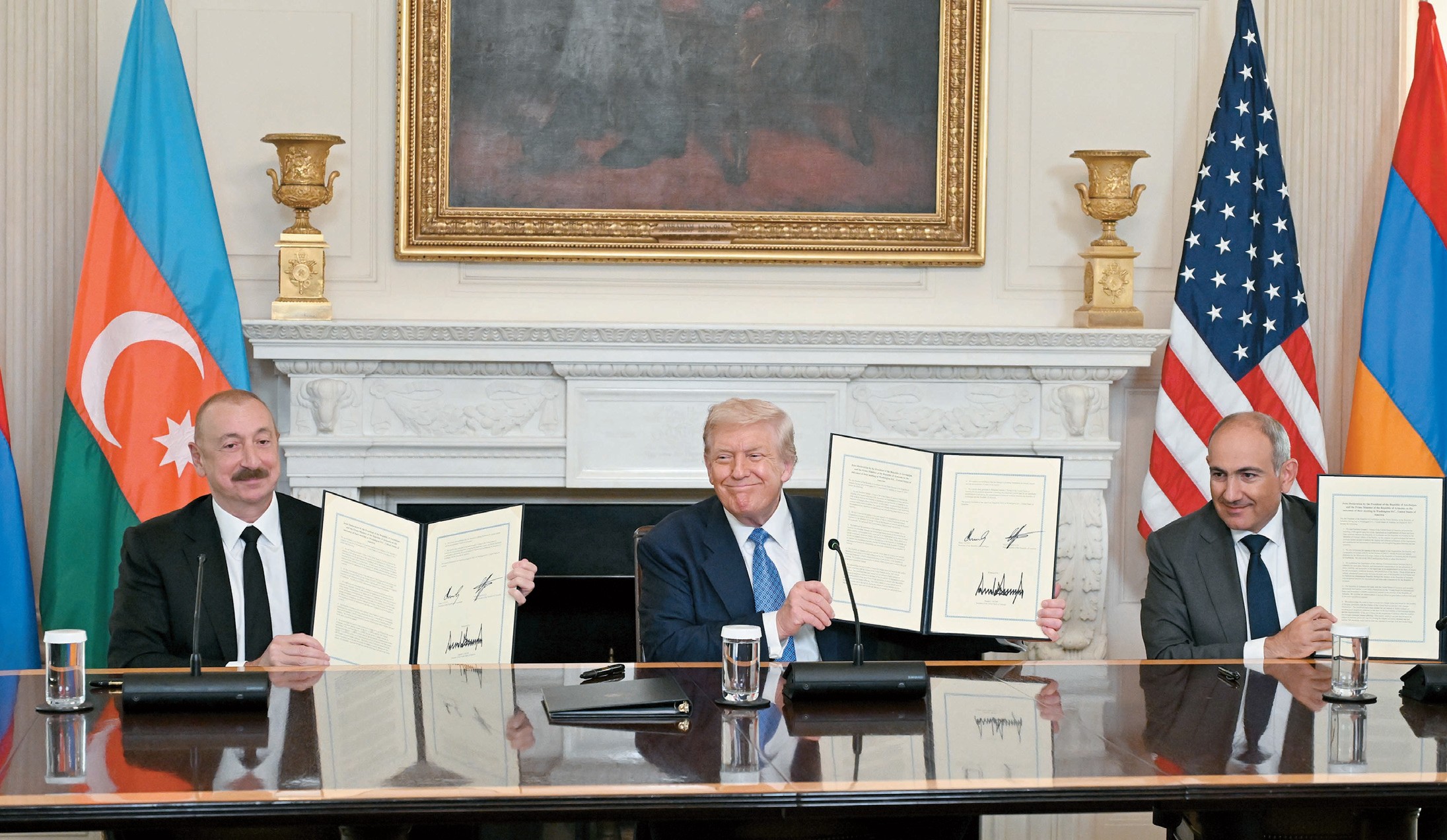
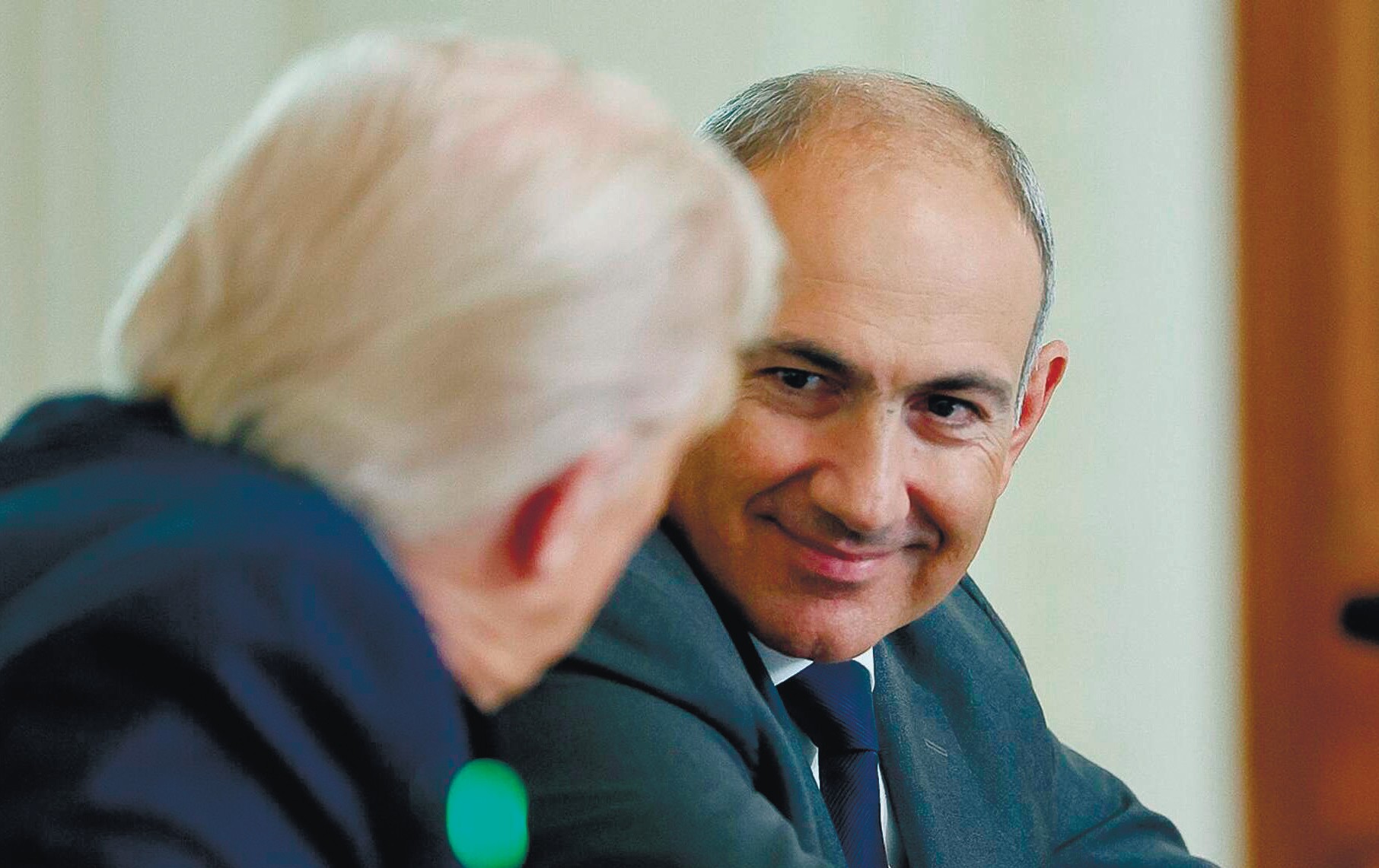
Following a pivotal event directly affecting the future of the South Caucasus—the Washington summit and the initialing of a peace agreement between Armenia and Azerbaijan—the region seemed to have opened a path to long-awaited stability. But immediately after this, at the SCO summit in China, Armenian Prime Minister Nikol Pashinyan once again resorted to an old tactic: escalating rhetoric. The reason was unexpected: Pashinyan expressed dissatisfaction that Azerbaijani President Ilham Aliyev referred to the regional logistics project Trump Route for International Peace and Prosperity (TRIPP) as the Zangezur Corridor. "Aliyev's rhetoric does not reflect the agreements reached," Pashinyan stated, demonstrating clear irritation.
On the surface, it appears to be a dispute over terminology. However, this may conceal far deeper processes: foreign policy manoeuvres, attempts to maintain internal control, and a geopolitical struggle for influence in the region.
TRIPP or Corridor? Geopolitics wrapped in logistics
At first glance, Pashinyan's grievance seems related only to the name. Zangezur Corridor or Trump's Route—does it really matter? But in the South Caucasus, even the names of infrastructure projects become symbols of political conflict. For Azerbaijan, the term Zangezur Corridor holds key significance: it is not just a geographical label but a matter of historical justice. It underscores the historical territorial link between mainland Azerbaijan and the Nakhchivan Autonomous Republic. This connection was severed a century ago when Soviet Russia seized Western Zangezur from Azerbaijan and transferred it to Armenia. For Armenia, this phrase has long been a trigger, for it raises sovereignty concerns, implying a potential extraterritorial status for the route, which is perceived by the Armenian public as a threat. The Armenian political elite believes that the name signifies something greater—increased influence for Azerbaijan and Türkiye, a possible extraterritorial regime, and, crucially, a loss of control. Although Yerevan well understands that no alternative status is feasible for the transport link between Azerbaijan's two separated parts. It is merely engaging in "diplomacy," exploiting different versions of the transport regime that are unpalatable to the domestic audience.
The TRIPP project is initially promoted as a broad regional logistics initiative, connecting Türkiye, Azerbaijan, Armenia, Iran, Russia, and Central Asian countries. It benefits all parties. And importantly, it imposes no extraterritorial status: the route falls under Armenian jurisdiction but with international guarantees.
Nevertheless, even in this form, the project alarms Armenian elites. The reason is simple: internal political instability prevents Pashinyan from openly stating that Armenia stands only to gain. Instead, he relies on familiar rhetoric: "we are being forced," "we are being coerced," and "we are being humiliated by words."
Pashinyan: between fear and diplomacy
Why does Pashinyan complain again, even after signing peace documents? The answer lies in domestic politics.
Armenia is in a state of political turbulence, though without an overt crisis. The main characteristics of this situation are traditional and no different from similar scenarios in other countries. These include low public trust in the government yet no attractive alternative; periodic protests but without mass mobilisation; and societal polarisation, especially over issues of identity, alliances, and foreign policy.
The domestic political situation in Armenia is stability on the edge. Society is polarised. Some demand immediate peace and unblocking of routes, while others accuse the authorities of betrayal. Against this backdrop, the economy is stagnating, migration is rising, and every new diplomatic step is met with a surge of distrust.
After the catastrophic defeat in 2020 and the subsequent collapse of Armenian policy in Garabagh, Pashinyan must balance the demands of the international community with the discontent of the Armenian "street." He cannot allow himself to be perceived as a "traitor," but nor can he openly oppose the peace agreement.
Pashinyan is forced to manoeuvre: to concede is to lose support, not to concede is to face isolation. In such conditions, foreign policy is used as a tool for internal stabilisation: complaints, statements, and meetings all become messages for domestic consumption.
The complaint against Aliyev and the emphasis on "incorrect terminology" are nothing but a way to demonstrate to the internal audience: "I am not silent; I am fighting." This is a performance for the public. Especially amid Armenia's ongoing rapprochement with the West and attempts to distance itself from Russia.
His domestic policy aims to minimise costs. Within Armenia, Pashinyan faces significant pressure. After 2020, public trust in him has weakened, but the opposition remains fragmented. In such a context, any appearance of "acquiescence" is perceived very painfully. Therefore, Pashinyan must show that he controls the process and can "put Aliyev in his place."
Pashinyan's primary goal is to navigate between external pressures and internal demands. His foreign policy currently focuses on saving face. Nikol Pashinyan, aware of the sensitivity of Armenian society after the war defeat regarding Armenian-Azerbaijani relations, seeks to show that even while pursuing peace, he is not sacrificing national interests.
Pashinyan's task is to ‘integrate’ Armenia into the Trans-Atlantic context. He is betting on closer ties with the West, particularly the US and France, to balance dependence on Russia, which since 2020, in Yerevan's view, has failed to meet security expectations.
Opposition In Armenia: criticism with no alternatives
The Armenian opposition, both parliamentary and extra-parliamentary, is highly critical of the peace process in its current format. It reacted to the Washington summit and subsequent diplomatic steps with predictable dissatisfaction. The main grievances boil down to three points. First, the surrender of national interests. The opposition accuses Pashinyan of "capitulation"—both on the issue of Garabagh and in the context of the Zangezur Corridor, alleging that the peace process comes at the cost of concessions. Second, the existence of "secret agreements" and a lack of transparency. They claim that Pashinyan is negotiating behind the people's back, with many processes occurring without broad public or parliamentary debate, suggesting hidden concessions. Third, the Western tilt. The rejection of Russia and the bet on the West are seen as risky; Pashinyan's pro-Western course is viewed as adventurous and leading to complete isolation from the traditional ally, Russia.
However, the opposition also faces legitimacy problems. Many of its figures are associated with the previous criminal, corrupt authorities, the Garabagh clan, and enjoy little public trust. Thus, despite sharp statements, the opposition's potential for real destabilising action is limited—at least in the short term.
Protests occur, but they are disjointed, and no mass popular movement against the government has emerged. Pashinyan is disliked, but no one offers a better alternative.
Who is the benefactor of escalation?
In the short term, no one. However, in the medium and long term, the picture looks different. Azerbaijan is strengthening its position by implementing economic and logistics projects, integrating itself into regional supply chains. The country is consistently pursuing a strategy of economic and geopolitical enhancement, promoting transport corridors, and, importantly, initiating constructive processes.
Türkiye is increasing its presence in the South Caucasus, using economy and security as tools to project power and offering economic opportunities to regional countries.
Russia, despite its formal presence, continues to lose ground but retains leverage, especially through the 102nd Military Base, border troops in Armenia, and proxy forces.
The West gains a window of opportunity to influence processes in the South Caucasus but currently acts fragmentarily. Clearly, it cannot propose a clear strategy.
Even Iran has begun to speak of logistics as a common interest.
Armenia, caught between all these players, remains without a clear position, attempting to build a new strategy without a powerful ally, a comprehensive plan, or sufficient resources.
Epilogue: rhetoric instead of strategy
Pashinyan's complaint about the corridor's name is not just nitpicking. It is a symptom of deep uncertainty, an indicator of an profound internal conflict: between the necessity for peace and the fear of concessions, between orientation towards the West and the risks of losing sovereignty, between external positioning and internal discontent. Armenia faces the need to accept a new reality. But instead, we see diplomatic jabs, attempts to save face, and the perpetual game of "we are under pressure."
As one Armenian political analyst told Azatutyun in an interview: "The people want peace, but they fear it will be followed by capitulation. The government knows there will be no capitulation, but it cannot explain this clearly."
This is the central paradox of today's Armenia. The peace process is underway. But each step is accompanied by a new wave of tension. Like the Zangezur Corridor (or Trump's Route) itself, it stretches through a "minefield" of fears, distrust, and unacknowledged envy of a neighbour who does not complain but builds.
RECOMMEND:
 244
244

