

INNOVATION INSTEAD OF INERTIA
Combined with proper regulatory incentives and public support, a smoke‑free future can be achieved faster
Author: Nurlana GULIYEVA, Astana–Baku
Smoking causes more than 8 million deaths each year, warns the World Health Organisation (WHO). This figure exceeds losses from wars and natural disasters by several dozen times. Yet more than 1 billion people worldwide continue to smoke daily and harm their health.
The American company Philip Morris International (PMI) has invested more than $14 billion in building a science‑based portfolio of smoke‑free alternatives, and to date innovative products have helped roughly 34 million people move toward a healthier lifestyle. Their number could have been larger if not for limited awareness, obstacles from government structures and other factors.
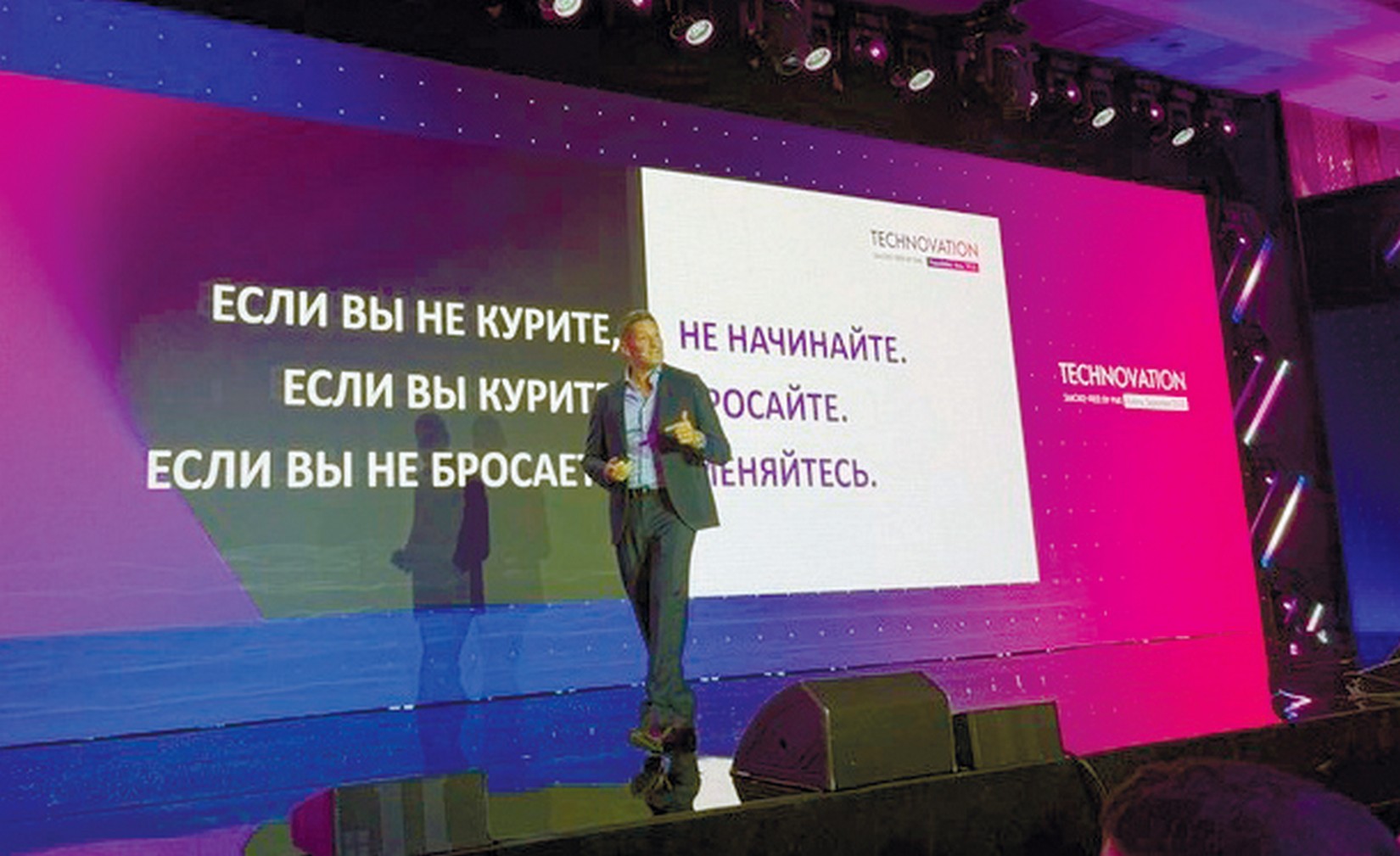
Recently in Kazakhstan’s capital, Astana, the regular Technovation conference discussed the latest research on how switching to smoke‑free products can be a less harmful option for those who do not want to abandon this deeply damaging habit.
Poisonous smoke
Cigarette smoke contains 6,000 chemical substances, about 100 of which have been classified by public health bodies as harmful or potentially harmful constituents. Yes, modern research has proven that it is the smoke itself that is the main cause of smoking‑related diseases. Although nicotine is not harmless — it causes dependence that keeps smokers hooked — research conclusions, notably from the National Institute for Health and Care Excellence in the United Kingdom, state that "it is the toxins and carcinogens in tobacco smoke, rather than nicotine, that primarily cause illness and death."
As leading clinicians who treat the "victims" of smoking noted at Technovation, cigarette smoke can cause not only cancers of the lung, mouth, larynx and other organs, but inflicts almost irreparable harm to cardiac function and is a principal driver of the rapid development of chronic obstructive pulmonary disease.
The scale of the harm is shown by figures: among lung cancer patients, smokers outnumber non‑smokers eightfold.
In an ideal world, a person equipped with all this widely available information should strive to quit the habit entirely. But statistics show that despite campaigns, warnings and even bans, this does not happen — on the contrary, the number of smokers worldwide grows each year.
Therefore, the need arose to search for an alternative, a less harmful substitute, which has been the focus of specialised laboratories and institutes for the past two decades.
As Tommaso Di Giovanni, vice‑president for communications and engagement at PMI, stated in his Technovation address, years of scientific work have shown that harm reduction goals can be achieved by eliminating the process of burning — since when combustion does not occur, levels of harmful chemicals can be reduced significantly compared with cigarette smoke.
Resistance to innovations
So why are these products still banned in a number of countries? As Tommaso Di Giovanni observed, public health representatives and anti‑tobacco organisations systematically reject the potential of smoke‑free products and deny their effectiveness in reducing smoking prevalence. At the same time they refuse to engage fully with the latest scientific data.
There is, however, clear statistics showing that in regions where innovations are accepted and made available to consumers, positive changes occur. For example, smoking prevalence in Japan fell by 45.9% between 2014 and 2022, in Sweden by 49.5% (2014–2022), in Iceland by 50.0% (2014–2023), and in New Zealand by 52.8% (2013–2023). In countries such as Australia, Brazil, Singapore, Thailand and Türkiye, where bans or restrictions on their use apply, smoking prevalence either declines very slowly or even increases.
According to the PMI representative, the situation stems from plain resistance and distrust of most innovations. The same happened historically with the adoption of the telephone, the automobile and even the refrigerator.
"History shows: any innovation initially meets distrust. But over time it becomes part of our everyday life. The experience of renewable energy and electric vehicles has shown that state regulation can not hinder but support industrial innovations that successfully solve global challenges. But one must understand: innovations in a vacuum, without conditions for application, mean little. This is precisely the situation we face today," Tommaso Di Giovanni noted.
Alexey Kim, director of corporate affairs for the CIS at PMI, added that sometimes bans have the opposite effect, giving room for the "black" market to expand, and consumers end up with products far from any safety standards. As a result, the dominance of such products in the market and the negative effects of their use create a wrong impression about the harm of smoke‑free alternatives overall. Yes, licensed products are more expensive, but that price reflects not only quality but the manufacturer’s guarantees and responsibility. On the other hand, this represents significant losses for state budgets, since illicit products find ways to circumvent taxation systems.
Kim believes governments should differentiate taxes and excise duties applied to nicotine‑containing products according to the degree of their negative impact on human health.
Overall, experts think tobacco control policy must keep pace with the times, because current control measures in many countries, developed decades ago to combat combustible tobacco consumption, no longer fully address contemporary challenges.
Combined with proper regulatory incentives and public support, a smoke‑free future can be reached more quickly.
Not a dream, but reality
In Azerbaijan the share of smokers has remained at about 30–32% of the population over the past five years, which is a serious figure considering that, by WHO parameters, a smoke‑free country is one where smokers do not exceed 5% of the population. This is despite legislative acts adopted over the last seven years that strictly limit public smoking, introduce high excise duties and other restrictive measures.
"Let me say straight away that Azerbaijan is particularly important to us, since it is essentially the first country where 100% of our revenues come from smoke‑free products. Our next step is to ensure that all consumers who do not quit smoking switch to smoke‑free alternatives," Tommaso Di Giovanni said in an interview with Azerbaijani media on the sidelines of Technovation.
PMI plans to derive about two‑thirds of its net profit from smoke‑free products by 2030. Its long‑term plans envisage a complete phase‑out of cigarette sales in countries with appropriate regulation and public support within 10–15 years.
Thus the Technovation conference in Astana showed that a smoke‑free future is not only an ambitious dream but an achievable goal provided governments and societies support it.
The best closing chord to all that was said is PMI's slogan, repeatedly voiced by Tommaso Di Giovanni at each Technovation conference: "If you don't smoke — don't start; if you smoke — quit; if you don't quit — change."
RECOMMEND:
 225
225

