

NATO ARABIC STYLE
Israeli strikes and regional instability spur Egypt to put forward the idea of creating a military alliance of Arab states
Author: Ilgar VELIZADE
Several days after the Israeli strike on Doha, The Times of Israel, citing data from a special report, published an article claiming that Egypt had once again revived the initiative to establish a NATO-style alliance of Arab states to counter external threats. The resumption of the debate was prompted not only by recent events in the region, which exposed the vulnerability of the existing security system, but also by Cairo’s desire to strengthen its position as one of the key power centres of the Arab world. The return to the idea of an "Arab NATO" reflects a growing sense of instability: Arab states are increasingly confronted with challenges that cannot be addressed individually – be it international terrorism, the expanding influence of external powers, or conflicts with neighbouring states. Amid rising tensions with Israel, Egypt is attempting to demonstrate that collective defence could become a tool capable of turning the region into a more independent and influential actor in global politics.
How it all began
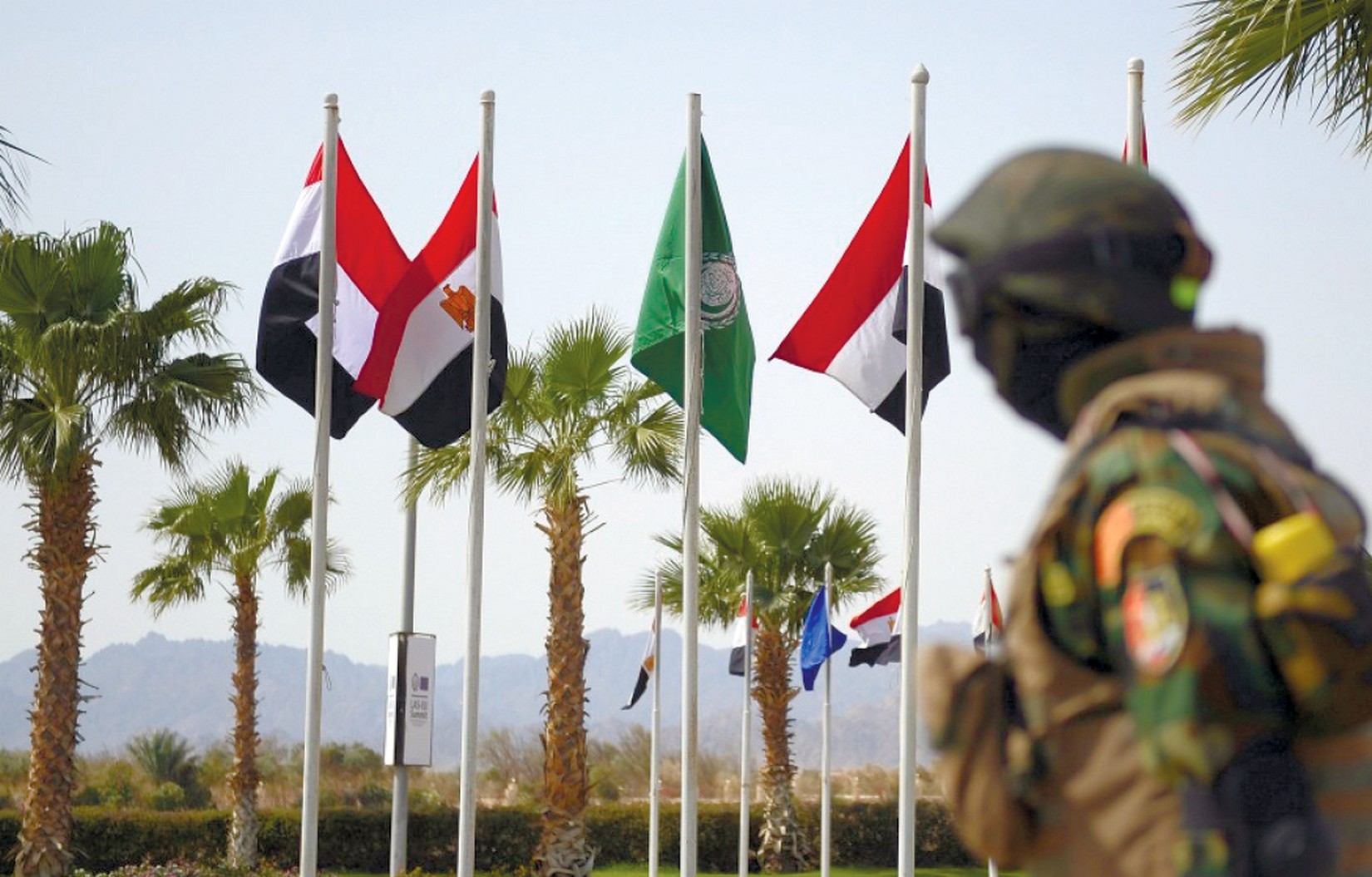
The idea of forming a so-called Arab NATO was first raised at the Arab League summit in 2015 in Sharm el-Sheikh. It was linked to mounting security threats in the Middle East and North Africa. At the time, President Abdel Fattah el-Sisi stressed the need for Arab states to create their own mechanism of collective defence, one that could respond swiftly to threats without reliance on external powers. The concept envisaged the formation of joint armed forces of around 40,000 troops, with a unified command centre, air force, naval units, and special operations forces. Such an approach was intended to fill a gap in the regional security architecture and enhance the ability of Arab states to defend their interests independently.
The primary motives were the growth of international terrorism, particularly in the form of ISIS, the consolidation of Iran’s positions in Syria, Iraq, Lebanon, and Yemen, and the desire to reduce dependence on the US and NATO. Egypt argued that its own military alliance would allow the Arab world to act more coherently, shield national regimes from destabilisation, and evolve into an autonomous centre of power.
However, the initiative encountered serious obstacles and was never realised. Deep divisions among Arab states regarding priority threats proved insurmountable: for some the main enemy was terrorism, for others Iran’s regional expansion, while others focused on the conflict with Israel. Additional barriers arose within the Gulf Cooperation Council (GCC), particularly between Saudi Arabia and Qatar. Concerns also persisted in several governments about losing elements of military sovereignty if powers were transferred to supranational structures. The position of the US remained a crucial factor: Washington welcomed greater defence self-sufficiency among its allies, yet was reluctant to see the emergence of an alliance that could rival the American military presence in the region.
As a result, the "Arab NATO" remained more a symbol of unity than a practical project. In reality, Arab states confined themselves to temporary coalitions, such as the Saudi-led intervention in Yemen, or joint military exercises. The Arab League, founded in 1945 and headquartered in Cairo, does have a joint defence agreement, but it has never materialised in the form of permanent armed forces. While Arab armies have on several occasions carried out joint manoeuvres and fought together in wars against Israel, the creation of a permanent military mechanism proved impossible due to conflicting interests and difficulties in establishing command structures.
Two drivers of military development
In present circumstances, the proposal for an "Arab NATO" has again taken on clearer contours. Israel is regarded as the principal adversary. Egypt insists that the headquarters of the future forces should be based in Cairo and has proposed a rotating command system, under which the post of commander-in-chief would be held by representatives of all 22 Arab League members, with Egypt taking the first term. The secretary-general would be a civilian.
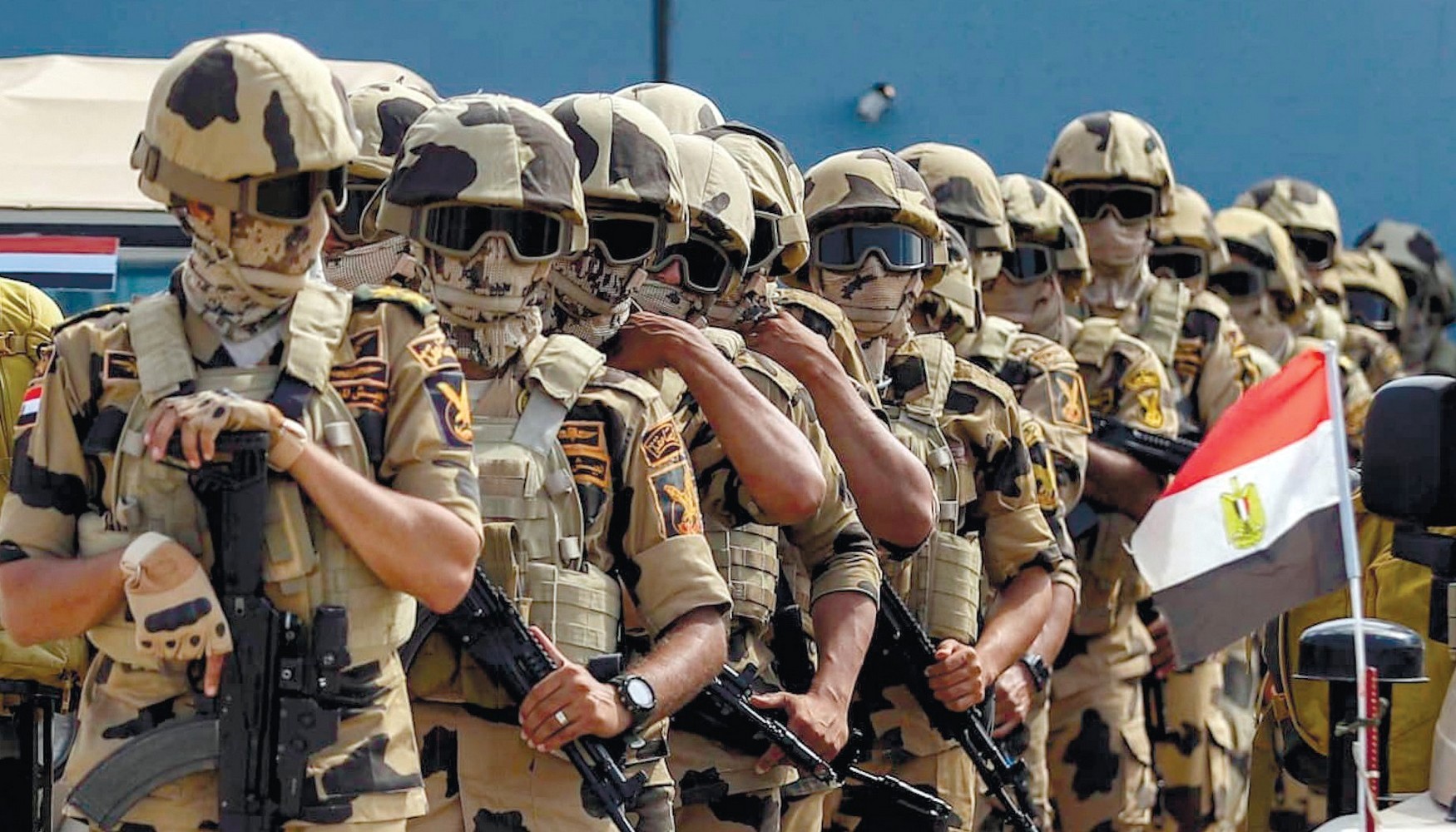
According to available information, the joint forces would include naval, air, and ground units, as well as selected elite troops trained for special operations and counter-terrorism missions. These forces would participate not only in combat operations but also in peacekeeping missions. To ensure coordination, a special planning council would be created, responsible for personnel training, logistics, and the standardisation of weapons systems. Each country’s contribution would depend on the size and capacity of its army, and the use of these forces would only be possible upon official request by a concerned state and following approval by Arab League command.
Egypt, with an army of nearly 1.2 million troops, aspires to be the informal leader of the joint forces. According to the Power Index, which takes into account dozens of parameters of military strength, Egypt ranks first among Arab states and fourth in its wider region. Its index score of 0.3427 significantly surpasses Saudi Arabia’s 0.4201. Despite the advanced technical equipment of the Saudi army, in terms of numbers and overall strength it remains far behind Egypt.
Nevertheless, Saudi Arabia commands the largest army among the GCC states. In 1984, it created the Peninsula Shield Force, headquartered in Riyadh. These rapid response units have been deployed in regional conflicts on several occasions, although their use has remained limited in scale.
Thus, Egypt and Saudi Arabia emerge as the two leading military powers of the Arab world, whose security relations have always contained elements of rivalry. Egypt, in promoting the "Arab NATO" concept, has sought to secure leadership, while Saudi Arabia preferred to develop GCC mechanisms and reinforce the role of the "Peninsula Shield". Their rivalry does not escalate into open confrontation, but is expressed in competition for symbolic leadership and the ability to shape the regional agenda.
Rivalry and cooperation
To some extent, the relationship between Cairo and Riyadh can be compared to that between France and Germany: Paris and Berlin embedded their rivalry within the rigid framework of NATO and the EU, transforming it into the foundation of stability. In the Arab world, however, no such institutional framework exists, and hence Egyptian-Saudi rivalry remains a source of contradictions, particularly when discussing ideas of collective defence.
It is telling that at the same time Saudi Arabia opted to sign a strategic mutual defence agreement with Pakistan. The accord was concluded during Prime Minister Shahbaz Sharif’s visit to Riyadh and effectively created a military alliance obliging both parties to treat an attack on one as aggression against both. Pakistan, with its powerful army and nuclear arsenal, proved to be Riyadh’s optimal choice among extra-regional partners.
For Saudi Arabia, the alliance with Islamabad offers several advantages. It bolsters the kingdom’s defence capabilities, enables it to adopt a firmer stance in relations with Iran and other rivals, and enhances Riyadh’s weight on the international stage. In the context of the Middle East, the ability to rely on Pakistan’s army and its nuclear deterrent introduces a new configuration in Saudi Arabia’s relations with both Iran and Israel. Pakistan’s institutionalised support for the Palestinian cause further strengthens Riyadh’s diplomatic position.
Thus, the Saudi-Pakistani agreement goes beyond bilateral cooperation and reflects Riyadh’s strategy, which is aimed not at hastily creating a broad but fragmented structure such as an "Arab NATO", but at selectively relying on strong extra-regional allies.
At the same time, the very fact that discussions about an "Arab NATO" continue and are becoming increasingly specific indicates that, in the longer term, the idea may indeed be realised. The shape of future decisions will largely determine the architecture of Middle Eastern politics, where military cooperation among Arab states – despite enduring contradictions – will play an increasingly significant role.
RECOMMEND:
 193
193

