

TIME OFF
Afag BABAZADE: "By measuring our worth by the number of things we do rather than by the quality of our lives, we find ourselves in a constant rush, 'punishing' ourselves for falling behind."


Author: Sabira ALAKBAR
October 10 was once again celebrated throughout the world as World Mental Health Day. In an era of relentless pace, continuous information overload, and mounting challenges, mental wellbeing has become not just a topic of discussion but a critical necessity. Mental health is the foundation upon which a fulfilling life, productive work, and harmonious relationships are built.
Why, then, have anxiety and burnout become widespread phenomena in the 21st century? How can one distinguish simple fatigue from true exhaustion, and learn to "switch off" from the endless pursuit of success? We discussed these pressing questions with psychologist, psycho-corrector, and certified EMDR therapist Afag Babazade, who has spent many years helping people restore their inner balance. What follows is a candid conversation about how to preserve oneself in a world where everyone is constantly "online", and why caring for one’s mind is not a luxury but an obligation to oneself.
"Why have anxiety and burnout become so widespread in our time?"
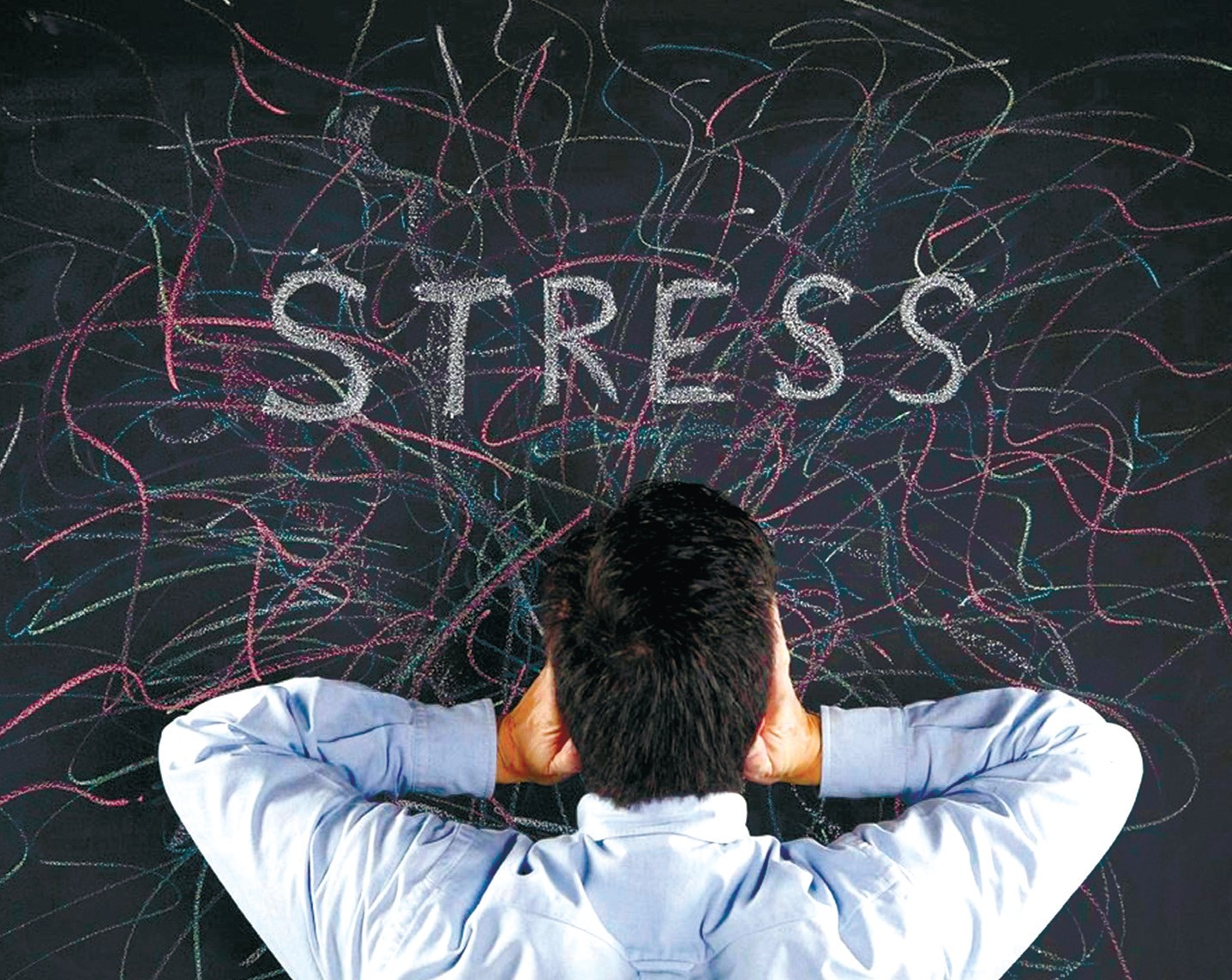
"We are living in an environment of total uncertainty, where guarantees and stability have largely disappeared. The flow of information and the speed of change are only accelerating. As a result, many people fall into the trap of comparing themselves with others, which places enormous strain on the nervous system. A person simply does not have time to recover, and chronic stress gradually becomes the new normal."
"And here it is — the uncertain future that cannot be escaped. What helps to maintain mental health in such circumstances?"
"To begin with, we must recognise the reality of the 'here and now', rather than living in a hypothetical future. It is important to have a clear goal towards which one is moving. Regular rituals create a subtle sense of control over the steps taken toward that goal. One must rely on inner values and meaningful connections. Physical activity, breathing exercises, and meditation are critically important. Realising that the world is imperfect — and yet beautiful precisely because of this — and that each of us possesses limitless potential to express our best selves, can serve as powerful motivators not only for preserving but also for strengthening mental health."
"Do you personally meditate? And can meditation or breathing practices really help to reduce anxiety?"
"Yes, absolutely. It has been scientifically proven that meditation lowers anxiety levels, stabilises breathing, and has a positive effect on the autonomic nervous system. Regularity is what matters most: even five to ten minutes a day can produce a tangible physiological effect."
"Sometimes emotional burnout is confused with ordinary fatigue..."
"Indeed. It’s important to understand the difference. Ordinary fatigue can be relieved through rest or a change of scenery. Burnout, however, usually doesn’t respond to these simple remedies. The body becomes depleted by constant stress, which it can no longer handle through usual means. Burnout manifests in the loss of joy in things that once mattered, a lack of desire to fill life with positive emotions, growing irritability verging on cynicism, unexplained physical ailments, and disturbed sleep with frequent, unpleasant dreams."
"Do social networks affect anxiety and self-esteem?"
"This is a very important question. Social media is designed to engage and draw users into constant comparison. Seeking 'approval' through likes becomes a habit that activates the brain’s reward system but simultaneously heightens anxiety. People unconsciously compare themselves with idealised, fictional images, which leads to self-devaluation, feelings of inadequacy, and deep regret."
"Adults can at least try to control themselves, but how can we help teenagers or children cope with the pressure of social media and comparison with others?"
"First, adults themselves need to recognise the role and impact of social networks. They must occupy a meaningful place in the younger generation’s lives, so that social media remains merely an auxiliary tool. It is essential to explain that online content represents an edited version of reality, and to cultivate critical thinking and a sense of self-worth independent of likes."
"There is also the constant stream of news, which causes stress and helplessness. What can be done about it?"
"There are many strategies, but I would highlight the most effective ones. Firstly, limit the time spent consuming news and refer only to reliable sources. Secondly, after receiving negative information, switch to activities that bring satisfaction and joy — such as walking, talking with friends about pleasant topics, exercising, or engaging in creativity. I especially emphasise creativity: it allows a person to uncover hidden talents, filling life with colours and emotions that promote both physical and psychological healing."
"So is it really possible to disconnect from work and duties in a world where everyone is always 'online'?"
"It is possible — but it requires discipline. One must set specific 'offhours' with no notifications, separate, even symbolically, work space from personal space, and establish a transition ritual — a walk, music, a shower, or a film. This helps the brain switch from work mode to rest mode. Otherwise, the stress system remains activated for far too long."
"Where lies the balance between the desire to be productive and the need to rest?"
"The two concepts are inseparable. The question of balance concerns almost everyone today. Our society has imposed the idea that being busy — especially profitably — equals success. Yet the human psyche is not logical; it follows its own laws, just like the body. Without recovery, productivity does not merely decline — it ceases to exist in any healthy sense. By measuring our worth through the number of tasks we complete instead of the quality of our lives, we are constantly in a hurry, 'punishing' ourselves for not keeping up. The body, in turn, 'retaliates' with chronic stress and emotional burnout. We begin to lose interest in activities and projects that once delighted us."
"How can one help oneself in such a situation?"
"In such moments, it is necessary to allow oneself to engage in what brings peace and joy, not just material gain. One must accept being imperfect, yet responsible. It’s important to identify one’s 'source of strength' — the place or activity from which energy is renewed — whether that’s creativity, sport, walking, or travelling. One should not blame oneself for unfinished tasks or failures — no one is immune from them. And one must always remember that recovery is an essential part of professional responsibility."
"Let’s talk about loneliness — that feeling of isolation even when surrounded by people. How can one cope with it?"
"Humans are social beings, indeed. But it’s crucial to feel needed, capable of love and of giving — that’s what the universe has programmed into us. Such people are never truly alone. Loneliness, however, applies to those who cannot find like-minded souls or the inner resources to build emotional bonds. What can be done? First, focus on the quality rather than the quantity of connections, and learn to share your feelings sincerely. It also helps to take part in charitable activities or communities of shared interest. If this proves insufficient, it’s worth consulting a psychologist or psychotherapist to identify and work through the underlying causes of loneliness."
"Suppose someone realises they need to speak with a psychologist but keeps putting it off. How can one overcome this habit of procrastination?"
"It’s important to identify what exactly triggers such avoidance. Procrastination is often rooted in subconscious fear of failure, perfectionism, or exhaustion — and sometimes in unresolved trauma. To help oneself, it’s useful to break tasks into micro-steps, avoid excessive self-criticism, and accept any result in advance, even one far from perfect. One can follow the 'five-minute rule': just start, without planning to finish soon, and reward the process rather than the outcome. The same applies to seeking therapy — sometimes the first step is simply finding the strength to dial the psychologist’s number. After that, the process unfolds naturally."
"When should one seek professional help, and when is support from loved ones enough?"
"One should see a psychotherapist when persistent anxiety, stress, or apathy last for more than two weeks; when sleep, appetite, or productivity are disturbed; or when relationships with partners become strained. The support of loved ones is, of course, important — but it cannot replace therapy if the root causes run deeper."
"Many people still try to deal with anxiety and stress on their own. Where lies the main mistake in this approach?"
"In overconfidence and neglecting the symptoms. People often resort to destructive coping mechanisms — overeating, drinking, or engaging in endless, meaningless activities or watching TV series. Another mistake is comparing oneself with others and dismissing the importance of mental self-care instead of looking deeper to uncover the real reasons behind one’s condition."
"But since everything requires energy, what minimal 'psychological self-care' should one practise daily?"
"Be kind — to yourself and to those around you. There are many possible actions, many ways to choose them — but kindness is always the key."
"In terms of Azerbaijani realities, what are the main challenges to mental health here. Do they differ from global trends, based on your experience with patients abroad?"
"The main challenges in Azerbaijan stem from a combination of cultural, economic, and social factors. Anxiety and emotional burnout are also on the rise in our country. People live under constant information pressure within the online environment, though with distinct local nuances. Collective values and the need for social approval remain highly significant for many. Constant concern for daily livelihood, difficulties with employment — especially among young people — and competition intensify feelings of instability, keeping the brain in a state of continuous anxiety about the future. Similar tendencies are seen in other nations pursuing economic growth — a specific race for success that often devalues the very meaning of life.
"Yet there are also positive developments. Trust in psychological therapy is growing, especially among the youth. The desire to 'live and create' increasingly becomes a lifeline, while the attitude towards the old question — 'What will people say?' — is slowly changing. Differences between countries are becoming less pronounced as globalisation blurs boundaries. However, our region remains distinguished by traditional bonds. A characteristic resilience often prevents people from showing vulnerability (mistakenly perceived as weakness), and such self-restraint can hinder productive interaction between psychologist and patient."
Post Scriptum
Our mental health is no less important than our physical health. It is not something abstract but an ongoing practice that requires attention, self-compassion, and, when necessary, professional support. We must learn to pause, define our own "off-hours", stop comparing ourselves with polished ideals, and allow ourselves imperfection and rest. Caring for one’s inner world is not weakness — it is the highest form of responsibility towards oneself and one’s loved ones. Making mental wellbeing the norm, not the exception, should be our goal. Remember: true strength lies, above all, in the ability to listen to oneself — and, when needed, to ask for help. And that is absolutely normal.
RECOMMEND:
 210
210