
STANDARDS OF TRUST AND HONESTY
Halal industry as a powerful tool to integrate Azerbaijan into the global Islamic economy
Author: Nurlana BÖYÜKAGHAGIZI
Today the concept of the "halal industry" denotes an ecosystem that includes not only food products but also hospitality services, Islamic finance, cosmetics production and specialised medical services. This economic sector is growing by more than 10% a year and engaging an increasing number of countries.
Azerbaijan, as part of the Islamic world and as a country that adheres to principles of tolerance and multiculturalism, has naturally connected to this global trend and seeks to actively develop the potential of the halal industry.
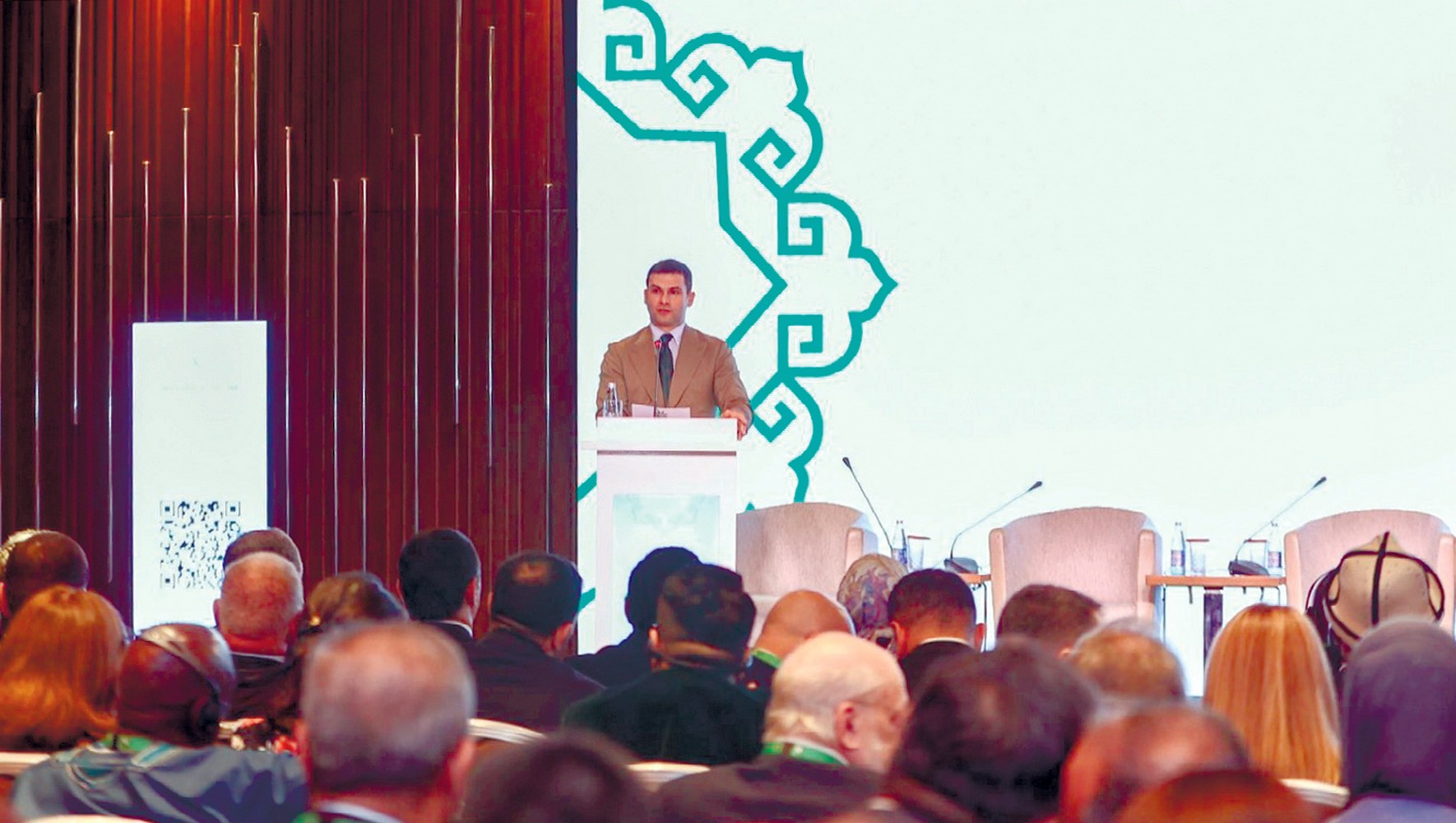
How to do this quickly and effectively was discussed at the II Azerbaijan Forum and Halal Business Exhibition (AZHAB) in Baku, organised by the Agency for the Development of Small and Medium Business (KOBIA) under the Ministry of Economy.
New standards of trust
Within the framework of the II AZHAB forum KOBIA signed two memoranda of understanding—one with Türkiye’s "Information Technology Valley" and another with Halal Development Corporation Berhad under the Ministry of Investment, Trade and Industry of Malaysia. It was also decided to create a network of small and medium enterprises (SMEs) of the Organisation of Islamic Cooperation (OIC); the Baku Declaration was adopted following the founding meeting.
Over two days officials, representatives of international organisations, academics, businessmen and specialists from more than 30 countries were able to interact. Views were exchanged and a wide range of issues were discussed: cooperation in trade and investment, access to international markets, the potential and new trends in the halal industry, the role of innovation and technology in this area, and more.
"AZHAB, organised for the second year, aims not only to establish economic ties but also to draw attention once again to the essence of halal trade—principles of honesty, trust and fairness. Without these values neither a real market nor sustainable success in entrepreneurship is possible. Azerbaijan is known as a country that has preserved these values for centuries while maintaining and developing a multicultural approach," said KOBIA Chairman Orkhan Mammadov.
In a world of unprecedented and rapidly changing economic, technological and social realities, the importance of unlocking the full potential of the halal industry cannot be overstated. According to Ahmad Kawesa Sengendo, Advisor to the OIC Secretary General on economic affairs, the potential and development of halal economic activity open huge opportunities not only for more than 1.9 billion Muslims but for all humanity. "Today halal is not only related to religion. The 'halal' label has rightly become a symbol of quality and health," he added.
It should be noted that from January to August 2025 the volume of trade turnover between Azerbaijan and OIC countries amounted to about $6 billion. At the same time, as First Deputy Minister of Economy Elnur Aliyev observed, a favourable business environment, benefits, privileges and incentives ensure increased investment in the country’s economy. "In addition, 10 bilateral free-trade agreements have been signed with neighbouring and regional countries, which increases trade flows from the Middle East to the CIS region and expands economic cooperation," Mr Aliyev reported.
Honest entrepreneurship is the most effective way to earn the trust of clients, partners and society. In this sense Azerbaijan advocates forming halal principles not only as a religious or ethical concept for entrepreneurs but also as a modern business model. "The halal economy today covers a market of about $3 trillion, but its value is determined not by figures but by trust. In this direction we work on improving halal certification systems, provide entrepreneurs with training and consulting services, and promote the halal brand internationally," Orkhan Mammadov informed.
Work is also under way to create favourable conditions for developing the halal industry in the liberated territories of Azerbaijan and in the Nakhchivan AR. According to the head of the Azerbaijan Food Safety Agency, Goshgar Tahmazli, this will become possible after the World Organisation for Animal Health grants them the status of territories free from particularly dangerous animal diseases.
Tourism as a value
International harmonisation of halal standards plays an effective role in developing the global halal industry, as it not only facilitates trade relations but significantly strengthens consumer trust in such products.
"Thanks to harmonisation of standards there is no need for repeated certification in each country. This saves time and money. More importantly, harmonisation increases consumer confidence. People are confident that a product certified as halal in one country will be reliable in another. This trust and efficiency make it easier for companies to access regional and even global markets, and as a result harmonisation of standards becomes a real business success," argues Ihsan Ovyut, Secretary General of the Institute of Standards and Metrology of Islamic Countries.
In this regard Azerbaijan can also become part of global halal tourism. If this direction is developed within the Organisation of Turkic States (OTS), new opportunities will arise for regional cooperation based on shared values, identity and mutual respect.
Merei Mukazhan, Deputy Secretary General of the OTS, speaking about the role of historical heritage in developing halal tourism in the Caucasus and Central Asia, noted that this topic is especially important for Turkic-speaking states where unique civilisational heritage is concentrated: "Historic cities and monuments reflect the best traditions of Islamic art and architecture. Halal tourism creates a unique opportunity to preserve this heritage and present it to the world as spiritual wealth. It also supports small businesses, gives an impulse to the development of arts and hospitality, and strengthens the local economy by attracting investment," Mr Mukazhan said.
Chair of the Committee on the Halal Supply Chain at Pakistan’s Standards and Quality Control Authority Muhammad Abu Baker added that SMEs account for 90% of the global halal business, create 70% of jobs and are responsible for 50% of harmful atmospheric emissions: "This places them at the centre of ethical, trade and climate diplomacy," he believes.
He also presented a new Triple Compliance Model for OIC member countries. "At the heart of the model is the concept of a 'green halal enterprise', which integrates a zero-waste supply chain and circular-economy principles, forming a more ethical and environmentally sustainable business environment," he emphasised.
The forum showed that Azerbaijan confidently asserts itself as a key player in the regional and global halal ecosystem. This model is not confined to religious boundaries—it is built on trust, sustainability and openness to new forms of cooperation. Its development will give impetus to a new business ethic that combines technological advancement, environmental responsibility and cultural values.
RECOMMEND:
 202
202