

FINANCIAL INNOVATIONS
From virtual assets to QR payments: Azerbaijan's shaping digital ecosystem
Author: Nurlana GULIYEVA
Amid the rapid digital transformation of the financial market, fintech companies, despite having entered the sector relatively recently, have managed to secure a position as one of the key service providers in a remarkably short time. Their flexible and innovative solutions not only simplify financial operations for consumers but also intensify competition, fostering the development of new technologies within this already progressive economic sector.
In Azerbaijan, the payment systems sector is also developing at a dynamic pace. The adoption of the Law "On Payment Services and Payment Systems" under the aegis of the country's Central Bank has created the foundation for forming a competitive fintech infrastructure, drawing on international experience and modern trends. The inclusion of electronic money institutions and payment organisations among the official service providers, along with the introduction of advanced digital technologies, has opened new avenues for innovation.
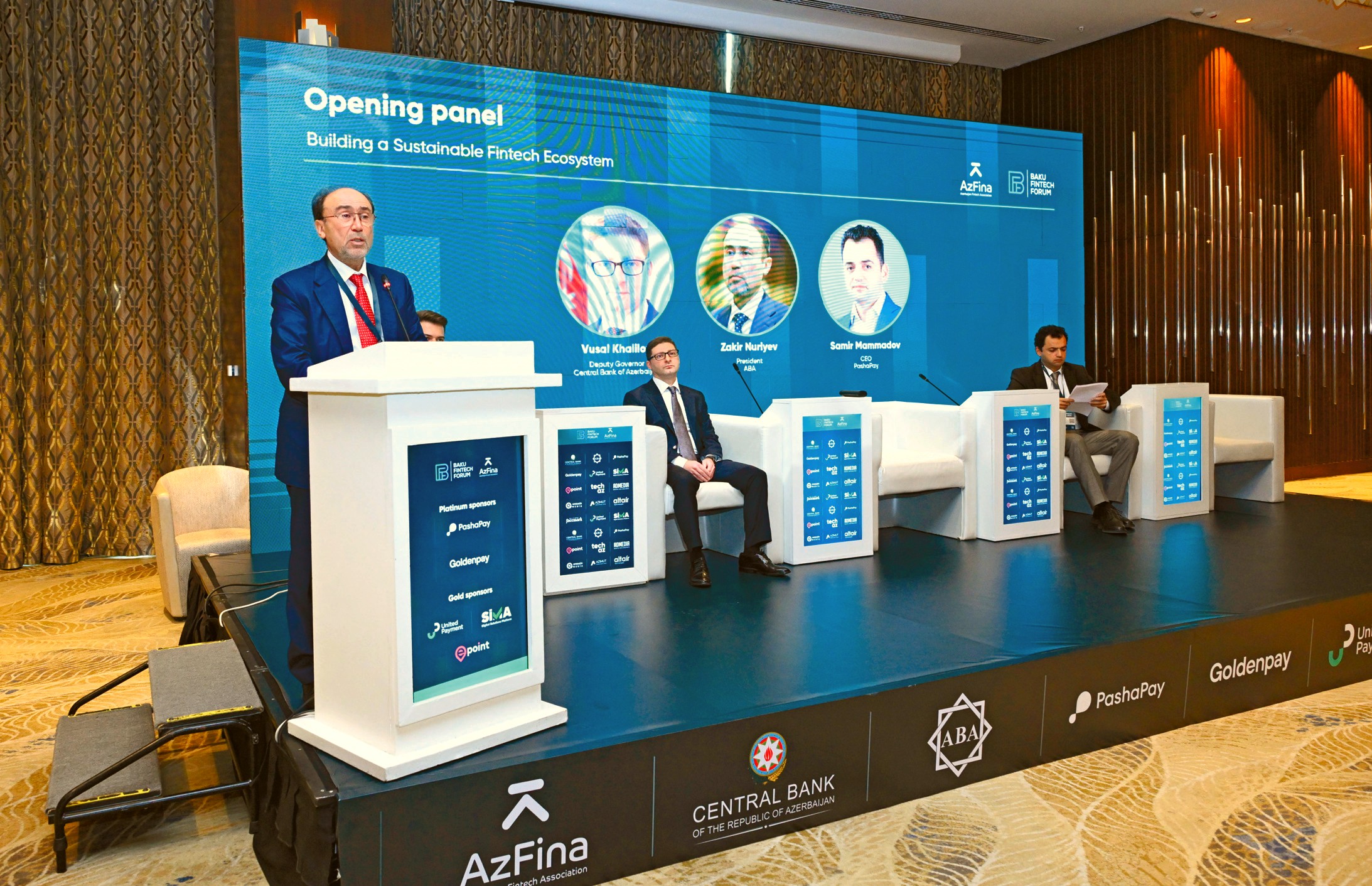
At the recent Baku Fintech Forum 2025, market participants discussed not only the successes achieved but also the necessary reforms and steps that will help ensure the further development of the country's fintech sector.
Regulation and development
As Vüsal Khalilov, Deputy Chairman of the Central Bank of Azerbaijan (CBA), stated in his speech at the forum, the regulator's main objective regarding supervision of the financial services market is to apply both classical mechanisms and risk-oriented control.
According to him, the monthly card turnover in the country has reached 10 billion ₼, which testifies to the country's transition to non-cash payments. "We are also observing growth in the use of instant payments. We have managed to transfer 10% of operations in the national payment system to the instant payment system, and we plan to increase this figure," added the CBA deputy chairman.
Meanwhile, the regulator continues to systematically build a modern ecosystem, where virtual assets, open banking, and the implementation of national payment standards are becoming key elements.
In particular, Fidan Tofidi, Director of the CBA's Department of Financial Technologies and Innovations, stressed that work on virtual assets holds an important place on the bank's strategic agenda. "As you know, a draft law on the regulation of virtual assets is being prepared. This is one of the CBA's priorities. Overall, we plan to interact closely with the market," she noted.
According to Tofidi, the Central Bank will begin preparations for a new strategic period as early as 2026: "There are one or two areas that we are considering as priorities. The work on virtual assets does not end simply with the preparation of the draft law. We have many plans."
These statements reflect the regulator's ambition not only to create a legal framework for digital assets but also to ensure their integration into the country's financial system. The introduction of transparent rules for the circulation of virtual assets is seen as a necessary step toward building trust and strengthening Azerbaijan's position in the regional fintech market.
In parallel, the CBA is implementing a large-scale project to introduce an open banking system, which provides for closer interaction between banks and fintech companies. As Fidan Tofidi reported, the integration of sub-fintechs into this system has begun in Azerbaijan: "This is not the end for open banking; we are just beginning. We have several stages. A letter has already been sent regarding the integration of sub-fintechs. Furthermore, for 'payment initiation,' we will first include banks, and then fintechs. But it does not end there, as the CBA, as a mega-regulator, plans to integrate both insurance and investment companies into the open financing system."
The initiative is being developed within the framework of the Financial Sector Development Strategy for 2024-2026. Its main goals are the digitalisation of services, the development of innovative products, and the enhancement of financial inclusivity. To implement the project, regulatory acts and technical infrastructure have already been prepared, ensuring the security and transparency of data exchange among market participants.
The "open banking" approach opens the way to forming a unified financial space where banks, fintechs, and insurance companies can jointly provide clients with personalised, convenient, and technologically advanced solutions. This intensifies competition, stimulates innovation, and improves the accessibility of financial services for the population.
An important step toward creating a digital ecosystem was the launch of the new national standard, AZ-QR. "We believe the implementation of the standard will be an important step in the sector's development. The main goal is to provide citizens with more inclusive services and give every bank and fintech organisation the opportunity to pay for purchases at any time using a QR code via their mobile application. This will also make a major contribution to the development of an open payment system," noted Vüsal Khalilov.
According to CBA product manager Emil Aghjayev, the AZ-QR standard was developed in accordance with international norms and is capable of functioning in different banking and fintech systems. "Since AZ-QR was developed in accordance with international standards, it integrates easily with the QR payment systems of other countries. This means that upon integration with Türkiye or Kazakhstan, tourists from those countries will be able to conveniently make QR payments in Azerbaijan using their own banking applications," he explained.
Such a practice is already widely applied in Asian countries, where QR systems are mutually recognised. Azerbaijan, by following this example, is strengthening its position as a regional fintech hub, striving for international integration and enhancing the competitiveness of its digital economy.
Problems and gaps
At the same time, due to its novelty, the fintech market still faces gaps in both its regulatory framework and its regulation. Speakers at the Baku Fintech Forum 2025 placed particular emphasis on these points, as the successful development of the market in the country depends on the swift resolution of these problems.
According to Zakir Nuriyev, President of the Public Union "Azerbaijan Banks Association" (ABA), improvements to the Law "On Payment Services and Payment Systems" should take into account the provisions of the third-generation Payment Services Directive being developed in the European Union's internal market. He cited the example of the requirement to store funds placed in electronic payment systems in more than one bank: "Such an approach makes it possible to further strengthen the security of payment service users' funds and increase the stability of electronic money organisations," Nuriyev asserts.
He also proposed legislatively expanding the spectrum of activities for fintech companies: "This will accelerate the introduction of innovations, make it possible to cover new client segments, and form a competitive ecosystem. It is important to use the best European practices in data management and the regulation of digital services."
The development of e-commerce in Azerbaijan is gathering increasing momentum, forming one of the most dynamic segments of the financial market. To ensure the sustainability of this trend and to more actively involve small and medium-sized businesses in the sphere of online trade, further improvement of approaches to the organisation of settlements and payment operations is required. According to Z. Nuriyev, settlement terms in e-commerce should be regulated by the market participants themselves, which will allow for increased flexibility and reduced financial costs.
The implementation of advanced data management tools remains an important objective. Market participants believe that to maintain equal competitive conditions and create a solid foundation for sustainable development, it is necessary to use European experience in data management, including the development of legislative requirements for their storage, use, and protection. This will ensure equal access to information for all ecosystem participants and strengthen trust among banks, fintech companies, and consumers.
"As is known, 87% of non-cash payment operations carried out within the country using payment cards are attributable to e-commerce," noted Z. Nuriyev.
To enhance operational efficiency and adapt to international standards, Azerbaijan must more actively utilise the potential of the Instant Payment System. Key steps in this direction will include the introduction of a unique identifier structure based on the international bank account number and the opening of payment accounts in accordance with this model. "As competition in the ecosystem grows, the anticipation of this requirement's implementation will play an important role in attracting payment service users on equal terms," stressed Z. Nuriyev.
He also stressed the importance of joint measures to counter cyber-fraud. According to the head of the ABA, cooperation between banks and fintech companies must include improving the efficiency of information exchange and involving all market participants in these processes. "In addition to creating a centralised platform, these measures must include individual measures by each payment service provider, improving infrastructure capabilities, attracting additional resources, and implementing preventive measures," Nuriyev stated.
Alongside this, establishing uniform standards for open banking is of key importance, as this will create conditions for equitable integration relationships among payment service providers. This will also help accelerate data exchange, standardise approaches to user identification, and stimulate the development of innovative products.
The regulatory testing (sandbox) regime, which serves as an important instrument for developing innovation in the fintech sphere, merits separate attention. Experts note that the testing process must become continuous and sustainable, ensuring a constant acceptance of applications and the involvement of all interested parties. Despite the fact that individual projects in the "sandbox" may end in failure, the very fact of their implementation contributes to the growth of competencies and the formation of an innovative culture within the ecosystem. "We believe that the control and regulatory measures applied in the regulatory testing regime should differ from the traditional approach," said Z. Nuriyev.
Integration and cooperation
Interaction with partners and the use of advanced foreign practices make it possible to accelerate the development of digital finance and ensure the sustainability of transformational processes.
One of the main examples of such integration is the Fintech Alliance of Turkic-Speaking States (TURKFIN), a regional platform created on October 9, 2018, in Istanbul. The alliance was established based on an agreement signed by representatives of the fintech associations of Türkiye, Azerbaijan, Kazakhstan, Uzbekistan, and Kyrgyzstan. Its mission is to strengthen mutual cooperation in the field of payment services, electronic money, and digital banking, as well as to develop the regional fintech ecosystem through joint projects, educational initiatives, and industry events.
The creation of TURKFIN was an important step toward forming a unified digital space among countries united by similar economic and technological interests. The alliance plays the role of a communication platform where participants exchange knowledge, implement joint standards, and promote the mutual compatibility of payment solutions.
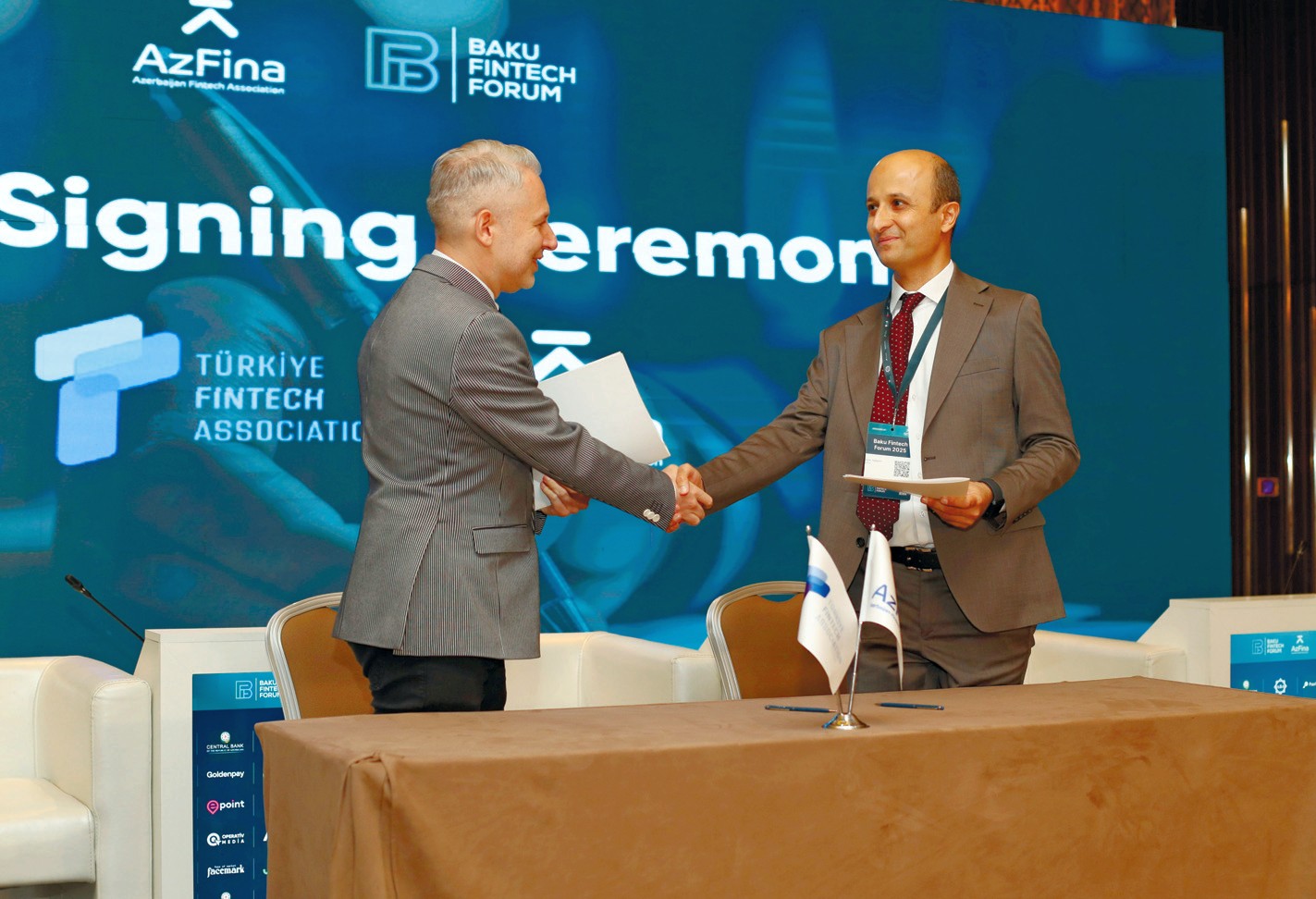
At the recent Baku Fintech Forum 2025, cooperation within the TURKFIN framework was further developed. During the event, the Azerbaijani (AzFina) and Turkish fintech associations signed a memorandum of understanding, which solidified the parties' intentions to develop partnerships and expand joint initiatives in the sphere of digital finance.
Furthermore, AzFina concluded a memorandum of understanding with an International Consulting Company, marking another step toward the globalisation of the national fintech industry. The documents provide for strengthening partnerships, promoting innovative solutions, exchanging expert experience, and expanding the participation of Azerbaijani companies in international projects.
Thus, fintech is becoming one of the key pillars of economic growth in Azerbaijan, shaping a modern financial infrastructure and expanding the opportunities for market participants. The consistent policy of the CBA and interaction with international partners are making it possible to accelerate the implementation of innovations and strengthen trust in digital services.
RECOMMEND:
 238
238

