

PEACE SUMMIT
Trump’s Middle East strategy underlines a new phase in American foreign policy
Author: Samir VELIYEV
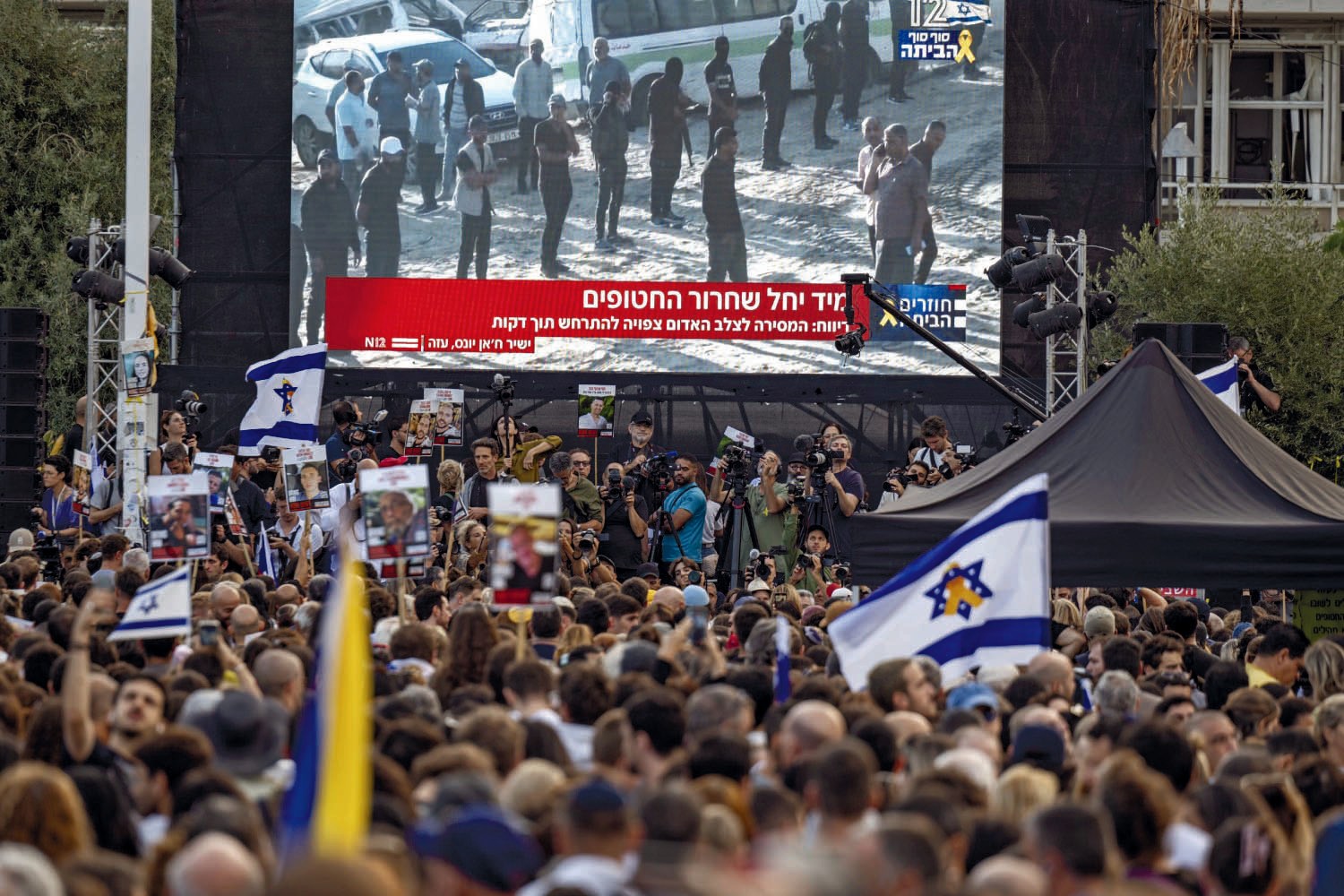
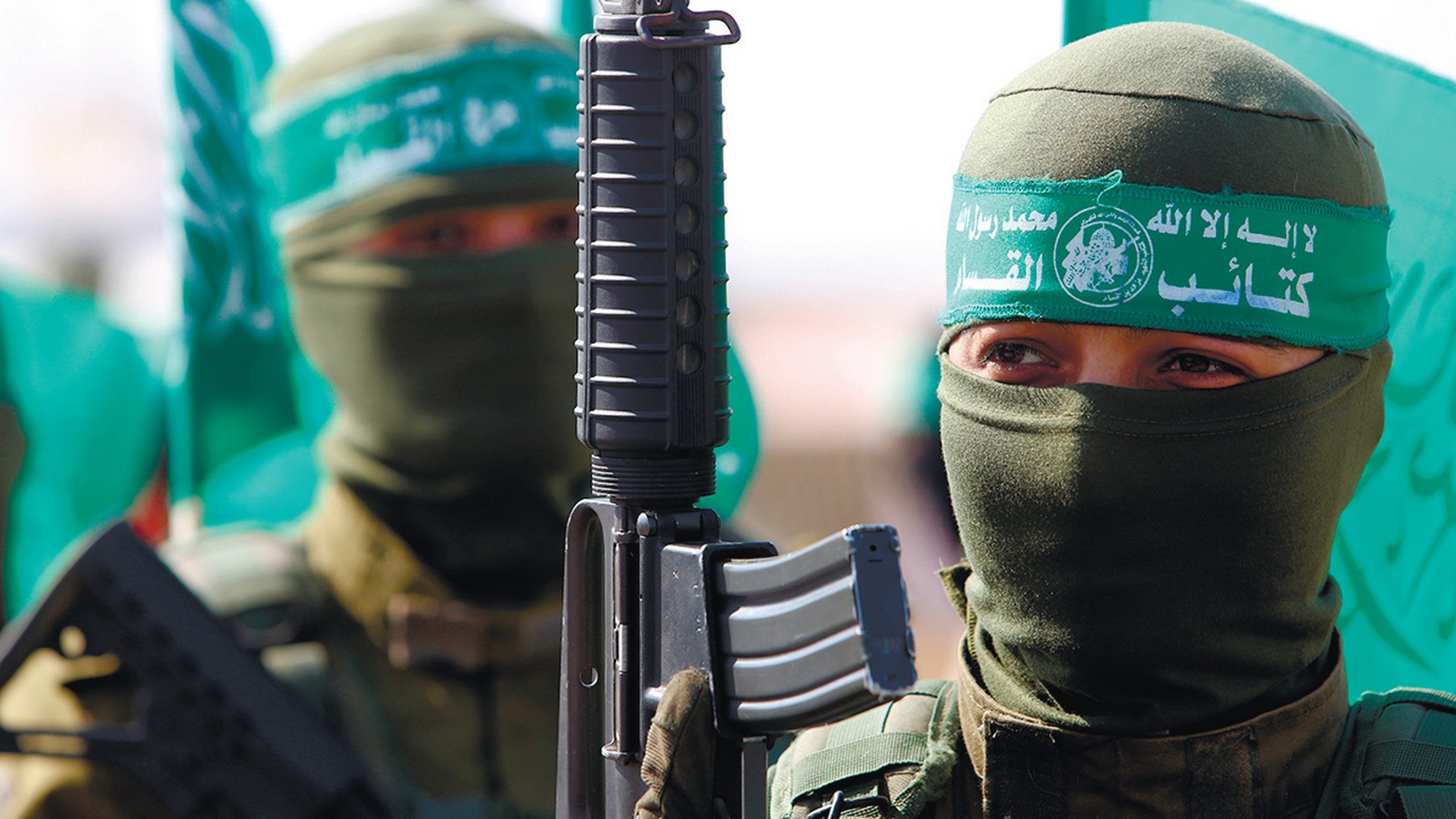
Although US President Donald Trump was not nominated for the Nobel Peace Prize, this does not diminish his efforts to secure peace in the Middle East, which culminated in adoption of his plan to resolve the conflict between Israel and HAMAS. HAMAS has already begun implementing the plan by handing over the remaining 20 living hostages to representatives of the Red Cross.
A plan supported with caveats
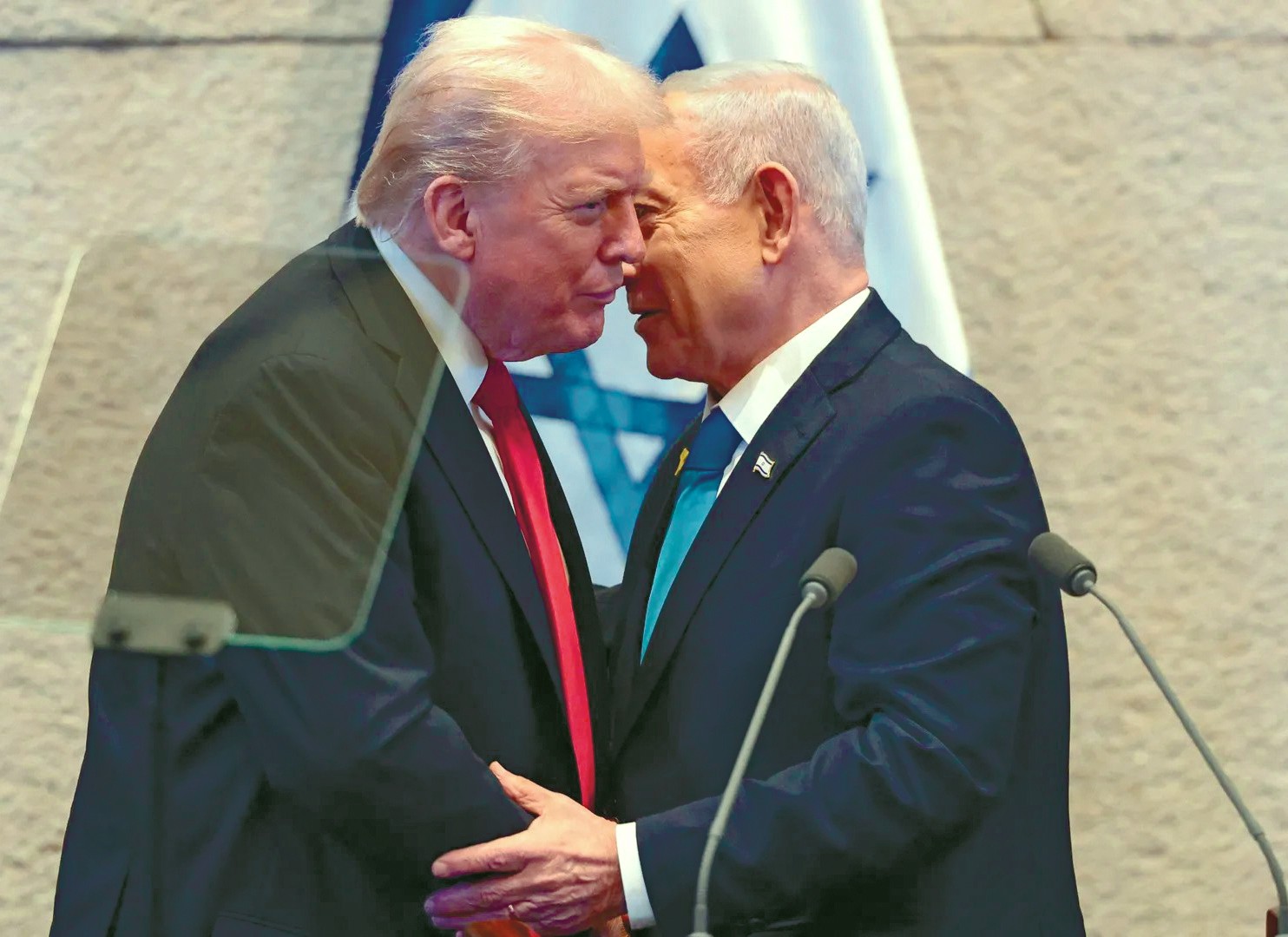
On September 29, during Israeli Prime Minister Benjamin Netanyahu’s visit to Washington, Donald Trump presented his plan to resolve the Gaza conflict—a document that immediately became the central theme of Middle East policy. The plan’s twenty points include cessation of hostilities, release of hostages, dismantling HAMAS’s military infrastructure, creation of international stabilisation forces and a gradual transition to civilian administration under international oversight. Under humanitarian language there is a goal: to restore governability in the Middle East through a reboot of American influence and a recalibration of the regional balance of power.
For Washington this initiative signifies a return to the traditional role of "global arbiter," but in new circumstances—where direct military presence is less effective, and political influence is sustained through a network of alliances, economic projects and diplomatic initiatives. By presenting the document at the height of the Palestinian–Israeli confrontation, Trump demonstrated that the US can still set the agenda and shape regional security mechanisms.
The plan’s main feature is that it does not offer a final solution to the Palestinian question. On the contrary, it creates a flexible framework for a process in which Washington retains the coordinating role while delegating part of the responsibility to regional actors. For the first time in many years the US is attempting to build an architecture of "shared control" instead of unilateral dictate—a step that could alter the model of interaction between the West and the Arab world.
The international reaction confirmed both the ambition and the vulnerability of this design. US European allies—France, Germany and Italy—welcomed the initiative as a step toward de-escalation but stressed that lasting peace is impossible without the prospect of a two-state solution and adherence to international law. Europe kept its customary stance: formally supporting the US but with caveats to preserve diplomatic autonomy.
Arab states reacted more pragmatically. Saudi Arabia, Egypt and the UAE saw the plan as a tool for measured détente and an opportunity to consolidate their roles in regional security. Other countries in the Islamic world, such as Türkiye, traditionally supportive of the Palestinians, signalled readiness to participate in diplomatic mechanisms provided they do not contradict the interests of the Muslim world. Pakistan, Indonesia and Iran adopted a cautious distancing, insisting on guarantees for Palestinian self-determination. Thus Trump’s plan did not produce a neat division of camps but rather a flexible reconfiguration of alliances where each state seeks its own diplomatic gain.
For Israel the document has a dual character. On one hand it allows Netanyahu to demonstrate loyalty to Washington and ease international pressure while retaining security control. On the other, it creates domestic tensions: the prime minister’s right-wing partners demand firm guarantees for continued military presence and border oversight. Thus Israel supports the plan more out of necessity than conviction. The very timing of its publication during Netanyahu’s visit is symbolic: Trump showed he can keep allies aligned with his initiatives, and Israel showed it is prepared for dialogue without major concessions.
Between concession and survival
The most unexpected element in the unfolding diplomatic mosaic was HAMAS’s stance. In early October the movement sent intermediaries an official response to the American initiative in which, for the first time in a long time, it expressed willingness to compromise. HAMAS agreed to release all surviving hostages and return bodies of the dead on condition of international guarantees and creation of a "suitable environment." Movement representatives also declared readiness to hand over Gaza’s administration to an independent technocratic body. Observers saw this step as a possible turning point—or at least a forced adaptation.
However, internal contradictions within HAMAS make any agreement extremely fragile. Political leadership in Qatar leaned toward a diplomatic course, seeing the plan as a chance to alleviate the humanitarian catastrophe and preserve the movement’s political standing. Meanwhile military commanders in Gaza viewed negotiations as a threat to internal control and categorically rejected the idea of disarmament without reliable guarantees. Thus the movement found itself squeezed between political necessity to make concessions and existential fear of losing identity. That is why initial reports of HAMAS’s readiness for gradual disarmament were promptly denied by its press service—a demonstrative signal that public flexibility does not equal readiness to capitulate.
It emerged that to "save the deal" US special envoy Steven Witkoff and the American leader’s son-in-law Jared Kushner met personally with HAMAS representatives. Apparently their efforts produced the desired results.
In this complex configuration the mediators play a key role. If previously Qatar was the main communication channel with HAMAS, the negotiation centre has now noticeably shifted to Cairo. Egypt, leveraging the American initiative, seeks to cement its status as the principal regional moderator by controlling border crossings, humanitarian flows and lines of communication between Israel and the Palestinians. This redistribution of influence not only strengthens Cairo’s position but also creates a new axis of interaction between moderate Arab regimes and the US. Qatar is forced to accept a secondary role—as financier and unofficial intermediary.
Notably, after Israel and HAMAS announced on October 8 the "first phase" agreement—prisoner exchange and partial withdrawal of Israeli forces from some Gaza areas—Cairo emerged as one of the main beneficiaries of the process. The international community greeted this development with guarded optimism: Egypt, Jordan, Saudi Arabia, the UAE, Türkiye, Pakistan and Indonesia voiced support. UN Secretary-General Antonio Guterres called the agreement "a rare ray of hope" amid a string of escalations. Although experience from past years advises caution about its sustainability—such accords often collapse due to lack of control and trust—concrete steps by the parties indicate there is "no turning back." What distinguishes the present situation is that Trump’s initiative creates an external political framework in which even partial concessions acquire strategic value for the US and key regional actors. Unsurprisingly, within the first hours of the agreement HAMAS handed all remaining hostages to Red Cross representatives. Donald Trump himself, visiting Israel and addressing the Knesset, declared an end to the war in Gaza, stressing that Israel "has won everything it could by force," and that the region now has time for peace and prosperity.
Hundreds of thousands of Gaza residents, exhausted by war, were able for the first time in a long while to breathe easily, free from fear of artillery shelling and hopeful for a peaceful future.
Political calculation and limits of American diplomacy
For Donald Trump the Gaza Plan is not only a diplomatic move but also a domestic political bet. With elections approaching the White House seeks to consolidate the image of a president "capable of stopping the war."
However, implementation faces structural constraints. Establishing international stabilisation forces requires a UN Security Council mandate, unlikely amid confrontation with Russia and China. Europe, burdened by its own crises, is reluctant to finance Gaza’s reconstruction, while Gulf Arab patrons prefer investing in infrastructure rather than security. As a result the initiative risks remaining a symbol of diplomatic activity rather than a functioning mechanism.
Nevertheless its political value for Washington is substantial. The plan allows the US to retain influence in a region where other external players, primarily China, are also seeking traction. Domestically, Trump aims to demonstrate to voters that he can secure "peace through strength" without military campaigns—in contrast to Democrats, whom Republicans traditionally portray as weak. "Peace through strength" for Trump acquires a post-intervention dimension: America manages crises not through direct intervention but via sanctions, trade levers and diplomatic mediation.
For Israel the plan is a means to ease international pressure and shift responsibility for the humanitarian crisis onto international structures. By retaining military control Israel gains breathing space for internal stabilisation and for strengthening ties with moderate Arab regimes. This could even form a new axis—the US, Israel, Egypt and Saudi Arabia—around which a renewed architecture of regional security is built.
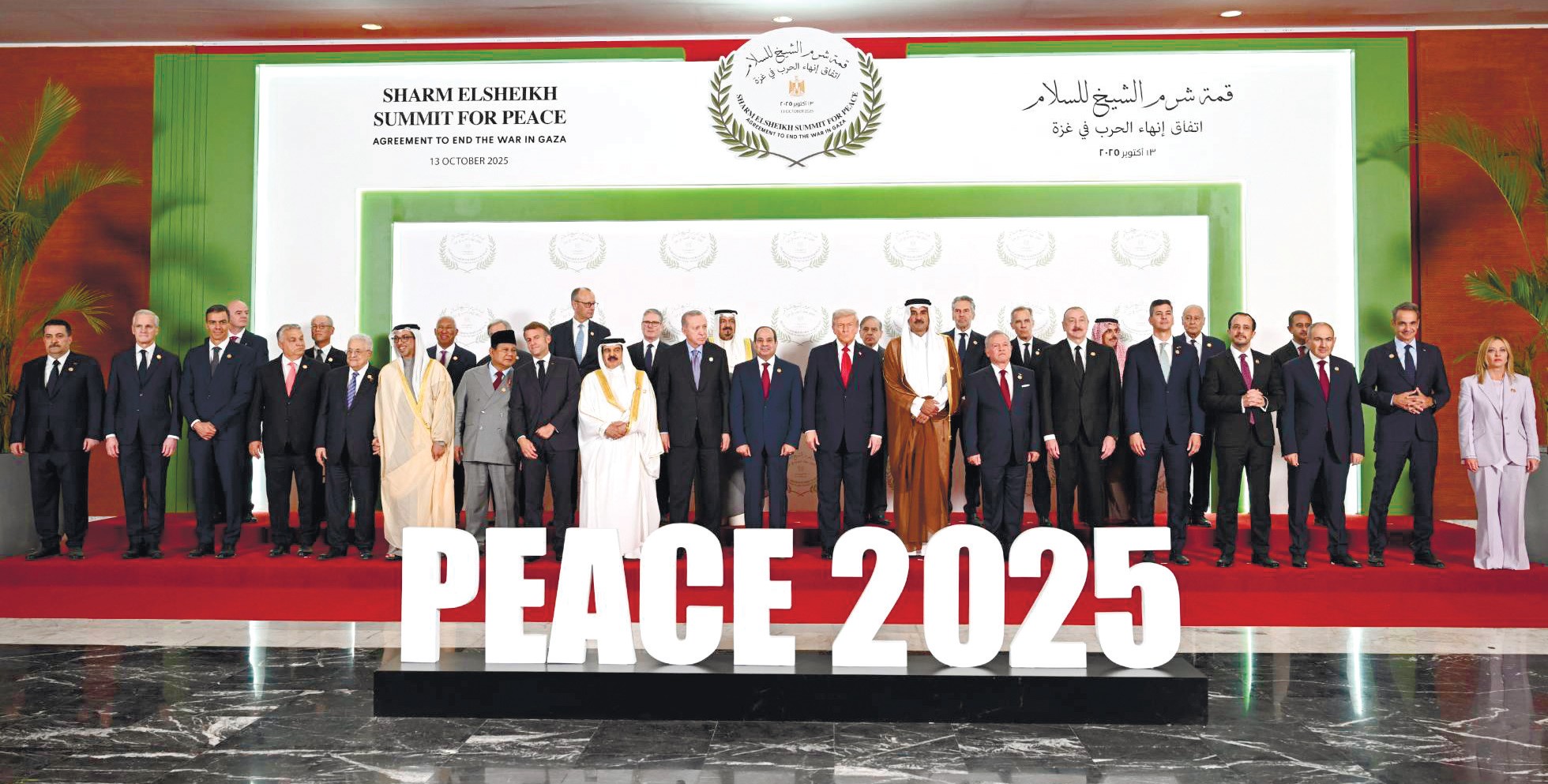
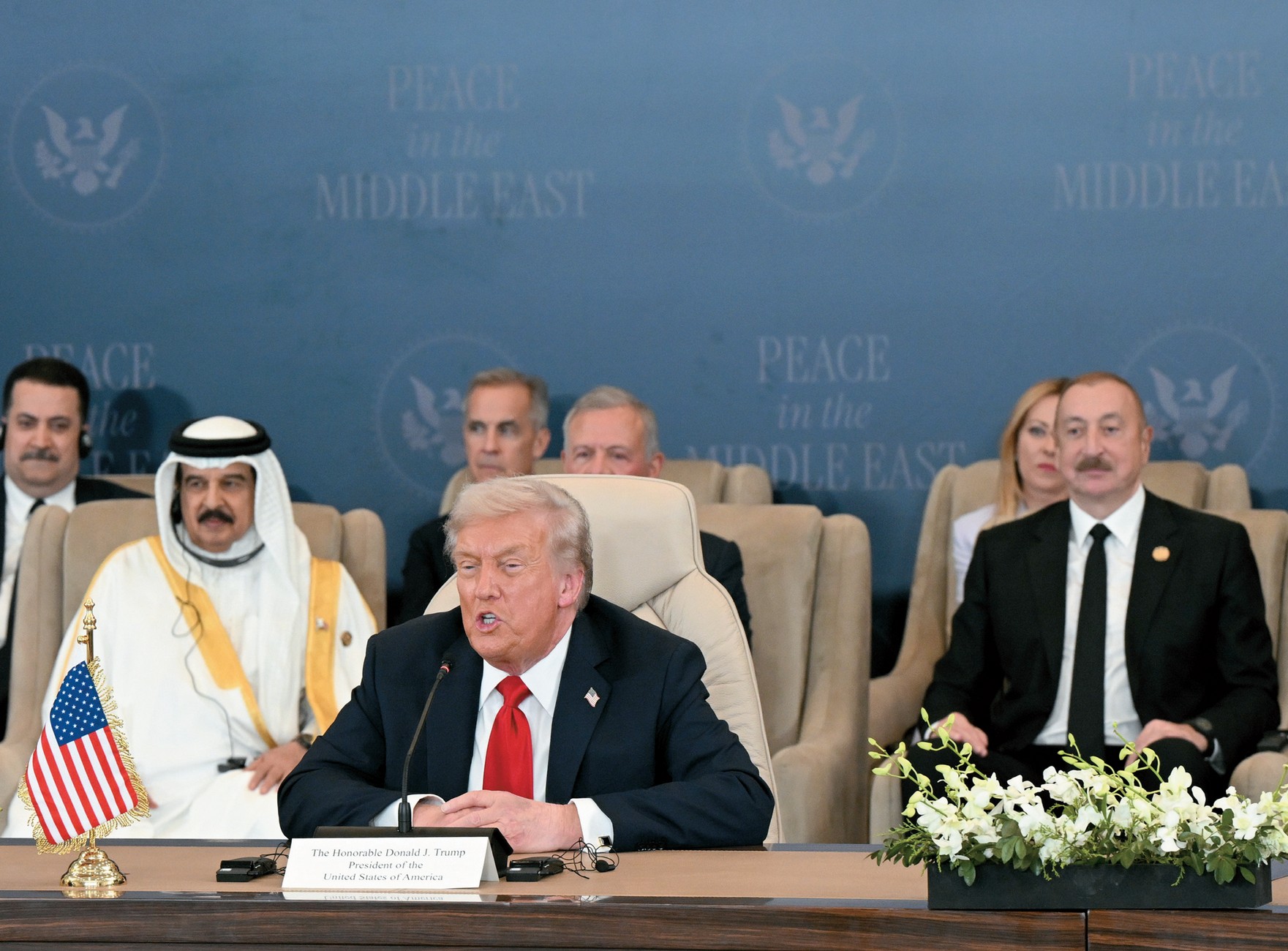
The culmination of near-global recognition of the peace agreement’s significance was the "peace summit" in Egypt’s Sharm el-Sheikh. It was an attempt to institutionalise diplomatic efforts, uniting under one platform leading Western powers, the Arab world and international organisations. Presence of Donald Trump, UN Secretary-General Antonio Guterres, and the presidents of France and Türkiye, as well as leaders of Jordan, Pakistan, Italy and Spain, lent the meeting the character of a mini-UN, showing rare agreement on key Middle East issues. During the summit leaders of the US, Egypt, Qatar and Türkiye signed a ceasefire agreement for Gaza that had been reached with the involvement of mediators and was based on the peace plan proposed by Donald Trump.
Special symbolism attached to the attendance of Azerbaijani President Ilham Aliyev and Armenian Prime Minister Nikol Pashinyan—whose Washington meetings two months earlier produced agreements that opened a new chapter in South Caucasus history.
The American leader also did not fail to praise the Azerbaijani president’s role in establishing durable regional peace. Greeting his colleague on the summit sidelines, Trump said of Azerbaijan’s president that "he is peace-loving, but better not to quarrel with him."
Speaking about settlement of the Armenian–Azerbaijani conflict, Trump recalled his meeting with the leaders of Azerbaijan and Armenia in Washington on August 8: "When I met them in the Oval Office they sat on opposite sides. The war between the two countries lasted 31 years, but when we finished our work, they hugged. Now they are friends and get on very well. So I want to thank you both (the president of Azerbaijan and the prime minister of Armenia). It is incredible," Trump added.
All these important events were ignored by the Nobel Committee: the Peace Prize was not awarded to the candidate many considered most deserving—US President Donald Trump. As Trump’s special envoy Paolo Zampolli aptly noted: "An ironic fact—Alfred Nobel’s fortune was created on Azerbaijani oil, yet the prize ignores the man who helped achieve peace in Azerbaijan." Zampolli suggested establishing an alternative—the Trump Prize.
In any case, the Gaza Plan is becoming less an instrument of conflict settlement than an indicator of a new stage in American foreign policy—pragmatic, limited and geared to symbolic impact. For Trump it serves as a platform where domestic and foreign-policy interests intersect: even a partial ceasefire can be presented as a diplomatic victory and proof the US can preserve its status as global arbiter without direct intervention. However the durability of this strategy will depend less on Washington’s rhetoric than on regional actors’ willingness to accept the new configuration of power and to treat America not as a hegemon but rather as a coordinator.
RECOMMEND:
 242
242

