

SANCTIONS AND ESCALATION
Should we expect yet another US-Israeli strike on Iran?
Author: Natig NAZIMOGHLU
Iran and its nuclear programme are in the focus of international agenda again. While the UN and the European Union have restored large-scale sanctions against Tehran, Israel, with US backing, is considering the renewed use of force against the Islamic Republic.
End of diplomacy?
The latest assessments by the International Atomic Energy Agency (IAEA), which note that Iran is the only non‑nuclear‑weapon state enriching uranium to 60% (whereas 3.67% suffices for peaceful nuclear energy), and the failure to reach a new deal with Tehran led to an important decision by the UN Security Council. That decision returns measures that had been suspended in 2015 after the adoption of the Joint Comprehensive Plan of Action (JCPOA) on Tehran’s nuclear programme. One clause of the agreement concluded between Iran and the six international negotiators (US, Russia, China, the United Kingdom, France, Germany) provided for the reimposition of formal UN sanctions in the event of significant breaches by Tehran. When other participants in the agreement complain about Iran, Security Council members cannot use the veto to prevent the imposition of sanctions. Consequently, Russia and China, who had opposed the Western position on the Iranian issue, were unable to employ their veto.
Following the restoration of UN anti‑Iran sanctions, the EU took a similar step. In a statement, the EU's High Representative for Foreign Affairs and Security Policy, Kaja Kallas, said intensive diplomatic contacts with Tehran over the past month had failed. Therefore, taking account of the Security Council decision, Brussels immediately reinstates all restrictive measures against Iran. Kallas emphasised that the reinstatement of sanctions "should not mark the end of diplomacy", and that Brussels hopes negotiations will continue.
Meanwhile, the largest share of anti‑Iran sanctions rests with the US. European states that formally did not support them have had to take this into account, to avoid falling under secondary American sanctions. Overall, the restrictions provide for an arms embargo, financial isolation, a ban on export of dual‑use goods to Iran, and prohibition on importing petroleum products, metals and other commodities that underpin its economy.
How will Iran respond to the toughening of international sanctions? So far its initial reaction signals an intention to "respond decisively" to "any actions directed against the interests and rights of the Iranian people." Iran’s Foreign Ministry announced a review of cooperation with the IAEA and a refusal to negotiate with the "E3"—the United Kingdom, France and Germany—accusing them of having "pursued a destructive course on the nuclear issue in recent months and abused their JCPOA authorities in the interests of the US at the UN Security Council."
In addition, members of the Iranian parliament have raised the prospect of adopting a law that would provide for the Islamic Republic’s withdrawal from the Treaty on the Non‑Proliferation of Nuclear Weapons (NPT). But will Tehran really go so far in its nuclear dispute with Western opponents?
Apparent divisions over Iran’s future policy exist within the Iranian leadership. This underlies criticism from the conservative camp of the foreign policy course pursued by President Masoud Pezeshkian and Foreign Minister Abbas Araghchi. They argue for continuing talks with the West even after the UN sanctions were reinstated, and they reject the prospect of Iran withdrawing from the NPT. As is customary in Iranian political practice, the final word will belong to Supreme Leader Ayatollah Ali Khamenei, who must decide whether Tehran should return to negotiations and ultimately accept Western demands to roll back the Iranian nuclear programme.
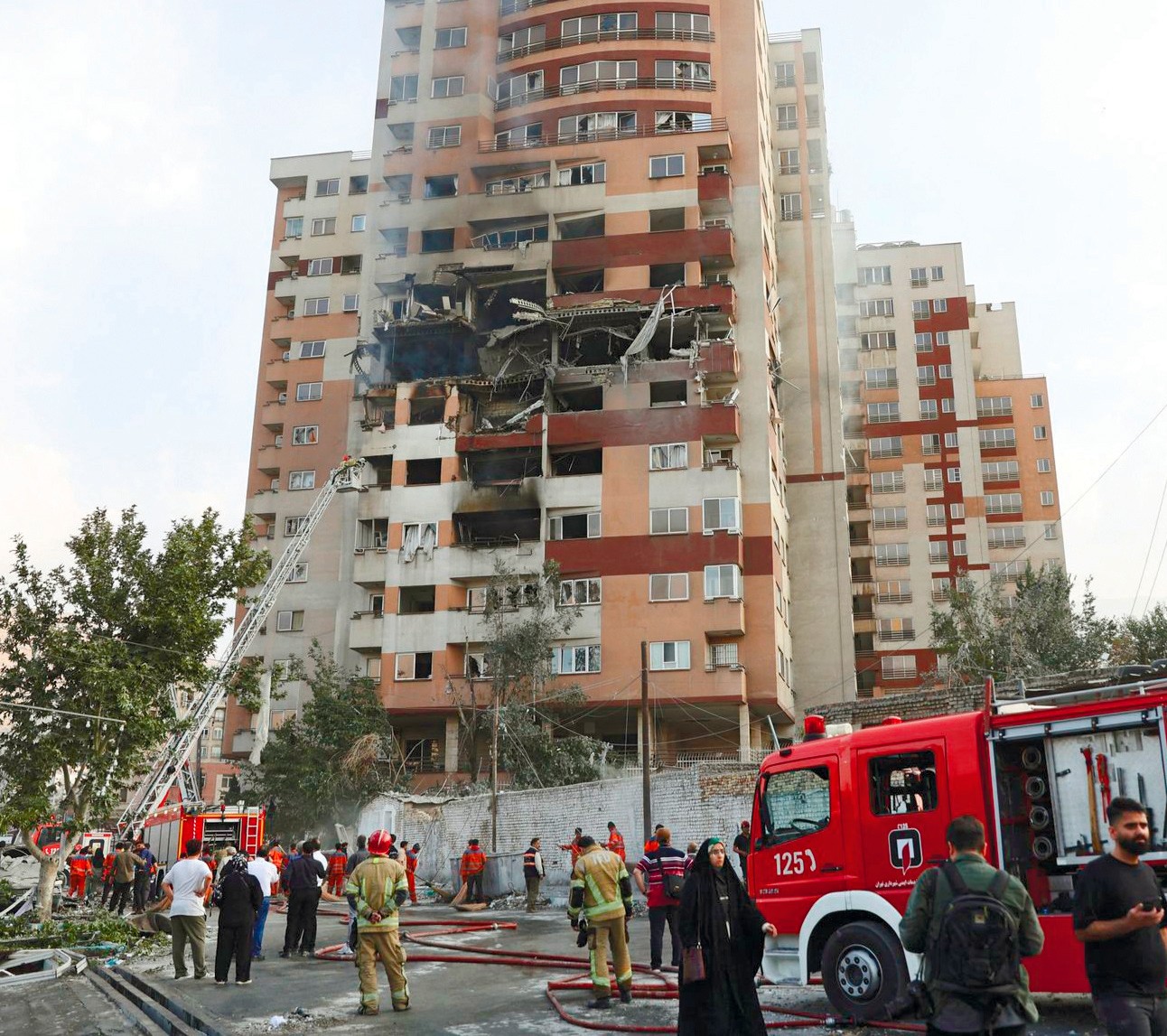
For now, in response to demands—principally by the US—that it cease uranium enrichment entirely and permit IAEA inspectors access to all Iranian nuclear facilities (in exchange for partial sanctions relief and the resumption of Iranian oil exports), Tehran reports the imminent restoration of facilities struck by Israel and the United States during the 12‑day June war.
Israel remains one of the key actors in the Iran‑related configuration. Prime Minister Benjamin Netanyahu has asserted that Israel knows where Iran stores enriched uranium hidden before and during the 12‑day war. According to Netanyahu, Israel shared this information with the United States. This, together with the latest UN and Western sanction decisions, provides a backdrop for speculation about a planned new military operation by the US and Israel against Iran.
A "wounded beast" as a target
That Israel is capable of renewing active military operations against Iran is not in doubt. Israeli media report that, after the UN reimposed anti‑Iran sanctions, the Israel Defence Forces (IDF) are at a state of full combat readiness. Statements by Israeli politicians, not only by those in power, are telling. Former defence minister Avigdor Lieberman, now leader of the "Our Home Israel" party, urged compatriots to prepare for a new war with Iran. According to him, the military operation "The People as a Lion" brought Israel tactical successes but failed to achieve the main objective—eliminating the Iranian threat—and Iran, left in the position of a "wounded beast", poses special dangers and acts more decisively.
Clearly, Israel aims to destroy Tehran’s nuclear programme and, in addition, to remove the hostile regime that the Islamic clerical state represents for the Jewish state. Israel also understands that these strategic objectives (which, Israel believes, can be achieved only by force) can be accomplished only with the support of its closest ally, the United States. Hence Israel’s effort to persuade Washington that a new strike on Iran may become necessary—and that it could be required soon, and in the interests not only of Israel but of the US as well.
Prime Minister Netanyahu explicitly stated that Iran is developing new weapons that could threaten the US. He claimed Tehran is creating ballistic missiles with ranges up to 8,000 km. "Add another 3,000 km—and Iran's nuclear weapons could threaten New York, Boston, Washington, Miami and Mar‑a‑Lago," Netanyahu warned, thereby implying that Israel is "effectively defending America" from the Iranian threat.
The US stance on Iran’s nuclear programme is as unequivocal as Israel’s: Iran must not possess nuclear weapons. This position has been repeatedly expressed by President Donald Trump and members of his administration. At the IAEA's annual General Conference in Vienna, US Energy Secretary Chris Wright declared that "Iran’s nuclear pathway to weapons, including all uranium enrichment and plutonium reprocessing capabilities, must be completely dismantled."
But do the US intend to strike Iran to resolve its nuclear programme once and for all? And are they prepared to back a new Israeli attack on Iran in practice?
Western media report that the US is deploying military aviation to the Middle East, including tanker aircraft. Similar steps were taken shortly before the start of the 12‑day war. Simultaneously, the aircraft carrier USS Nimitz was redirected from the South China Sea to the Persian Gulf. Military analysts see this as confirmation that US air power, even if not planning to strike Iran directly, is at least preparing to defend Israel from retaliatory rocket and drone strikes by Iran should a new war begin.
Moreover, the Pentagon convened an emergency meeting of military command where Defence Secretary Pete Hegseth announced a new strategy described as "waging war and preparing to win." This also indicates that the US do not rule out direct involvement in a kinetic operation against Iran, even if the operation is carried out primarily by Israel rather than by US forces themselves.
Inside Iran, the risk of renewed military escalation appears to be recognised. Official media, especially those aligned with Supreme Leader Khamenei, publish materials arguing a "high probability" of a new large‑scale conflict with Israel and the US. Calls to be ready for a "difficult war with the enemy" and to strengthen internal unity among Iranians are therefore being voiced loudly.
Thus, all parties involved in the conflict in one way or another admit the possibility of a new military clash. That possibility is considered also in light of the nearing Palestinian‑Israeli ceasefire and the end of the Gaza war, which could free the Jewish state to pursue a new kinetic campaign. The international community, meanwhile, has an interest in restoring a negotiation process between the West and Iran, because such a step could prevent the Middle East from descending into another broad‑based war. The coming months will show whether this peaceful option has any realistic chance of being implemented.
RECOMMEND:
 193
193

