

DREAM VERSUS ILLUSIONS
Georgian Dream wins, Europe criticises, Rose Revolution attempt fails
Author: NURANI
In most countries around the world, local elections don't usually spark much voter interest. They involve choosing city officials, and the topics are strictly local, not international. People often see these elections as a gauge of public sentiment. After that, the analysis kicks in. Parties unhappy with the outcome are expected to "learn from their errors," while experts and pundits share their takes, and so on.
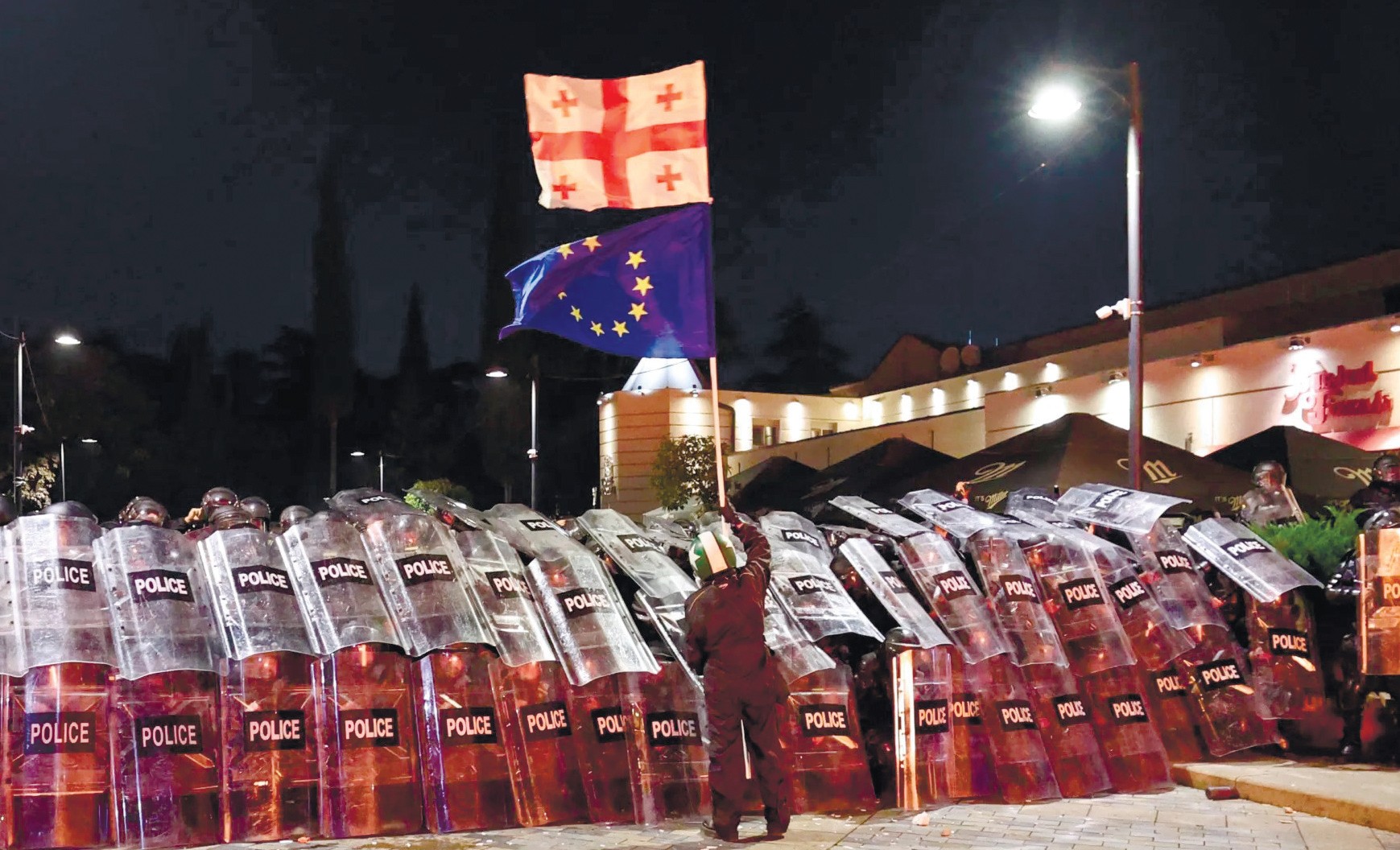
That said, Georgia's municipal elections stand out as an outlier. The country is facing major political turmoil, including persistent protests, an effort to overrun the presidential palace, and claims of a coup attempt. Georgian officials have labeled the opposition as "foreign agents," implying they're swayed by European nations. In turn, Europeans have directly charged Georgia's leaders with undermining democracy and suggested they're too cozy with Russia.
Baku and Tbilisi share a solid strategic alliance. Azerbaijan is a key investor in Georgia's economy. Azerbaijani oil and gas pipelines, along with the Baku-Tbilisi-Kars railway, run through Georgian land. It's in our nation's interest to foster peace and stability there. Ties between Azerbaijan and Georgia are state-to-state, not tied to specific leaders, and they've grown to a point where domestic politics can have some impact, though limited. Baku is keeping a close eye on developments in Tbilisi, where things are unfolding dramatically.
The ruling party won, but...
The October 4 elections delivered a clear win for the ruling Georgian Dream party, with its candidates taking seats in nearly every municipality. Prime Minister Irakli Kobakhidze shared the outcomes of this recent vote, noting that the party's mayoral picks and coalition lists averaged 75% support from voters across all 64 cities and districts.
That said, there's a notable catch. Turnout hit a record low, dipping below 50% participation. The two biggest opposition groups—the United National Movement and For Change—sat out the election entirely. Both are seen as closely linked to ex-President Mikheil Saakashvili, who's now behind bars. According to a joint statement from EU foreign policy chief Kaja Kallas and enlargement commissioner Marta Kos, Georgia's local elections unfolded "amid widespread repression" of the opposition. They argued that "months of raids on independent media, crackdowns on civil society, arrests of opposition leaders and activists, plus tweaks to election laws benefiting the ruling party have seriously hampered fair voting," and that blocking international observers "eroded the process's transparency."
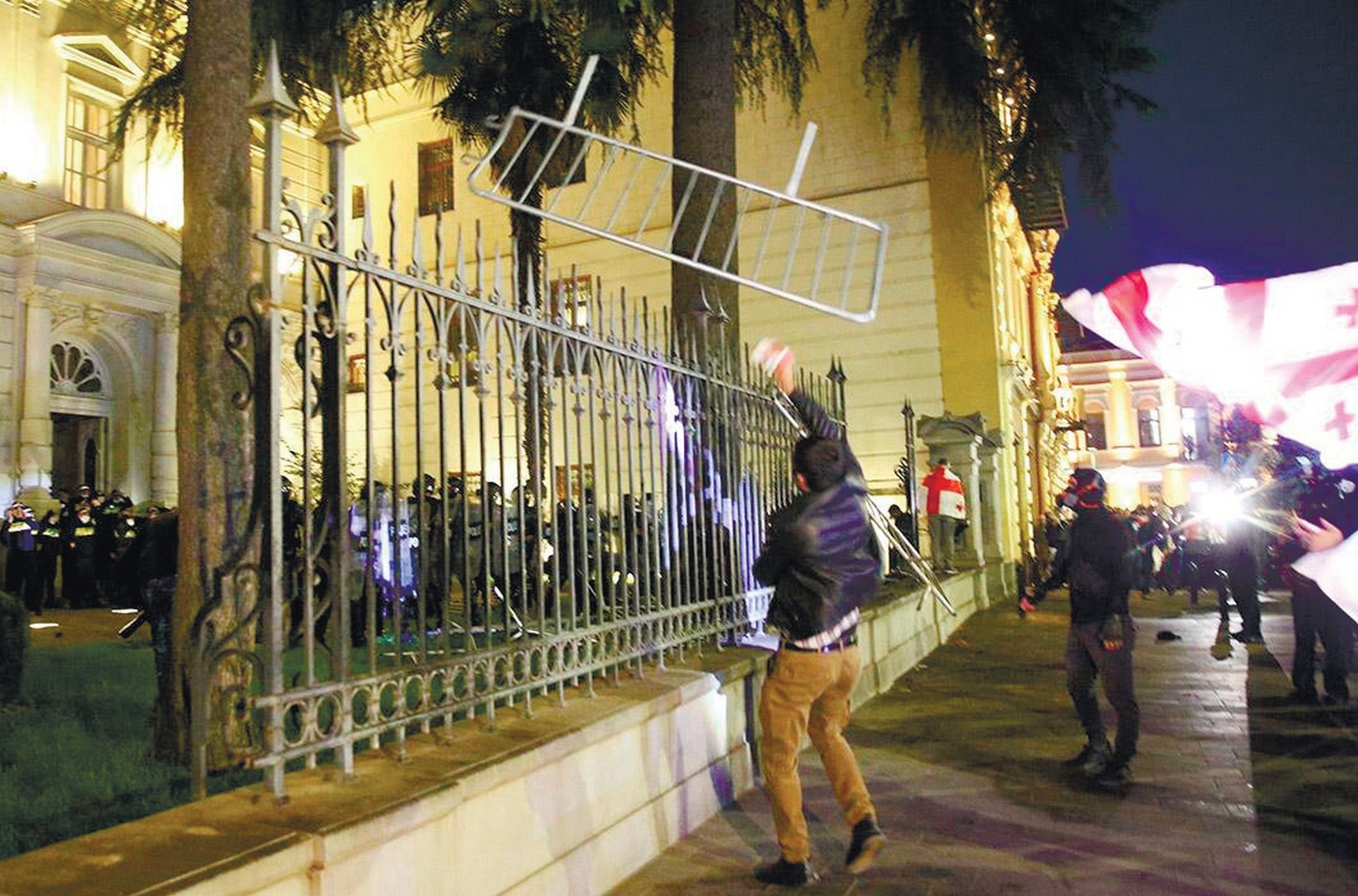
Kallas and Kos urged restraint from both the government and opposition. Yet right after the results came out, hardline protesters didn't just hold a rally where they burned Russian flags—they also tried to storm the presidential palace. Police pushed back with tear gas. Authorities arrested five key opposition activists: opera singer Paata Burchuladze, ex-Prosecutor General Murtaz Zodelava, and figures Irakli Nadiradze, Paata Manjgaladze, and Lasha Beridze. Officials are charging them with attempting a coup.
Roses have faded, but the thorns remain
Prime Minister Irakli Kobakhidze weighed in on the attempted storming of the presidential palace, claiming that ex-President Mikheil Saakashvili's United National Movement was aiming to spark a "Maidan"-style uprising in the country. He issued a stern warning: "Any efforts to orchestrate a Maidan or stir up chaos will face a firm response." In reality, though, it seemed more like an echo of Georgia's 2003 Rose Revolution, which propelled Saakashvili to power.
The bid fell flat. As the saying goes, you can't step into the same river twice—and that's even truer in politics. Back in 2003, Georgia was ripe for change, and Saakashvili positioned himself as the anti-corruption crusader pushing Western democracy. But by 2013, while still in office, he lost the election amid various controversies.
Observers point to the 2021 events as a cautionary tale. Municipal elections were underway then too, and Saakashvili—who was already a wanted man—snuck back into Georgia. He bet on his allies sweeping the vote, emerging as a hero, and the government backing off due to street pressure and Western backlash. Instead, the opposition flopped, and he ended up arrested and jailed.
Today, analysts note deep rifts within the opposition ranks. Unlike the united front against the government in 2003, things are fractured now. Even within the opposition, views on the palace storming vary widely. Ex-President Salome Zurabishvili, who still calls herself the "legitimate leader," branded Paata Burchuladze, Murtaz Zodelava, and other Freedom Square protest heads as "provocateurs" and "government plants" out to sabotage the peaceful demonstrations. Remember, Zurabishvili once served as Saakashvili's foreign minister. All in all, the "roses" of Georgia's revolutionary past have faded, leaving just the thorns. This latest push didn't match the original's success, which is why the opposition couldn't breach the palace.
This raises a key question: Do European diplomats, who've been slow to denounce the post-election clashes, view the palace assault as a "democratic expression"? Or is there a double standard at play? Take the U.S. Capitol storming, for example—it led to tough police crackdowns and long prison terms, with no one blasting the Biden administration for "lacking democracy." Yet Georgia's saga drags on unresolved.
Georgian Dream VS European Illusions
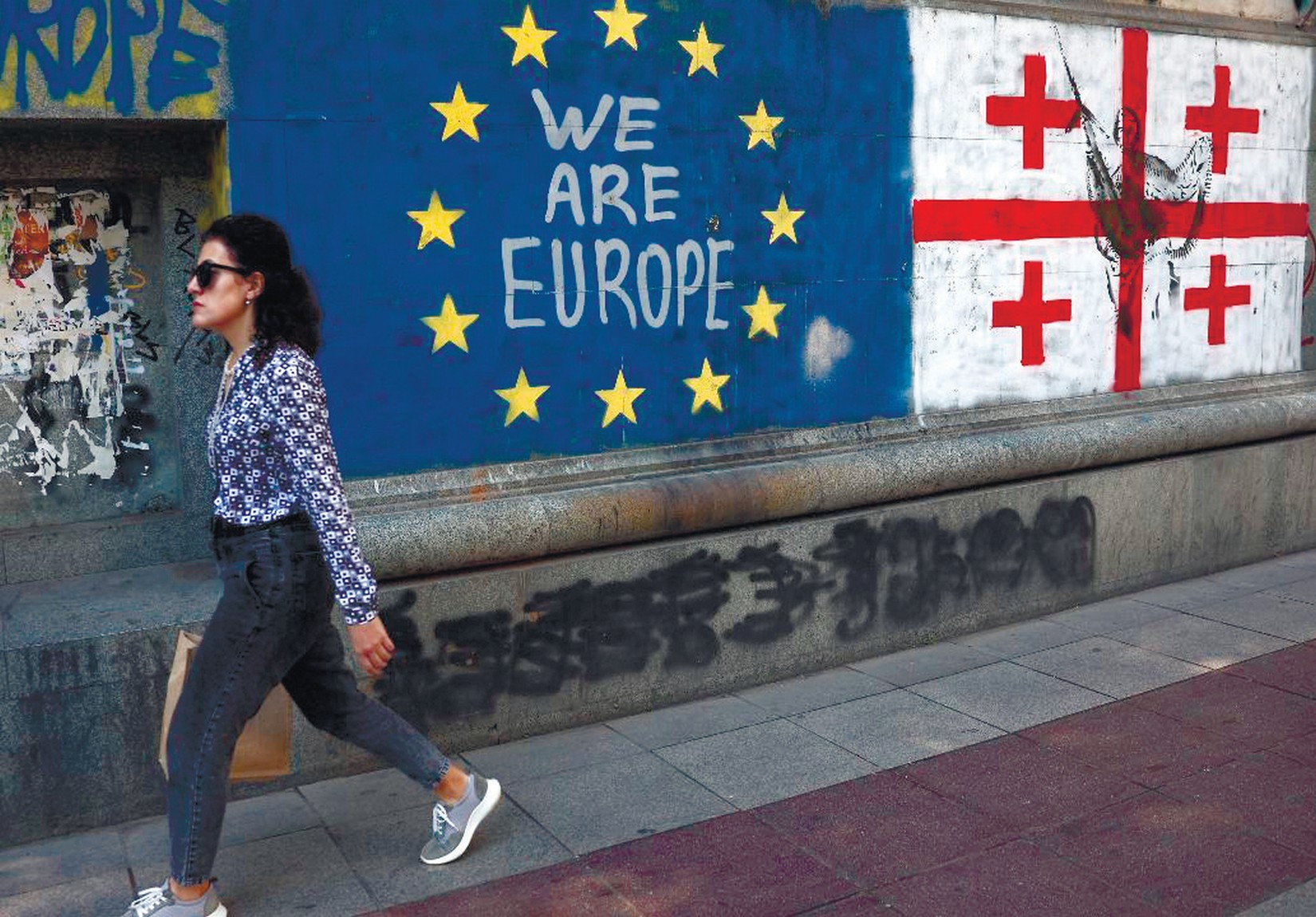
Until recently, Georgia was considered the most "European-integrated" country in the South Caucasus. Tbilisi had openly declared its ambition to join NATO and the EU, signed a number of agreements with the European Union, and even secured the highly coveted prize of visa-free travel. However, a significant shift has since occurred. Georgia has recently come under criticism over the contentious issue of LGBT rights. Following the outbreak of the war in Ukraine, the European Union made it clear to Tbilisi that unless the Georgian government opened a "second front" against Russia, it would be expected to support the sanctions regime. Tbilisi refused to comply. Firstly, economic realities did not allow for such decisions. Secondly, and most importantly, Tbilisi vividly remembered the 2008 "five-day war," during which Western allies failed to offer substantial assistance. The country was effectively abandoned for the sake of yet another "reset." This marks only the beginning of the issue.
These realities are not always discussed openly, yet the facts remain. Throughout the 1990s and even the early 2000s, the notion of "European integration" held significant sway among audiences across post-Soviet countries. The European Union also suggested that some of these states—at least those located in the European part of the post-Soviet space—could one day be admitted into the EU. It was anticipated that the necessary reforms would eventually be completed, though at an unspecified point in the future. To that end, a special programme, the Eastern Partnership, was established.
Azerbaijan participates in this programme but has declined to engage in its integration projects from the outset. The country preserves its sovereignty, remaining independent from external influences emanating from Moscow, Brussels, or elsewhere. Azerbaijan has chosen a more pragmatic course, refraining from vague discussions about "association" and instead focusing on signing a strategic partnership agreement with the European Union. By contrast, other countries—such as Georgia, Moldova, and Ukraine—opted for the path of European integration.
However, the rules of the game soon changed dramatically. The European Union began debating a moratorium on further enlargement. This development significantly delayed the prospect of membership in the "European family" for countries within the post-Soviet space. At the same time, Europe reserved the right to intervene in virtually all spheres, dictating to its partners how to conduct their domestic and foreign policies, among other matters.
As a result, Euro-disillusionment is now becoming increasingly evident—not only in Georgia but also elsewhere. A notable example was seen during the October 2024 parliamentary elections and referendum in Moldova, when voters were asked whether they supported the country's accession to the European Union. The results showed only 50% backing for the European project, a figure that surprised many observers, as such scepticism toward the European dream had not been widely anticipated.
Georgia has not forgotten the events of 2008—the barbed-wire fences erected by Russia, nor the lukewarm support from its European partners. In response to Tbilisi’s legitimate concerns, the European Union launched a campaign of mild criticisms. This has led to a decline in the appeal of slogans tied to European integration. Following a detailed analysis of Georgia’s recent electoral processes, it has been concluded that Europe’s latest electoral setback is a natural consequence of the prevailing circumstances.
RECOMMEND:
 248
248

