

UNION OF TWO CASPIAN LITTORAL STATES
Ilham Aliyev's state visit to Kazakhstan opens a new page in relations between the two Turkic states
Author: Ilgar VELIZADE
The state visit of the President of Azerbaijan, Ilham Aliyev, to Kazakhstan on October 20-21, 2025 was not just a diplomatic event, but a reflection of a new level of strategic thinking in the relations between the two Turkic states.
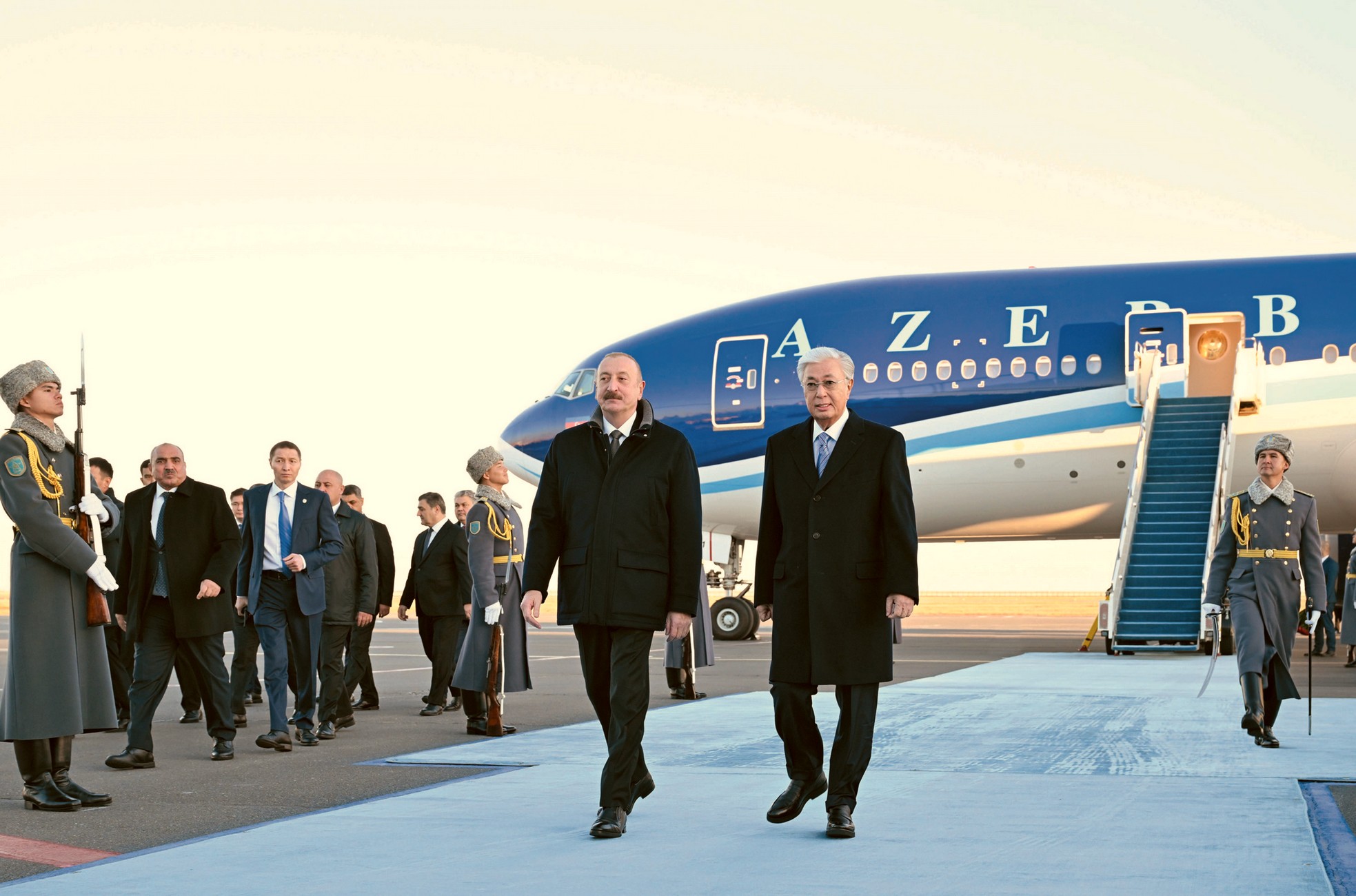
President Aliyev was personally met at the Astana airport by President Kassym-Jomart Tokayev, symbolising the exceptional nature of the bilateral dialogue, which has acquired unprecedented intensity over the last three years. Since 2021, the leaders have met more than a dozen times—more frequently than the heads of most neighbouring countries in the region. Behind this statistic lies an obvious fact: relations between Baku and Astana have transitioned from the category of friendly to that of allied.
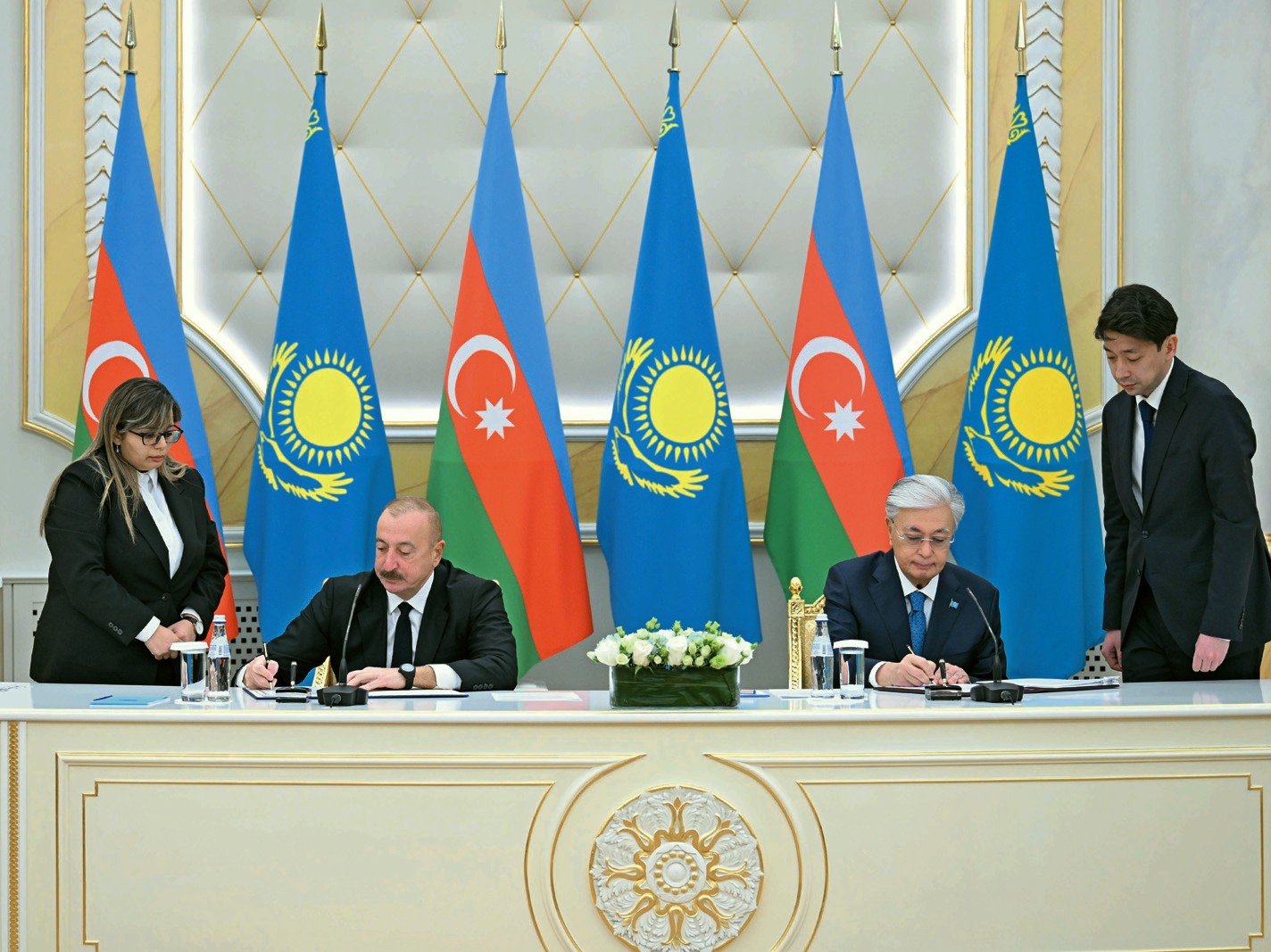
The outcomes of the visit confirmed that the parties are building a systemic partnership based on common interests and complementary potentials. Following the visit, an impressive package of 15 documents was signed, covering energy, transport, digitalisation, industrial safety, healthcare, culture, and statistics.
Such a breadth of topics reflects the general logic: Azerbaijan and Kazakhstan are restructuring their interaction from a bilateral format to a regional-structural one, oriented towards creating sustainable institutions of cooperation.
Transport as the driver of cooperation
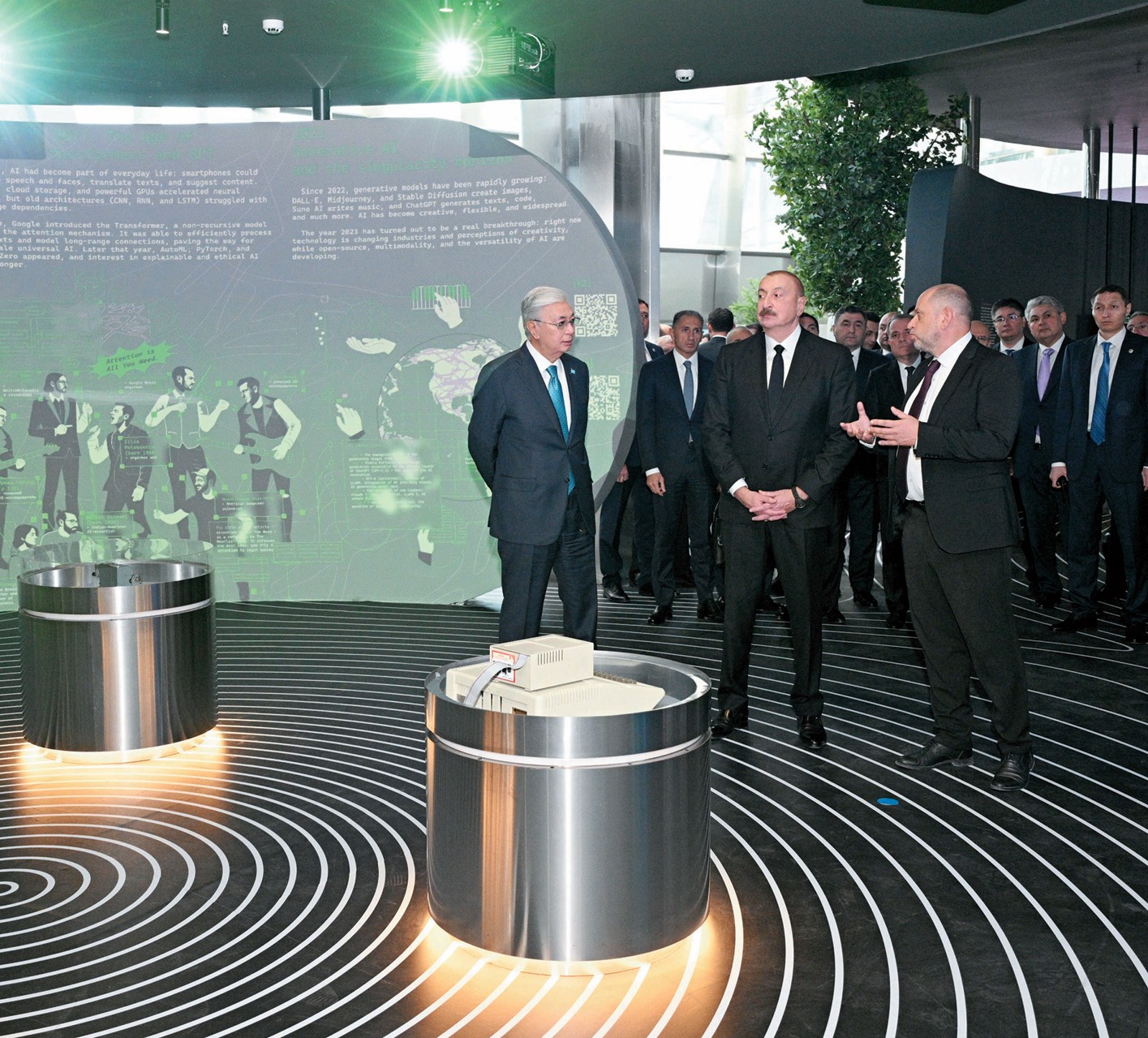
The transport and logistics agenda has become a key priority. The Middle (Trans-Caspian) Corridor, connecting China, Central Asia, the Caucasus, and Europe, is today becoming a key artery of the Eurasian space. On October 21, with the participation of the two presidents, there was even a presentation of the joint project Development of the Middle Corridor (Trans-Caspian International Transport Route).
Both countries agreed on the coordination of tariff policies, the digitalisation of customs procedures, and the synchronisation of port infrastructure to ensure that Aktau, Kuryk, and Alyat operate as a single mechanism. In addition to the modernisation of the route, this will also result in the establishment of a technologically unified logistical organism, capable of ensuring the stability of supplies even amidst global geopolitical fluctuations.
The heads of Azerbaijan and Kazakhstan were briefed about the project. It was noted that the Middle Corridor, being the main transport and logistics route connecting China and the countries of Central Asia with European countries, plays a strategic role in strengthening regional and intercontinental trade. It was emphasised that the volume of transport from China to Azerbaijan is growing and is expected to increase threefold by 2030. This, in turn, serves to further enhance the project's significance.
The dynamics are impressive: according to 2024 data, the volume of traffic along the Middle Corridor grew by 63%, reaching 4.1 million tonnes.
The trade turnover between Azerbaijan and Kazakhstan in the first eight months of 2025 exceeded $547 million and, according to forecasts, could reach a record billion by the end of the year.
It is evident from these figures that trade growth is not the only factor in question; they also serve to illustrate the establishment of trust as an economic category.
It is important to note that Baku's decision to lift restrictions on the transit of all goods to Armenia, including Kazakhstani ones, was imbued with special political meaning. Furthermore, President Ilham Aliyev announced this decision during the joint press conference with Kazakhstan's President Kassym-Jomart Tokayev. This could be seen as an indication that Baku places significant value on Kazakhstan's peacemaking initiatives and the recent endeavours of its leader to initiate a constructive dialogue between Baku and Yerevan. It is noteworthy that the inaugural transit cargo to Armenia was Kazakhstani grain. This step is intended to demonstrate the irreversible nature of the peace agenda and the full support of key regional players. It also represents an expansion of the route's geographical reach, serving as a symbol of the region's new philosophy. The transition from confrontation to a mutually beneficial relationship. The Zangezur corridor, which is integrated into the Middle Corridor system, thus transforms into an element of infrastructural peace, where roads and railways become instruments of peace-building.
This point was well illustrated by the words of President Ilham Aliyev in Astana during the final press statement: In light of the opening of new transport routes, the realisation of projects related to connectivity in the wider Eurasian region, and the increasing interconnectedness of the South Caucasus and Central Asia, it is imperative that there is constant attention paid to these developments. Naturally, the participation of heads of state is essential in order to ensure that these interactions are backed by concrete results.
Energy, green transition and investments
The energy component of the partnership remains equally significant. For Kazakhstan, Azerbaijan presents a valuable opportunity to diversify its hydrocarbon export routes and reduce its reliance on Russian pipelines. For Baku, it further consolidates its position as a pivotal hub within the Caspian region. The previously signed agreement between KazMunayGas and SOCAR on transporting oil via the Baku-Tbilisi-Ceyhan (BTC) system became a practical embodiment of this logic: if transit was 1.4 million tonnes in 2023, it grew to 1.6 million by 2025, and growth to 5-7 million tonnes is expected by 2027. Furthermore, the President of Kazakhstan stated during the negotiations that Astana intends to significantly increase the volume of oil transit via BTC.
Concurrently, there has been a development in cooperation in the field of renewable energy. The "Green" Energy Corridor initiative, signed by Azerbaijan, Kazakhstan, and Uzbekistan, aims to export up to 5 GW of clean electricity from Central Asia to Europe. The Aktau-Sumgayit underwater cable, spanning 380 km with an investment volume of $1.5 billion, will serve as both an infrastructural and a symbolic bridge between the Turkic countries and Europe, firmly integrating them into the global climate agenda.
Kazakhstan and Azerbaijan are also negotiating gas-chemical projects, the construction of processing facilities, and the exchange of decarbonisation technologies. In essence, both countries are establishing a novel "energy alliance" encompassing hydrocarbons and innovations.
Economic integration is accompanied by the active movement of capital. Since 2005, Azerbaijani investments in Kazakhstan's economy have reached $424.6 million, while Kazakhstani investments in Azerbaijan total $156 million. There are more than 1,500 companies with Azerbaijani participation operating in Kazakhstan, and approximately 150 Kazakhstani companies operating in Azerbaijan. These are not merely statistics, but rather a testament to the confidence placed in each other's institutional settings.
Projects such as the construction of an Azerbaijani tourist complex on Lake Alakol and the underwater fibre-optic cable along the Caspian seabed, connecting Aktau and Sumgayit, have become symbols of this growing interaction. The latter holds particular strategic importance: it will ensure digital security and the resilience of communications, turning the Caspian into a corridor not only for oil but also for data.
Humanitarian cooperation
While transport connects continents and energy connects economies, humanitarian cooperation connects hearts and minds. It is in the humanitarian sphere that the relations between Azerbaijan and Kazakhstan acquire a genuinely human dimension. According to Kassym-Jomart Tokayev, "Interaction in the cultural-humanitarian sphere traditionally holds a special place on our agenda. Significant events in recent years include the Days of Culture and Days of Cinema of Kazakhstan and Azerbaijan, held reciprocally in our countries. In order to systematise work in this direction, it was agreed that a cultural cooperation programme should be adopted. In a separate meeting, we discussed the positive potential for the development of education and science, as well as youth contacts. For these purposes, the Kazakhstan-Azerbaijan Scientific-Educational Centre has been operating in Baku since last year."
Indeed, in recent years, the parties have demonstrated a steady convergence in education, culture, and science. Leading universities in the two countries are developing joint exchange programmes for students and postgraduates, holding conferences on Turkology, and conducting joint research in history and archaeology. A key project has been the establishment of the Turkic University Network, with Baku and Astana serving as coordinators of educational integration in the Turkic world.
It is important to note the implementation of events this year as part of the Year of Azerbaijani Culture in Kazakhstan. These include theatre tours, exhibitions, screenings of Azerbaijani cinema, and festivals of national cuisine. These initiatives are not merely cultural gestures; they serve to strengthen the identity of the Turkic world, creating a unified cultural space where traditions and modernity converge to form a cohesive system of values.
Azerbaijan has previously hosted a Week of Kazakh Culture, which attracted considerable public interest. Such exchanges contribute to the "soft power" of both states, with respect for cultural heritage and a focus on creativity being key factors.
Humanitarian cooperation also includes the development of public diplomacy. Youth organisations from Azerbaijan and Kazakhstan are participating in Turkic Council programmes, organising volunteer and educational forums. Joint media initiatives are used to create documentary films, television programmes, and digital projects that narrate the parallels in the historical development of the two countries.
Special attention is paid to linguistic and cultural interpenetration. In 2024, a Centre for Kazakh Culture and Language opened in Baku, and a Centre for the Study of Azerbaijani Language and Literature opened in Astana. These institutions have become platforms where a new generation of specialists, thinking in categories of the future, is being formed.
Therefore, the humanitarian component is becoming a key part of the partnership. It strengthens mutual understanding and ensures the continuity of generations, forming common cultural and value-based foundations for further integration.
New and conventional areas of cooperation
Military-technical interaction is developing in leaps and bounds. The joint exercises Caspian Breeze 2025 and Birlik 2024 demonstrated the operational compatibility between the armed forces of the two countries. Baku and Astana are collaborating to protect maritime communications, counter piracy, and defend energy infrastructure. The focus is shifting from the force component to the technological one, with an emphasis on sharing experiences in the digitalisation of the defence sphere and cybersecurity.
Recently, the ecological direction has acquired strategic resonance within the system of multilateral interaction between countries. The shallowing of the Caspian Sea is a shared concern and a stimulus for joint action. Azerbaijan and Kazakhstan attach great importance to international coordination within the framework of the Tehran Convention and are developing scientific research and ecological monitoring. The Regional Centre for monitoring the state of the Caspian, established in Kazakhstan, is already ensuring the collection and analysis of data, while Azerbaijan is implementing the "Green Caspian" programme for transitioning ports and coastal infrastructure to ecological standards.
The combination of transport, energy, investment, humanitarian, and ecological directions transforms Azerbaijani-Kazakhstani relations into a model example of complex and mutually beneficial interstate cooperation. The interaction between the two countries demonstrates that modern regional policy can indeed be built not on rivalry, but on the alignment of interests.
Today, Baku and Astana play an active role in the development of Turkic integration, both as participants and as key contributors to its advancement.
They are establishing a new model of regional interaction that is flexible, technologically advanced and culturally rich.
Ilham Aliyev's state visit to Kazakhstan became a symbol of this new era: an era in which Azerbaijan and Kazakhstan are transforming into systemic actors in the central part of Eurasia, uniting the energy of history and the potential of the future.
RECOMMEND:
 269
269

