
A SECOND CHANCE FOR PRIVATISATION
Azerbaijan focuses on investment quality and asset management at the new stage of denationalising

Author: Ilaha MAMMADLI
Although Azerbaijan's economy began adapting to market management standards over 30 years ago, the privatisation of state property remains relevant for the country. The reason for this is that, in contrast to the rapid transfer of assets to the private sector seen in some post-Soviet states, Baku opted for a gradual denationalisation process, focusing on an investment-oriented approach.
Over the years, the policy in this sphere has evolved, as have the mechanisms and tools employed. It is important to note that the line item in the state budget for revenues from privatising state property has remained constant.
A new phase
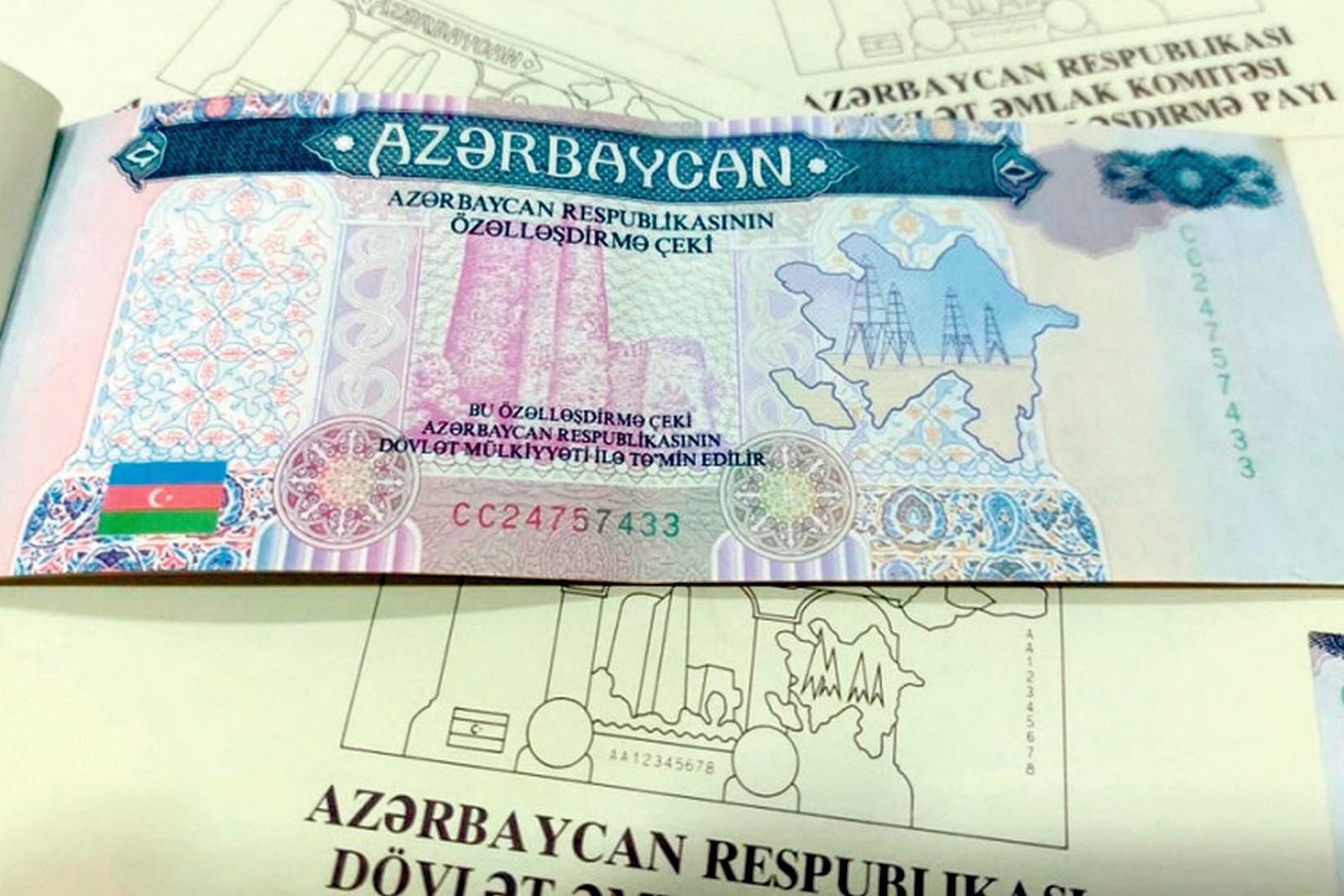
The objective of privatising state property in the initial years, which began almost immediately after Azerbaijan gained sovereignty, was to achieve a rapid transition from state to private ownership in a short time. The overarching principles that guided this initiative were speed and scale. State privatisation cheques issued at that time to the entire adult population allowed every citizen to participate in this process.
According to the decree of the President of the Republic of Azerbaijan dated December 23, 2009, the validity period of these cheques expired on January 1, 2011, after which they were withdrawn from circulation. This marked the conclusion of the mass privatisation era, and the cheques lost their status as securities. However, according to the National Depository Centre, 2.4 million privatisation cheques remain in storage. Transactions with them on the black market indicate that there are still illusions among the population regarding the revival of cheque mechanisms, even though the process has long since moved into monetary and investment phases—with an emphasis on restoring production activity and long-term investor commitments.
Azerbaijan's Strategy for Socio-Economic Development for 2022-2026 includes the drafting of a new law on privatisation and the transfer of state property to management. However, this has not yet been implemented. At the same time, updating the legislative framework is a key condition for transitioning to a "second generation" of privatisation, with a focus on investment quality, transaction transparency, and asset utilisation efficiency rather than on quantitative indicators.
From 2020 to 2024, a total of 52 open joint-stock companies, 1,237 small enterprises and facilities, 2,043 transport vehicles, and 961 land plots were privatised in Azerbaijan. During this period, revenues from privatisation totalled ₼514.4 million, while investments in privatised enterprises amounted to ₼56.7 million.
In 2025, activity in this sphere increased significantly. From January to September, the budget received ₼144.7 million from the privatisation and lease of state property, including ₼110.2 million directly from privatisation. Thirty-eight auctions were held, resulting in the transfer of share packages in seven joint-stock companies, two small enterprises, and 792 transport vehicles to private investors.
However, the sector's potential remains underutilised. As of mid-year, out of 10,005 non-residential buildings and premises with a total area of 4.38 million square metres under the purview of the State Service for Property Issues, only 29.6% were leased out, accounting for 10.6% of the total area. This indicates a significant reserve for expanding the rental market and increasing budget revenues.
Furthermore, there are substantial arrears for accrued but unpaid privatisation proceeds, which by mid-year amounted to ₼57.7 million. The majority of the debt is linked to the sale of small state enterprises and assets, including land plots. This suggests that buyers may not have sufficient payment discipline, and that there are significant opportunities to boost budget revenues through more effective management.
It is worth noting that in the first ten months of this year, state budget revenues from the lease of state property totalled ₼38.6 million. This represents an increase of 22.2% on last year's figures and 32.6% above the forecast.
Efficiency problems
A key element of the reforms has been the introduction of digital tools for the management of state property. Electronic auctions and online platforms operating through the portal of the State Service for Property Issues provide open access to asset information, make the process competitive, and reduce corruption risks.
Concurrently, the institutional foundations for privatisation are being fortified: state enterprises are undergoing restructuring, and international standards for corporate governance, auditing, and financial reporting are being adopted. In preparation for the privatisation of major enterprises, a financial rehabilitation process is underway, and a search is ongoing for strategic investors who can facilitate technological renewal and ensure sustainable development.
As previously noted by the Head of the State Service for Property Issues, Metin Eynullayev, approximately 55% of enterprises from the first wave of privatisation never resumed operations. The reasons for this are varied, including outdated technologies, lost production links and weak management.
"Currently, approximately one-third of privatised joint-stock companies are operating in their original field or have pivoted after modernisation, while the remainder are merely leasing out their premises and production facilities," emphasised Eynullayev.
The contemporary approach to privatisation involves the organisation of investment competitions, wherein successful participants are obligated to allocate funds for the development of the enterprise. Should the conditions not be met, the state reserves the right to annul the transaction results. This mechanism ensures transparency and guarantees the genuine restoration of production potential.
At the end of 2023, the President of Azerbaijan signed a decree on attracting private investment to the privatisation of state enterprises. In 2024, proposals were prepared for the sale of part of state shares in SOCAR, AzerGold, ASCO, BakTelekom, AzTelekom, and the International Bank of Azerbaijan.
According to M. Eynullayev, corporatisation may have implications for SOCAR structures such as the Azerkimya Production Association, methanol, ethylene, propylene production plants, and urea plants. These assets are planned to be offered to local and foreign investors, with the state's share gradually decreasing.
Discussions regarding the privatisation of significant assets were a key part of the negotiations between Rashad Nabiyev, the Minister of Digital Development and Transport, and Bhargav Dasgupta, the Vice President of the Asian Development Bank. A number of mechanisms for attracting private capital to manage companies within AZCON Holding were considered.
The minister also held consultations with the International Finance Corporation (IFC) regarding potential partnerships with AZAL and the Baku Shipyard. These consultations also included prospects for attracting private investors in the future.
Prospects and limitations
The Open Joint-Stock Company Azerbaijan Industrial Corporation (AIC), established in December 2017, played a key role in consolidating state ownership and preparing enterprises for privatisation. The corporation was established with the primary objectives of introducing corporate governance principles, fostering collaboration among state enterprises, and optimising their market value.
The corporation's balance sheet included 29 enterprises, of which 6 have already been privatised and 7 put up for auction. Companies within the AIC structure, such as Azeraluminium, Azerpambig ASK, and Azeripek, are among the largest exporters in the country's non-oil sector.
The "Azerbaijan Industrial Corporation" is currently in the process of liquidation, and state enterprises are being transferred to the management of the Azerbaijan Investment Holding. To date, 20 state companies have been transferred to its balance sheet.
In the medium term, there is an expectation of a gradual denationalisation of large infrastructure and utility assets, including systems for electricity, heating, water, and gas supply, telecommunications, and waste processing.
The merger of AzTelekom and BakTelekom was a significant step towards establishing a unified national communications operator. The long-term benefits of the consolidation process include business scalability, enhanced operational efficiency and the establishment of a robust foundation for attracting both domestic and foreign capital.
Furthermore, the first IPO (initial public offering) of the state share package in the International Bank of Azerbaijan set an important precedent. Consequently, the number of individual shareholders increased from 1,794 to 35,104, and the bank concluded the current year with a net profit of ₼360 million, paying dividends to over 30,000 shareholders for the first time.
It is evident that all these processes are reflected in the total state revenue. According to the latest projections, the draft state budget for 2026 anticipates revenues from privatisation to amount to ₼125 million, marking a 13.6% increase compared to the forecast for 2025. However, as industry experts have noted, this figure does not fully reflect the sector's actual potential. The liquidation of the AIC and the opening for privatisation of enterprises under its management, along with bringing assets of Agrakredit, alternative energy objects of the Ministry of Energy, and property of the liquidated OJSC Azerkontract to the market, could significantly increase the volume of revenues.
Furthermore, the draft budget allocates ₼31.3 million in subsidies to the State Service for Property Issues for organising privatisation and protecting property rights of non-state enterprises.
In summary, the process will continue in accordance with the new rules and priorities. Given the sector's significant potential, further reforms are required, particularly with a focus on enhancing transparency and efficiency. Realisation of all the planned measures has the potential to provide the budget with additional revenues, as well as stimulate private sector development and investment in the country's economy.
RECOMMEND:
 184
184