

ARE ROBOTS TAKING OVER THE WORLD?
Azerbaijan intensifies efforts for the mass adoption of AI technologies

Author: Aghasaf NAJAFOV
UN experts classify artificial intelligence (AI) as a key technology of the 21st century that is rapidly transforming our world. These technologies can be characterised as self-learning and adaptive systems—from computer vision and speech recognition to robotics. AI aims to expand traditional human capabilities, covering almost all sectors of the economy, social sphere, and other areas of societal life.
In recent years, Azerbaijan has intensified efforts to implement the achievements of the Fourth Industrial Revolution, digitalise the economy, and, of course, incorporate international experience in the field of AI. The potential and prospects for AI application in our country were discussed during the VII StrategEast Forum in Baku, as well as the Innovation Forum on Digital Economy in Shanghai.
Digital risks to the labour market
In recent years, a colossal breakthrough has been made in the field of artificial intelligence: modern computers and robots are capable of self-learning, improving their work, and making independent decisions. AI hardware-software systems are gradually assuming control over complex facilities in industry, energy, and transport networks, regulating utility infrastructure and traffic flow, while bot services assist customers in the financial sector and on government e-government platforms. The increase in robotisation helps secure risky technological processes and automate the solution of repetitive routine tasks; analytical systems based on AI can foresee the probability of accidents in advance. Automobile manufacturers integrate artificial intelligence algorithms into production, reducing downtime and improving accuracy. Virtual systems enable effective management of business processes: banks use AI to combat fraud and automatically verify transactions; insurance, marketing, and trading companies actively use chat-bots to optimise communication with their customer base; AI facilitates work with documents, contracts, and other daily operations. At the same time, the robotisation of business processes allows for reducing costs, decreasing dependence on staff turnover, and increasing the stability of operational processes.
According to estimates by the leading global vendor Nvidia, by 2030, investments in data centres and the processing of large volumes of data (Big Data) that ensure the functioning of AI systems could reach $3-4 trillion. This sum is comparable to the GDP of the world's largest economies, showing that global business perceives AI not as an experiment or a flashy banner for reports and presentations, but as a strategic direction.
However, despite the huge potential, the benefits of AI are still distributed unevenly: only 100 companies, mainly from the US and China, account for 40% of global corporate spending on scientific and technological development. According to UN Secretary-General António Guterres, many developing countries face difficulties in accessing such technologies. And without proper regulatory frameworks, AI could exacerbate existing inequality and the digital divide, disproportionately affecting the most vulnerable populations. According to experts from the International Labour Organisation, there are age, gender, and other risks that hinder workers' adaptation to digital innovations. In addition, the lack of a clear regulatory framework, as well as real threats of unemployment growth due to the automation of some processes, exert serious pressure on labour market participants.
According to data from The Banker, already today, banks worldwide are beginning to reduce the number of employees amid the introduction of AI. For example, Singapore's DBS and Italy's Intesa Sanpaolo have announced a 10 per cent reduction in staff. It is expected that within the next five years, up to 200,000 people in the banking sector will be replaced by artificial intelligence; similar processes will eventually encompass insurance, leasing, processing, and other segments of the financial market.
At the same time, the global expert community believes that the benefits from implementing AI technologies far exceed the expected risks for the labour market. According to some estimates, the contribution of artificial intelligence to the global economy could range from $2.4 to $4.4 trillion per year.
National policy
Azerbaijan must be ready for these large-scale changes and try to attract a share of global capitalisation into its projects. As a member of the Artificial Intelligence Alliance of the World Economic Forum, the country intends to focus on key labour market trends in light of the development of AI and other high technologies. In this regard, the legislative base is being modernised and a relevant strategy is being formed.
In particular, this year, on the initiative of the head of state, the Concept of Digital Development of Azerbaijan and the Artificial Intelligence Strategy of Azerbaijan for 2025-2028 have been adopted. The ultimate goal of these documents is to accelerate development in the format of Industry 4.0 and ensure the digital transformation of the country's economy.
"In Azerbaijan, a sustainable ecosystem in the field of artificial intelligence is being formed; the country is becoming a new centre of attraction for international IT companies and research structures. Many leading global companies have already chosen Baku as a new development centre; for them, it is a place for research, education, and staff training. The participation of companies like Google, EPAM Systems, EBRD, Ernst & Young, and Pasha Holding, along with investors and researchers, in the forum demonstrates growing interest in Azerbaijan as a platform for technological cooperation," stated Salar Imamaliyev, Commercial Director of Azerbaijan's Agency for Innovation and Digital Development, during his speech at the State and IT Eurasian Forum.
Speaking about national policy in this sphere, he recalled that at the beginning of the year, the government of Azerbaijan approved the National AI Strategy—a comprehensive roadmap aimed at creating a sustainable artificial intelligence ecosystem. The strategy focuses on developing infrastructure, human capital, and ensuring that artificial intelligence benefits the entire economy and society. "As part of this process, an international market analysis has already been conducted, and four digital standards have been implemented that now serve our citizens. An important step was the creation of the 'Artificial Intelligence Academy' (AI Academy), designed to introduce the world's best educational practices," noted the agency representative.
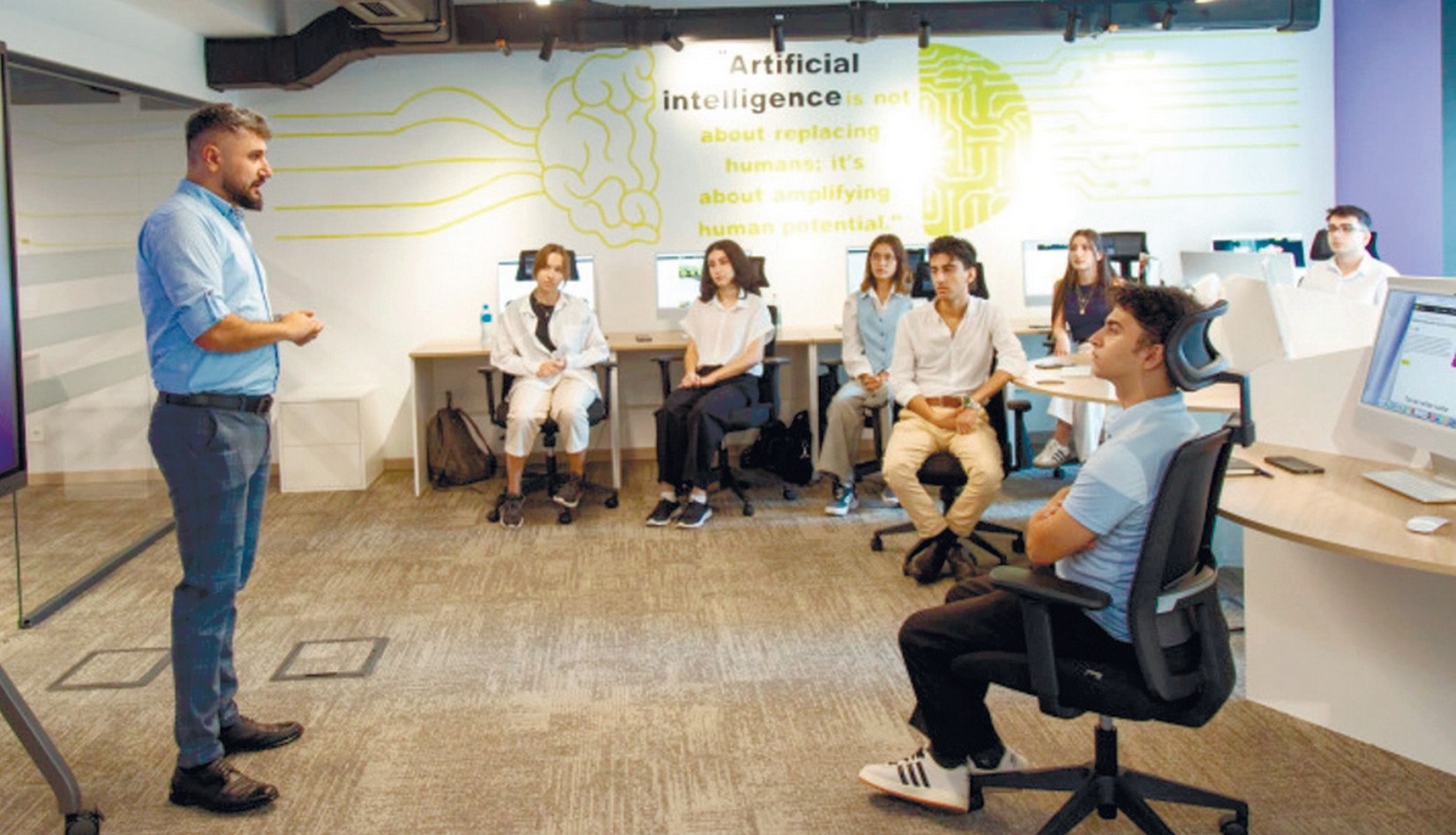
The AI Academy, which opened in early September 2025 in Baku, will operate with the support of AZCON Holding. The key goal of the academy is to train specialists in the field of AI and accelerate digital transformation in the country. To optimise this process, cooperation has been established with leading world universities in the field of artificial intelligence. Lecturers from the Massachusetts Institute of Technology, the University of California, Carnegie Mellon University, Harvard, and Stanford universities will teach at the academy.
The development of the MyGov portal also promotes the listed areas: together with EPAM Systems, AI systems are being integrated into the portal, including chat-bots and content-aware services that understand user intentions, provide recommendations, and help resolve issues proactively. "In Azerbaijan, AI will be integrated into e-government information systems, and as a digital consultant platform, it will be able to automatically prepare various documents for citizens. In turn, work is already underway in the country to create its own local language model for artificial intelligence," noted Kamran Aghayev, Director of the Data Management Department, at the VII StrategEast Forum. According to him, personalised service platforms based on AI are being created, and this process is already being implemented through the MyGov portal. Here, a chat-bot system that answers citizens' questions is functioning; at the next stage, an E-advisory platform—a digital consultant—will be launched based on machine intelligence. This system will be hosted in the government cloud environment G-Cloud.
Partner support
The existence of considerable experience in developing portals and government systems in Azerbaijan is also acknowledged by international experts, who believe that the potential of AI tools can be most fully realised precisely in the e-government segment. "Artificial intelligence can qualitatively change the nature of government services in Azerbaijan, and for this, it is necessary to accelerate the digitisation of open databases and modernise regulatory mechanisms," believes Marina Junic, participant of the StrategEast Forum, Head of Government Relations for the South Caucasus, Central Asia, South Africa, and Israel at Google Cloud. "The application of AI allows improving services in the judicial system and government administration in just weeks; this model can accelerate growth in the financial sector by at least 33%."
In a broader format, the long-term policy for digital transformation of Azerbaijan aims to develop new intellectual products, form Big Data and blockchain systems for managing large volumes of data, create AI-based solutions, and support the startup ecosystem. Such work is also being carried out by the Central Bank of Azerbaijan (CBA): based on international standards using AI tools, management frameworks are being developed for IT segments of banks and other financial organisations, aimed at increasing the resilience of their operations and the efficiency of processes in the field of cybersecurity. With the support of the CBA, advanced technologies such as AI are also being integrated into insurance processes, making them more efficient, transparent, and customer-oriented.
Recently, AI mechanisms are being introduced in the domestic agro-industrial sector. In particular, in the electronic agriculture system, as well as in the transport-logistics sector, for example, within the transit of multimodal cargo along the Middle Corridor. It is extremely important that our country's efforts to develop high technologies and implement AI solutions are supported by partnership with a number of European countries, Israel, Türkiye, and other states of the Organisation of Turkic States.
China's 'Group of Friends'
Cooperation with government agencies and companies from China could play a leading role in this direction in the future. "At present, a number of memoranda of understanding have been signed between Azerbaijan and China in the fields of investment in the digital economy, intelligent logistics, the 'Internet of Things', industrial digitalisation, technological innovations, and personnel exchange," reported Shahin Mustafayev, Deputy Prime Minister of Azerbaijan, in an interview with People's Daily Online. Recall that Azerbaijan was one of the first to join China's 'Group of Friends' within the UN initiative on AI development.
In China, great importance is attached to global governance in the field of AI, and they advocate that these technologies do not become a privilege only for rich countries, but rather serve for the benefit of all humanity, including countries of the Global South. Betting on cooperation with China contributes to overcoming the digital and intellectual divides, and this is a very correct choice for our country. "At the meeting dedicated to the 80th anniversary of the National Academy of Sciences of Azerbaijan, President Ilham Aliyev in his speech emphasised the importance of artificial intelligence, digital technologies, and data digitalisation. This is an important signal, and I see huge potential in Azerbaijan for the development of artificial intelligence," stated Professor Renying Li from the Institute of Central Asian Studies at Lanzhou University. "China is ready to provide assistance in the development of innovative and high-tech production, including the AI sphere."
Such partnership is extremely important for our country, as today China is recognised as one of the world leaders in the number of AI patents. It is home to the largest AI startups, including Baichuan, Zhipu AI, and MiniMax; a country, where the giants of the industry—Baidu, Alibaba, Tencent, and Huawei—are actively developing AI; unicorn companies SenseTime and Megvii are forming new markets. Chinese developers have launched their new model DeepSeek-R1 with open source at an extremely low price and using a minimal number of microchips, significantly outpacing competitors from the US and Europe. According to Professor Renying Li, an ideal platform for AI training has been formed in his country. Thanks to active digitalisation, AI is being massively introduced into internet services, in the fields of finance, security, and industry—China is ready to share this experience and knowledge with Azerbaijan.
RECOMMEND:
 181
181