

ADAPTATION AND RESILIENCE
Azerbaijan focuses on economic and environmental balance to strengthen small and medium business ecosystem
Author: Nurlana GULIYEVA
Amid increasing turbulence in the global economy and instability in international markets, the issue of resilience for small and medium enterprises (SMEs) gains particular importance for Asian countries.
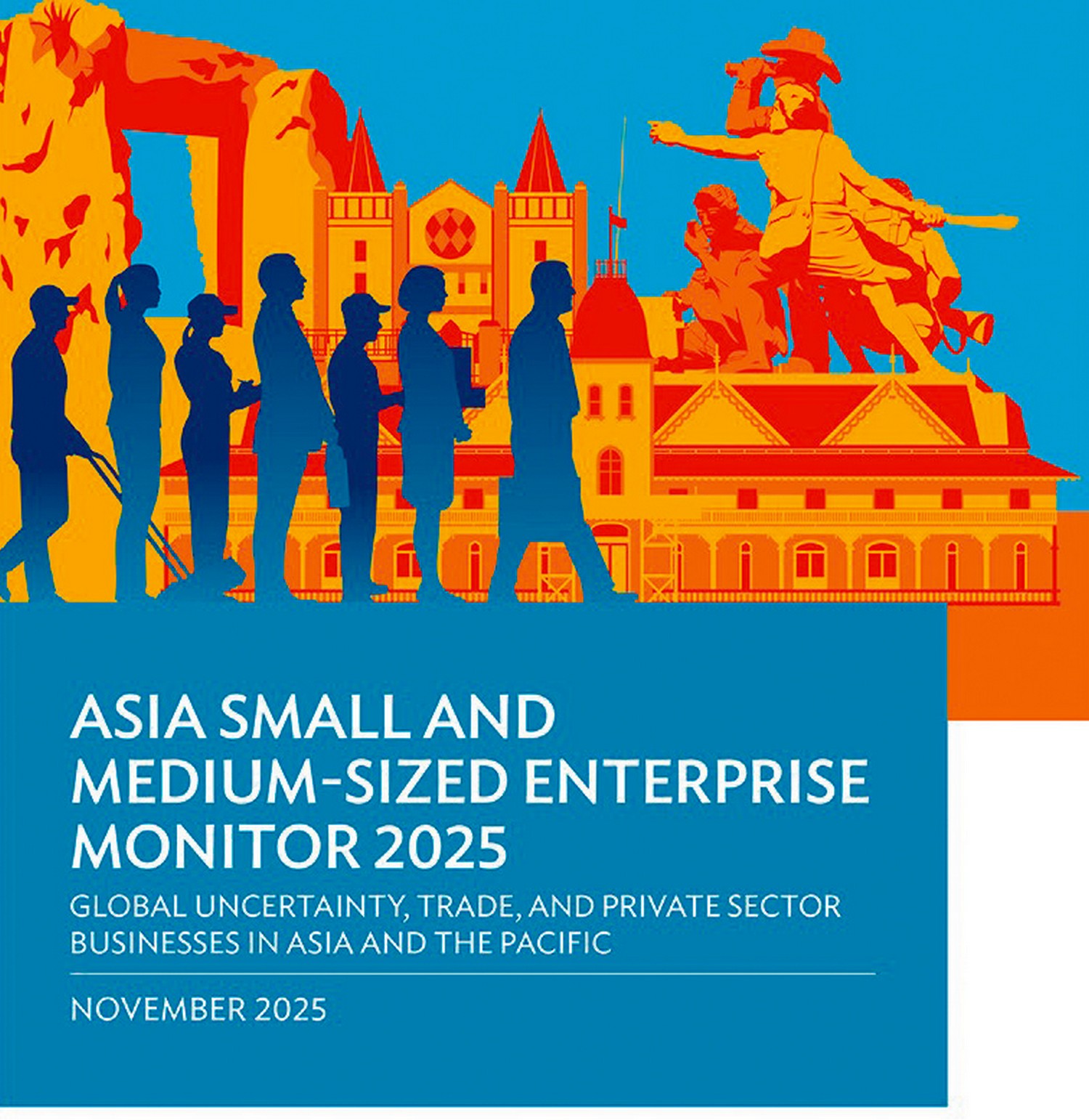
A new report by the Asian Development Bank (ADB), titled "Asia Small and Medium Enterprise Monitor 2025" (ASM 2025), presented in Baku, revealed that the SME sector is becoming a crucial component of national strategies aimed at ensuring inclusive economic growth and adapting to external shocks.
In this context, Azerbaijan is intensifying efforts to strengthen the SME ecosystem by focusing on financial stability, digital transformation, and a "green transition".
Global challenges
As Shigeo Shimizu, ADB's Executive Director for Japan, noted during the ASM 2025 presentation, current global challenges are forcing governments worldwide to reassess their strategies and approaches to SME development. According to him, one of the main issues remains the lack of reliable data on their scale and functioning.
"Given this lack of information, ASM has taken on the task of creating a dependable data repository. Now we have an important resource for policymakers when designing and implementing national SME development programmes," emphasised Shimizu.
The creation of a systematic information source, in his view, is a fundamental prerequisite for developing effective business support tools. However, "there is still much work ahead".
"The database is already good, but gaps remain that need to be filled. As global economic uncertainty deepens, a more complete database can strengthen evidence-based policy, which is increasingly necessary to build sustainable and inclusive economic growth both nationally and regionally," stated the ADB representative.
This is especially significant during a period of high uncertainty experienced by world trade. Everything—from tariff wars to geopolitical conflicts—affects SMEs depending on countries' economic conditions, including their size and growth policies. "But since SMEs play a key role in national economies, global challenges compel governments to revise strategies and approaches to their development in order to ensure the formation of a resilient and viable growth ecosystem," Sh. Shimizu asserts.
Another key speaker at the presentation was ADB's lead economist Shigehiro Shinozaki, who highlighted the uneven credit trends in the region. "Small and medium enterprises have shaped the market in developing Asia and the Pacific region; however, it remained very small, averaging 16.9% of total bank lending, equivalent to 10.7% of national GDP in 2024. On average, 53% of SME loans were allocated to services, followed by industry and agriculture," said Shinozaki.
The economist noted that the distribution of credit resources varies significantly by region and depends on exposure levels to external shocks as well as corresponding government measures.
According to him, from 2020 to 2024, dynamics differed among countries: some saw a decline in SME lending share while others experienced growth due to active state support. "In certain countries like Azerbaijan and Armenia, the share of SME loans gradually decreased coinciding with expanded lending to large companies. In others, such as Uzbekistan, the SME loan share increased thanks to enhanced state funding support through the newly established Business Development Bank," he pointed out.
ADB's lead economist paid special attention to credit portfolio quality, indicating emerging risks. "Thus, the ratio of non-performing SME loans to total SME loans fell after peaking at 8.7% during the 2020 pandemic and then stabilised at 7% in 2023. However, it rose again to 7.6% in 2024. Overall, non-performing loan shares continued declining in the Caucasus and Central Asia but increased in South Asia as well as Southeast Asia and the Pacific," emphasised Shinozaki.
This means that even with a general recovery trend after the pandemic, small and medium businesses remain vulnerable to geopolitical risks and structural changes in the global market. This compels regional countries including Azerbaijan to continue strengthening financial support mechanisms for SMEs and improving economic adaptation tools.
The Azerbaijani context
This view is shared by Anar Kerimov, First Deputy Minister of Finance of Azerbaijan, who stated that future success of enterprises will be determined by their resilience and adaptability.
He said that increased transparency and accountability of public spending in recent years have contributed to SME development in the country. "We aim to provide tax incentives and concessional financing to small businesses, promote digital transformation, and expand market access opportunities for women and young entrepreneurs," said A. Kerimov.
Chairman of the Board of the Agency for Development of Small and Medium Business under the Ministry of Economy Orkhan Mammadov added that small and medium businesses are not only economic units but also "the pulse of society", generating innovation and development. "In Azerbaijan, we view SMEs as the foundation of inclusive prosperity and innovation—a bridge between economic potential and social progress. KOBIA does not believe in isolation but in partnership. Our goal is for every small business to move forward," he stressed.
Nevertheless, despite efforts to create an enabling ecosystem and increased interaction between banks and the real sector, SMEs’ contribution to value added creation in Azerbaijan remains limited.
Meanwhile, banks continue playing a key role in providing access to financial resources. The report states that the Central Bank of Azerbaijan (CBA) has set a target to increase business loans— including those to SMEs—to no less than ₼16.5 billion by the end of 2026.
According to Rustam Tahirov, Director of Sustainable Financial Sector Development Department at CBA, SME loans account for about 25% of total loan portfolios and 47% of banks’ business portfolios. "This indicates growing engagement between banks and the real economy sector. However, during credit cycle fluctuations SMEs may face difficulties in accessing financing," Tahirov noted.
One systemic constraint he identified is insufficient financial literacy among entrepreneurs. "Our surveys among micro-, small-, and medium-sized enterprises show that about one-third have limited or insufficient knowledge about financial products offered by lenders. This certainly limits their ability to choose appropriate products and cooperate effectively with creditors," he explained.
Collateral issues remain another significant barrier. "Micro-, small-, and medium-sized enterprises, especially in regions, face limitations regarding liquid collateral even though over 80% of loans are secured by collateral. This means that sometimes even viable small businesses may be excluded from the system," Tahirov pointed out.
SMEs’ "green" transition
Furthermore, this sector continues to exhibit low levels of financial management and transparency which complicate risk assessment and increase borrowing costs. Underdeveloped accounting and audit infrastructure, weak risk-sharing mechanisms, and insufficient efficiency of collateral enforcement procedures add pressure on the sector and generate a shortage of affordable financing.
The Central Bank employs prudential regulation tools to stimulate credit activity. For instance, risk-weighted assets for SMEs in Azerbaijan are set at 50%, representing one of the more lenient regimes compared with international standards.
Simultaneously, CBA maintains active dialogue with banks to help them adapt lending strategies and business models. Tahirov believes it is important for financial institutions to develop risk-oriented approaches when assessing borrowers. "Under these conditions they will evaluate enterprises' creditworthiness and reliability of data rather than just commercial lending alone. Another key element is strengthening auditing and accounting institutions in the country. Traditionally, government support tools such as guarantees are important instruments for reducing risks in SME projects," said the regulator’s representative.
To monitor financial sustainability in the sector, CBA regularly conducts stress tests on SME loan portfolios. "Such stress tests are important for early identification of emerging risks. These are commonly used tools we employ to broaden SME access to financing," Tahirov stated.
One new direction for the Central Bank is developing a bancassurance model which may become an additional entrepreneurship support tool.
An important step towards systemic SME development was also preparation of a financial inclusion strategy involving an interagency approach to address sectoral problems. According to Tahirov, "the main goal of this strategy is for several government agencies—not just one—to be responsible for resolving financing issues."
Another factor SMEs will need to consider going forward is compliance with environmental regulations in their operations. "The first challenge we face with greening SMEs both in Azerbaijan and globally remains a lack of information and knowledge about 'green technologies' and 'green finance' instruments. The second issue for SMEs is cost: 'green technologies' are usually more expensive than traditional ones," Tahirov pointed out. Therefore requirements set for assessing small business 'green projects' should be proportionate to their actual capabilities.
In any case, from this year CBA will require financial institutions to report on their 'green' and sustainable portfolios. According to Tahirov, regulators worldwide are trying to simplify sustainability and emissions assessment mechanisms: "The market is developing various solutions; companies and providers offer their approaches; open data sources are actively used. For instance, there is growing practice of obtaining information from utilities to assess SMEs’ emissions profiles." In this regard Azerbaijan actively cooperates with international partners promoting 'green finance' principles and encouraging small businesses’ participation in ecological transformation processes.
In summary, it can be said that developing small and medium business in Azerbaijan requires not only financial incentives but also institutional reforms aimed at improving transparency, enhancing business culture, and strengthening entrepreneurship support infrastructure. After all, in the long run SMEs have the potential to become catalysts for 'green growth' and digital transformation of regional economies.
RECOMMEND:
 184
184