

TACTICS CHANGE, THE GOAL REMAINS
US abandons the policy of regime changes. But what about wars?
Author: Natig NAZIMOGHLU
Shifts of a new course are visible in US foreign policy. It implies abandoning some elements of the former American engagement on the world stage, while retaining the primary strategic objective—consolidation of US global leadership.
New course
Essentially, this concerns a revision (even if partial) of US tactics as leader of the Western world, challenged by the traditional rival Russia and a rising "third world" (a Cold War-era label), led prominently by China. If one of the instruments the United States used to prevent a multipolar world was the measures practised under the Donald Trump administration to subordinate Europe to Washington's will, then to preserve Western—primarily American—influence in other strategic zones (the Middle East, Africa, Latin America) new "diplomatic" elements are emerging. The White House officially confirms that the era when priority was given to forceful methods to secure America's "vital interests" is in the past.
The practice, which reached its peak a quarter century ago of the United States crushing regimes it found objectionable, led to the de facto paralysis of governing systems in several countries of the turbulent Muslim East—another potential power centre posing a serious threat to Western global hegemony. However, that destructive practice could only serve tactical US interests while creating major problems for pursuing their interests strategically. And today, it appears the American administration is willing to make substantial changes to previous policy, favouring non-military methods of controlling geopolitical processes in strategically significant regions.
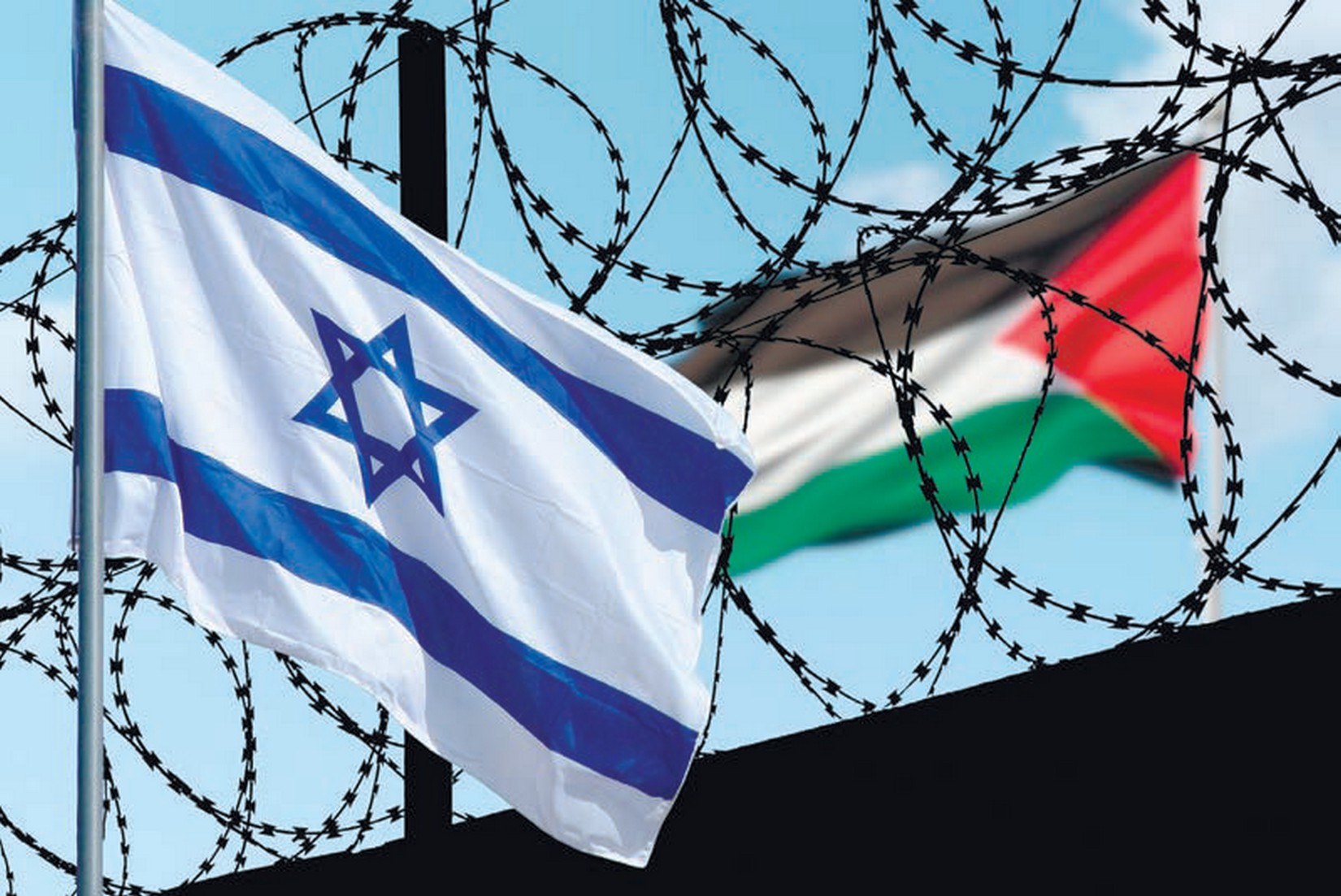
Notably, one of the White House's conductors of policy in the Middle East—the US ambassador to Türkiye and the president's special representative for Syria, Thomas Barrack—stated frankly at the Manama Dialogue 2025 conference in Bahrain's capital that what "we have seen are the falls of twenty-eight regimes and twenty-eight catastrophes" and that this was futile. Barrack made clear that from now on the US does not intend to impose a specific ideological or political development model on countries and peoples. The ongoing processes in the South Caucasus and the Middle East—regions where the US is building a new transport-communications and trade-economic integration system—are examples of the new American approach. Naturally, this occurs with US participation or mediation, as reflected in the Trump administration's initiatives to resolve Azerbaijani-Armenian relations and the military conflict in Gaza, which resulted in agreements signed in Washington on August 8 and in Sharm el-Sheikh on October 13.
"Azerbaijan, Armenia and Türkiye are on a path to rapprochement" and "are aligning in the same direction," Barrack said with satisfaction in Manama. Regarding events in the Middle East he expressed confidence that "Türkiye and Israel will not fight each other—in my view that will not happen. And you will see an alliance forming from the Caspian Sea to the Mediterranean."
According to Barrack, these are the consequences of President Trump having "changed the entire arrangement of pieces on the chessboard" and that "this is happening everywhere." But will the new American strategy—shifting from brute force to subtle diplomacy focused solely on peaceful cooperation and American mediation—really be applied "everywhere"? And can one suppose, for example, that US direct military involvement on Israel's side in the 12-day June war with Iran was merely an exception to the new foreign policy course implemented by the Trump administration?
Recent statements by US leaders on a number of countries and regions where economic integration under American mediation apparently does not take hold give reason to doubt a total transformation of the White House strategy. Thus there can always be "exceptions" to the tactic of abandoning "regime change." This only indicates that the United States does not intend to completely renounce the use of military means to achieve its long-term strategic goal—strengthening its global leadership.
What awaits Venezuela, Nigeria and others?
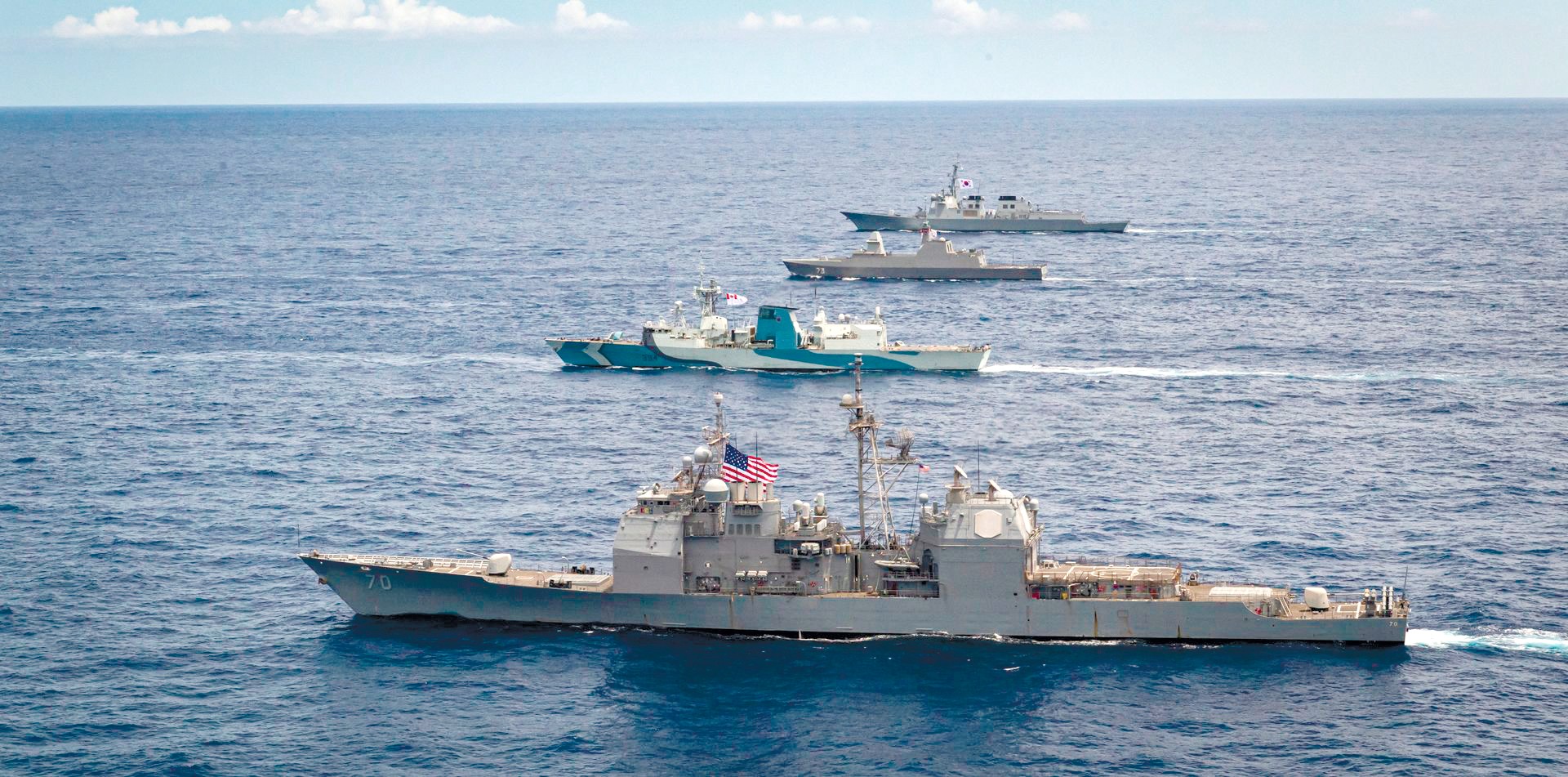
US media reported that the White House is preparing a possible military operation against Venezuela. The preparation is directly linked to President Trump's decree expanding US military powers to combat Latin American drug cartels. As part of this strategy, a naval group including a submarine and combat ships was sent to the coasts of Venezuela in late August. Trump’s advisers are now discussing several scenarios, including strikes not only against drug cartels but also against military units protecting Venezuela's President Nicolás Maduro. It is notable that Defence Secretary Pete Hegseth stated that US armed forces are ready for operations including regime change in Venezuela.
All this suggests that the sharp increase in US activity in the Caribbean region, and in particular actions toward Venezuela, do not concern exclusively the fight against drug cartels accused of transporting their product to the United States on high-speed boats. Those boats, incidentally, have already been regularly struck by US forces. Although Trump reportedly has not yet made a final decision regarding the start of a military operation, even discussing such an option touches essential politico-economic factors—namely, US dissatisfaction with the Venezuelan government's refusal to place the country's rich natural resources under their control. These resources are not limited to oil and gold but also include ores needed to produce advanced technologies and thereby maintain primacy amid intensifying global technological competition.
A possible US strike against Venezuela is consistent with the famous Monroe Doctrine, dated from 1823, when the fifth US president James Monroe declared that the entire American continent, including its southern and central parts, is within Washington's sphere of influence. The last time the US removed an unfavourable ruler on the American continent was in 1989, when Panama's de facto head, General Noriega, was removed. Whether Maduro will be next remains to be seen, but it is already certain that Venezuela will at minimum face increasing pressure from the US. Its problem is not only alleged links between authorities and drug cartels, although that connection has indeed become one of the most painful realities in Latin American states.
At the same time, distant Nigeria has come under US scrutiny. Trump threatened this African country: "If the government of Nigeria continues to allow Christians to be killed, the US may well enter this now-disgraced country, fully armed, to completely destroy the terrorists committing these horrendous crimes." He briefly summarised: "Warning: the Nigerian government had better hurry!"
US Defence Secretary Pete Hegseth expressed his department's readiness to act. "Yes, sir," he wrote in response to the head of state.
When referring to "the killing of Christians," the US points to the activities of terrorist groups Boko Haram and the Islamic State in West Africa, which have committed numerous war crimes in Nigeria for more than a decade. According to the country's government, tens of thousands of people have been killed by militants over these years.
Meanwhile, Nigeria's President Bola Tinubu rejects US assertions of his government's inaction. He stated that attempts to characterise his country as intolerant to other faiths "do not reflect national reality and do not take into account the consistent and sincere efforts of the government to protect freedom of religion and belief for all Nigerians."
Nigeria's "national reality" is indeed specific, primarily due to the confessional composition of its nearly 260-million population. Half of it is Muslim and the other half Christian, and across the country there is no pervasive religious hostility. Notably, the president's wife, Oluremi Tinubu—a Christian pastor—is married to a Muslim president, and this is broadly perceived by society as normal. The problem is predominantly social: in certain areas clashes frequently occur between Muslim herders and Christian farmers, with conflicts arising over access to water and pastures. Where disputes or conflicts take on a religious dimension, victims include both Christians and Muslims. But the fact remains that militants from terrorist groups do attack churches and Christian residents; they also often target Muslims. The Economic Community of West African States highlighted in its statement that terrorist groups operating in Nigeria target all innocent civilians irrespective of their faith—Muslims, Christians and adherents of other religions.
Thus, a reasonable question arises: why have the United States turned attention now to the long-standing criminal activity of Boko Haram and other groups terrorising Nigeria?
Political and public circles within the African country believe the real reason for the Trump administration's threats toward Nigeria is interest in its rich natural resources. Nigeria is abundant in oil, gas and gold, so it is unsurprising that amid reports of an expected meeting between Presidents Trump and Tinubu there is talk of a forthcoming deal serving US economic interests. Otherwise the US might move from words to action and "enter that country," including to displace competitors in West Africa—China, Russia and those still clinging to their former colonial prestige, Britain and France.
All this indicates that the US renunciation of a policy of regime change is unlikely to be absolute. Especially since President Trump has already effectively demonstrated, in the example of American involvement in the 12-day Israel–Iran war, that even real US strikes do not prevent him from maintaining the image of a "president of peace."
RECOMMEND:
 171
171