

ON THE EDGE
On the odds of military operations in Nigeria and Venezuela
Author: NURANI
Is it good or bad for a country to discover rich natural resources within its borders? The luxury of the Persian Gulf’s "oil monarchies", the prosperity of Norway are the examples plain to see. Yet this is not always the case. Experts often remind us that natural resources require competent management. Without it, there is a risk that colossal revenues will dissipate into ostentatious extravagance or worse: vanish into the pockets of local strongmen. There are countless examples, from the Iran of the Shah to Sierra Leone, where diamonds extracted at semi-legal mines financed a civil war.
Finally, valuable raw materials greatly increase the "political temperature" around the territories where they are found. It is difficult to believe today, but in the mid-19th century countries even went to war over bird droppings. After the discovery of the Americas, Europe encountered local cultivated plants of potatoes, maize… These crops did not merely diversify diets; they saved Europeans from the constant Damocles sword of famine. They were far more nutritious than traditional European crops. But they required regular "feeding" of the soil with nitrogen fertilisers, which were produced from guano, i.e., bird droppings. And it was precisely for this guano that serious wars were fought in South America, as well as for the deposits of saltpetre derived from it.
In the Middle Ages, the so called salt wars raged: salt was needed by everyone, accessible not everywhere, and Europe’s climate did not easily allow evaporating salt from seawater. From the early 20th century onward, wars were fought over oil, and one of the first "oil wars" erupted around Azerbaijan. It is not commonly spoken aloud, but Lenin’s famous telegram "Taking Baku is of the utmost importance" offers ample food for thought. Another equally telling example: in 1967 oil was discovered in Angola, then a Portuguese colony. When jubilant assistants reported the news to Lisbon’s dictator Salazar, he is said to have clutched his head and exclaimed: "God, that was the last thing we needed!"
Thus it so happens that in recent weeks two countries possessing immense natural wealth—and whose governments have failed to manage them wisely—have become the focus of attention as potential new "hotspots".
From Nigeria to Venezuela
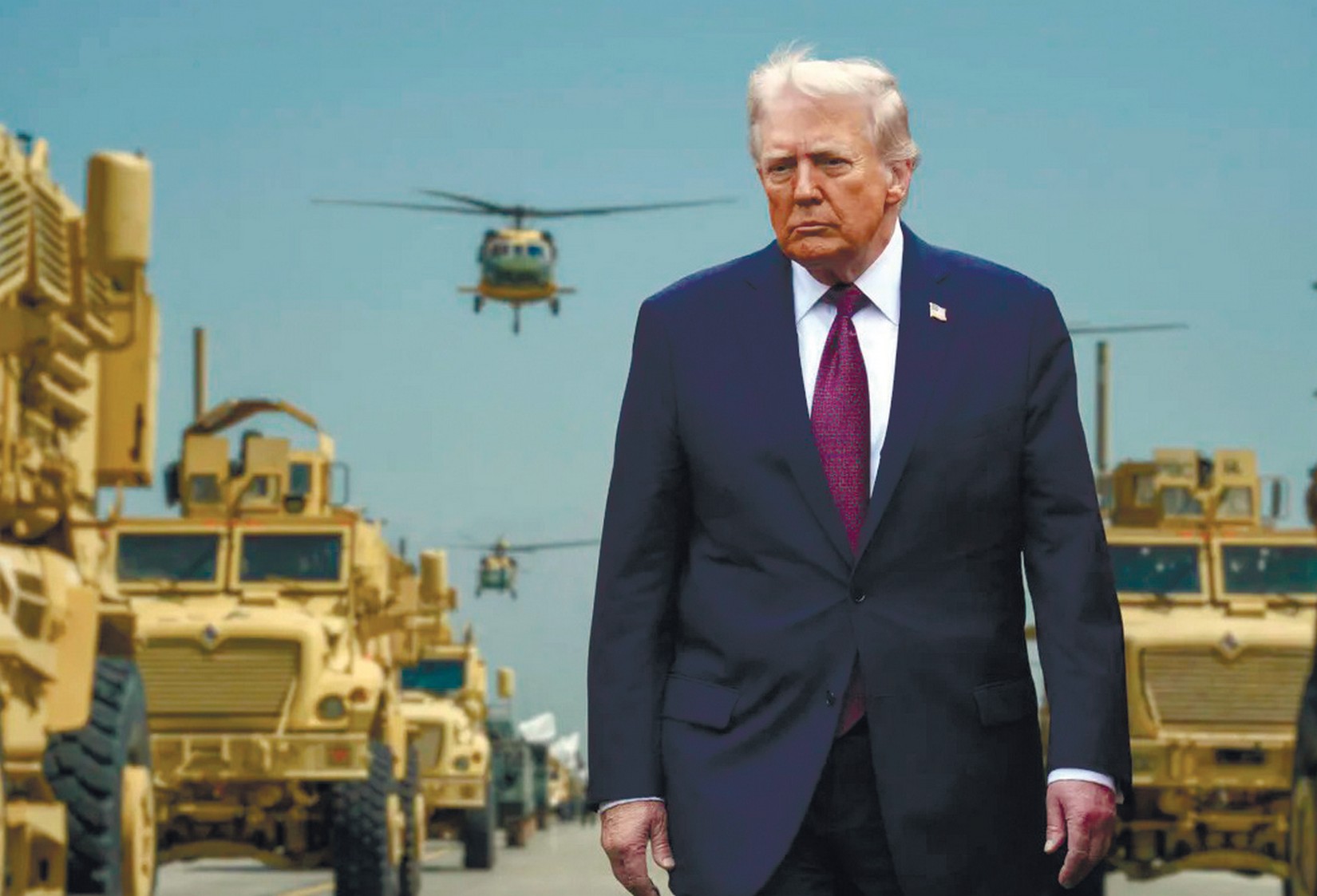
US President Donald Trump threatened a military strike on Nigeria if the local authorities do not put an end to persecutions and killings of Christian communities. He also stressed that Washington is ready to halt all financial and military assistance to the country. "I am instructing our military department to prepare for possible action. If we strike, it will be swift and severe… in the same manner as those terrorist bandits attack our cherished Christian communities. A warning: the Nigerian government must act quickly!" he wrote on his Truth Social account.
"Yes, sir," replied US Defence Secretary Pete Hegseth. "The killing of innocent Christians in Nigeria—or anywhere—must stop immediately. The military department is preparing for action. Either the Nigerian government protects Christians, or we will eliminate those Islamist terrorists committing these horrific atrocities."
Nigeria’s population is almost evenly divided between Muslims and Christians. The government does not persecute Christians, but they frequently fall victim to the actions of extremist groups such as Boko Haram.
Meanwhile, for several weeks discussions have continued in the US about the possibility of a military operation against Venezuela. The stated reason is not the protection of Christians, as Caracas stands accused of drug trafficking. Reports periodically emerge of missile strikes on boats transporting narcotics to the US. Congress has already rejected a resolution requiring Donald Trump to obtain Capitol Hill’s approval before launching any action against Venezuela. Altogether, the situation forms a troubling picture.
Strikes on drug-smuggling boats in the Caribbean look dramatic. But how effective is this measure in combating narcotics? The question remains open. First, not all vessels can be intercepted; some will inevitably get through. Second, drug cartels will search for new methods of smuggling. For example, hiding contraband in the cargo holds of cruise liners, which cannot simply be targeted with a missile. There are third, fifth, and tenth points to consider. Hence the question arises: should a "clean-up" operation be carried out inside Venezuela itself?
Christians, drugs, or oil?
Trump raised the possibility of military intervention in two countries—Venezuela and Nigeria. Both possess substantial oil reserves. Venezuela, in fact, holds the world’s largest proven reserves of crude. It is tempting to claim that Washington is truly interested in controlling oil, rather than protecting Christians or combating narcotics. This theory is strengthened by today’s intense struggle on the global oil market. Washington is steadily imposing sanctions on Russia’s fuel-energy sector. The noose has tightened around Lukoil and Rosneft. India and China are cutting purchases of Russian oil. Against this backdrop, the version that Trump is primarily concerned with oil cannot be dismissed.
But to what extent does this "classical" explanation match reality? Let us set Nigeria aside—apart from one statement, nothing has followed. Yet the tension in the Caribbean and around Venezuela is growing visibly.
To begin with, let us be realistic: narcotics trafficking from Latin America truly is a major challenge for the US. And Venezuela is in no hurry to "take action".
Moreover, since the time of Hugo Chávez and Bolivia’s former president Evo Morales, the traditional practice of chewing coca leaves has been elevated again to a sacred ritual. In Latin America it has deep roots. So deep that scientists still struggle to find wild coca. However, the point is that most coca is processed into cocaine, the bulk of which ends up on the American market. Proceeds from drug trafficking finance many radical and terrorist groups in the region, often supported by "Bolivarian socialists" such as Maduro.
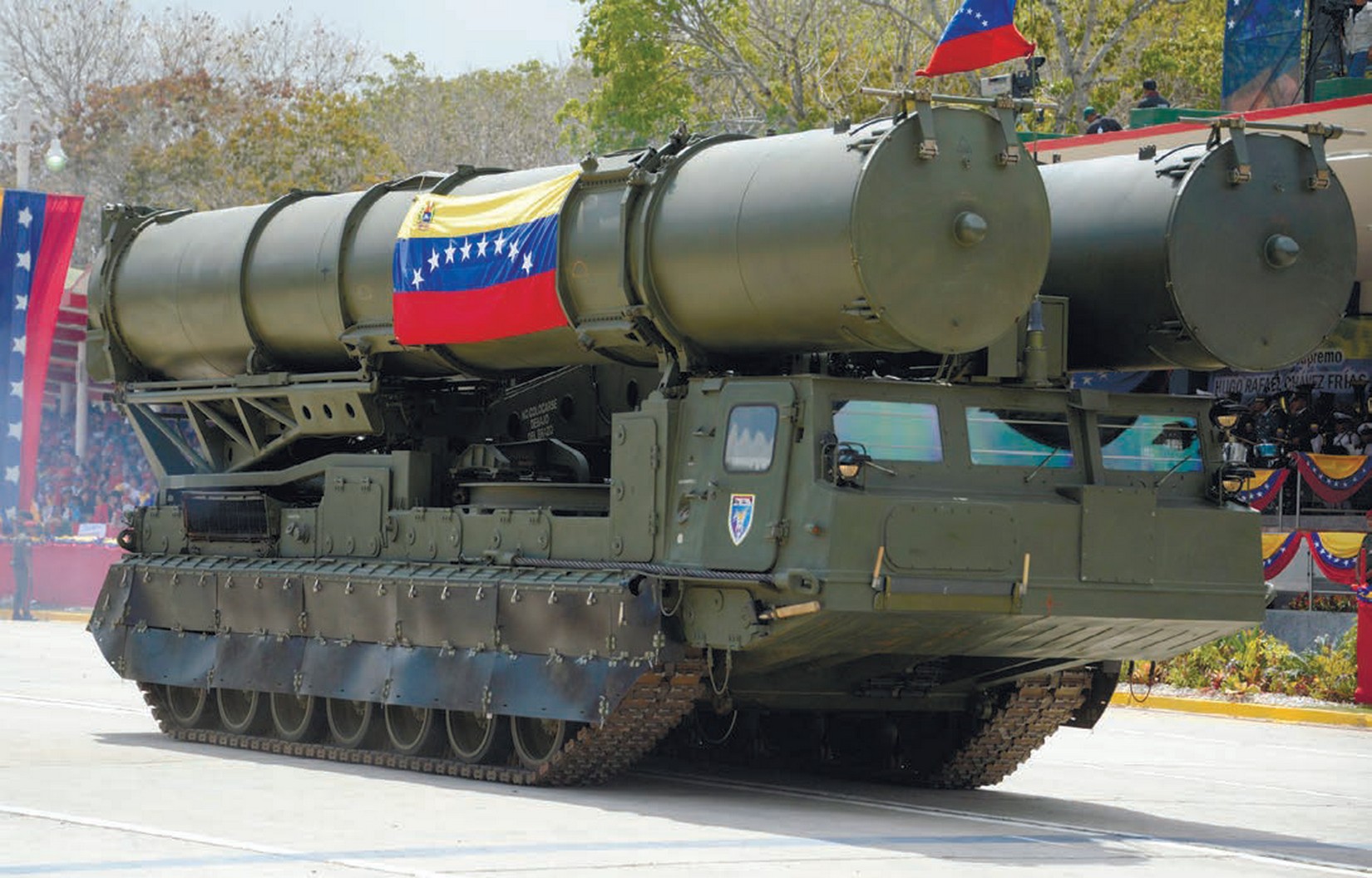
There is another dimension. Venezuela has been actively developing military cooperation with Russia. Russian missiles have already been deployed there. Unsurprisingly, Washington dislikes having an anti-American government "on its doorstep". But does this mean Donald Trump would truly embark on a large-scale military operation in Venezuela?
It looked smooth on paper…
Such a decision would mean abandoning his previous image as a peacemaker in big politics—a far from simple step. And even now, there is no clarity on what exactly constitutes a "large-scale military operation". One scenario is that the US targets plantations and other cartel-controlled sites. Quite another is a ground invasion, regime change, and everything that follows.
From a purely military standpoint, such an operation would likely present few difficulties. For a country like the US, breaking the resistance of Venezuela’s army would not be overly challenging. Even demonstrative supplies of Russian air-defence systems may not help. As the war in Ukraine shows, it is entirely possible to neutralise Russian air-defence assets. There are also doubts that Russia would support Venezuela to the necessary extent. First, with the war in Ukraine, Moscow has no bandwidth for Nicolás Maduro. Second, engaging in a direct confrontation with the US is excessively risky.
The real obstacles lie in the political sphere. Until 1999, Venezuela was a typical Latin American petrocracy. But in 1999 Lieutenant-Colonel Hugo Chávez assumed the presidency and proclaimed Bolivarian Socialism. Oil dollars were channelled directly into social programmes. A "policy of unprecedented generosity" towards the urban poor began. Cash handouts, subsidies, free housing furnished with appliances… For a moment, Venezuela appeared to enter a social paradise. Then it all collapsed. Oil prices, once soaring, declined. Financing previous levels of social spending became impossible. Specialists had long warned that oil revenues must not be poured directly into the budget, as they are too unstable. Venezuela ignored this and paid dearly. Yet cutting social spending became politically impossible. The authorities resorted to printing money. But stabilising the situation proved unattainable.
In 2013 Chávez died, and Maduro, his vice-president, assumed power. The "social paradise" gave way to hell. Inflation runs into four-digit rates. The country lacks paper to print its own currency, the bolívar, previously imported with foreign exchange that no longer exists. In a country with immense natural wealth, hunger is widespread. Hospitals face acute shortages of medicines. The metro system cannot sell tickets—there is no paper to print them. Crime has skyrocketed: Venezuelans say they have been robbed several times in recent years. Tourism, despite the country’s natural beauty, has nearly vanished. Few are willing to pay money only to risk being stabbed. Elections, it is claimed, are won by Maduro solely through falsifications.
It might seem enough to give the regime a slight push and it would collapse. But not everything is so simple. The authorities enjoy support. The army, police, and even major criminal groups each receive their dependable "share of the pie". These very structures control food distribution and secure a little "for themselves". It is not hard to guess that they will defend Nicolás Maduro fiercely. Moreover, the opposition still lacks a bright and charismatic leader, and those being "appointed" to this role lack both popular appeal and populist flair.
In the US it is now openly acknowledged that the forceful export of democracy does not work. One can still bring someone to power "on American bayonets", but keeping them there is another matter. This is a powerful argument against a military operation. Yet the situation may shift not because of Washington, but because of Caracas—particularly if Maduro is cornered.
RECOMMEND:
 168
168

