

RACES WITHOUT A FINISH LINE
A new round in nuclear technologies transforming mutual deterrence into a struggle for survival
Author: Irina KHALTURINA
After the end of the Cold War and the establishment of a new architecture of international security, the prevailing belief was that a nuclear war had become impossible because it guaranteed mutual destruction. However, the 21st century, with its emerging and evolving technologies, has been adjusting that concept. The discussion now concerns not how many nuclear warheads each side possesses, but how "intelligent" and "endurance-capable" their delivery systems are and who would still be able to survive and act effectively during what strategists call a "second strike" or "second chance".
At the same time, this broadens the potential scope of nuclear use. No longer only in the context of a Third World War in its classical sense, but also in possible scenarios of limited regional use. Against the backdrop of confrontation between Russia and NATO countries in Ukraine, the international community is increasingly hearing talk about resuming nuclear testing. The rules of the mutual deterrence system are rapidly eroding, and the world is witnessing a new stage in the nuclear arms race. It is clear that when new rules of the game begin to form, the transition period is particularly dangerous.
Abandoning the moratorium?
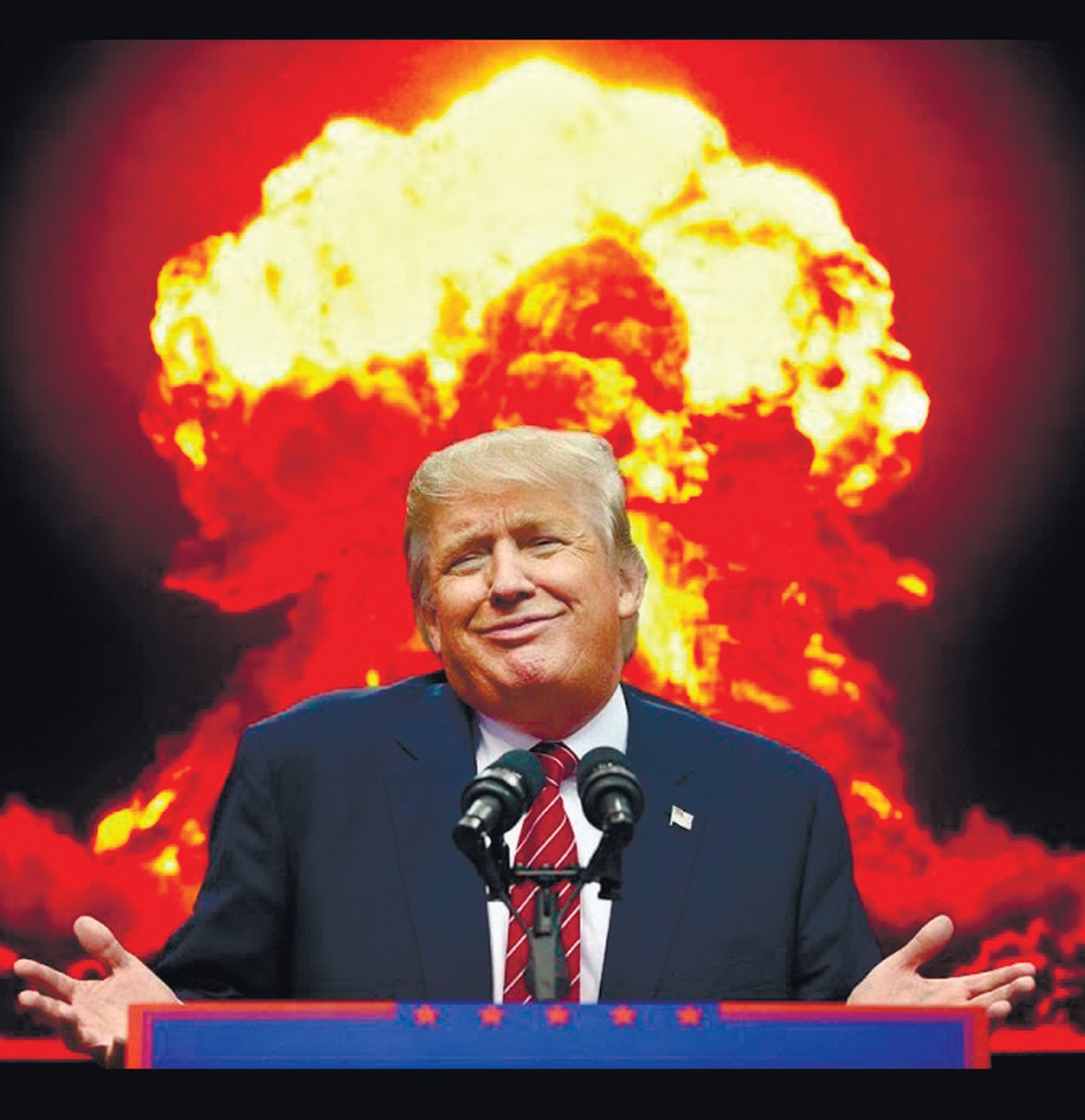
At the end of October, US President Donald Trump stated that he had instructed the Pentagon to "begin nuclear testing on equal footing" with other countries. According to him, the US has "the largest nuclear arsenal, Russia is second, and China, significantly behind, stands in third place but will reach parity within five years".
In response, Russia’s President Vladimir Putin instructed the Foreign Ministry, Defence Ministry, intelligence services and several civilian agencies on 5 November to prepare proposals on potential preparations for nuclear tests. Putin noted that Russia adheres to its obligations under the Comprehensive Nuclear-Test-Ban Treaty (CTBT) but must take adequate countermeasures if other signatories resume testing. Moscow believes that Washington’s potential withdrawal from the moratorium could become a step towards dismantling the system of global strategic stability.
It is worth recalling that last year Russia officially amended its nuclear doctrine, adding the possibility of responding to "aggression by any non-nuclear state involving or supported by a nuclear-armed state". Russia reserves the right to use nuclear weapons in response to aggression against itself or Belarus involving conventional weapons if such aggression threatens sovereignty and territorial integrity.
Testing nuclear-strike scenarios
Tests without nuclear components are conducted quite regularly, and nothing unusual is involved. The US routinely tests its Minuteman III intercontinental ballistic missile (ICBM), the main weapon of the land-based leg of the American nuclear triad, often referred to as the "city killer". Most recently, it was launched from Vandenberg Space Force Base in California and landed near the US Army’s missile-defence test site on the Marshall Islands, covering more than 6,700 km. In October, NATO forces once again rehearsed a potential real scenario of nuclear strikes on Russia above the North Sea using American strategic bombers.
Moscow, in turn, announced the completion of tests of the Burevestnik—a missile with unlimited range powered by a nuclear propulsion system. On 4 November, during an awards ceremony for the developers of the Poseidon (essentially a submarine drone carrying a nuclear or thermonuclear warhead) and the Burevestnik, Putin declared that the Oreshnik missile system had entered serial production. He also confirmed the development of a new generation of nuclear-powered cruise missiles that are expected to become hypersonic.
Putin further announced that the heavy intercontinental Sarmat missile, replacing the Soviet-era Voyevoda deployed since 1988, would enter combat duty in 2026. This comes in addition to the routine test launches of the land-based Yars ICBM and the submarine-launched Sineva ballistic missile.
Remarkably, just three days after news about Russia’s latest systems, an unusual leak appeared in the US, concerning the highly classified AGM-181A nuclear-armed cruise missile developed under the Long Range Stand-Off programme. Reports also stated that the US plans to deploy Dark Eagle medium-range ballistic missiles in Germany, capable of striking central regions of Russia in just 6–7 minutes.
Both the US and Russia are closely monitoring each other’s moves. Washington is concerned about Russia’s active promotion of its new technologies, while Moscow is clearly unhappy that NATO not only checks the technical readiness of its nuclear forces but rehearses nuclear-strike scenarios specifically against Russian territory. The CTBT prohibits any nuclear explosions—military or peaceful—on land, underwater, underground or in space. However, testing nuclear delivery systems without warheads remains outside its formal remit. This leaves uncertainty about what exactly Washington and Moscow mean when speaking of "resuming nuclear tests".
Commenting on speculation that Washington might have mistaken tests of the nuclear-powered Burevestnik or Poseidon for nuclear weapons tests, Kremlin spokesperson Dmitry Peskov clarified: "This concerns, first of all, a delivery platform, not a nuclear explosion. It involves a nuclear propulsion system or engine, which are entirely different matters."
Experts consistently emphasise that computer modelling of nuclear explosions now produces even more reliable data than actual tests. The US has not conducted a real nuclear test since 1992. According to some sources, America is currently experiencing difficulties with test-site readiness, personnel shortages and uranium enrichment capacity.
There are also claims that the US is lagging in the field of tactical nuclear weapons because in recent years its defence industry has focused more on producing conventional arms, which generate higher profits. The Minuteman III system, for example, has been in service since 1970 and is only periodically modernised.
The third pillar of the triad
While the US and Russia are engaged in a remote display of power, a third player has firmly entered the nuclear competition—China. For the first time since the 1980s, China conducted an intercontinental ballistic missile test in September 2024, launching a DF-31AG training warhead toward international waters in the southern Pacific. According to the latest data, China now surpasses both the US and Russia in the number of deployed ICBMs, possessing 462 (compared with 400 for the US and 333 for Russia). China also leads all other nuclear powers in the annual production of warheads. Under President Xi Jinping, the country’s nuclear arsenal has expanded faster than under any previous Chinese leader. According to the Stockholm International Peace Research Institute (SIPRI), China possesses at least 600 nuclear warheads and has been adding around 100 annually since 2023.
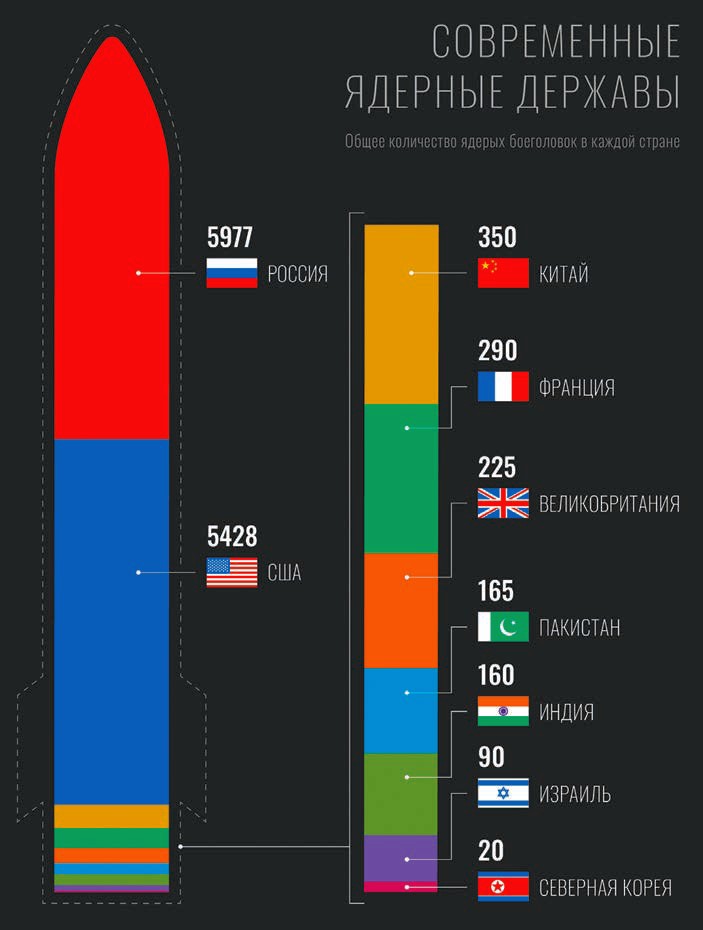
SIPRI analysts forecast that by 2035 China could have around 1,500 warheads. Currently, the US and Russia still account for 90% of the world’s nuclear arsenal. Western media note that while Russia slightly exceeds the US in the total number of nuclear warheads, America leads in deployed nuclear-launch platforms.
According to SIPRI, as of January 2020 the US possessed 5,800 warheads and Russia 6,375. Experts estimate that the US stores at least 100 tactical nuclear bombs at bases in Europe. Meanwhile, both the US and Russia continue developing new types of nuclear munitions. Competition is also intensifying in the construction of small modular reactors and naturally in missile-defence and anti-satellite technologies.
This situation raises serious questions about the future of strategic-arms treaties. During his first presidential term, Trump refused to negotiate an extension of the New START Treaty and withdrew the US from the Intermediate-Range Nuclear Forces Treaty. At the same time, Washington has repeatedly signalled that it considers China a key competitor and…
China’s expanding capabilities are clearly causing growing concern in Trump’s circle. Yet, as Russian experts point out, he rejects the idea of bringing France and the United Kingdom into the negotiations, even though the US could transfer part of the warheads slated for reduction to those allies. If Washington breaks the moratorium and initiates full-scale weapons testing, this could trigger a domino effect among other nuclear powers. China could resume testing at the Lop Nor site, and most likely India and Pakistan would follow.
According to SIPRI, the nine nuclear-armed states—the US, Russia, China, the United Kingdom, France, India, Pakistan, Israel and North Korea—possess a total of 12,241 nuclear warheads. It is notable that Robert Kadlec, nominated by Trump for the post of US Assistant Secretary of Defense for Nuclear Deterrence, and Chemical and Biological Defence Policy and Programmes, stated that Washington would like to sign an agreement with Russia on controlling tactical nuclear weapons, an area not currently regulated by any bilateral or multilateral treaties.
The traditional model of nuclear deterrence developed during the Cold War, when strategic balance depended almost exclusively on the US–Soviet confrontation, is giving way to a more complex multipolar system. Its core is defined by the interactions among the US, Russia and China. This evolution is further complicated by new technological developments. By the end of the first quarter of the 21st century, nuclear rivalry, contrary to optimistic forecasts, is producing risks unseen since the 1960s. All three major powers consider themselves to be in a phase of technological or strategic disadvantage and are intent on “catching up” before sitting down at the negotiating table.
The increasingly active use of artificial intelligence, along with the capability to disable early-warning satellites or breach nuclear-command systems, threatens the very logic of deterrence and raises the likelihood of automatic escalation during crises. The world is entering a dangerous period when any poorly considered or uncoordinated step may prove fatal for humanity.
RECOMMEND:
 207
207

