

POST-CONFLICT SHIFT
Georgian-Armenian dialogue amidst reset in South Caucasus

Author: Namig H. ALIYEV
The year 2025 proved pivotal for the entire South Caucasus. Following the Washington Summit on August 8, 2025, the region entered a phase of cautious yet noticeable reassessment of relations, with regional dynamics gradually shifting from confrontation towards a window of opportunity. The conflict that had defined the agenda for nearly three decades is giving way to diplomacy, transport interconnectivity, and economic pragmatism.
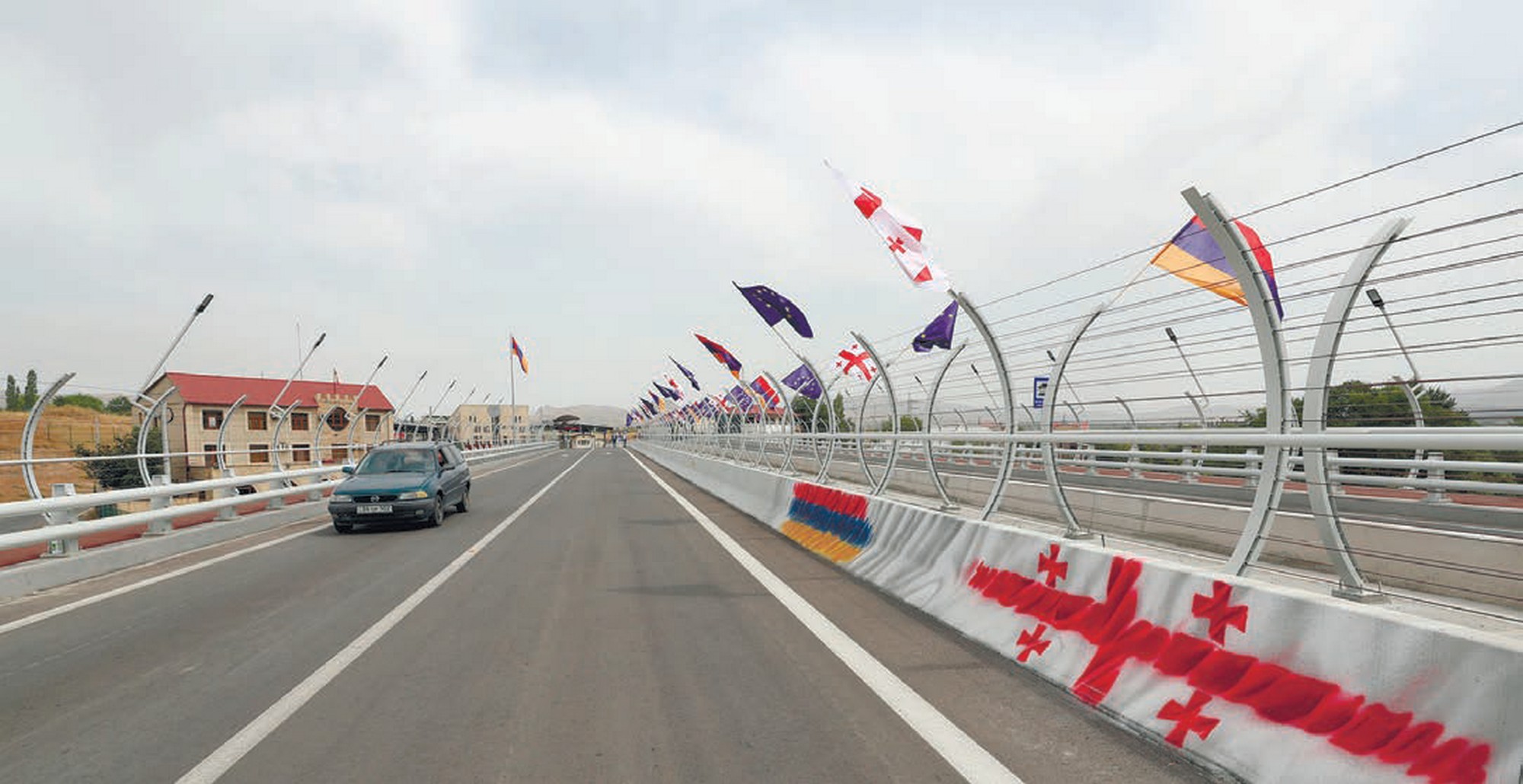
Against this backdrop, Georgia and Armenia, two neighbours with historically close yet complex relations, have received a unique chance to transform traditional "good neighbourliness" into genuine strategic partnership. Their dialogue is becoming part of a new reality, a new post-conflict landscape, where for the first time in a long while, one can speak of peaceful possibilities rather than solely risks. For Tbilisi, this means enhancing its role as a platform for dialogue and transit. For Yerevan, it signifies access to new geo-logistical routes, strengthened economic resilience, and reduced regional vulnerability.
Tbilisi actively supported the peace treaty, emphasising that "a stable and secure South Caucasus is a common goal for all our countries." For Armenia, which has endured the painful consequences of the conflict, building sustainable relations with Georgia is becoming not only a political but an economic necessity: its primary access to the Black Sea, Europe, and global markets runs through Georgian territory.
Amid the grand "Caucasian Reset," the Georgian-Armenian dialogue now appears the most pragmatic and constructive. Politics, economics, security, and the transport-logistical component function as an integrated whole. The sides are striving to turn good intentions into concrete mechanisms of cooperation—from energy to transport corridors.
The new post-conflict balance
The initialling of the peace agreement between Armenia and Azerbaijan and the progress towards its implementation are changing the game. This process has not merely been a stage in ending the conflict; it has opened a new chapter in the history of the South Caucasus.
The region is now restructuring itself around three key axes. The first is peace and security, where Georgia gains an opportunity to settle conflicts on its own territory. The risk of military incidents is decreasing, which enhances the region's business and transport appeal. The second axis is transport and logistics, where new routes are being formed—from Zangezur to the Middle Corridor. And the third is economic cooperation, where against a backdrop of growing investment in the region, Armenia and Georgia are seeking a balance between the interests of their own economies and competing transit projects.
While Baku and Yerevan develop mechanisms for implementing the peace agreements, Georgia is attempting to position itself as a stabiliser. "Peace between Azerbaijan and Armenia is not only their victory. It is a chance for the entire Caucasus to emerge from the geopolitical impasse," notes Georgian analyst Vakhtang Maisaya.
This logic is perfectly reflected in relations with Armenia. Tbilisi and Yerevan are intensifying political contacts, strengthening economic ties, and discussing joint transport initiatives. With the signing of the Declaration on Strategic Partnership between Armenia and Georgia on January 24, 2024, the sides for the first time formally documented their mutual aspiration for systemic, rather than situational, cooperation. "We signed a document on strategic partnership... new opportunities are opening... We are also obliged to continue the process of delimiting the border with Georgia," stated Armenian Foreign Minister Ararat Mirzoyan.
Armenian Prime Minister Nikol Pashinyan, commenting on the new format, emphasised: "We are entering an era where the South Caucasus can be a space for cooperation, not an arena of conflicts. Armenia and Georgia are natural allies on this path."
Politics and security
The year 2025 in Armenian-Georgian relations began with "synchronising watches" on strengthening strategic partnership. In January, the 14th session of the Intergovernmental Commission on Economic Cooperation between Armenia and Georgia was held, where a new impetus in bilateral relations was particularly noted. This was also confirmed by Pashinyan, who stated that "the establishment of strategic partnership between our countries... has given a new impetus to interstate relations..."
From the Georgian side, readiness to deepen relations was also affirmed. Tbilisi stresses that bilateral relations have "significantly advanced" and possess "great potential for further expansion."
Thus, the foundation for cooperation is formally strengthened: mutual commitments have been declared, an institutional framework defined, and goals set.
Throughout the three decades of the Armenian-Azerbaijani conflict, international players chose Georgia as a platform for deploying their structures and international NGOs. Now, by inertia, Georgia positions itself as a mediator and a platform for transport and dialogue between Armenia and Azerbaijan. In October 2025, a draft Georgian budget was compiled, stating that Georgia is "ready to host discussions on any current issues between Azerbaijan and Armenia."
For Yerevan, ensuring regional stability and open transport links becomes an element of security. Cooperation with Georgia helps reduce the risk of geographical isolation.
Unresolved issues remain in Armenian-Georgian relations. The complex and ambiguous process of delimiting the border between Armenia and Georgia is marked as a topic for activation, though without specific timelines yet. The role of Russia, Iran, and China in terms of geopolitical competition remains significant. And if Tbilisi and Yerevan do not develop a clear position, they may face imposed roles, consequently opening channels for influence and unwanted penetration into the South Caucasus. To a certain extent, the Georgian-Armenian format is also influenced by Armenia's unfulfilled condition set by Azerbaijan, necessary for signing the peace agreement.
All this makes the partnership between Georgia and Armenia not merely bilateral, but part of a broad process of reshaping the South Caucasian space.
Economy
As of January-May 2025, trade turnover between Georgia and Armenia amounted to approximately $280.3 million, which is 6.4% less than the same period the previous year. Georgia's exports to Armenia fell by 11.9% (mainly due to a decrease in car re-exports). Meanwhile, imports from Armenia, conversely, increased by 10.3%.
Direct investments from Armenia to Georgia in 2025 amounted to approximately $5.3 million, compared to about $6.9 million the year before. The volume of remittances also decreased.
Tourism showed slight improvement. Armenia remains the third-largest source of tourist revenue for Georgia—390,788 visits (+0.8%) in 2025.
The main reasons for the weak indicators should be considered the reduction in car re-exports from Georgia to Armenia—this is one key factor. Another factor is logistical/border problems: Armenian businesses complain of delays and enhanced checks at the Georgian border. Regional instability and transit uncertainty affect the investment climate. And finally, one must note the weak diversification of cooperation—a structural lack of major joint economic projects.
Throughout the year, bilateral relations have also sent positive signals. Institutional steps such as elevating the level of contacts to strategic partnership, regular meetings of intergovernmental commissions, are intended to stimulate interconnections. Officials from both countries emphasise that economic cooperation remains a priority. Tourism holds great potential—a sector driven by the geographical proximity of the two countries and natural factors.
It can be said that the economic relations between Georgia and Armenia are in a "waiting" stage. Formally—a solid legal base and a high level of political trust. Practically—growth is limited. Changing the situation requires infrastructure projects, elimination of administrative barriers, and active utilisation of the new regional context.
On the role of transport and logistics corridors
Georgia, thanks to Azerbaijan's transport-communication projects, is positioned as part of a key node between East and West. Logistics through the Caucasus Mountains are also important.
Georgia is Armenia's "maritime outlet." For a landlocked country, transport links via Georgia remain critically important. The ability to route cargo flows through Georgian ports enhances the logistical significance of the Tbilisi-Yerevan chain. In meetings, the sides have repeatedly emphasised the importance of removing customs-border barriers.
Armenia, in turn, is an additional route for Georgia to the south and east. Tbilisi could become a transit hub, reducing its vulnerability and increasing its economic significance, once Armenia gains access to the "North-South" route (Russia-Azerbaijan-Iran) via the Zangezur Corridor (TRIPP). Joint initiatives (roads, railways, border procedures) between Georgia and Armenia could meanwhile accelerate within the context of the new regional balance.
Competition with alternative routes (via Azerbaijan, Türkiye, Iran) is intensifying, so it is important for Georgia to maintain advantages in cost and delivery speed.
Thus, the peace process between Armenia and Azerbaijan opens paths for logistical reorientation: the idea of multi-corridors prevails. And the transport-logistics direction represents one of the main "engines" for future Georgian-Armenian cooperation. If concrete projects are realised and administrative/border obstacles eliminated, this sector could become a breakthrough point.
Forecast for the next 1-2 years
The mentioned trends evoke a range of expectations in Armenian-Georgian relations. A high level of bilateral contacts is highly likely to persist. There is a probability of certain progress in an agreement on delimiting the border between Georgia and Armenia.
If logistical/border barriers are eliminated, growth in trade and investments could resume. The emergence of one or two flagship projects (a logistics hub, a joint enterprise) is possible. But without infrastructural leaps, growth will remain moderate.
The implementation of transport routes (Zangezur Corridor, or TRIPP) via Armenia could attract transit flows. The speed and cost of transportation will play a crucial role. Success in this direction could significantly enhance the importance of Georgia-Armenia in the region.
In conclusion
Relations between Georgia and Armenia in 2025 can be characterised as transitional yet promising cooperation. On one hand, there is a new level of institutionalisation, declared strategic goals. On the other—the economy still shows mixed signals, transport-logistics potential is not fully realised, and the regional context is changing.
It is the realisation of transport-logistics projects and the elimination of administrative/border barriers that could turn "good intentions" into tangible benefits. Politics sets the framework, but economics and logistics are the fields where real gains are made.
RECOMMEND:
 208
208

