

G20: AFRICA'S MOMENT
A summit that began with a declaration and ended with questions
Author: Irina KHALTURINA
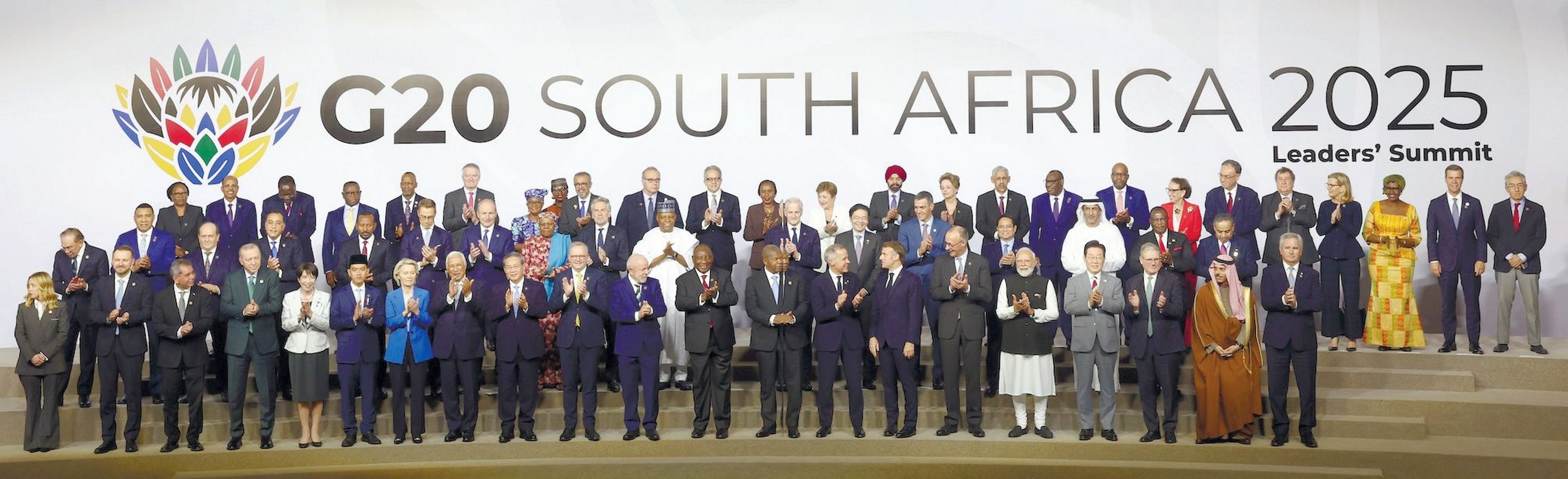
The G20, which convened on November 22-23 for the first time in 17 years on the African continent, specifically in South Africa, left behind many questions, contradictions, and uncertainties.
Given the currently radically restructuring system of international relations, this format can no longer be called effective in solving current issues of global politics. The fact is that the G20, originally created for consultations on issues relating to the international financial and economic system, is too large, and within its framework, many interests collide. This year, the leaders of the US, Russia, and China declined to participate in the event for various reasons, with no American representatives present at all. Argentina, Mexico, Indonesia, and Saudi Arabia also abstained.
The 2025 summit in Johannesburg was also notable for the fact that, contrary to established practice, the final declaration was adopted at the beginning of the event, although the document was not supported by all. A positive outcome of the forum is that it will undoubtedly be remembered for elevating the role of the poorest continent in global politics. Many African media outlets covered the results of G20-2025 precisely in this light.
"Africa always brings something new"
"Our meeting is taking place amid intensifying geopolitical and geoeconomic rivalry and instability, escalating conflicts and wars, deepening inequality, and rising global economic uncertainty and fragmentation," states the final declaration. These words now perfectly illustrate the context of any international institution or organisation's meeting. At the same time, the parties emphasised their "belief in multilateral cooperation to collectively overcome common challenges" and called for solving current world problems. A particular focus is proposed on enhancing resilience to natural disasters and improving response measures, as well as taking more active global steps in the fight against climate change. The declaration, consisting of 122 points, also speaks of the need to end wars and counter terrorism in all its forms, and to uphold the rights of refugees.
A significant portion of the text is devoted to issues of economic growth, industrialisation, investment in infrastructure and healthcare, inclusive growth and sustainable development, data governance, innovation, employment, reducing inequality, and food security. The relevance of reforming international financial systems, implementing just energy transitions, ensuring supplies of critical minerals, and maintaining sustainable debt levels in low-income countries is acknowledged. Specifically, the G20 working group on critical minerals intends to work towards ensuring African states receive more financing from their own mineral resources.
The leaders also agreed to develop international cooperation in the field of AI to fully unlock its potential, fairly distribute its benefits, and mitigate risks, taking into account the needs and views of all countries. Comparatively much attention in the declaration is paid to the problems of the poorest members of the international community: it is emphasised that over 600 million Africans currently lack access to electricity. Furthermore, the G20 leaders "commit to reforming" the composition of the UN Security Council, calling for increased representation from Africa, the Asia-Pacific region, and Latin America.
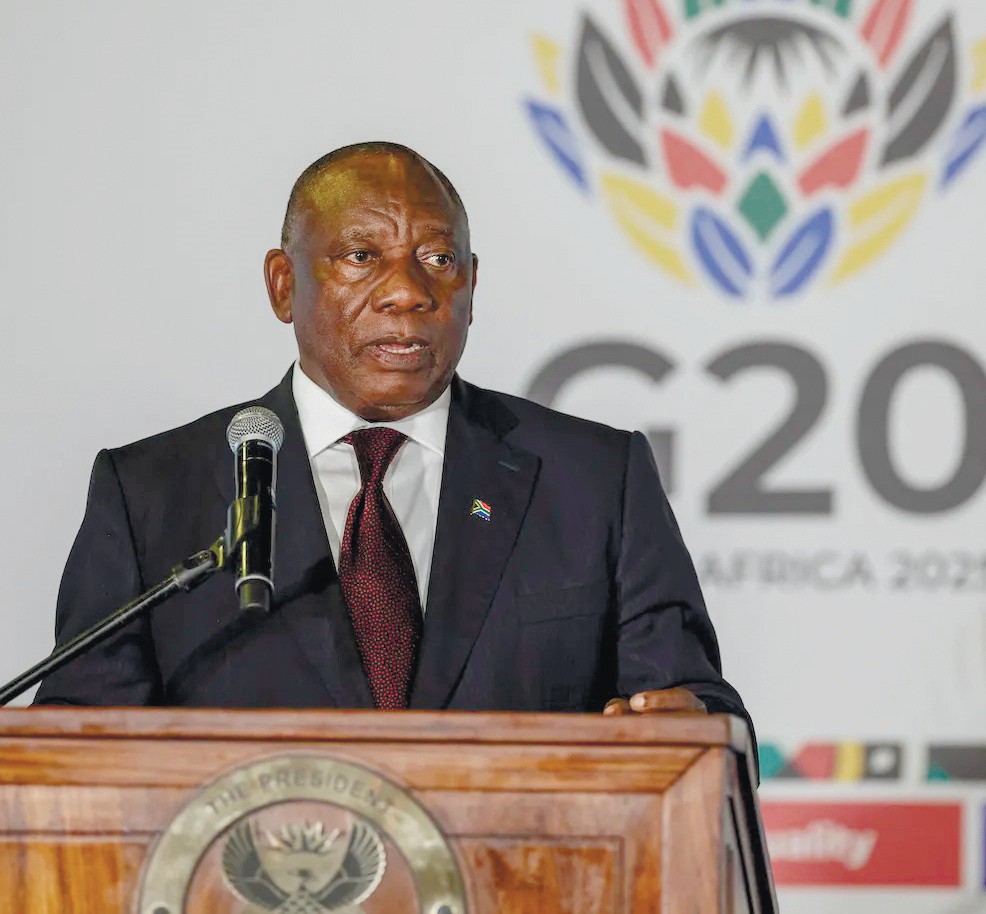
Notably, South African President Cyril Ramaphosa, "despite consistent and firm objections" from the American side, insisted that participants agree on a declaration mentioning the climate crisis. A senior White House official called this "shameful," but the South African president's spokesperson stated the declaration was "not up for review." Ramaphosa commented on the final document being adopted at the start of the event with the words: "Africa always brings something new."
The host's mood was noticeably optimistic, so the adoption of a joint statement, despite the boycott by the absent US, was indeed considered a success. Much local media commentary boiled down to the notion that the summit's tone was set not by the empty chair left by the Americans, but by South African leadership and the growing confidence of all Africa. In South Africa, the summit was called a "triumph of multilateralism." According to local observers, the continent was presented at the forum not as a traditional problem requiring a solution or rescue, but as one of the driving forces behind global solutions.
It was particularly emphasised that the G20 agenda in Johannesburg was framed through the prism of the African philosophy of ubuntu (in Zulu, "humanity")—a culturally rooted worldview recognising that nations thrive through cooperation and interdependence, not isolation. This is understood in the sense of unifying the social, environmental, and spiritual contexts.
From Africa to Florida
Not all participants shared the positive mood of the host country. French President Emmanuel Macron, for example, stated that the G20 "is failing to address global security crises, which threatens its existence." He pointed to the difficulty in reaching a common standard in the geopolitical sphere, suggesting the G20 was "probably approaching the end of its cycle." "We are experiencing a moment in our geopolitics where it is very difficult for us at this table, including members who are not present today, to resolve major international crises," said Macron, referring also to the fighting in Ukraine and the situation in the Middle East.
The US President skipped the summit because he considers the South African authorities guilty of violating the rights of the republic's white population (Afrikaners—descendants of European settlers). It was assumed that Vice President JD Vance would go to Johannesburg, but three weeks before the event, Trump announced that no one from the administration would travel to South Africa. Therefore, the South African President could not personally hand over the G20 chairmanship to the US representative, doing so, as he put it, to an "empty chair."
Nevertheless, the 2026 summit, as expected, will take place in Miami. Trump has already stated it will be a grand event and that he counts on "restoring the legitimacy of the G20" when it meets on American soil.
Observers are already speculating about what Washington's chairmanship will be like. How will Trump use the opportunity to gather countries that together represent about 85% of global GDP? What agenda will the White House set? After all, everyone knows about the current White House administration's negatively cool attitude towards multilateral formats, noting that Trump prefers to act more narrowly and concretely. However, everything will depend on both the internal situation in the US at that time and the global agenda.
As for the global agenda, it will most likely continue to be influenced by the situation in the Middle East, around Ukraine, and the rivalry between Washington and Beijing. Incidentally, Trump has already stated he would "be happy to welcome" the Russian and Chinese leaders in 2026.
The White House leader will be interested in using the G20 as a platform for negotiations and deals he needs. So, the likelihood of the G20 ceasing to exist is very small. But not because this forum is strong, representative, and makes effective decisions, but because there is no point in changing anything, and in current conditions, nothing new can be devised anyway. With the right approach, each interested party can derive its own benefit.
This year, South Africa successfully drew attention to itself and the continent in the right way, and Trump, the leader of the world's most powerful and developed country, will pursue his own goals first and foremost. As for the common declared tasks, they will be adjusted for each specific case and context. But it is unlikely the G20 will remain the main platform specifically for dialogue between the developing and developed worlds—it's not the right format, not the right leaders, and not the right international situation.
RECOMMEND:
 172
172

