

INTRIGUING PEACE PLAN
Diplomacy amid uncertainty: who is trying to rewrite Ukraine’s negotiating agenda, and how
Author: Samir VELIYEV
Following a long pause, consultations on a peace plan for the Ukrainian conflict have resumed, but they now resemble a detective plot rather than routine coordination of parameters for resolving what is arguably the bloodiest confrontation since the Second World War.
Rumours and speculation as part of the peace agenda
Bloomberg published a transcript of a phone conversation in which Steven Witkoff allegedly suggested to Yuri Ushakov, aide to the Russian president, that they work together on a peace agreement. The transcript claims that Witkoff offered recommendations on how President Putin might most effectively raise the subject of a settlement in his conversation with Donald Trump.
Another transcript, from a meeting between Ushakov and Putin’s special envoy Kirill Dmitriev on October 29, indicates that they discussed a draft “peace plan” and the degree of insistence with which Moscow should push its demands. Ushakov advocated seeking “maximum concessions” from Kiev.
Around the same time, NBC reported alleged tensions between US Secretary of State Marco Rubio and Vice President J. D. Vance due to differing views on the issue. According to the report, the vice president considered it necessary to increase pressure on Kiev, whereas Rubio believed pressure should be applied primarily to Moscow.
The Secretary of State dismissed the report as fictitious. “This publication is yet another entry in a long series of completely fake stories claiming divisions within the Trump administration on how to end the war in Ukraine,” he wrote. Vance also backed Rubio, accusing the media of publishing falsehoods aimed at undermining Trump’s plans. None of these developments changed the essence of what was happening: the process of searching for peace in Ukraine resumed.
The sequence began on November 19 with a working visit by President Vladimir Zelensky to Türkiye. His negotiations with Recep Tayyip Erdogan in Ankara were seen as an attempt to revive the “Istanbul format”, which previously enabled agreements on prisoner exchanges and the grain deal. Ukraine stated that the visit’s objective was to “reactivate the negotiating process” and broaden it by involving Western partners, primarily the US and European countries.
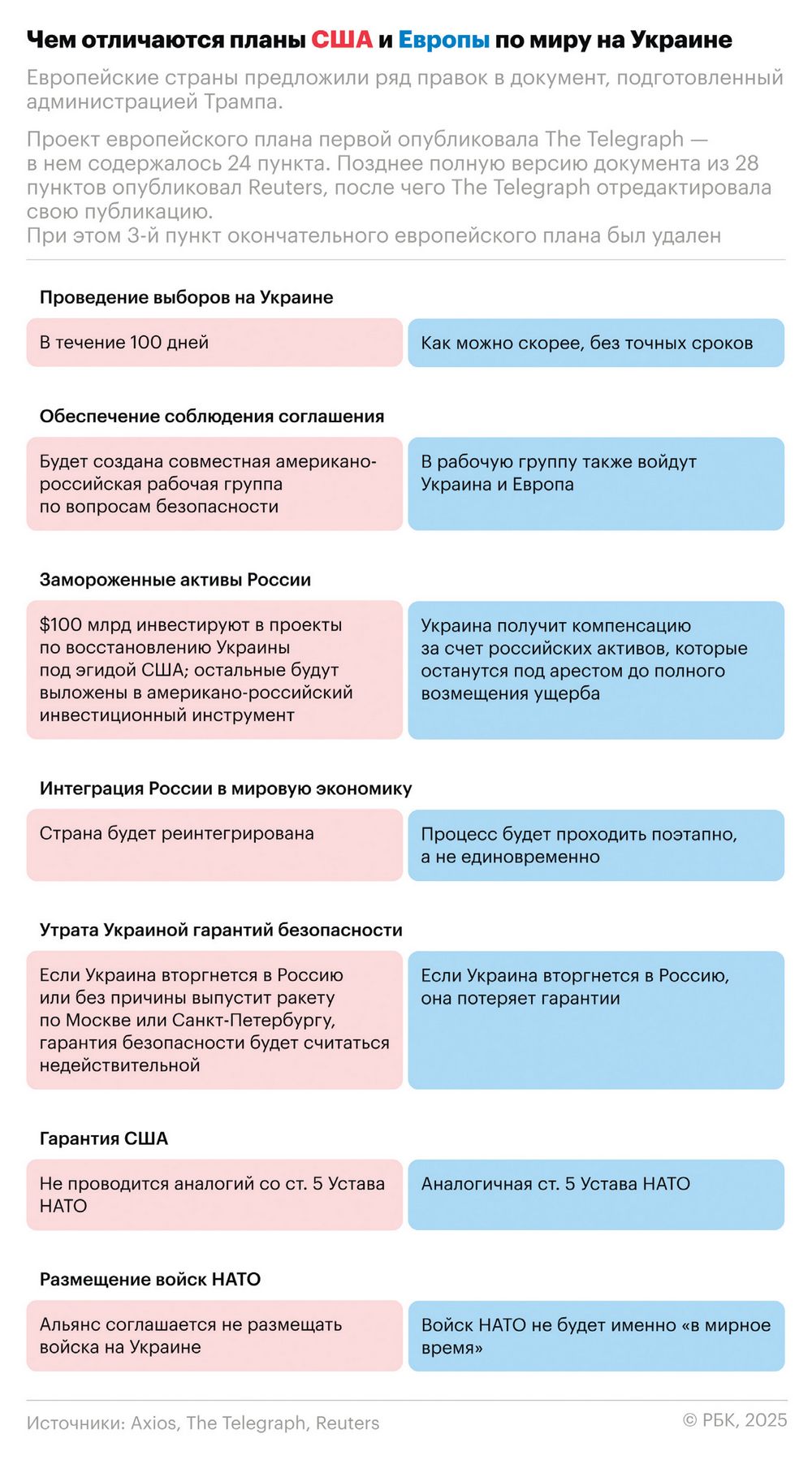
According to Axios, a trilateral meeting in Türkiye had also been planned to include US special representative Steven Witkoff, President Zelensky and Turkish Foreign Minister Hakan Fidan. They were expected to discuss peace initiatives proposed by the Trump administration — the so-called 28-point “Trump plan”, which envisaged Ukraine making territorial concessions to Russia in exchange for security guarantees and US participation in reconstruction. However, the meeting was postponed when it became clear that Kiev had brought a different proposal to Ankara: a joint Ukrainian–European plan that, according to American sources, Russia would never accept. This became the reason why Witkoff did not appear in the Turkish capital.
The Trump plan: land for peace
As Politico reports, the 28-point American–Russian peace plan was developed jointly by Steven Witkoff and Kirill Dmitriev.
It sought to formalise the consequences of the conflict. Russia would retain effective control over parts of the Kherson and Zaporozhye regions, while Ukraine would commit to abandoning NATO membership and the deployment of foreign troops. The military component envisaged a ceiling on the size of the Ukrainian army, and the economic section provided for US and foreign investment in the country’s reconstruction. Use of frozen Russian assets would depend on Moscow’s consent.
Although the document formally affirms Ukraine’s sovereignty, it limits the country’s defensive capability, removes freedom of foreign-policy choice and effectively acknowledges territorial losses. Kiev and European capitals view this as transforming military aggression into political advantage for Moscow and as an incentive for the use of force.
Supporters of this plan argue that Ukraine’s resources are depleting, Russian forces retain the initiative, infrastructure continues to deteriorate and international support may wane. From their perspective, a less-than-ideal peace now appears preferable to potentially worse terms later. Ending the war would allow Kiev to secure its safety, shift its focus to recovery, attract significant investment and prevent further casualties.
Against this background, Europeans attempted to formulate their own response. On November 23, media reports indicated that the European Union had presented Kiev and its partners with an alternative set of proposals. It is based on Ukraine’s accession to the EU, support for its Euro-Atlantic aspirations and security guarantees. A central element of the European counterproposal is that future territorial negotiations should be tied to the current line of contact. This approach rejects automatic reliance on Ukraine’s 1991 borders and recognises the existing frontline as the starting point for political talks. It is reflected in the clause stating that “negotiations on territorial exchanges will begin from the line of contact”. Beginning negotiations from the state of the battlefield rather than internationally recognised borders implies that territory held by Russia today may partly remain under Russian control tomorrow.
This risk is the source of intense debate in Ukraine. Even if the proposal does not directly recognise loss of land, full restoration of sovereignty no longer appears as the assumed basis of talks but as one of several possible, and far from guaranteed, outcomes.
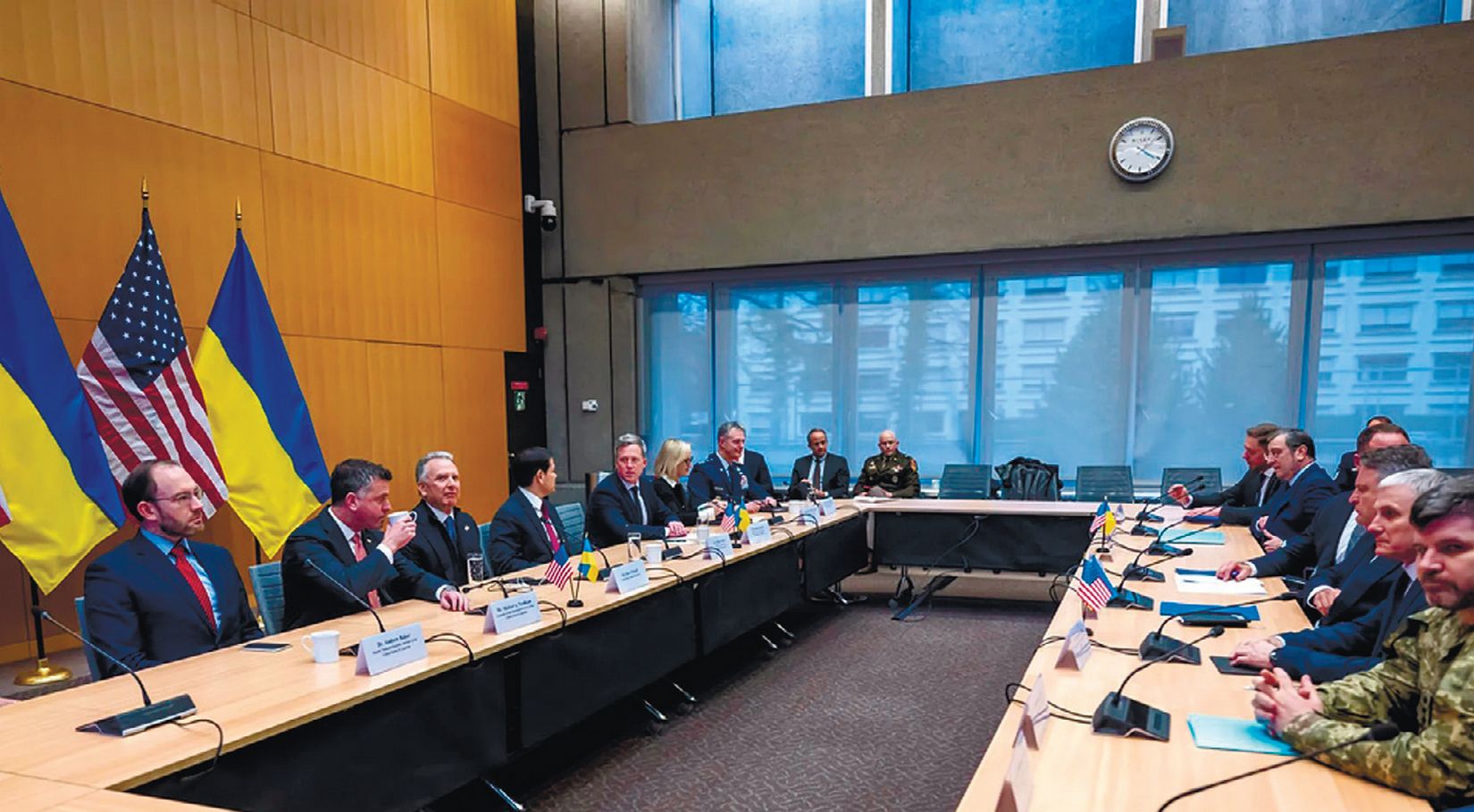
It was to harmonise the American, European and Ukrainian approaches into a single diplomatic framework that consultations began in Geneva, involving representatives from the US, key European states and international organisations. Their aim was to prevent divergence within the Western coalition and to establish a framework for a potential political process that does not undermine Ukraine’s strategic interests.
After complex negotiations, the parties managed to formulate a 22-point option accommodating both European and Ukrainian views on settlement prospects. It is expected that several points will remain open for discussion at a future meeting between Donald Trump and President Zelensky, the date of which has yet to be set.
War amid corruption
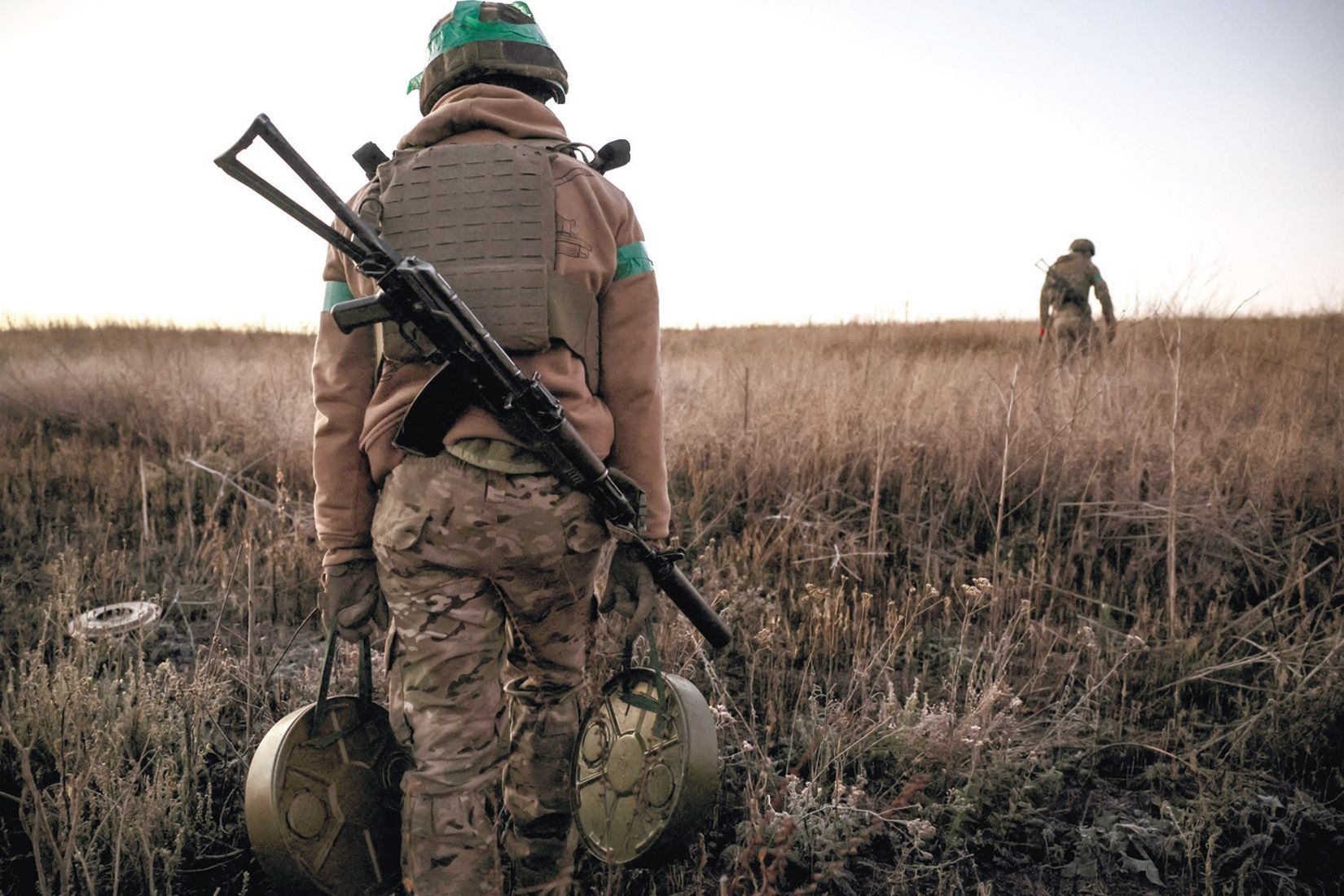
Kiev’s situation is complicated by severe conditions on the frontline. Fighting for Pokrovsk (Donetsk region) has entered one of its most intense phases. Although the city has not formally fallen, holding it has become significantly more difficult. According to the Institute for the Study of War (ISW), Russian forces are attempting to complete the encirclement of the city, though progress is slow and costly.
Russia employs a method of gradual pressure, conducting frontal assaults, flanking manoeuvres and attempts by small detachments to infiltrate the urban area. Ukrainian military officials report that Russian sabotage and reconnaissance groups are operating under the cover of civilians in Pokrovsk. A supply corridor remains open for Ukrainian forces, but it is highly vulnerable. ISW assesses that Russian units “will likely complete the capture of Pokrovsk and Mirnograd”, yet the timing and broader operational consequences remain uncertain.
There is no large-scale Russian breakthrough at the front. Moscow cannot accelerate its advance due to logistical constraints and resistance from opposing forces.
Meanwhile, Ukraine faces a serious corruption scandal that threatens not only political stability but also its capacity to coordinate the war effort and logistics. On November 10, the National Anti-Corruption Bureau of Ukraine (NABU) published findings of an investigation into a scheme through which kickbacks totalling $100–110 million allegedly passed via the state-owned Energoatom (the main operator of nuclear generation) and related structures.
The inquiry, as revealed by the NABU and the Specialised Anti-Corruption Prosecutor’s Office’s “Midas” operation, shows that a network embedded in Energoatom allegedly facilitated kickbacks of 10–15% of contract value.
Names of individuals close to the country’s leadership appear in the investigative materials. Media reports mention businessman Timur Mindich as one of the key actors in the scheme.
Journalistic investigations also point to possible links between the scheme and the head of the Office of the President of Ukraine, Andrei Yermak, and the Secretary of the National Security and Defence Council, Rustem Umerov. Their names arise in the context of alleged influence over contractor appointments and contract turnover.
Yermak denies any involvement, stating that attempts to associate him with the corruption inquiry carry “a political motive”.
Collectively, these developments — the revival of diplomatic channels, competing peace initiatives, disagreements within the Western bloc, intensifying pressure on the frontline and corruption shocks in Kiev — form a highly contradictory and fragile picture. Ukraine is simultaneously compelled to maintain its defences, demonstrate the resilience of its state institutions and resist attempts to impose upon it the burden of political concessions.
The West, despite its declared unity, seeks a formula capable of preventing a prolonged war without creating a precedent that rewards aggression. Moscow, in turn, strives to leverage military dynamics and diplomatic divergences to consolidate its positions.
Thus the current stage of negotiations represents only the preliminary calibration of a future peace architecture. Key decisions have yet to be made and will depend on how the situation evolves in the coming weeks and months — on the frontline, in Western capitals and within Ukraine itself.
RECOMMEND:
 231
231

