

NEW EURASIAN ARCHITECTURE
On Azerbaijan's raising reputation as one of the key elements of the new Eurasian configuration
Author: Ilgar VELIZADE
In mid-November, a truly historic event took place. It was an event capable of substantially altering the geopolitical structure of the vast space stretching from the Caucasus to the Altai Mountains.
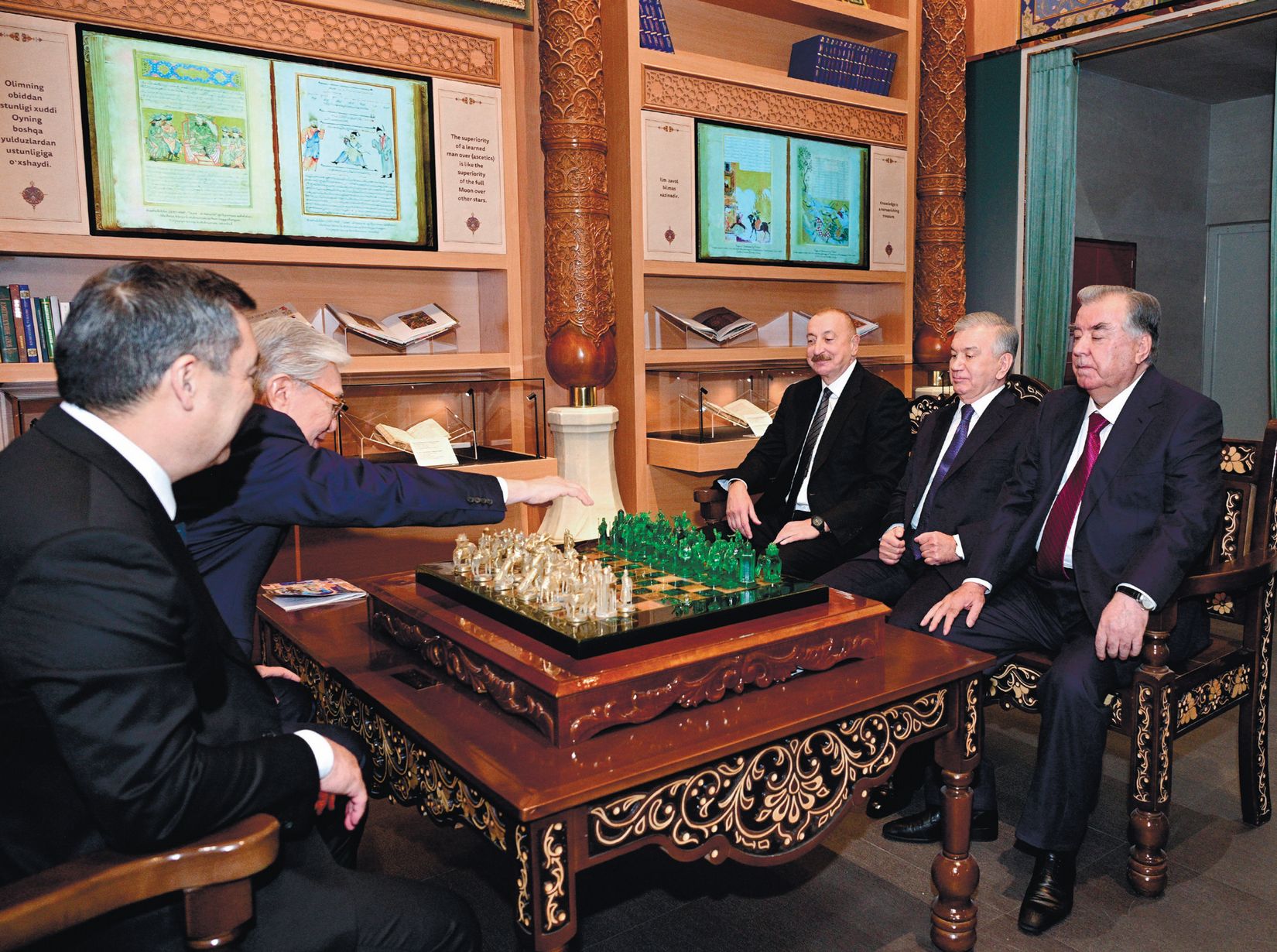
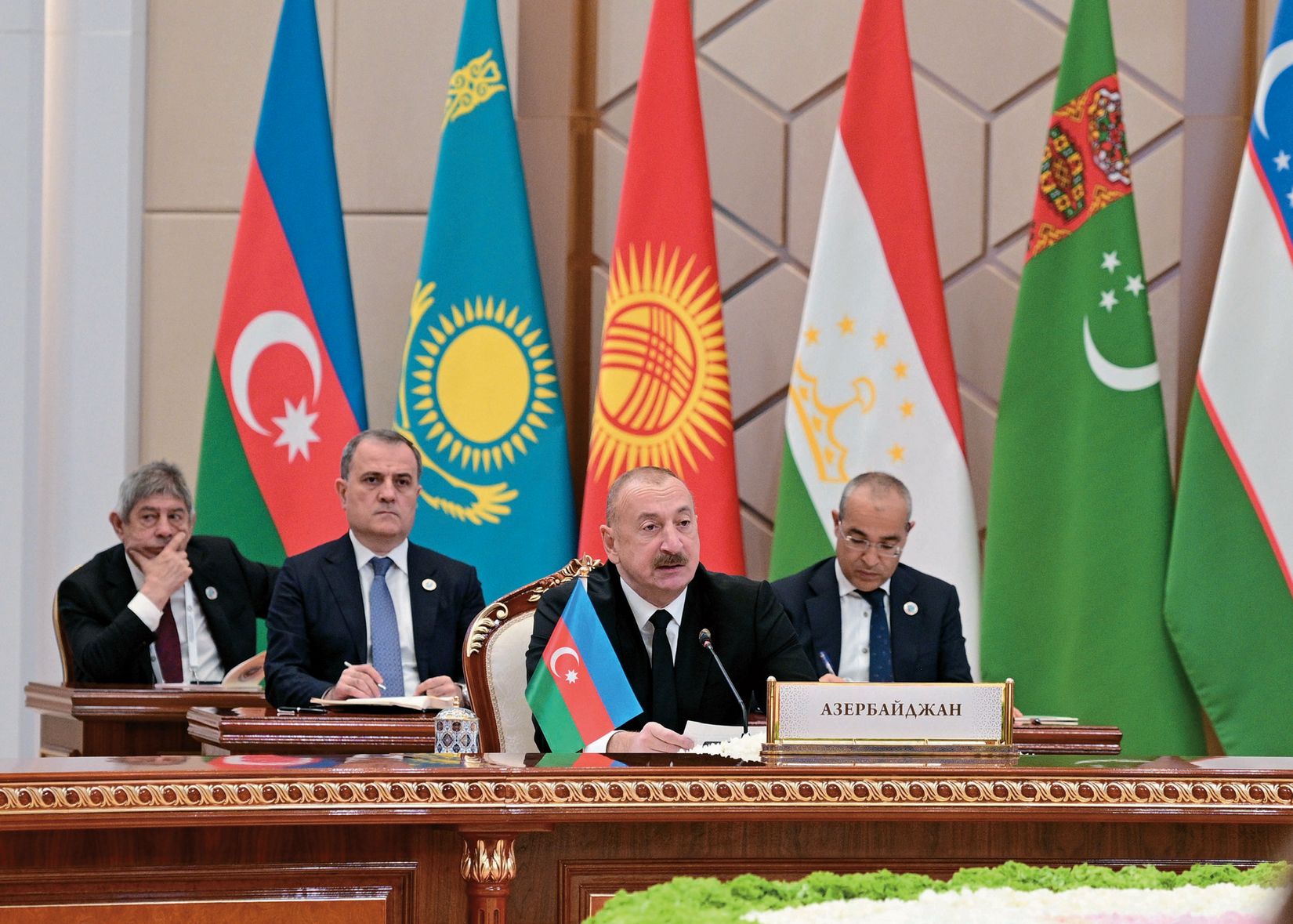
At the 7th Consultative Meeting of the Heads of State of Central Asia held in Tashkent on November 16, Azerbaijan was officially granted the status of a full participant in the consultative format that has united the five countries of the region for seven years. This decision, announced by the summit's host, President of Uzbekistan Shavkat Mirziyoyev, became more than just a technical expansion of the format from a "quintet" to a "sextet".
It became a symbol that Central Asia (CA) is entering a new era where regional boundaries are defined not by geography, but by functionality, interconnectedness, and a common strategic logic.
For the first time, a country located outside the traditional Central Asian region, yet acting as its natural partner due to historical, cultural, logistical, and economic interconnectedness, has been included in the consultative structure.
Economy, energy, and logistics of the new region
As is known, it was President Shavkat Mirziyoyev who initiated the creation of the consultative format in 2017. Therefore, his announcement regarding Azerbaijan's inclusion lent additional political symbolism to the event. Over the years of its existence, the format has journeyed from a platform for informal communication between regional leaders to an institutional mechanism. Within its framework, states coordinate positions on the most important issues of the economy, trade, security, and strategic development. Azerbaijan's accession became a logical continuation of this transformation. It cemented the actual state of affairs, in which Baku was already an active participant in the processes occurring here even before the official decision.
Since 2023, the country has regularly been present at meetings of the heads of state of Central Asia and has taken a direct part in shaping decisions on key directions—from transport and logistics routes and energy projects to investment mechanisms and issues of sustainable regional development.
The economic logic of the ongoing process is obvious. In recent years, the trade turnover between Azerbaijan and the CA countries has demonstrated rapid growth and is becoming increasingly structurally complex. Trade with Uzbekistan and Kyrgyzstan has grown manifold, while trade with Kazakhstan has approached a historical maximum. The total trade volume, amounting to about $1.5 billion, might seem moderate, but amidst the deep transformation of CA economies and the expansion of their external ties, this is merely the beginning.
Today, as a transition is underway from episodic cooperation to a sustainable system of complementarity, the parties are counting on a multi-year upward trend in trade.
Therefore, in the coming years, one can expect a manifold increase, as the foundation for this has already been laid—through investment instruments, infrastructure projects, renewing transport corridors, and the development of joint production facilities.
Key factors include the creation of bilateral investment funds initiated by Azerbaijan jointly with Kazakhstan, Uzbekistan, and Kyrgyzstan. The combined authorised capital of these funds is approaching $1 billion. A large part of the funds has already been directed towards the implementation of dozens of projects in the spheres of raw material processing, the agro-industrial complex, mechanical engineering, light industry, logistics, and tourism. These funds have become not only financial structures but also platforms for creating new production chains capable of enhancing the resilience of economies and taking cooperation to a fundamentally different level.
Logistics occupies an important place in the new model. The region is actively forming a modern transport infrastructure that links internal markets with external directions—via the Caspian, the South Caucasus, Türkiye, etc. The expansion of the capacities of the Baku Port, the modernisation of the ports of Aktau and Turkmenbashi, the development of hubs in Andijan, Tashkent, Almaty, and Bishkek, as well as work to increase the throughput capacity of railway and road crossings, are creating the basis for the formation of a unified transport space.
Central Asia is ceasing to be an internal region of Eurasia: it is turning into an active hub of international logistics, and Azerbaijan is becoming its key link.
In parallel, the green energy sector is developing. Azerbaijan and the CA countries are implementing programmes for the construction of solar and wind power plants, creating new inter-system connections, discussing mechanisms for supplying green energy to Europe, and forming the foundation of the future energy transition. This direction is acquiring increasing significance, as it is green energy that will become one of the foundations of the region's long-term competitiveness.
From visits to real integration
The growth of economic interconnectedness is accompanied by unprecedented diplomatic activity. Over the last three years, the President of Azerbaijan has made 14 visits to CA countries, and the leaders of these states have visited Baku 23 times. Such dynamics demonstrate not only mutual interest but also a transition to a systemic strategic dialogue. If cooperation was once episodic in nature, today it is built on regular meetings, coordinated political initiatives, and the consistent modernisation of the legal framework. It numbers nearly six hundred documents covering practically all spheres—from energy and transport to education, the defence industry, culture, and digital integration. As a result, a large-scale legal foundation has been formed, ensuring the predictability of long-term cooperation.
An important element of the summit was the trade and economic agenda, which effectively determines the future of regional development. President of Kazakhstan Kassym-Jomart Tokayev announced the intention to increase the volume of mutual trade between CA countries from the current $11.5 billion to $20 billion. The region has already doubled trade over the last seven years and is now setting even more ambitious tasks for itself. Moreover, this concerns not only an increase in volumes but also a qualitative change in the model. Intra-regional trade has traditionally been raw material-based, but today the share of deeply processed products, mechanical engineering, agriculture, textiles, and the food industry is growing.
New logistics routes are appearing, cross-investment is developing, and joint clusters are being created where semi-finished products, components, and finished goods circulate between countries.
Uzbekistan proposed a large-scale set of measures aimed at facilitating trade. These include the digitalisation of customs procedures, the unification of certificates, the creation of a single window at borders, the mutual recognition of licences, the formation of a common catalogue of manufacturers, and the integration of digital platforms of government agencies and chambers of commerce and industry.
Kazakhstan put forward an initiative to develop the sphere of rare earth metals, Kyrgyzstan focused attention on expanding investment cooperation, Tajikistan proposed creating an innovative educational centre, and Turkmenistan highlighted the need to modernise energy grids and form a regional energy architecture.
All these proposals demonstrate that Central Asia no longer thinks of itself as a set of separate national economies—it strives to form a unified space of production, transport, trade, and security.
Security as a system
The main political outcome of the summit was the adoption of the Concept of Regional Security, Stability and Sustainable Development of CA. The document became the first strategic act uniting the states in a common approach to risk assessment and the development of measures to prevent them. The Concept records the transition from fragmented initiatives to an institutional model, where security is understood not narrowly, but comprehensively—as a combination of infrastructural, economic, logistical, humanitarian, climatic, and technological factors.
The catalogue of risks and measures for their prevention for 2026-2028 sets a practical framework allowing countries to coordinate actions when crises arise and to strengthen the resilience of regional systems.
Azerbaijan's accession to this mechanism significantly strengthens its potential. Baku possesses significant experience in the sphere of energy security, the management of transport corridors, digital infrastructure, and cross-border projects. Thus, the consultative format receives an additional resource, allowing it to expand its capabilities and enhance the stability of the entire regional system.
It is becoming obvious that CA is ceasing to be a space of rivalry between external players and is turning into an independent centre of power, within which a new geopolitical and geo-economic community is being formed. Azerbaijan is becoming one of the main elements of this format of relations, connecting Central Asia with the South Caucasus, Türkiye, and external markets.
A new configuration is emerging on the map of Eurasia, where transport routes, energy flows, joint production facilities, investment mechanisms, and the coordination of strategic decisions are turning into the basis of regional interconnectedness.
That is precisely why the decision taken in Tashkent will become the starting point of a new historical stage that will determine the region's development for decades to come and create a sustainable platform of cooperation based on common interests, mutual benefit, and long-term stability.
RECOMMEND:
 215
215

