

RELIABLE PARTNERSHIP
Azerbaijan continues to ease trade procedures through customs reforms
Author: Ilaha MAMMADLI
In recent years, dialogue between government institutions and the business community has become a key tool for economic development in Azerbaijan. This is especially evident in the customs sector, where process efficiency directly affects trade speed, export potential, and the country's logistical appeal.
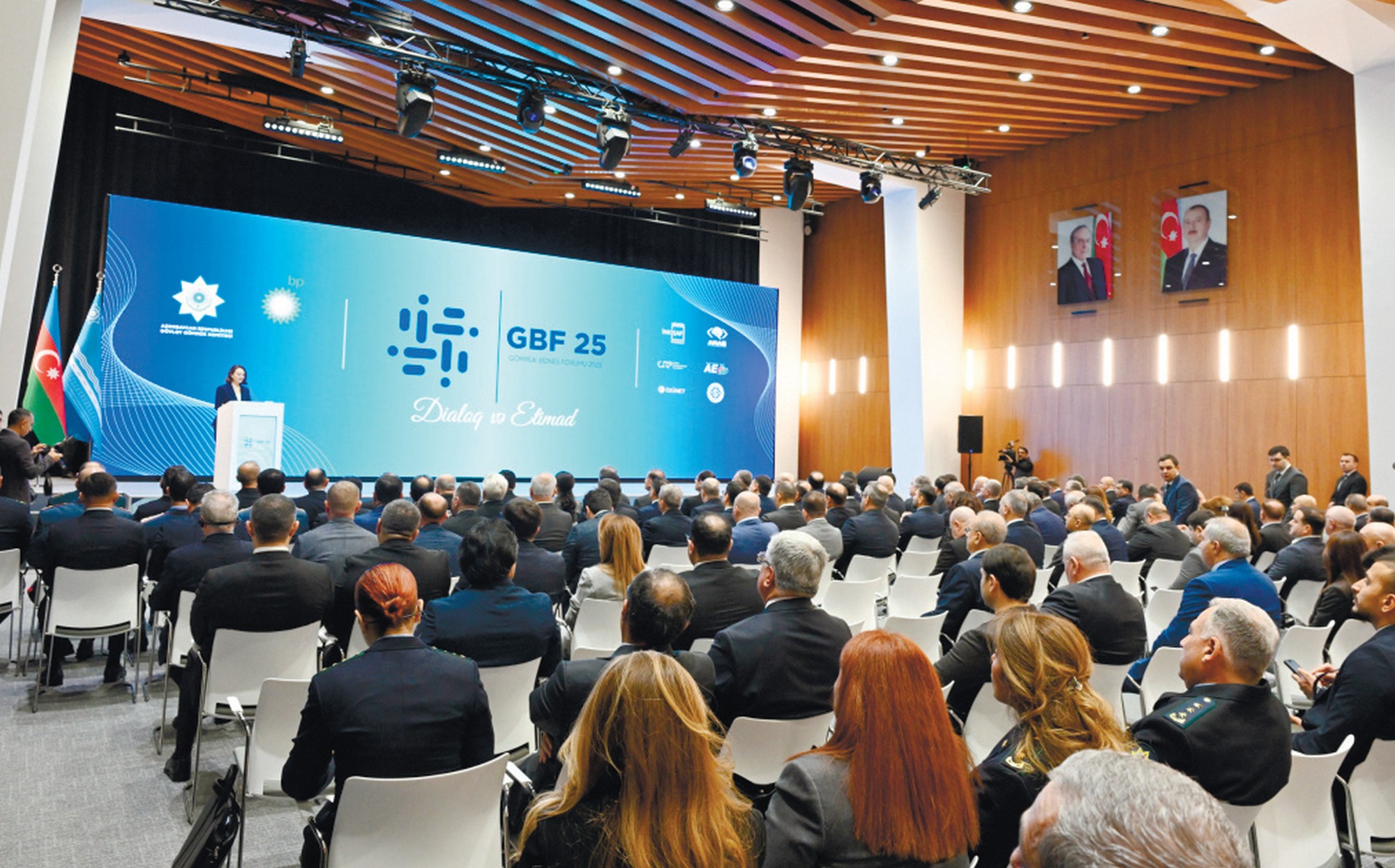
For the third consecutive year, the "Customs-Business" forum is being held at the end of the year. This event is an open platform for discussion. This is not merely a review of current issues, but rather an effort to establish a long-term cooperation model based on trust, predictability, and digital integration.
A single chain
In advance of the forum, Ilham Aliyev approved an action plan to implement the Concept of Reliable Partnership, thereby establishing the foundation for a new development model for "Customs-Business". The document establishes a modern approach to regulating foreign economic activity, where the state and business are not opposing parties but participants in a unified trade chain focused on results.
Shakhmar Movsumov, Head of the Department of Economic Affairs and Innovation Policy of the Presidential Administration, stated at the commencement of the forum that this novel cooperation model has been designed to adapt foreign economic activities to the requirements of contemporary international supply chains and streamline trade procedures. The document will safeguard the interests of business entities, boost revenue streams and modernise customs services. It offers businesses more flexible export mechanisms, promotes the Made in Azerbaijan brand on global platforms, and makes national carriers reliable partners for international companies," Movsumov said.
The "Reliable Partner" model will apply to economic entities that strictly comply with legislation and effectively utilise state-created opportunities. This approach strengthens trust within the business environment, develops self-assessment institutions, and opens access for reliable partners to new tools—from phased payment of customs duties to comprehensive support programmes.
"Implementing this concept will enhance the competitiveness of Azerbaijani businesses, expand export opportunities, and strengthen the country's role in international trade chains," Movsumov emphasised, expressing hope that entrepreneurs would receive detailed explanations of the new mechanisms during the forum.
He observed that over the past two decades, Azerbaijan's customs system has undergone a significant transformation into a modern economic management institution. In the current business climate, the customs service is heavily reliant on digital innovations. These innovations have a significant impact on the acceleration of trade flows, thereby reinforcing Azerbaijan's position as a regional logistics hub.
The Presidential Administration representative stated that the principle of transparency and convenience for entrepreneurs, as well as reliability for the state, has become the foundation of all reforms.
Key areas for development in customs policy over the coming years will include simplifying trade procedures, modernising border infrastructure, digitising processes, and integrating into global supply chains.
Ensuring fair competition will also be important: combating illegal goods circulation, developing human capital, applying data-driven solutions, and promoting the "green customs" initiative.
Shahin Baghirov, chairman of the State Customs Committee (SCC), also emphasised that effective collaboration between customs and business is contingent on continuous dialogue and transparent communication.
He asserts that enhancing customs administration, introducing flexible tools, and consistently improving service quality are key to fostering a competitive environment and enhancing process transparency.
Baghirov cited specific reform results, including a 35% reduction in customs clearance time, a 22% reduction in physical inspections, and a 25% reduction in border crossing time, attributing these improvements to the implementation of the ARAS risk analysis system. In addition, methodological materials based on international standards were developed, electronic notifications were introduced, and a goods release mechanism based on guarantees was implemented.
Alongside these reforms, customs' financial contribution increased significantly: in 2024, ₼6.648 billion was collected for the budget—a 53% rise compared to 2021.
Updated criteria
Natig Shirinov, the SCC's Deputy Chairman, provided a detailed explanation of the reasons behind the reduced use of the "Green Corridor" regime. He explained that this was due to the introduction of a more transparent and accurate risk assessment system. The committee has approved updated criteria that are now available to entrepreneurs applying for this status.
"When an entrepreneur applies for 'Green Corridor' status, their activities are evaluated against specific risk parameters. In the absence of any identified risks, the status will be granted. If a risk is detected under any criterion, the entrepreneur is openly informed about what needs correction," he explained.
Shirinov noted that regulatory frameworks have been strengthened and legal boundaries for customs-business interaction clarified.
He emphasised the implementation of a new version of the automated risk analysis system ARAS Pro, which facilitates the integration of additional algorithms and the management of refined data.
According to the latest statistics from the SCC, 38% of declarations for free circulation are processed in under three hours. Among "Green Corridor" participants, this figure rises to 55%.
One strategic objective for the coming years is the transition to automatic declaration approval. Shirinov informed us that should there be no discrepancies detected by the risk management system or the digital customs valuation system, a set limit of 30 minutes will be applied for automatic declaration approval without the involvement of an inspector. If an inspector does not manually confirm within that time frame, goods release will be automatic. This practice is being studied based on international experience; initial results are expected at the end of next year.
Fuad Mammadov, also deputy chairman of SCC, emphasised the significance of digitising transit documents. The introduction of international tools and advanced technical control methods has a direct impact on transit growth.
Adil Muradov, head of service quality control management, stated that today up to 50% of transit vehicles are cleared within 50 minutes; transit declaration returns are less than 1%. The share of "Green Corridor" operations in transit has exceeded 80%.
SCC plans include building modern terminals and TIR parks at border checkpoints with service zones and electronic queues.
Finances speeding supply chains
The conversation naturally shifted to the topic of international integration. Kyanan Asadov, Deputy Head of the SCC Apparatus, has noted that Azerbaijan is working closely with a number of government agencies with a view to connecting to international transit systems.
Asadov has stated that the uninterrupted flow of trade is dependent not only on infrastructure, but also on the digitalisation of all chain elements, including payments, guarantee instruments and mutual recognition of documents. He believes that establishing an international guarantee system will provide extra momentum for banking and increase transit and import speeds.
He also emphasised the role of customs in sustainable agricultural development, from protecting local producers through tariffs to supporting technical modernisation via incentives. Over a 11-month period, the total value of tariff exemptions amounted to ₼686.4 million, representing a 7% increase, while incentives for breeding livestock increased by 125%.
Elmeddin Guliyev, Head of Certification at the State Agency for Antimonopoly Control, has announced that as of 2026, all applications for certificates of origin will be accepted through a specialised electronic module. Integrating registries into a unified SCC information system will streamline cargo processing and eliminate the need for manual authenticity checks. A key step in this process will be the introduction of self-declaration for low- and medium-risk goods, enabling enterprises to submit quality and compliance declarations directly.
In eleven months, the agency issued 87,600 certificates of origin. As of next year, data on these certificates will be automatically sent to Russia's Federal Customs Service under an approved electronic certification protocol. A similar protocol has been agreed with Belarus, and integration with Türkiye and Ukraine is planned for the future.
The upcoming reforms also envisage expanding the role of banks and insurance companies in customs processes.
Mushfig Kerimov, the Central Bank of Azerbaijan's deputy director of banking supervision, has announced that the bank is currently developing a project that will allow banks to provide customs guarantees and insurers to offer electronic insurance coverage. He is convinced that the acceleration of business processes can only be achieved through the complete integration of government entities into a unified digital ecosystem. The Central Bank holds regular meetings with various institutions, including the State Customs Committee, to discuss this matter.
Within the scope of this project, banking institutions are being integrated with a Unified Automated Management System. To date, six banks serving approximately 80% of business entities have completed the integration process. We are pleased to inform you that the final testing of three more banks is scheduled to be completed in the near future. Connections are also being established with other banks. We are pleased to inform you that the insurance company is currently being tested. Once this has been completed, the process will be extended to the other companies.
Kerimov further stated that Azerbaijan is in the process of establishing legislative and regulatory frameworks for supply chain financing, utilising tools such as factoring, reverse factoring and forfaiting. "Entrepreneurs will be able to obtain financing without additional collateral simply by uploading accounts receivable documents. This work is conducted in close collaboration with other government agencies. The mechanism will improve short-term financial access and reduce financing costs in the medium and long term," he stressed.
Therefore, the "Customs-Business" forum demonstrated that state-business cooperation is gradually moving to a new level characterised by increased structure, technology and predictability. The reforms presented cover almost every aspect of foreign economic activity, from digitising transit operations and implementing risk-oriented systems to creating international guarantee mechanisms and expanding financial tools for businesses.
The key common factor in this situation is the desire of various government bodies – including those responsible for customs, the financial sector, agriculture, and certification – to operate using a unified logic based on data, transparency, and process synchronisation.
RECOMMEND:
 163
163

