

THE LAST DROP
Azerbaijan’s Ministry of Finance reveals reason for refusing paid cooperation with S&P Global Ratings
Author: Nurlana GULIYEVA
On December 6, a piece of unusual information emerged, claiming that the international rating agency S&P Global Ratings had confirmed Azerbaijan's long-term and short-term credit ratings on obligations in national and foreign currencies at the level of BB+/B. The ratings outlook was also changed from "stable" to "positive". However, the S&P release also included a remark that the agency withdrew the ratings at the issuer's request.
Why? What are the implications of this decision? The issuer, represented by the Ministry of Finance of the Republic of Azerbaijan, provided a comprehensive response to all the aforementioned questions.
Devaluation of relations
The relationship between the Ministry of Finance and the Azerbaijani government with international rating agencies is not without its complexities.
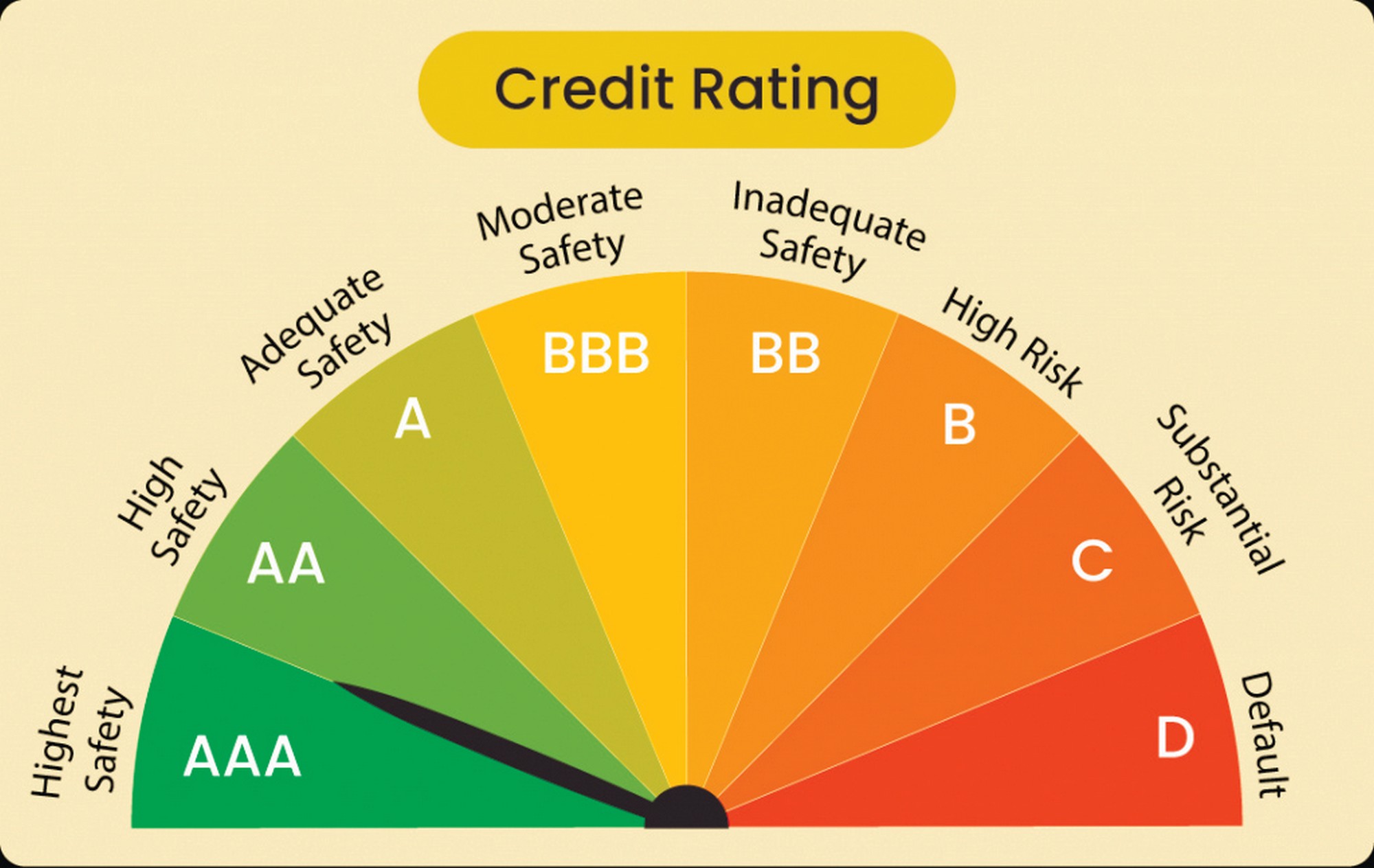
The process began in January 2016 when S&P downgraded Azerbaijan's long-term and short-term credit ratings in national and foreign currencies from BBB-/A-3 to BB+/B with a stable outlook. This was followed by similar actions from Fitch and Moody's. Consequently, the country's credit rating fell below the investment grade level, often referred to as the "junk" rating.
It should be noted that this was a period following two devaluations of the manat, when from January 1, 2015, to January 21, 2016, the national currency lost 52% of its value against the dollar. Experts from the rating agencies issued pessimistic forecasts, anticipating downturns and crises across multiple sectors.
Simultaneously, the Ministry of Finance issued a formal protest regarding the downgrade. It expressed its hope that "S&P, which promptly downgraded Azerbaijan's credit rating amid falling oil and petroleum prices, would show similar promptness in case of rising commodity prices by restoring the country's investment rating."
Contrary to the predictions of many, the economy of Azerbaijan has shown a remarkably rapid and comprehensive recovery. Within a relatively short space of time, the country has not only stabilised its financial system but also laid the foundations for significant and sustained growth in the non-oil sector.
By 2018, non-oil GDP had grown by 1.8%, and by 2019 it increased by another 3.3%, with overall economic growth at 2.2%. Inflation, which exceeded 12% in 2016, was successfully brought down to 2.3–2.8% in 2018-2019 thanks to a tightened monetary policy and strengthened financial supervision. During the same period, the banking sector, having experienced significant turbulence, halved its share of non-performing loans, a key factor in restoring trust and economic resilience. This period is now regarded as the starting point of Azerbaijan's new, more diversified development model.
However, as one might suspect, these achievements were inexplicably ignored by international rating agencies, which year after year refused to restore the country's investment rating.
In 2019, the then-Minister of Finance, Samir Sharifov, noted that Azerbaijan had successfully resolved problems following the economic crisis, especially debt issues. He added that foreign exchange reserves had significantly increased, so the country's rating should be upgraded.
The Ministry of Finance has reiterated similar statements in subsequent years.
Two against one
Approximately one year ago, President Ilham Aliyev also provided his perspective on this matter: "I believe our international rating deserves a higher level than its current status, but leading rating agencies for certain reasons still show a more modest approach. These developments indicate that we have achieved sustainable economic growth, and I am confident that this positive momentum will continue throughout the current year and beyond," emphasised the head of state.
The first positive steps in this direction were taken by Fitch. In 2022, the agency upgraded Azerbaijan's international credit rating outlook from "stable" to "positive." In July 2024, the country was finally assigned a long-term foreign currency issuer default rating of BBB- with a stable outlook. The agency has stated that the return of the country's sovereign rating to investment grade after eight years, as well as the establishment of a 'stable' outlook, is undoubtedly a sign of international recognition of macroeconomic and monetary policy, institutional reforms, improvements in the investment climate and low public debt.
The Ministry of Finance has once again called on two other agencies to adopt a similar position and confirm Azerbaijan's credit rating at investment grade. In a recent interview, Mr. Sharifov, the former finance minister, expressed concerns about the reliability of credit rating agencies' assessments of Azerbaijan.
A positive response was received in summer 2025 from Moody's, with the rating of Azerbaijan's sovereign credit being raised from Ba1 to Baa3 with a positive outlook. Consequently, the country was assigned an investment-grade rating. The agency observed that the upgrade was the result of Azerbaijan's efforts to reduce economic and fiscal dependence on the oil and gas sector and maintain stable macroeconomic stability despite external shocks. Special mention was made of efforts to attract investments, develop transport and logistics infrastructure, and sustainably rebuild Garabagh and Eastern Zangezur, supporting economic diversification.
Meanwhile, S&P once again ignored both these achievements and competitors’ corrections. The failure to secure fair treatment from the agency ultimately prompted the Ministry of Finance to take a radical step.
A logical choice
Azerbaijan has therefore decided to decline S&P's services, despite the fact that S&P has revised its ratings forecast from "stable" to "positive" in its latest outlook. Furthermore, its comprehensive analysis yielded a favourable evaluation of the nation's economic condition.
"Azerbaijan maintains one of the strongest sovereign balances among rated countries. Significant assets managed by the State Oil Fund, a stable net asset position of government bodies, and low public debt provide considerable cushioning capacity and help protect the economy from hydrocarbon price volatility. These reserves support macroeconomic stability despite modest economic growth, due to depletion of oil fields and stabilisation of gas production," noted the agency.
S&P forecasts average annual inflation in Azerbaijan to slow to 4.7% in 2026, with GDP growth at 1.7%.
But why S&P did not award Azerbaijan an investment-grade rating, given these statistics?
The Ministry of Finance has commented on its decision regarding S&P, noting initially that Azerbaijan plans to continue cooperation with the agency outside contractual obligations. This means that interaction will be maintained in an unsolicited rating model without a paid contract.
The Ministry of Finance has stated that the practice of evaluating sovereign credit ratings using the assessments of two of the three leading rating agencies is a widely adopted institutional approach on an international level. Over the past five years, Azerbaijan's sovereign credit rating was assessed on a paid basis under official contracts by two agencies (Fitch and S&P) and by one agency (Moody's) without contractual obligations or payments.
"Azerbaijan's economy has demonstrated sustainable growth and positive trends, leading to improvements in its sovereign rating. In 2024, Fitch Ratings upgraded Azerbaijan's rating to investment grade at the levels BBB– and Baa3, respectively, with "stable" and "positive" outlooks. In 2025, Moody's Ratings followed suit, upgrading Azerbaijan's rating to the same levels. It was also stated that Azerbaijan will continue paid cooperation only with two agencies – Fitch and Moody's – while interaction with S&P will proceed without contract or payment.
The ministry has also stated its intention to continue working with leading international rating organisations on sovereign credit ratings in the coming years, with a view to ensuring that Azerbaijan's fundamental and sustainable economic growth is reflected in credit ratings.
Almost simultaneously with S&P's report, Fitch Ratings published its conclusion confirming Azerbaijan's long-term foreign currency issuer default rating at BBB- with a stable outlook once again.
In light of the recent developments at S&P and the shift towards Fitch and Moody's, it is crucial to acknowledge that Azerbaijan is actively pursuing the establishment of a more adaptable and comprehensive risk assessment framework. The Central Bank's development of a National Credit Rating Mechanism was a strategic response to years of reliance on external evaluators whose conclusions often diverged from the country's economic trends. This new tool will allow the creation of a transparent, objective model that is better adapted to the national financial landscape. Improved accuracy in risk classification is expected to result in reduced borrowing costs and promote a more competitive banking environment. Ultimately, this will consolidate Azerbaijan's financial stability and help to reduce any subjectivity from international agencies.
RECOMMEND:
 183
183

