

POLITENESS WITHOUT AGREEMENTS
China plays its own game, offering France smiles instead of concessions
Author: Irina KHALTURINA
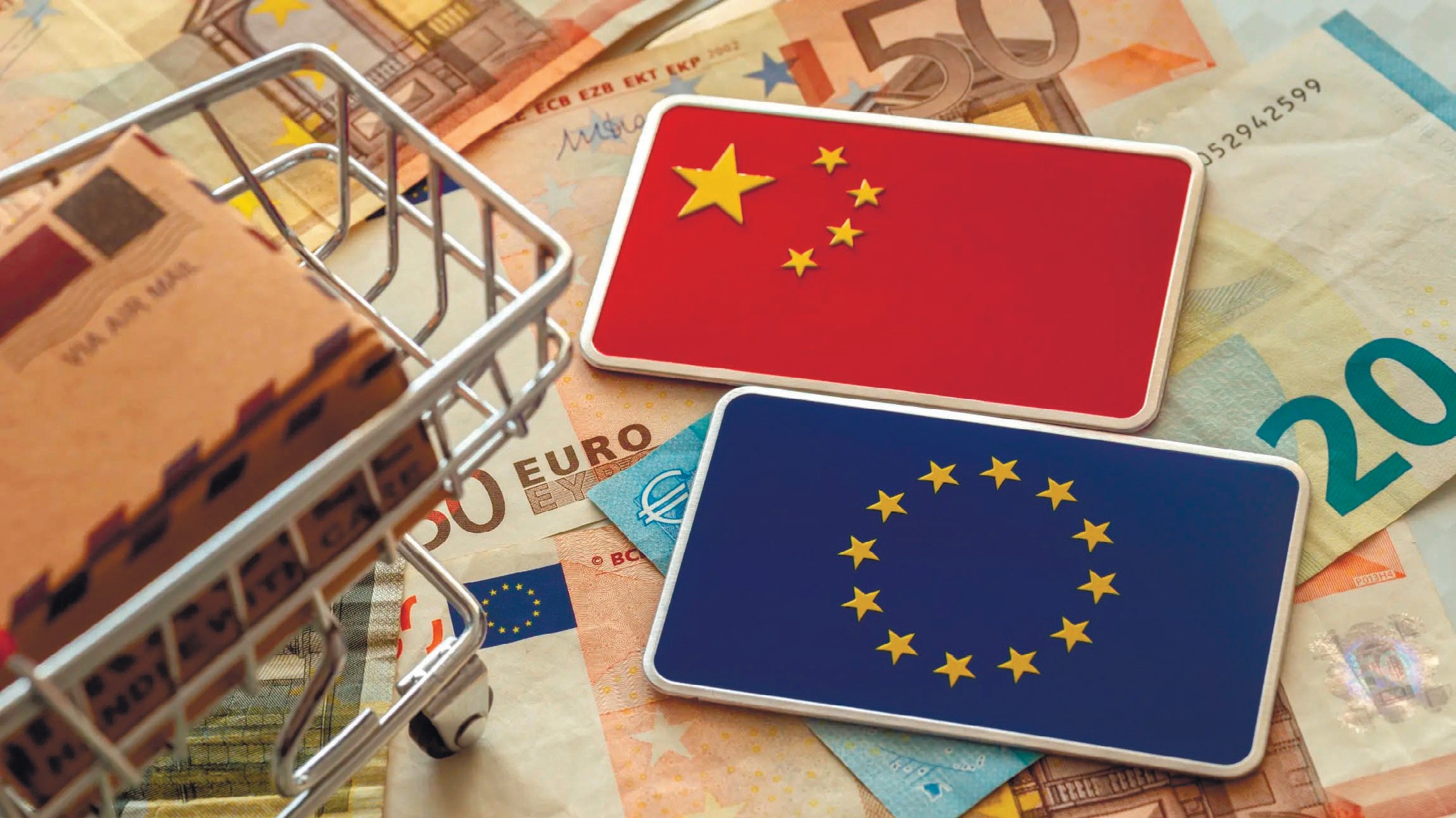
The relationship between the EU and China has always been intricate, with some commentators suggesting it has reached its lowest point in decades. Therefore, the official visit of French President Emmanuel Macron to China from December 3 to 5 was viewed by Western media outlets less as a bilateral France-China event and more as a test of whether mutual understanding between the EU and the Middle Kingdom could be established.
Macron dreams of partnership, while Beijing tests Europe
"We want Europe to be respected as a major partner of China," Macron declared before the visit. However, the pre-trip commentary suggested that few believed this endeavour would succeed. It was noted that the French president would not be able to negotiate with Beijing on equal footing.
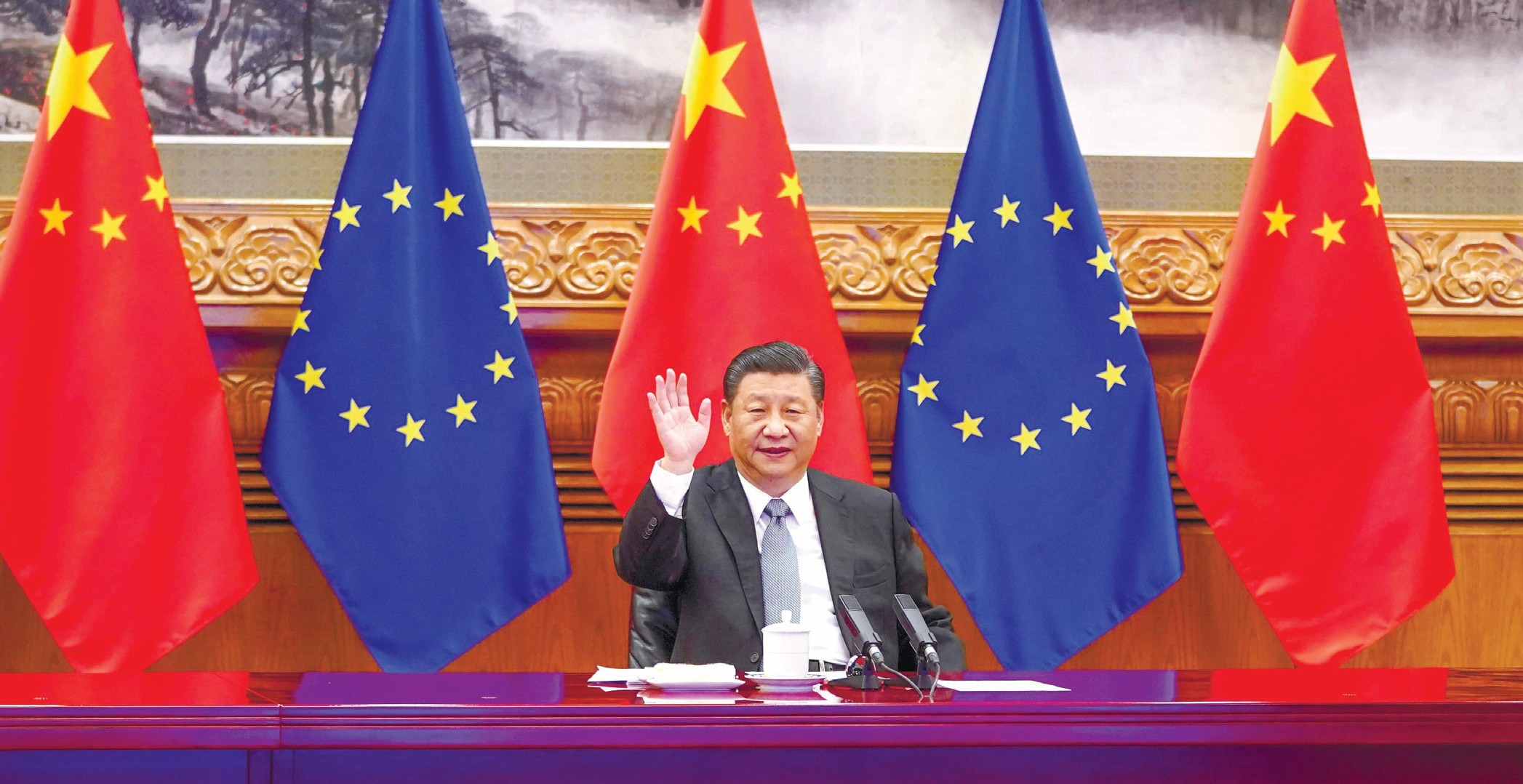
This is essentially what happened. The visit's results were limited, if not disappointing. Although Chairman Xi Jinping once again demonstrated diplomatic skill by subtly reinforcing the conventional view that China-France relations remain relatively stable despite broader disagreements between China and the EU. In Beijing, officials readily echoed Paris's mantras that France intends to promote healthy and sustainable Sino-European relations and that both sides should adhere to dialogue and cooperation.
According to the Xinhua News Agency, both parties issued a joint statement on strengthening global governance, jointly addressing climate and environmental issues, developing partnerships in peaceful nuclear energy, cooperating in agriculture and food security, as well as discussing the situations. In Ukraine and Palestine, there have been discussions of a similar nature that coincided with Xi Jinping's European tour last year. This was his first visit in almost five years, during which he visited France, Serbia, and Hungary. Experts viewed this trip as an obvious probe by Beijing to gauge how willing various European countries were either to accept or oppose China's global agenda. At that time, about 15 commercial agreements and partnerships were signed in Paris.
Regarding the meeting in Beijing, only 12 cooperation agreements were reached. This seems underwhelming considering the 35 heads of major corporations that accompanied the Élysée Palace host, including representatives from Veolia, Suez, EDF, Andros, and Airbus. Notably, the expected contract for purchasing 500 Airbus aircraft was not signed.
This only confirmed the reality: despite outwardly friendly and apparent readiness to cooperate, deep disagreements persist between China and France, and more broadly Europe. The Old Continent accuses the Middle Kingdom of trade imbalances, unfair competition, restricting European market access, and questions the security of Chinese technologies.
The main issue is trade imbalance. It began early this century when China flooded European (and other) markets with cheap goods, which EU businesses welcomed due to cheap labour costs. The "Made in China" label was synonymous with mass-produced, low-cost, low-quality items found on practically every European and American tourist souvenir. After a quarter of a century, Chinese products have gained dominance not only through volume and prices but also quality. Now few hesitate to buy Chinese smartphones, cars, clothing, or cosmetics.
Moreover, China leads in supplying products like solar panels, electronics, and electric vehicles. Consequently, Europe increasingly imports from China while The importation of goods from Europe has decreased, with the trade deficit now exceeding €300 billion. France, in particular, experienced a trade deficit with China of €47 billion in 2024, and French investments in China significantly exceed Chinese investments in France.
Europe has also expressed concerns about what it sees as "unfair competition" from Beijing, citing state support for enterprises and monopolies, particularly in the area of rare earth metals (REMs). This is a matter of particular concern for the West, as REMs are critical in the production of high-tech goods and weapon systems. China now effectively dictates terms in these sensitive sectors.
The US is particularly concerned about this situation, given its direct competition with China in this area. Europe has historically supported US efforts to contain China's technological advancement by imposing restrictions on the transfer of Western technologies and taking measures to protect itself from Chinese goods, citing economic and security concerns. However, as this year has demonstrated, China has not wavered in its trade war with the US; instead, it has strengthened its position. Consequently, Europe has become a victim of collateral damage. When Washington blocks Chinese goods from its market, they are rerouted to Europe. Furthermore, former US President Donald Trump imposed nearly equivalent tariffs on European goods as on Chinese ones. Finally, the appreciation of the euro makes imports cheaper for Europe, but exports more expensive in other countries.
Smiles mask deep contradictions
It is worth noting that, upon returning to France, Macron announced his intention to impose customs tariffs on China if the country does not cooperate with Europe to reduce the trade imbalance. "We are facing the prospect of having to implement stringent measures in the near future, such as the imposition of tariffs on Chinese products by the US. These measures are a response to China's impact on the European industrial and innovation model, which is historically rooted in the machinery and automotive industries," Macron stated in an interview with the French daily Les Échos. Media reports indicate that the European Union is planning to tighten regulations for foreign investors "so that Chinese companies do not gain an unfair advantage in Europe's open market if they do not share profits with local workers or disclose technologies." Brussels is also considering implementing targeted "Made in Europe" thresholds of up to 70% for certain products.
In light of these significant challenges and France's ongoing political crisis with Macron's future uncertain, the warm reception he received in China is full of Eastern symbolism and irony. For instance, an invitation to visit Chengdu—the fourth largest city considered culturally and socially open—was seen as a special diplomatic gesture. Observers noted it was a "The leader of Europe's second-largest economy was honoured, which is an indication of Beijing's attention to Paris in its relations with the European Union.
An agreement was signed to deliver two pandas from China to France by 2027 to replace those returned from a French zoo to Chengdu. This occurred when Brigitte, wife of Emmanuel Macron, visited Chengdu's panda conservation and research centre—a major tourist attraction and leading scientific institution. Pandas are seen as symbols of friendship between China and France and bridges linking the two countries. While Madame Macron focused on pandas, her husband visited Sichuan University, where students gave him an enthusiastic welcome akin to that of a rock star. His visit attracted significant attention on Chinese social networks, particularly on Xiaohongshu and Sina Weibo, where posts with the hashtag #Macron received millions of views. However, the visit also prompted some light-hearted memes, which humorously suggested that Macron might feel "unbearably sad" returning to France after such an enthusiastic reception, given his low approval ratings at home and the absence of similar admiration from local students.
The Financial Times provided a concise overview of the visit: Despite arriving in China with gifts of silk scarves from Hermès and returning with promises of pandas, the visit failed to resolve the underlying tensions between the two nations.
It appears that Macron was unable to convince Xi Jinping that Europe, and its individual countries, can make a convincing global impact. Firstly, the EU's economic leverage over China is limited to threats; secondly, credibility requires unity and a strong collective stance.
Beijing sees Europe as a weak US ally
Recent events in Brussels and the ongoing personal disagreements between European Commission President Ursula von der Leyen and EU Foreign Policy Chief Kaia Kallas have raised concerns about the reliability of Europe's American ally. In Munich this February, US Vice-President JD Vance stated that Europe's greatest security threat comes "from within", rather than from China or Russia.
The new US National Security Strategy text criticises Europe, stating that "...serious challenges facing Europe include activities by the European Union and other transnational bodies undermining political freedom and sovereignty; migration policies transforming the continent and sowing discord; censorship and suppression of political opposition; declining birth rates; loss of national identity and self-confidence." It emphasises that the US needs a strong Europe to compete effectively and collectively prevent dominance by any adversary on the continent.
Meanwhile, Trump is negotiating with both Russia and China while marginalising EU opinions in... There are several reasons why Brussels is not a popular destination. In contrast, Beijing believes that Europe does not sufficiently distance itself from Washington. Beijing views Europe as subordinate to the US, weak, fragmented, lacking political leadership and resolve. As the Financial Times notes: "Beijing has expressed concerns that Europe may lack the unity to deal with the consequences of new barriers against cheap, quality Chinese goods."
China's approach is to divide and rule, as evidenced by its decision to give France's president a prestigious reception bilaterally, a strategy aimed at expanding its influence within the 27-member EU.
It is noteworthy that Germany's foreign minister and Britain's prime minister are planning visits to China in the near future, each with their own agendas. It is certain that Beijing will treat them with the same politeness and friendliness shown to France's leader.
RECOMMEND:
 183
183

