

LOGISTICS ON A NEW SCALE
2025 became a turning point for Azerbaijan’s transport potential and the region
Author: Aghasaf NAJAFOV
Among the landmark developments of 2025 in Azerbaijan, the breakthrough results achieved in transport, logistics and transit development deserve a particular attention. A pivotal event in this sphere was the historic agreements signed in Washington in August, which gave new momentum to efforts aimed at opening the Zangezur corridor.
Azerbaijan and its partners along the Trans-Caspian route are recording tangible growth in transit freight traffic. For the first time, the annual volume of container handling at the Port of Alat reached a record 100,000 TEU.
As noted by Azerbaijan’s Prime Minister Ali Asadov at the Second Azerbaijan–Türkiye Investment Forum in Baku, held within the framework of the 12th session of the Joint Intergovernmental Commission, progress has been achieved in simplifying trade procedures and digitalising the Middle Corridor, which has significantly increased cargo traffic dynamics.
Explosive growth
Amid the increasing demand for cargo transportation between China and Europe, the accelerated development of transport hubs across Eurasia has become a pressing priority. As the primary beneficiary of these processes, Azerbaijan is undertaking a comprehensive modernization of its fleet, railway network, and port infrastructure, while introducing new logistics instruments. These multibillion-dollar investments are fully justified, as Azerbaijan must ensure the transit of rapidly growing cargo volumes from China, Central Asia, Türkiye, Europe, and beyond via the Middle Corridor.
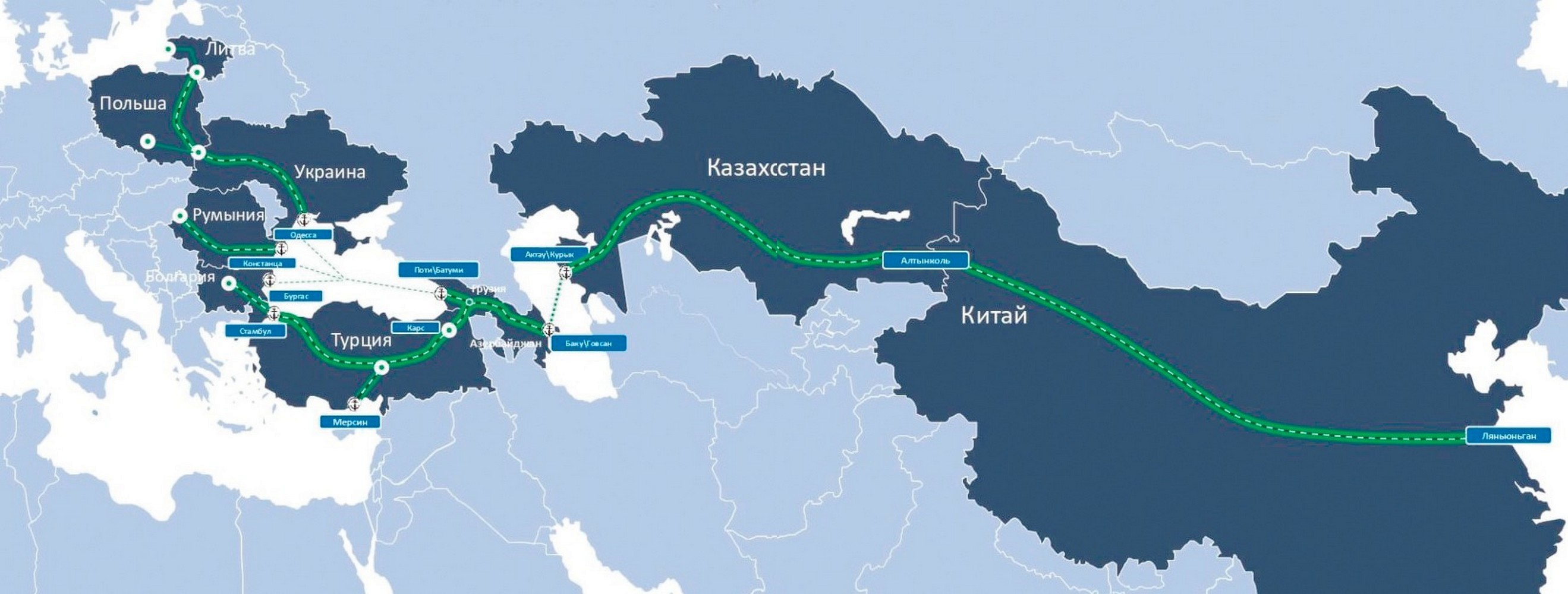
It is important to note that a significant increase in demand for the Trans-Caspian International Transport Route (TITR) was observed in 2022, coinciding with the Russian-Ukrainian conflict. While only 10 to 12 Chinese container block trains travelled along the TITR in 2023, their number increased more than thirtyfold in 2024. According to forecasts, the intensity of multimodal container traffic along the TITR was expected to rise by more than one third in 2025.
This growth is driven by the high efficiency of cargo handling at the Baku International Sea Trade Port (BISTP). According to official statistics, cargo transshipment at the Port of Alat amounted to 7.6 million tonnes over the first eleven months of last year, while container handling at the BISTP reached a record 100,000 TEU for the first time. During the same period, Azerbaijan Railways CJSC received 350 block trains via the Middle Corridor, representing a 34% increase compared to the same period in 2024.
These achievements are largely attributable to the unified transport management system that was implemented following the merger of BISTP and Azerbaijan Railways by presidential decree dated February 25, 2025. The seamless integration of port and railway operations has enabled significant improvements in cargo processing efficiency and logistics route optimization. The new Unified Transit Centre at the Port of Alat has also demonstrated notable effectiveness, facilitating collaborative operations among various organizations and forwarding companies since September of last year. This collaborative effort has enabled agile management of cargo handling and transshipment operations.
"The volume of cargo transportation through Azerbaijan via the Middle Corridor has increased by 90 per cent over the past three years, and over the first eleven months of the current year (2025), transit volumes exceeded 3.5 million tonnes. The strategic importance of the corridor, which plays a pivotal role in not only our region's development but also in expanding global trade and transport links, is growing significantly," Prime Minister Ali Asadov stated at the forum.
According to the head of government, the reforms aimed at simplifying trade and cross-border procedures represent a significant step in the digitalization of the Middle Corridor. These reforms will positively impact cargo transportation dynamics with Türkiye and other regional countries.
Unification and digitalisation
The Prime Minister's message merits further scrutiny. Azerbaijan is implementing the 2022–2027 Roadmap with its TITR partners, Astana, Ankara, and Tbilisi. The goal of the Roadmap is to synchronously eliminate bottlenecks and develop the Middle Corridor. This work focuses on improving and unifying cross-border and customs procedures, digitalizing logistics, introducing unified IT solutions, and establishing digital document exchange.
These efforts encompass rail, maritime, and road transport. Systems for digital cargo marking and electronic border queues have been developed and are being implemented, while the use of electronic navigation seals on transit cargo and special trackers on road transport has begun. Digital tools are being developed to issue permits and cargo documentation through a single-window mechanism, alongside the development of electronic technologies for collecting and verifying carrier data and compiling carrier ratings based on freight performance.
This initiative is supported by the integration of the information systems of the railways of Azerbaijan and Kazakhstan with the customs module of the DTC Tez Customs platform. Similar work is planned with the railways of Georgia.
TITR partners intend to launch the Block Digital Corridor platform, which will unify document circulation, customs clearance, and cargo tracking procedures into a single ecosystem along the entire route. These objectives are supported by the accession of Baku and Ashgabat to the UN e-CMR protocol, as well as by road freight transport under the E-TIR system between Uzbekistan and Azerbaijan. Further digitalization and integration of logistics and customs mechanisms are reinforced by a presidential decree signed by Ilham Aliyev. This decree provides for the creation of a Single Window information system and the improvement of state mechanisms for regulating foreign trade.
TRIPP's transport potential
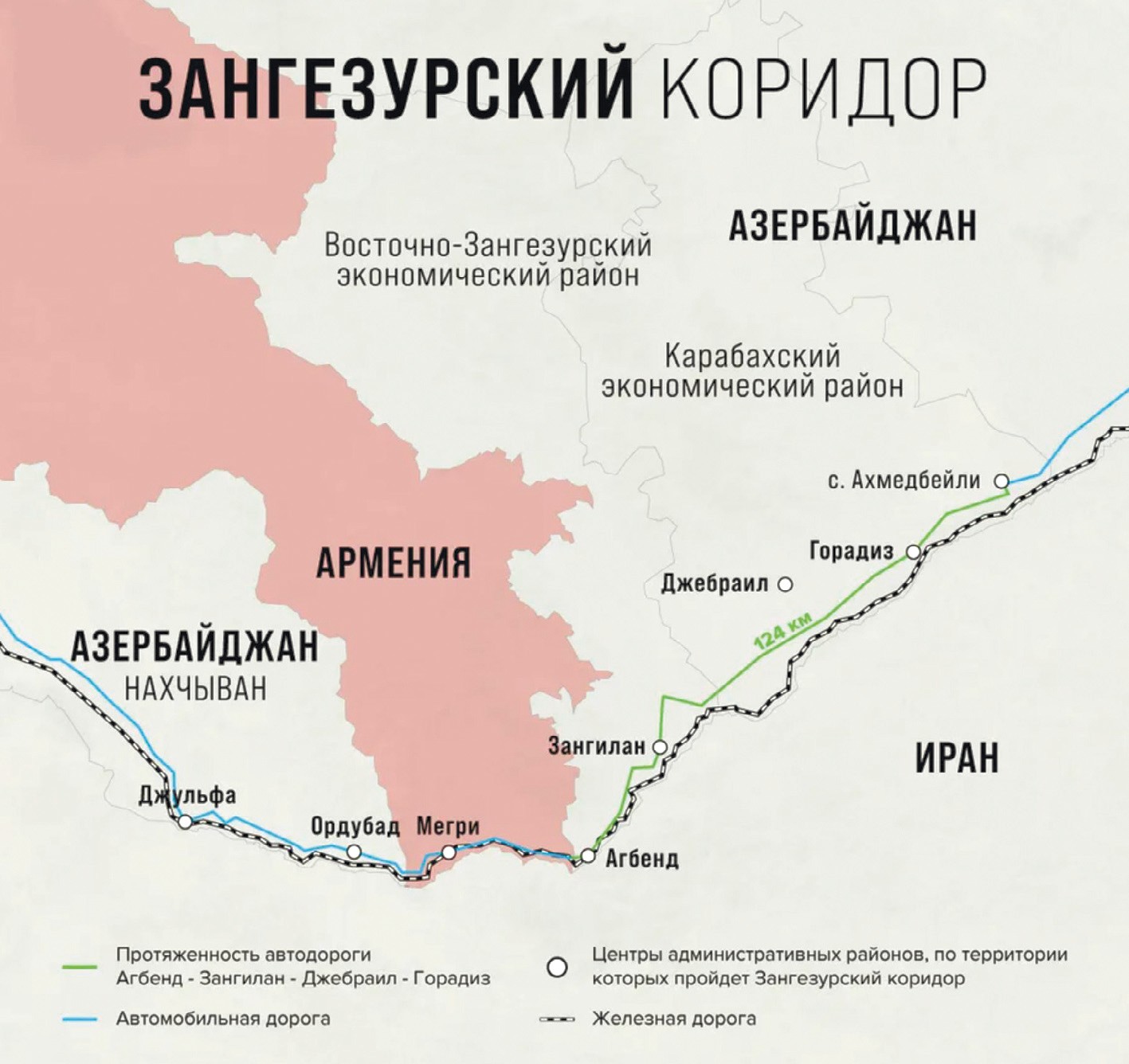
The Prime Minister placed particular emphasis on the historic importance of the agreements reached in Washington in August 2025 on the creation of the transport corridor known as The Trump route for international peace and prosperity (TRIPP), which will connect mainland Azerbaijan with the Nakhchivan Autonomous Republic. "The opening of the Zangezur corridor will not only provide new economic and transit opportunities for all regional states, but will also increase the throughput capacity of the Middle Corridor," the head of government stressed.
Alongside the transport deblocking of Nakhchivan and the strengthening of connectivity between Azerbaijan and Türkiye, the Zangezur corridor holds significant potential for expanding the trade and economic opportunities of Armenia, Georgia, as well as Central Asian states, Russia, China and the European Union. "I am confident that the TRIPP project will become the next most important segment of the Middle Corridor and will serve as a key transport link connecting Asia and Europe, expanding international freight transit opportunities and contributing to the prosperity of the region’s countries, as well as their integration into global supply chains," President Ilham Aliyev stated in his address to participants of the Sixth Caspian Business Forum held in New York.
A similar view was expressed by Türkiye’s Vice President Cevdet Yılmaz during the Second Azerbaijan–Türkiye Investment Forum in Baku. He noted that the opening of the Zangezur corridor would create new opportunities for stability and prosperity in the South Caucasus, strengthen integration between Central Asia, the Turkic states, Türkiye and Europe, and, importantly, significantly enhance the competitiveness of the Middle Corridor as an international transport and logistics route.
According to the results of a high-level roundtable organised by the American-Azerbaijani Chamber of Commerce, the TRIPP project has been identified as a crucial component of the United States' renewed strategic involvement in Central Eurasia. "American companies and capital are an integral part of this initiative. The current US administration is committed to ensuring their full participation in its implementation," said Vinay Chawla, Special Envoy for Peace Missions at the US Department of State.
The TRIPP project, in conjunction with the Kars–Igdir–Aralik–Dilucu railway line under construction, will enable a threefold increase in freight transportation along the Trans-Caspian route in the medium term. The commissioning of new segments of the Middle Corridor will allow for the transportation of up to an additional 15 million tons of cargo on an annual basis. The demand for this capacity is extremely high, as assessments by the World Bank and other experts indicate that potential growth in freight transportation along the Middle Corridor over the next five years could exceed 10 to 12 million tonnes, requiring even greater transshipment capacities.
Anticipating this demand, Azerbaijan launched a large-scale restoration of transport infrastructure in the East Zangezur economic region five years ago. Azerbaijan independently financed the construction of infrastructure for the cross-border international railway line Horadiz–Aghbend. Concurrently, a 123.6-kilometre motorway, Horadiz–Jabrayil–Zangilan–Aghbend, is being constructed along the same route. The project is on track to be fully completed by mid-2026.
Taken together, these projects are shaping a qualitatively new role for Azerbaijan, not merely as a transit territory, but as a systemic logistics hub of Eurasia. The synergy of infrastructure investment, digitalisation and international coordination strengthens the competitiveness of the Middle Corridor and lays the foundation for sustainable growth in transit revenues over the long term.
RECOMMEND:
 188
188

