

NEGOTIATIONS UNDER BARRAGE
Despite diplomatic efforts, preconditions for a swift end to the war remain absent
Author: Samir VELIYEV
By the end of 2025, the dynamics of processes surrounding Ukraine had acquired particular intensity. The US's objective to conclude the year with a formally documented outcome has prompted a surge in activity on the negotiation front. This primarily concerns American proposals, around which Ukraine, the US, the EU, and Russia have been conducting protracted, multi-level consultations for several weeks. According to Ukrainian President Vladimir Zelenskyy, the draft agreement currently under review encompasses approximately 20 points, with additional thematic addenda to be provided for separate sections. However, "coordinated" does not yet imply "adopted." It appears that the situation is not having any impact on the intensity of hostilities.
What is the cost of aiding Ukraine?
As the search continues for compromise solutions, the primary issue on the agenda remains the allocation of financial and military support to Ukraine. A substantial portion of the agenda for the recent year-end European Union summit in Brussels on December 18-19 was dedicated to this matter. The discussions focused on the potential for additional financial and political support for Kiev, as well as the exploration of long-term sustainable mechanisms to ensure its macroeconomic stability. Concurrently, a debate emerged concerning the future architecture of European security in the context of the transformation of the US role. This discussion encompassed both security guarantees for Ukraine and the broader question of the limits of EU strategic autonomy.
The summit revealed ongoing internal disagreements within the union, primarily concerning the allocation of financial responsibilities and the approach to relations with Russia. This was particularly evident during the coordination of the mechanism for a joint EU loan to Ukraine. In parallel sessions, participants explored the sustainability of the common European budget and the legal risks associated with the potential use of frozen Russian assets. They also discussed the importance of maintaining trust in the eurozone as a secure jurisdiction for international capital.
After protracted negotiations lasting approximately 17 hours, EU leaders reached a compromise decision to provide Ukraine with substantial financial support in the form of a joint loan totalling €90 billion for the 2026-2027 period. This refers to the EU borrowing on capital markets with guarantees from the union's common budget; the loan is intended to be interest-free.
According to the European Commission's plan, this mechanism should not create an additional debt burden for Kiev, as loan repayment is linked to possible future reparations. For Ukraine, this decision is not optional but critically necessary. Without these funds, the state will be unable to fully perform basic functions, including payments to military personnel and weapons procurement. In light of the United States' declining willingness to provide new direct aid, Europe is increasingly becoming the primary financial contributor to Ukrainian resilience.
Support to Ukraine: pros and contras
Concurrently, the summit vividly demonstrated the depth of disagreements within the EU. The approval of the package required unanimous consent, and Hungary, Slovakia, and the Czech Republic supported the decision on the condition of being exempt from individual financial obligations. The European Council's final conclusions noted that utilizing the EU budget as a guarantee for the loan would not incur financial obligations for these states. This further highlighted discrepancies in the strategic approach to the war. While Poland and the Baltic states regard Ukraine's survival as a matter of their own security, Budapest, Bratislava, and Prague adopt a more restrained stance, occasionally expressing overt criticism.
Polish Prime Minister Donald Tusk's statement that Europe faces a choice—"pay with money today or with blood tomorrow"—became a symbol of the debate. However, concerns regarding legal and financial ramifications prompted the EU to reject a more radical financing option: the direct utilization of frozen Russian state assets. According to the Financial Times, the leaders of France and Italy played a key role in blocking this initiative, their position proving decisive during the negotiations.
It is evident that the opposition to Brussels's most stringent initiatives is not confined to the stance of individual Eastern European countries. Disagreements among leading EU states also indicate structural cracks in European politics, which are often masked by declarations of unity.
Approximately €210 billion in Russian Central Bank funds are currently frozen in Europe, with the majority held in the Belgian depository Euroclear. Despite ongoing appeals from Kiev, several countries are concerned about the potential for retaliatory actions from Moscow and a decline in confidence in the eurozone. Consequently, the concept of a "reparation loan," which was to be directly backed by these assets, did not receive approval. However, their use to repay the previously agreed loan is not excluded in the future—provided that a peaceful settlement is reached and a legally sound mechanism is established.
Ukraine's financial needs are systemic, covering the budget deficit, military expenditures, the restoration of critical infrastructure, and the maintenance of macro-financial stability. In light of these developments, the EU's €90 billion loan provides only a portion of the necessary funding. According to Brussels's estimates, Ukraine will require approximately €45 billion in additional funding in 2026-2027. The European loan plays a crucial role in this regard, providing approximately two-thirds of the necessary volume and preventing financial collapse while ensuring the continuity of state governance.
At the same time, this instrument remains primarily macro-financial. This approach enables Ukraine to maintain economic resilience and continue its resistance, though it does not guarantee a strategic military turning point. Consequently, Kiev is pursuing support from non-EU countries and international financial institutions. The summit's outcomes demonstrated the duality of the European approach: a readiness to act on a large scale coupled with a dependence on complex internal compromises, which are increasingly determining the forms and limits of support for Ukraine.
The US as guarantor and negotiator
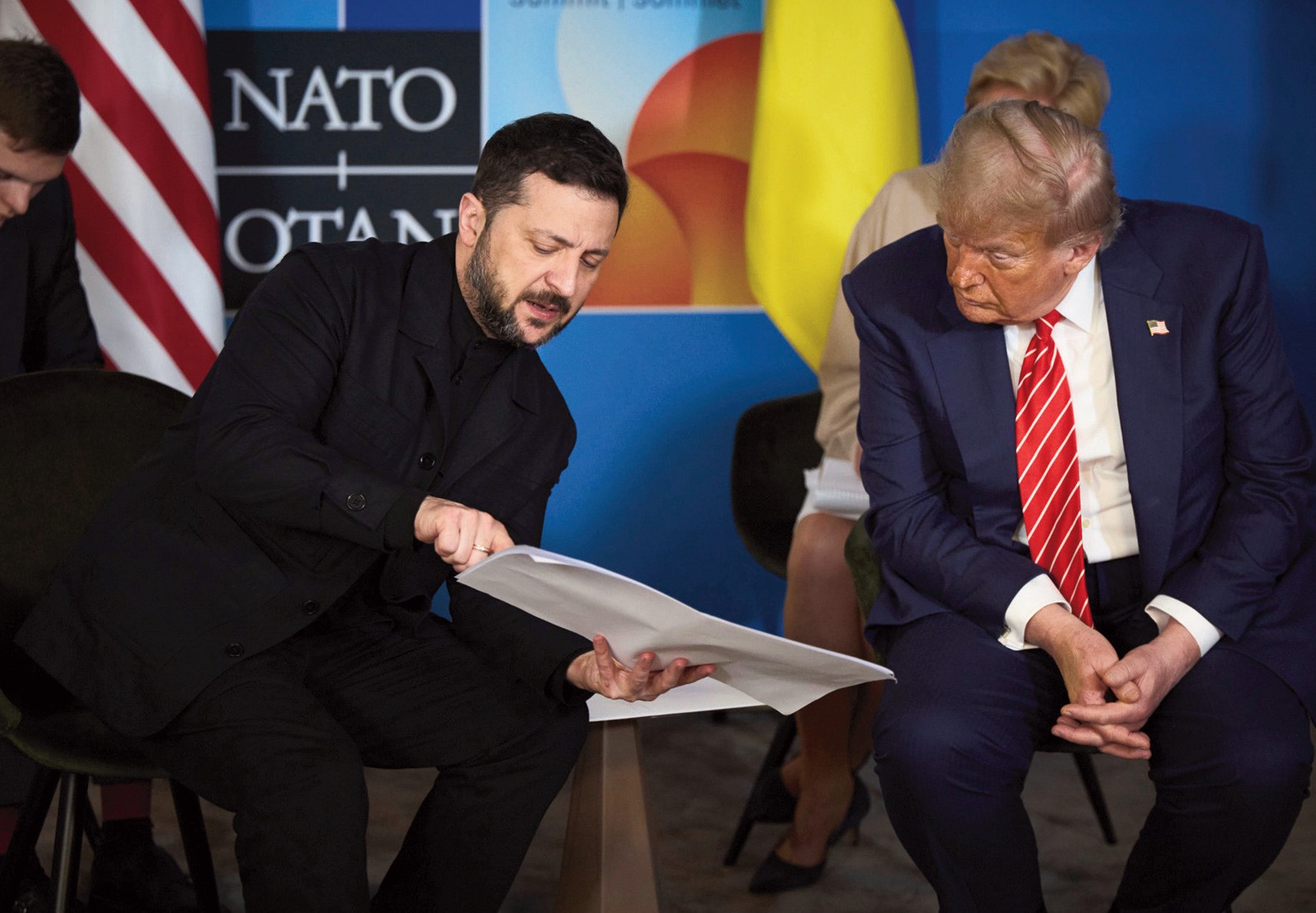
During the press conference that followed the summit, Vladimir Zelenskyy expressed his gratitude to the European Union for the decisions made and the substantial financial support provided. However, he also made a crucial clarification regarding Ukraine's security architecture. He underscored that he does not believe Europe should or can "replace the US" on the matter of security guarantees. He asserts that the obligations of European states to provide aid to Ukraine in the event of a new Russian attack cannot be considered a full-fledged alternative to guarantees from the United States. Zelenskyy made it clear that these guarantees should be legally binding and supported by decisions made by the US Congress. This would affirm Washington's key role in the strategic deterrence system for Kiev.
This statement clearly indicates that, despite the EU's growing role as a financial and political partner, Ukrainian leadership views the United States as the unconditional and irreplaceable guarantor of its security. While Brussels maintains a tough stance on strategic autonomy, Kiev recognizes the EU's institutional and military limitations. Ukraine is pragmatic in its approach, welcoming increased European support while maintaining a strategic partnership with the US as the foundation of its security.
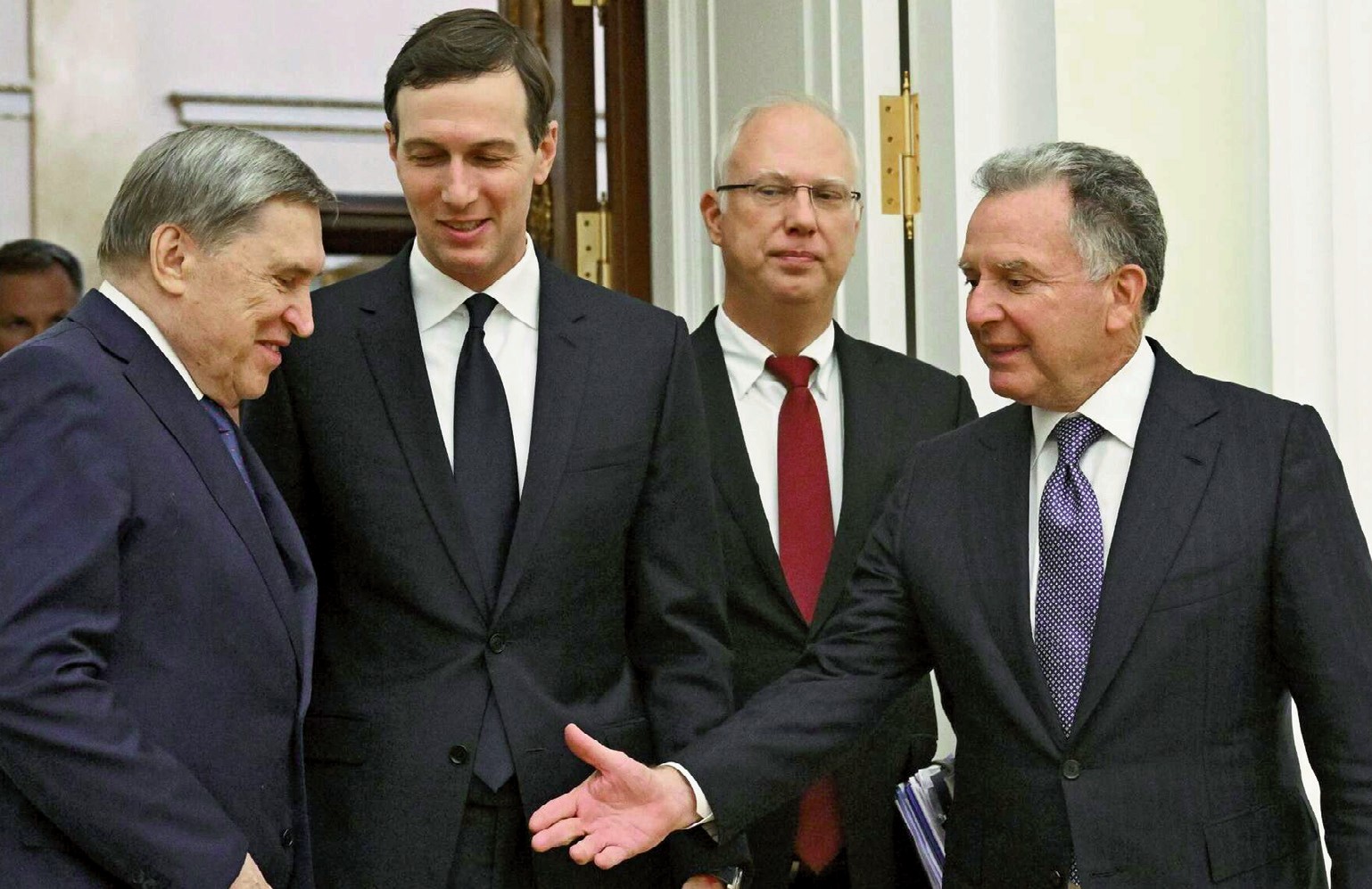
Washington has not reduced its efforts to find a compromise solution to the conflict. For this purpose, on December 20-21 in Florida, US President's Special Envoy Steve Witkopf held negotiations with representatives of Ukraine and Russia. The American delegation, in addition to Witkopf, included Jared Kushner, who is both an adviser and son-in-law of Donald Trump, as well as White House staffer Josh Gruenbaum. The Russian delegation was led by Special Envoy of the Russian President Kirill Dmitriev, and the Ukrainian delegation was led by Secretary of the National Security and Defense Council of Ukraine Rustem Umerov.
Following the meetings, Witkopf stated that a number of "productive and constructive" negotiations had been held, a cautious optimism shared by Vladimir Zelenskyy. A separate meeting was held in the US-Ukraine format. During this meeting, the following topics were discussed: further elaboration of the 20-point plan, alignment of positions on a multilateral system of security guarantees, parameters of US security guarantees for Ukraine, and a plan for the country's economic recovery and long-term development. Particular attention was paid to the timing and sequence of subsequent steps.
"Ukraine remains fully committed to achieving a just and sustainable peace. Our shared priority is to end the killing, ensure guaranteed security, and create conditions for the recovery, stability, and long-term prosperity of Ukraine," stated Witkopf.
However, this rhetoric stood in stark contrast to the situation on the front. In Moscow, a passenger car explosion resulted in severe injuries and the death of General Fanil Sarvarov, who headed the operational training directorate of the Russian General Staff. Concurrently, Ukraine executed a series of targeted strikes against Russian oil infrastructure along the Caspian Sea, while Russia maintained its intensive airstrikes on Ukraine's Odesa, Kherson, Kiev, and other regions.
This indicates that, despite the initiation of diplomatic efforts and the pursuit of compromise settlement formulas, the preconditions for a swift resolution to the war remain unmet. The negotiation tracks initiated by the US are largely preparatory and exploratory in nature and are not yet accompanied by changes capable of altering the logic of confrontation in practice.
In light of these developments, the war is increasingly characterised as an extended armed conflict where negotiations do not substitute for combat but rather complement it. Given the current balance of forces and political positions, the likelihood that the war will continue into 2026, at least in the first half, remains significantly higher than the chances of its swift conclusion, even considering the current dynamics of the negotiation process and the persistence of the US.
RECOMMEND:
 207
207

