

WINTER UNDER PALM TREES
The sea, the mountains, me and mandarins: winter Antalya in close-up
Author: Elchin HUSEYNOV, Baku–Antalya–Baku
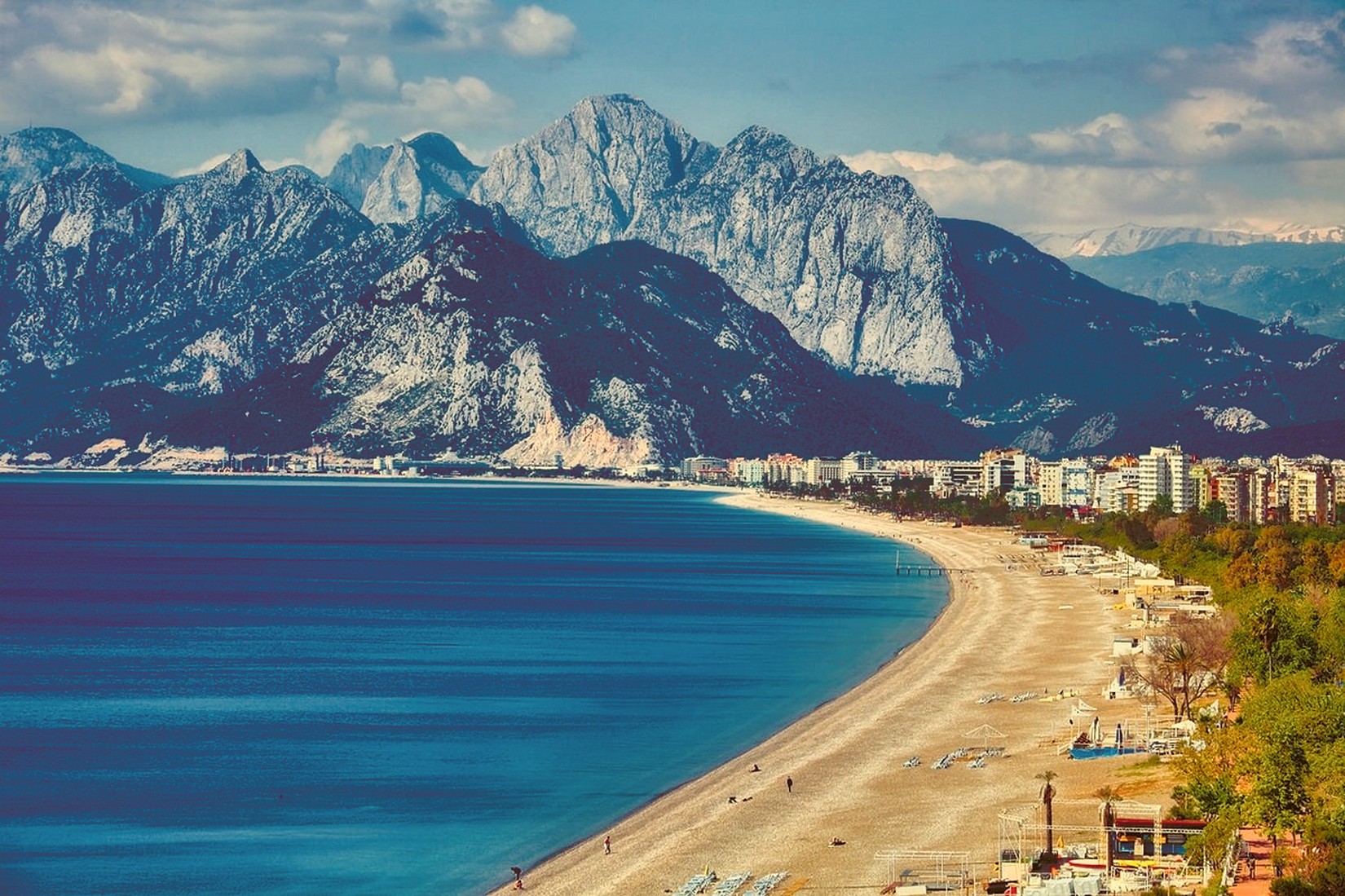
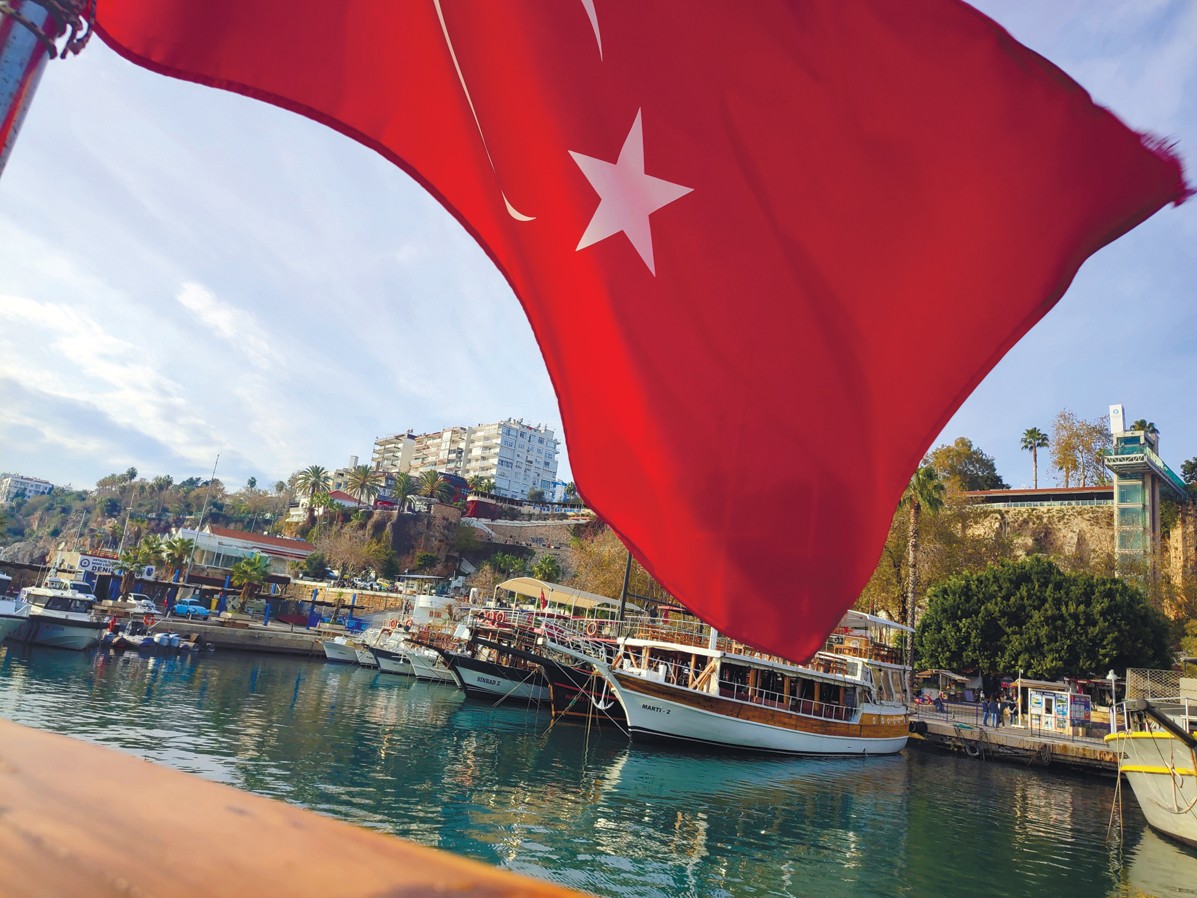
While Europe wraps itself in coats, Antalya lives in sunny pauses. Winter here does not cancel the sea; it merely changes the scenery. Palm trees stay where they are, the Mediterranean does not disappear, and against the distant backdrop of snow-covered mountains you can still spot tourists swimming. A resort that most people associate with noisy, sweltering summers becomes unexpectedly calm in winter.
Climate stats—comfort without extremes
Antalya in December, January and February means temperatures of +15–18°C, half-empty promenades and a city without its tourist make-up. No queues, no exhausting heat, and no feeling that you are just one of tens of thousands. You can walk for hours, listen to the sound of the surf, drink coffee outdoors, visit museums without crowds and look at the sea without peering between rows of sun loungers.
In winter, Antalya plays confidently with contrasts. Morning brings the sea and palm trees, daytime offers snow and mountains, and evening ends with a warm hammam and dinner overlooking the city lights. Hotels shed their summer gloss and switch to comfort mode, restaurants mostly cater to locals, and prices finally stop biting quite so painfully. That is why winter Antalya is neither a fallback option nor a “cheap version” of summer. It is a resort without hustle, a city made for walking, and a journey that pleasantly surprises you precisely when you expect nothing from it.
If in summer Antalya receives millions of tourists each month (with tens of thousands of arrivals recorded daily during peak season), in winter the flow is, naturally, far smaller. According to official data, 2024 saw a record number of visitors, with the city welcoming around 17 million people. In the first ten months of 2025, Antalya received more than 16 million foreign tourists, setting a new record. The majority still come from Germany, Russia and the United Kingdom. The winter season, especially around New Year, also attracts a significant number of travellers—on the order of hundreds of thousands per month. Many domestic and international flights remain in operation thanks to the mild climate, expanded year-round tour programmes, as well as New Year celebrations and holidays.
So winter in Antalya is not beach heat and not an excursion marathon under scorching sun. It is rather a kind of balance, where the city finally becomes comfortable. In this weather, it is easy to spend the whole day on your feet. Walks through the old town of Kaleiçi, along the Konyaaltı and Lara promenades, visits to viewpoints and ancient ruins do not turn into endurance tests. A jacket instead of a down coat, sunglasses instead of a hat—winter Antalya invites movement rather than flight into the shade or back to the hotel.
Rain is possible, but it is brief and does not spoil the overall picture. Afterwards, the air becomes even cleaner, the mountains sharper in outline, and the city looks as if it has been washed to a perfect frame. At this time of year, the sea remains more of a backdrop than the main character, but precisely because of that Antalya reveals itself more fully—as a place for walks, impressions and unhurried rest. Still, the sea should not be completely discounted: as locals note, the water temperature rarely drops below 19–20°C.
What to do in Antalya in winter
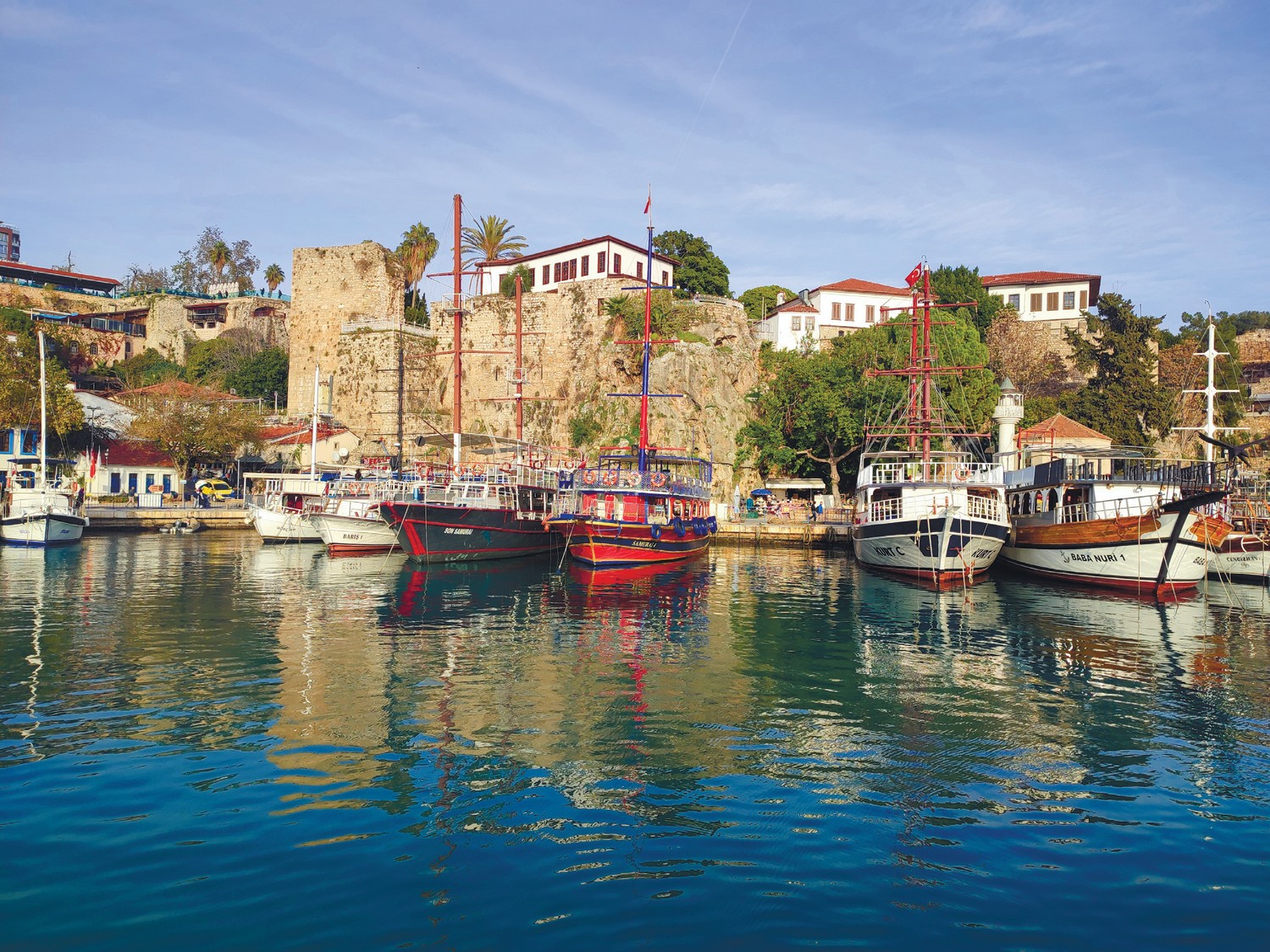
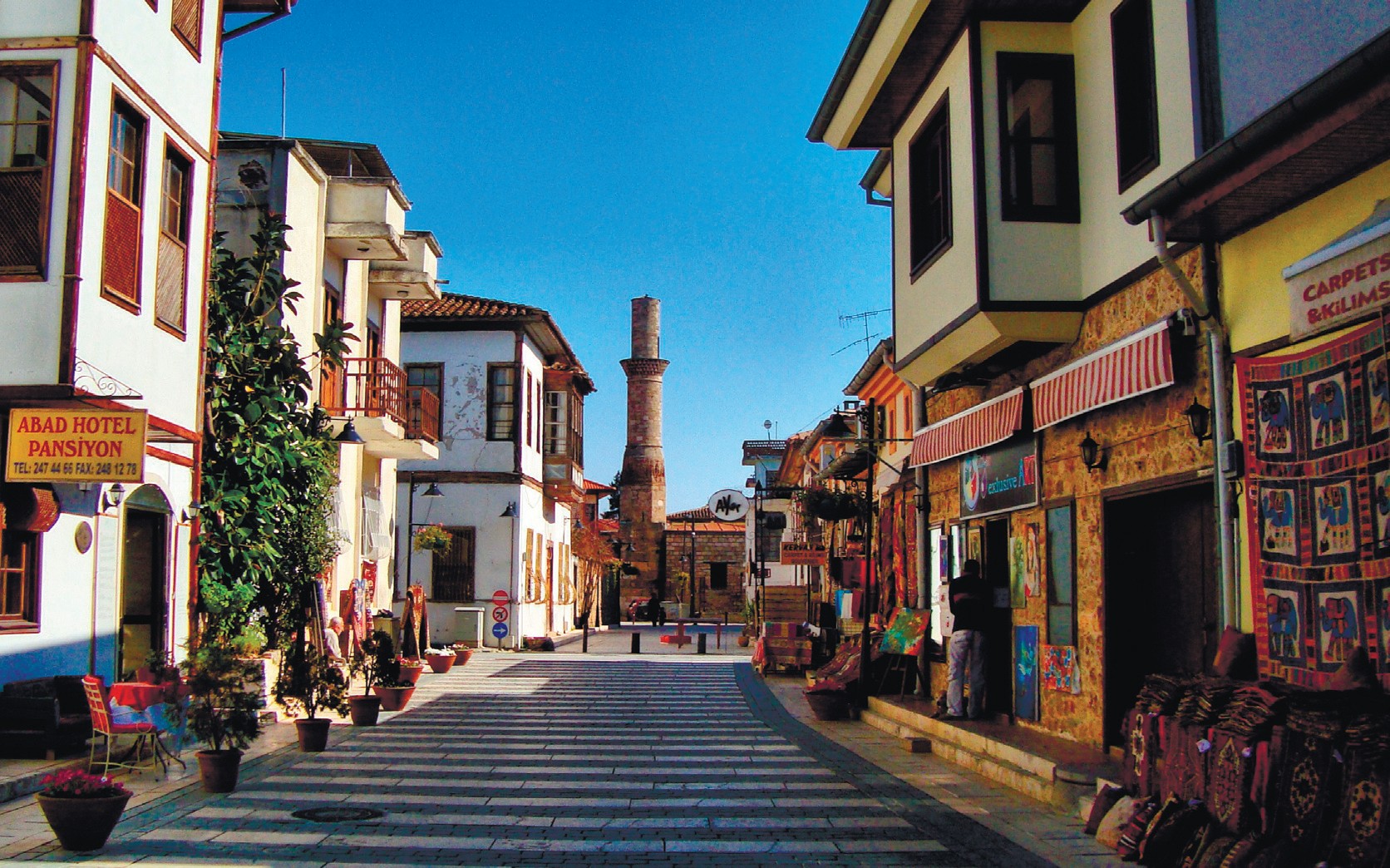
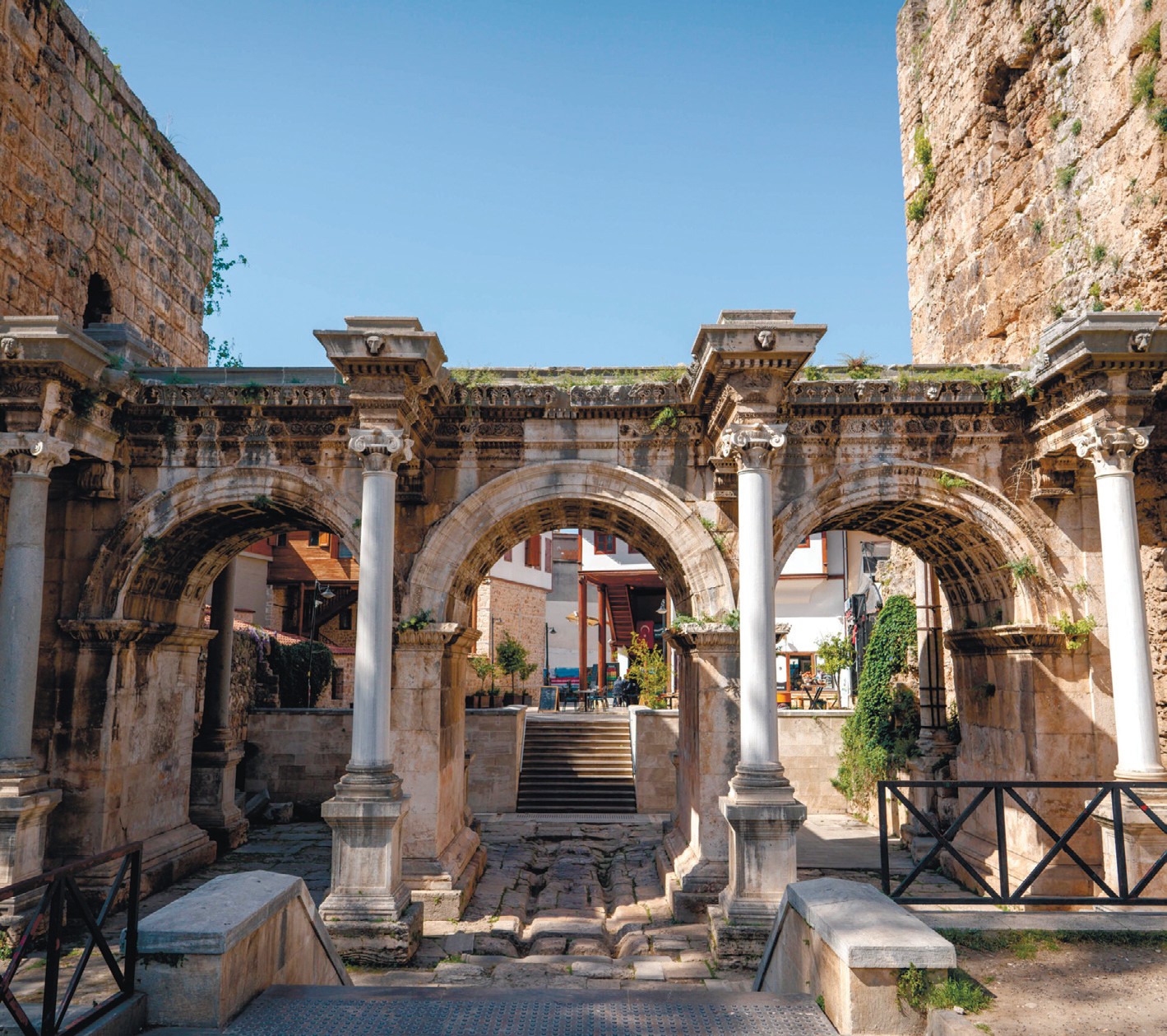
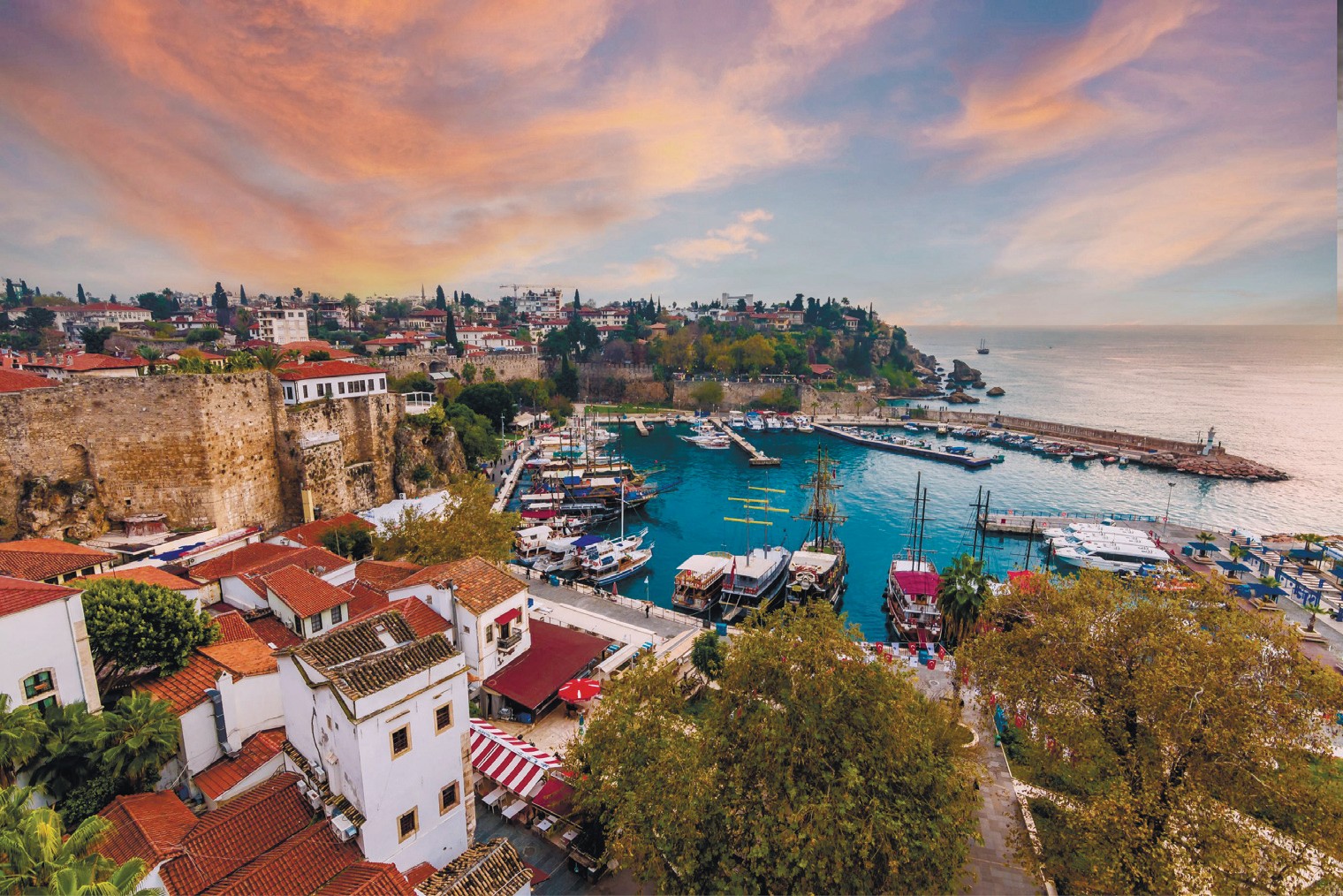
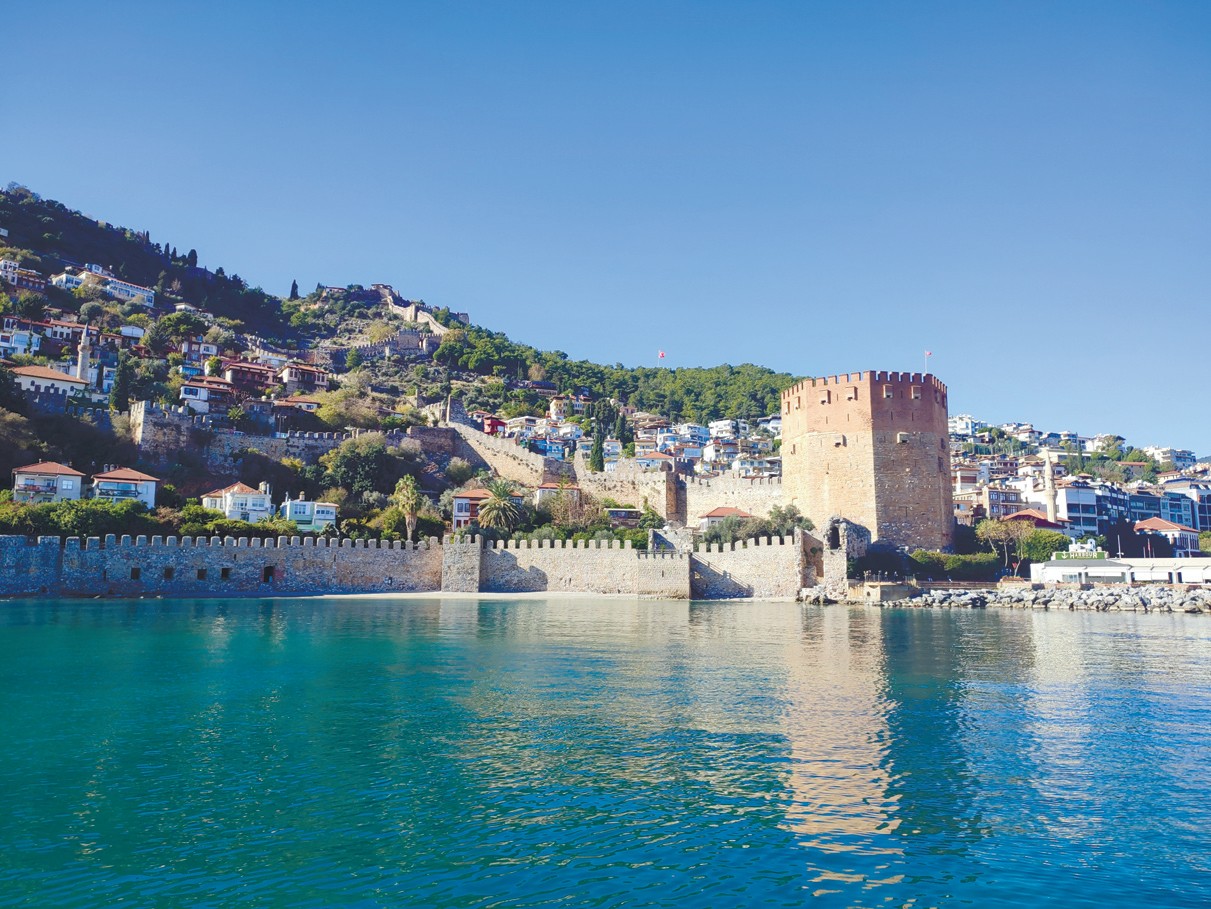
Winter Antalya is a city you want to explore step by step. Kaleiçi greets you with narrow streets, cosy cafés, boutique hotels, old houses with colourful shutters and hidden courtyards where it feels as though time has stopped. Every turn opens up a new photographic frame; every fountain or small shop tells a little story that you do not want to miss.
The Konyaaltı and Lara promenades, so crowded in summer, are almost empty, allowing you to stroll calmly along the sea, listening to the waves and the cries of seagulls. If you are in the mood for adventure, ancient cities await within a two-hour drive: Perge with its powerful columns; Aspendos with an amphitheatre that still holds the echoes of the past; and Termessos, perched on a mountain, where the air is sharper and cleaner and the views impress even seasoned travellers.
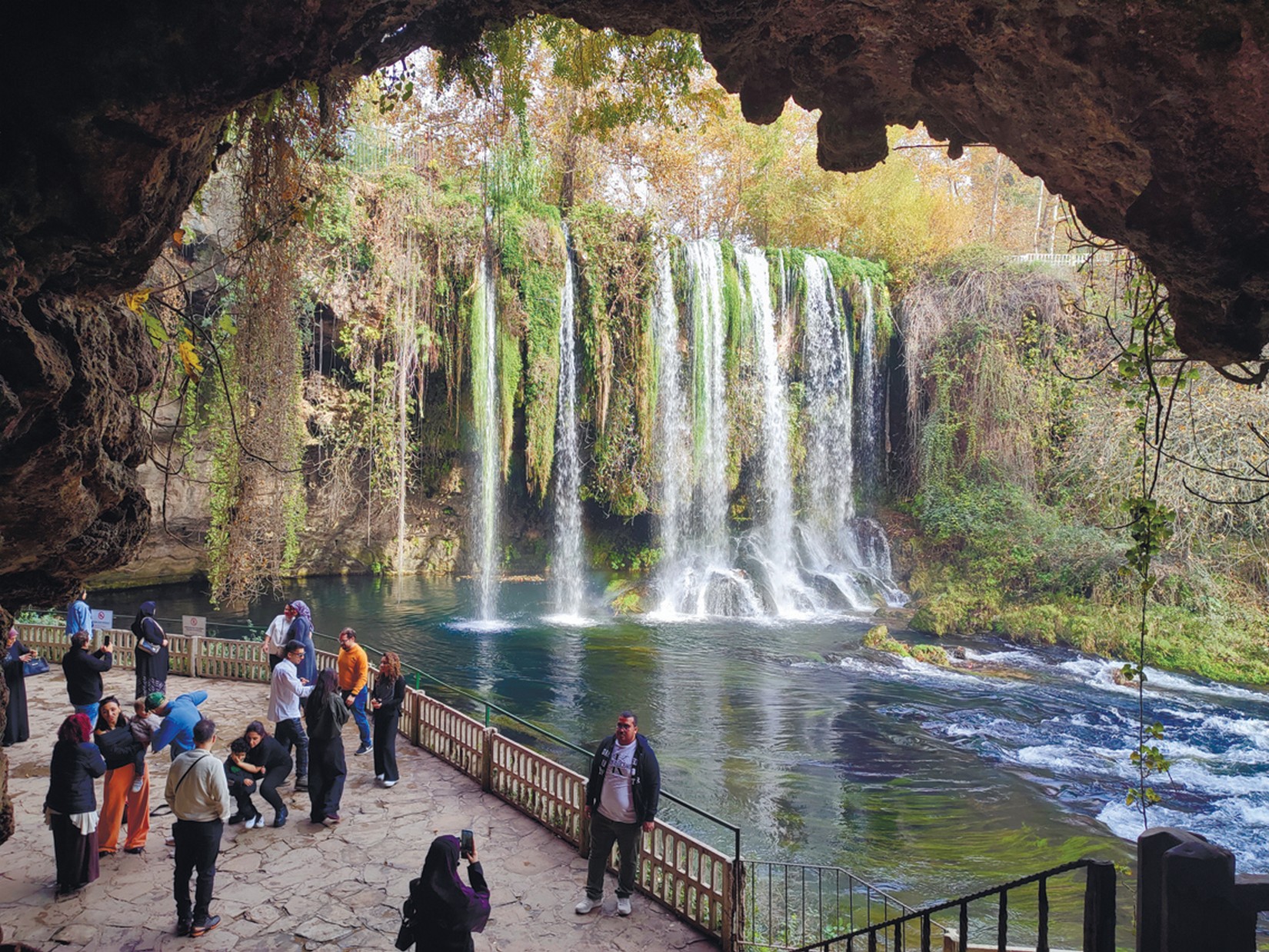
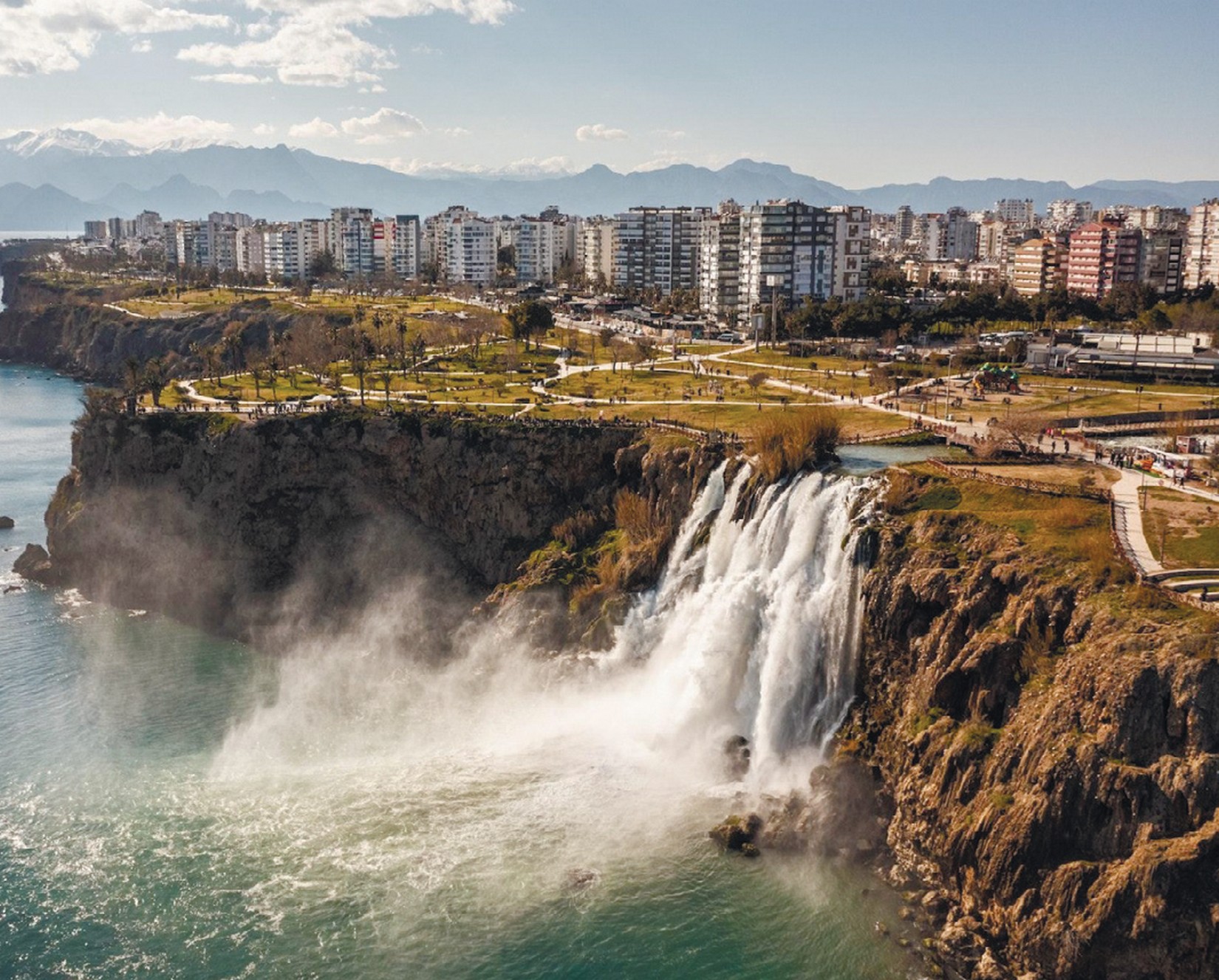
For nature lovers, there are the two Düden waterfalls—Upper and Lower—which reveal themselves quite differently in winter. The flow of water appears clearer, the greenery around more vivid, and there are far fewer tourists.
In summer, Antalya is a sea of people, the shouts of animators and queues for sun loungers. In winter, everything changes. Hotels open up as quiet refuges where every detail works towards comfort. Heated pools, hammams, spa treatments and cosy lounges make you want to stay inside, even when the sea breeze outside invites you out for a walk.
Winter prices become a real discovery: apartments and hotels can cost three to four times less than in summer. It is a chance to afford a room with a view of the sea or the mountains—something that remains only a dream during the high season. At the same time, it is worth remembering that many large and mid-sized hotels close for a couple of months during the low season, waiting it out until April, when the resort comes back to life and crowds of tourists return.
Of course, in the colder season the number of classic sea tours is greatly reduced compared to summer, but some excursions, museums and entertainment options continue to operate. City and cultural tours are particularly appealing—if in summer most tourists opt for yachts or water parks, in winter excursions focused on history and architecture work well. For example, a city sightseeing tour with a walk through the Old Town (Kaleiçi), a visit to the Düden waterfalls and a short boat trip can be found for around $25–30, including transfers, lunch and a guide.
As in summer, the Antalya Aquarium remains one of the city’s most popular family attractions and operates year-round. A ticket for the aquarium alone costs $36–50 per adult, while tours with transport and a guide are more expensive. Trips to Perge, Aspendos or combined tours visiting several historical sites cost $50–90 per person, depending on duration and included options. The Antalya Archaeological Museum reveals the centuries-old history of the region and is ideal for a cool or rainy day.
If you want a change of scenery, trips to Pamukkale—with its thermal travertines and the ancient city of Hierapolis—are popular, costing $80–100 per adult with transfer and guide. Two-day tours to Cappadocia start from $100, with the option to add a hot-air balloon flight. Activities such as jeep safaris in the mountains, fishing trips or rides on the Tahtalı cable car are sometimes available in winter as well, costing around $40–50 per person depending on the operator and included services.
By the way, a Turkish bath with massage costs around $35–45 (a relaxation package with transfer), while the Fire of Anatolia dance show—a performance with dinner and transfer—is priced at about $60 per ticket.
Morning at the beach, afternoon in the snow
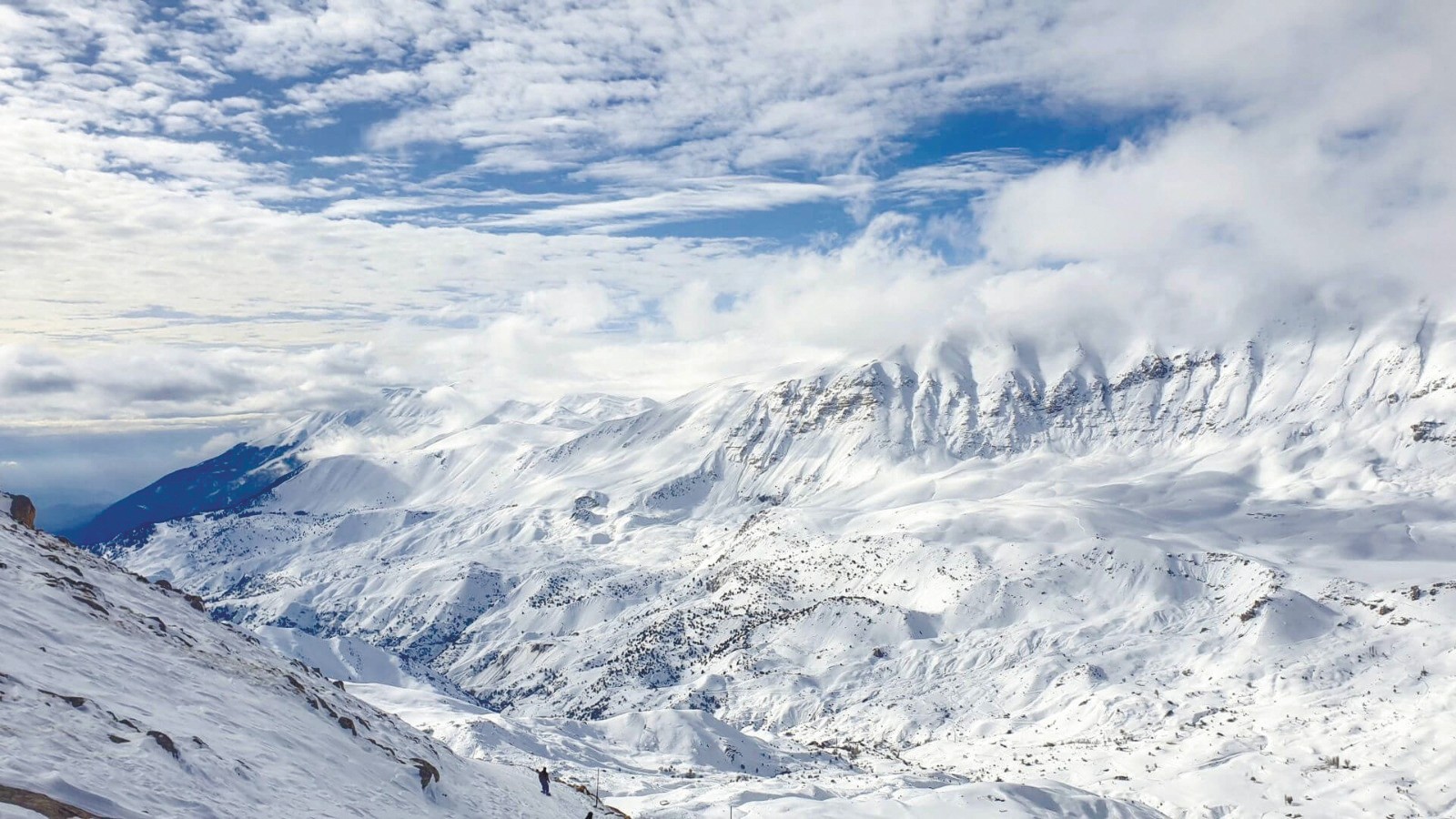
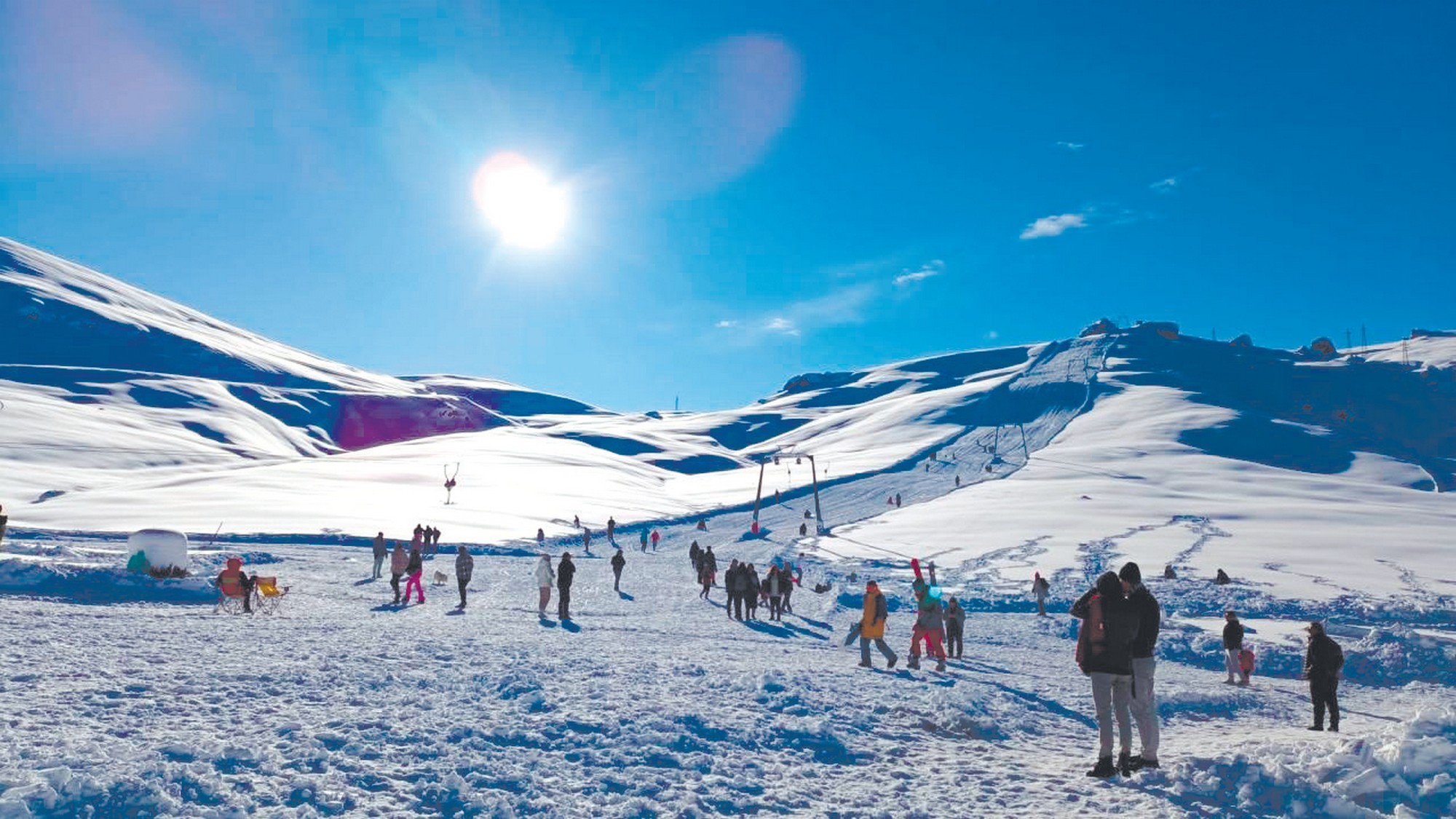
People sometimes say that in summer Antalya feels flat: beaches, sun loungers, sea and heat. In winter, the city opens up in a different way. In the morning, you can walk along the promenade in a light jacket, breathe in the fresh sea air and realise that the sun here is gentler than at noon in July. And a couple of hours later, all it takes is a car ride—and you are already among the snow-covered peaks of the Taurus Mountains.
The Saklıkent ski centre awaits those who enjoy slopes and snowy adventures. Skiing, snowboarding or simply walking through the snow—the contrast with the seaside is felt at every step. The cable car to Tahtalı rises to a height of 2,365 metres, where it feels as though Antalya lies far below and there is nothing around but clouds and crystal-clear air.
Saklıkent is the closest ski resort to Antalya, located 45–50 km from the city and the airport. The season here usually lasts from mid-December to the end of March or early April. Snow depth can reach 1–2 metres, and sometimes even 4 metres at the summit. By European standards, the resort is small, but it is very convenient as a one-day ski trip: you can be on the snow in the morning and back in Antalya within an hour or two for a walk or by the sea. The slopes are designed for beginners and intermediate skiers. There are several lifts, including a chairlift, around 10 km of prepared runs, equipment rental points, cafés and small hotels or chalets.
In winter, the mountains set a completely different rhythm for Antalya. In summer, people come here for heat and beaches; in winter, they come for contrast and emotion. Morning on the seaside promenade, daytime among snow, evening in a cosy hotel with a warm pool or hammam. This is impossible in summer, when the sun is relentless and sun loungers stand packed tightly together.
An interesting detail: the name Saklıkent appears twice for tourists in Türkiye—both in summer and in winter—and this often causes confusion. In summer, tourists from the Aegean coast near Fethiye are taken to cool off in Saklıkent Canyon, a popular summer route with cold water, walks and rafting. This is about 200 km west of Antalya. The Saklıkent ski resort, by contrast, is located near Mediterranean Antalya, where you can ski in winter. Two places with the same name, but entirely different in nature.
Seasonal flavours
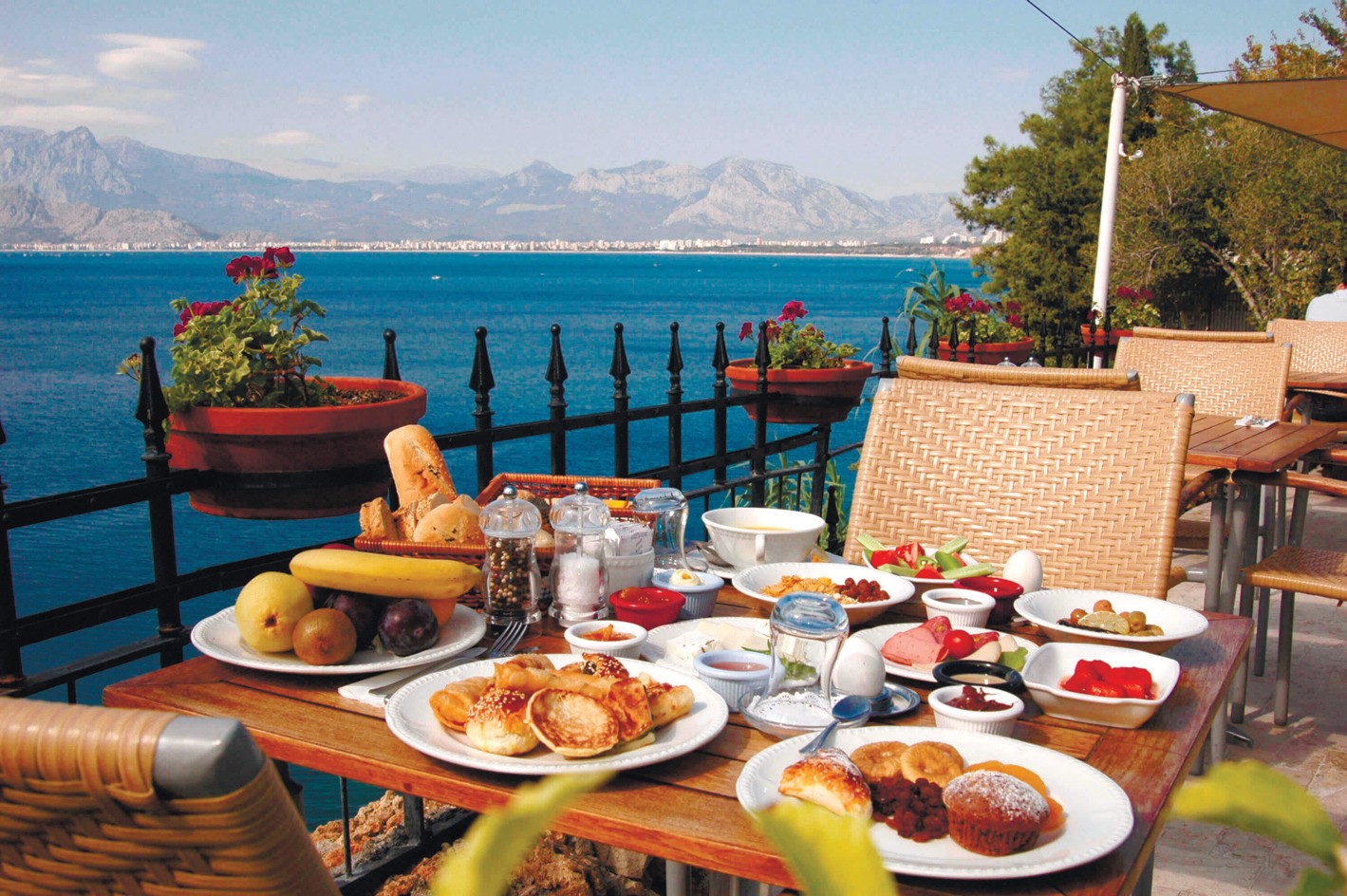
If in summer we talk about cafés and restaurants in Antalya, we mean endless tables along the promenades, seafood, soft drinks and, in recent years, intimidating prices. In winter, everything is different. Turkish cuisine reveals itself in another way—with warm, hearty dishes and subdued music, where the main thing is not the view of the waves, but the comfort inside. Moreover, gastronomic pleasures can be found even in simple places, where price and quality work in your favour.
An average lunch consisting of a single dish in a very simple restaurant costs around $9–13 per person, while a three-course dinner for two (without alcohol) comes to $26–59, depending on the level and location of the venue. Lentil soup costs ₺150–200, döner with pilaf (rice) ₺350–500, and a portion of fish with garnish from ₺600. Tea costs ₺25–50, coffee ₺80–160, ayran ₺70–90, and a bottle of water ₺50. Many cafés serve seasonal dishes with more spices and thick sauces than in summer, when lighter salads and cold meze (assorted appetisers) are preferred.
Winter is also a good time for markets and small shops: fresh citrus fruits (oranges, mandarins and lemons), pomegranates, persimmons and local cheese are popular, although prices still bite. Shops selling Turkish sweets such as baklava and lokum are almost empty—their prices have risen several times over the past three years, in a way that is far from proportional to inflation.
Even so, winter remains a good period for visiting restaurants that are almost inaccessible in summer because of the “resort effect”. Added to that is a calm atmosphere and attentive service without the rush.
Winter Antalya is sun without stifling heat, sea without crowds, mountains close by, history and culture within walking distance, comfortable hotels and good food. All of this unfolds at a calmer pace, when the city truly reveals itself and travel becomes not just a holiday, but a small discovery.
RECOMMEND:
 221
221

