

WELCOMING LITHIUM
Obeying operational rules for electric cars can reduce irreversible consequences to zero
Author: Sabira ALIAKBAR
In January, an incident occurred in the Garadagh district of Baku, in which the driver died in the cabin of a burning Dongfeng Aeolus E70. The event soon found its way to the headlines of the Azerbaijani media. Video footage of the vehicle burning in flames on the roadside spread at an accelerated rate, surpassing the dissemination of official emergency service briefings. For the general public, this case represented more than just a traffic accident; it was a deeply unsettling confirmation of latent fears.
What are the reasons for the greater impact of a fire involving a Dongfeng vehicle compared to a conventional car? The concept of cognitive dissonance offers a possible explanation for this phenomenon. It has been observed that a single incident involving an electric vehicle tends to generate more discussion and attention than thousands of annual incidents involving internal combustion engine (ICE) cars, which are perceived as being familiar and almost mundane.
Electric cars were presented as the pinnacle of safety. When that "ideal" future suddenly becomes apparent, there is a sudden and disconcerting realisation that expectations and reality are often at odds with each other. The effect is amplified by social networks: algorithms promote the most shocking content, creating the illusion of a fire epidemic, while dozens of burnt conventional cars that same day go unnoticed in the news flow.
Who is "burning" at work?
In order to comprehend the genuine nature of these fears, it is necessary to set aside panic and to consider the objective data provided by specialist agencies. The latest fire statistics for 2024–2025 reveal a contradiction with commonly held beliefs. According to a report by US analytics firm AutoInsuranceEZ, based on National Transportation Safety Board (NTSB) data, electric vehicles are the safest transport type in terms of fire risk. Statistics show that there are only approximately 25 fires for every 100,000 electric cars sold. By comparison, ICE vehicles are involved in approximately 1,530 incidents, which is 60 times more frequently. The riskiest category remains hybrids, which, according to the NTSB, record nearly 3,480 fires per 100,000 vehicles. A hybrid is an engineering compromise where the coexistence of combustible fuel and a high-voltage battery effectively doubles the number of potential failure points.
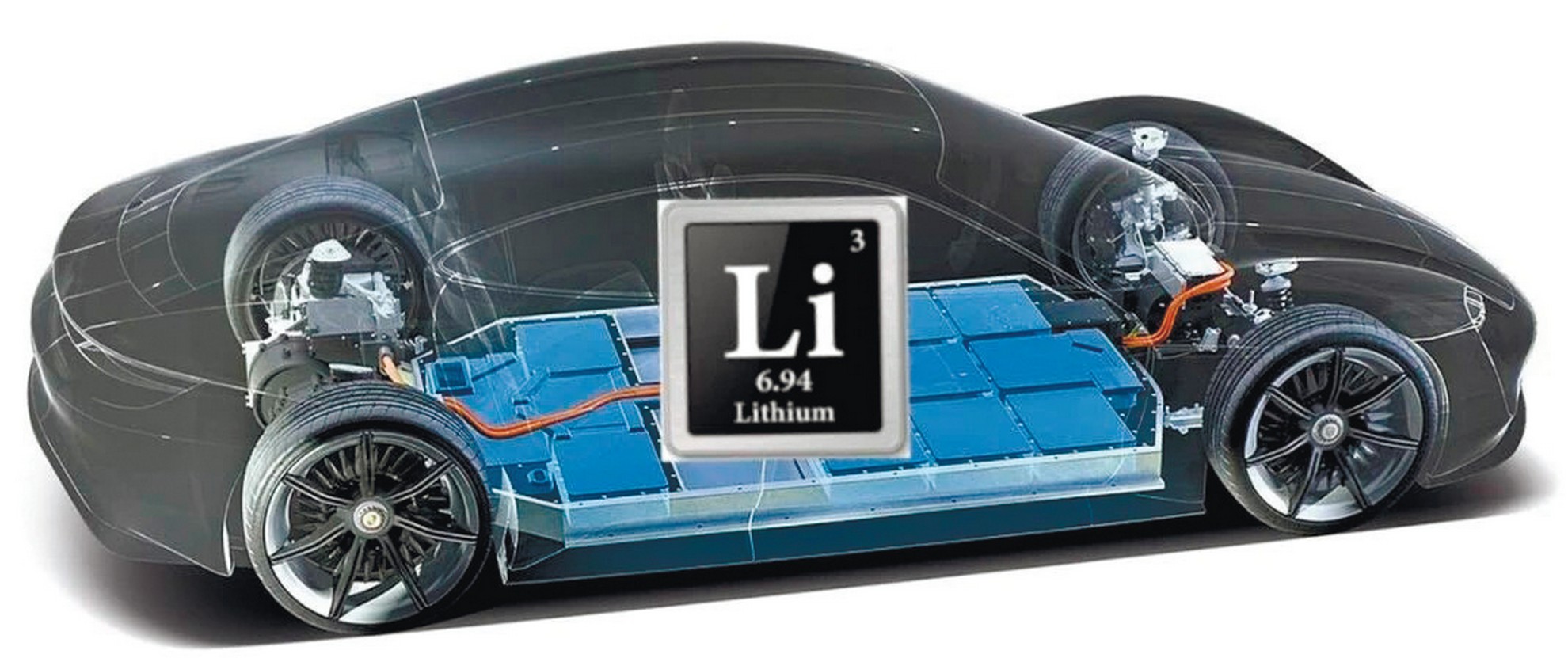
The underlying causes of these fires are different. In a conventional car, flames most often start from fuel leaking onto a hot manifold or a short circuit in worn wiring. In an electric car, a defect in one of thousands of lithium cells can trigger the process. This can lead to a phenomenon known as thermal runaway, where the battery releases oxygen, making the fire essentially independent of the external environment. Flame temperatures can reach an extraordinary 2,700°C, transforming a cabin into a blast furnace within seconds, which renders such incidents extremely dangerous.
Azerbaijan, however, has its own particularities. According to the Ministry of Emergency Situations, in 2025 the majority of fires occurred in the ageing vehicle fleet, which had worn wiring. However, electric cars pose a different challenge for firefighters. Experts have noted that while an ordinary car can often be extinguished with a couple of tonnes of water, cooling a lithium battery requires tens of tonnes and a strategy of prolonged immersion, because the battery tends to reignite even a day later. In light of this, contemporary international protocols stipulate the measures to be taken in order to extinguish flames. These include the isolation of the vehicle using high-temperature blankets and the implementation of deep-cooling methods on cells to halt the chain reaction. In the context of densely populated Baku, this presents significant challenges and necessitates a radical transformation in infrastructure and the management of lithium fires.
Wear-and-tear failures
The taxi sector in the capital merits particular attention, with Chinese manufacturer BYD's models being particularly prevalent. These cars use innovative Blade batteries, which are considered to be among the safest in the world. However, there are often issues with human factors that compromise safety in Baku. Some of the fleet is imported through unofficial channels, which can result in owners being cut off from official services. In the event of an update to interfaces, the responsibility for driver modification is typically assigned to unqualified technicians. Incorrect firmware has the potential to disrupt the functioning of battery management systems, resulting in alterations to temperature protection thresholds. In conditions such as Baku's summer, such digital interference becomes a more likely cause of incident than a factory defect. For taxi drivers, time is a valuable resource, and in order to maximise profit, maintenance schedules are often not adhered to. Operating an electric vehicle at full capacity on a continuous basis increases the risk of lithium-cell "fatigue". The Garadagh case demonstrates that, in the context of professional transport, a standard annual inspection is inadequate. Rigorous technical checks are required on a quarterly basis.
Beyond the operational issues, a more significant concern emerges: the post-use phase of these vehicles. Disposal of lithium batteries remains a significant challenge for the industry. It is evident from a global perspective that the recycling of batteries is a complex and costly process. According to the UNDP 2025 report, global demand for spent lithium batteries is expected to increase by 25% over the next decade, while the recycling infrastructure is not keeping pace. The European Union already enforces strict rules requiring producers to collect up to 61% of old batteries by 2031, creating a circular economy.
In Azerbaijan, the legislative process for the drafting of a recycling bill is currently ongoing. In late 2025, the Milli Mejlis engaged in active discussions on amendments to the handling of lithium waste, as the service life of the first widely imported batteries (5–7 years) was coming to an end. At present, the country has no full-cycle lithium recycling facilities. However, there is a positive outlook for the future, as evidenced by the recent agreements with BYD to localise the assembly of electric buses and passenger cars in Sumgayit. In accordance with the aforementioned agreements, plans for 2028 include the construction of assembly capacities and, in the future, the management of battery life cycles.
An invisible enemy?
Beyond the issue of fire, drivers and potential owners are concerned about the potential for "radiation" from a battery placed under the seat. Studies by ICNIRP confirm that electric cars do not emit ionising radiation. Electromagnetic field levels are measured at hundreds of times below medical thresholds. For a driver spending the day on the road, the level of exposure is comparable to that of working in a modern office environment. A lithium battery only poses a health risk if it is physically damaged, which results in the release of toxic gases.
The ghost of a hydrogen utopia
In light of these concerns, the question of whether there was a safer alternative is being revisited. As early as the 19th century, Isaac de Rivaz patented a hydrogen-fuelled engine, paving the way for future advancements in the field. There is a persistent belief that "water cars" technologies were suppressed for decades – first by oil cartels, and now by a lithium lobby seeking returns on significant investments in battery plants. A hydrogen vehicle that only emits water vapour could eliminate problems with heavy-metal waste and thermal runaway risk. However, the global business community favoured lithium, which proved to be a more viable option for global capital investment. According to industry experts, the adoption of hydrogen would necessitate a comprehensive restructuring of the energy system, given its status as a sophisticated chemical fuel source that frequently requires rare platinum group metals.
In light of the growing issue of lithium recycling, there is a renewed focus on hydrogen, primarily as a solution for heavy trucks and marine vessels, where batteries are unable to cope with weight.
New approach
The Garadagh tragedy highlights the need for a different culture of responsibility with regard to any technology. Statistically, electric cars are safer than their petrol predecessors, but they require professional diagnostics and state control over uncertified servicing. It would be erroneous to reduce the discussion to myths of "exploding batteries." It is important to note that electric cars themselves are not inherently dangerous. However, there is a risk involved when used in an unprepared environment. Just as gas-powered vehicles become problematic without certified installations, and old petrol cars without fuel-leak controls, the real issue is not the choice between petrol and electricity; it is the absence of a systemic approach. Electric cars require a different service culture, updated firefighting procedures and a distinct recycling policy. In the absence of these, any new technology will appear risky, not because it is, but because society is not yet prepared for it.
It is therefore essential that the conversation about electric-vehicle safety in Azerbaijan is conducted with honesty, avoiding both celebration and hysteria. Electric cars are not universally beneficial nor a cause for concern. These vehicles are equipped with advanced technology that is designed to highlight weaknesses in urban infrastructure more quickly than older vehicles. Until these vulnerabilities are addressed, each rare but significant fire event will be interpreted as indicative of danger, despite the fact that it is merely a symptom.
In the current climate, concerns regarding electric cars in Azerbaijan primarily stem from a lack of familiarity with the technology. The technological revolution has necessitated a new culture of responsibility. A battery-powered future is statistically safer than the petrol past, but it demands professional diagnostics every 15–20,000 km and a state recycling strategy so that environmentally friendly transport does not become tomorrow's ecological problem.
RECOMMEND:
 200
200

