

BLACKOUT IN BERLIN
How an underground eco-group plunged the German capital into cold and chaos
Author: Irina KHALTURINA
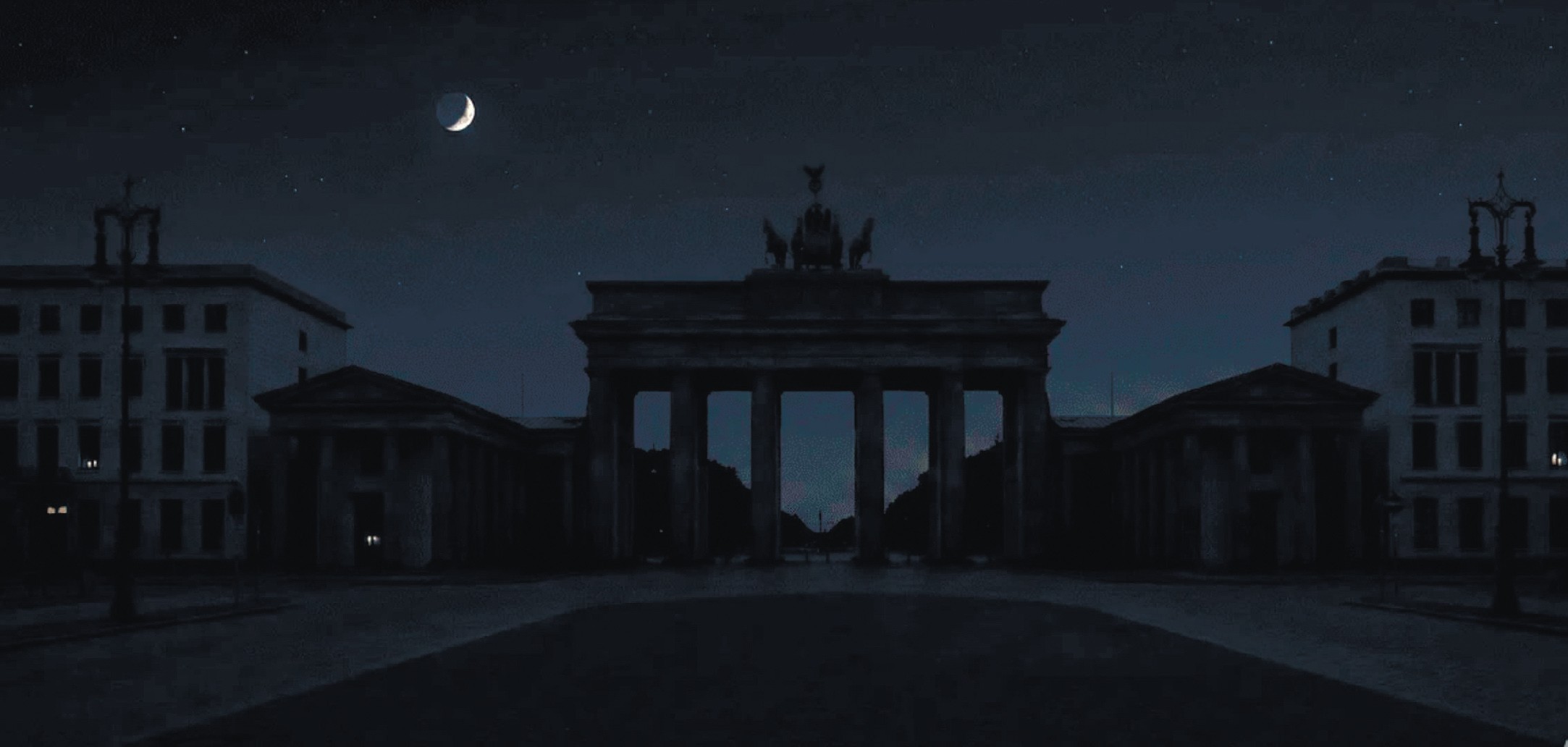
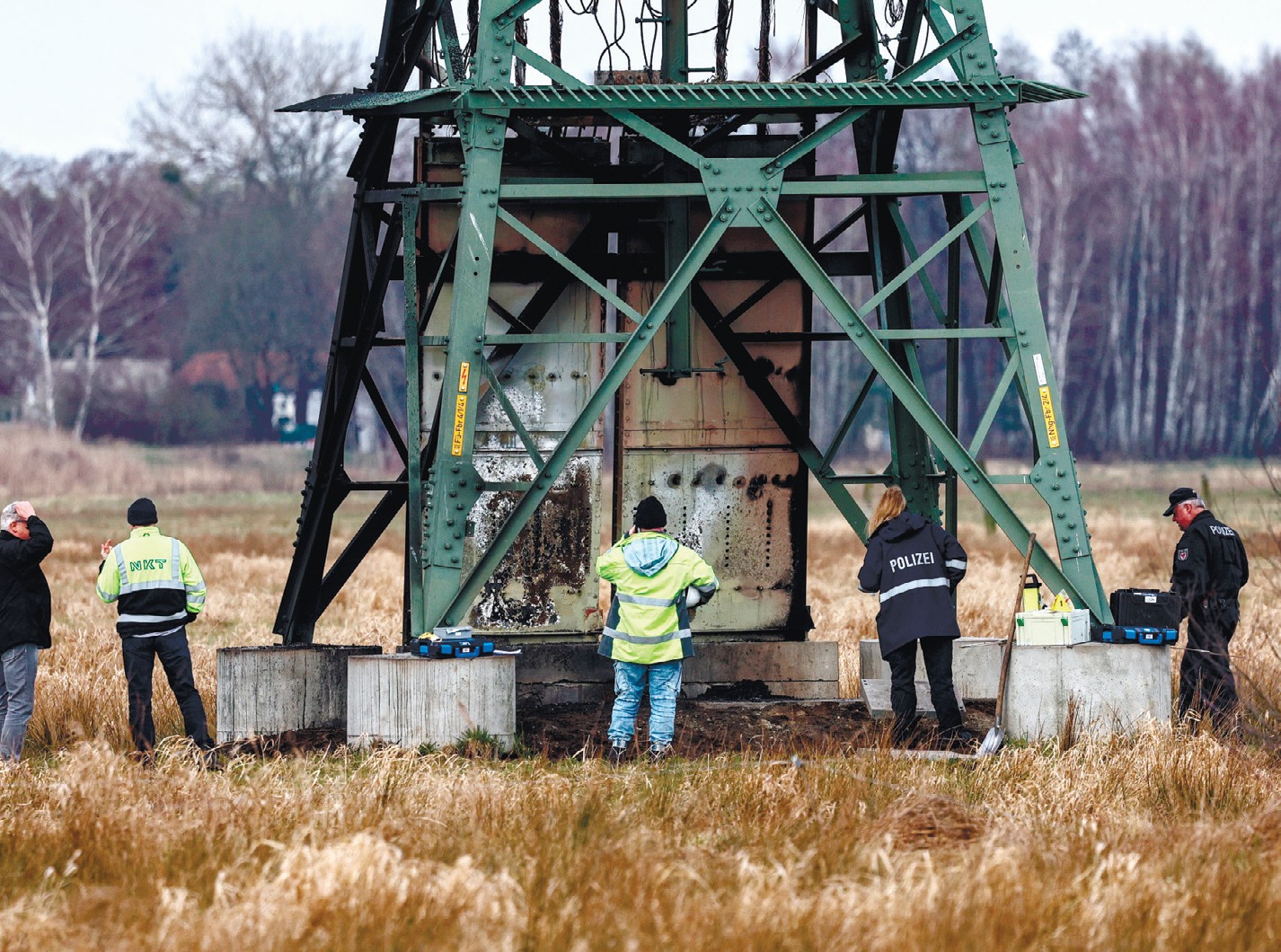
On 3 January 2026, an arson attack on a cable bridge over the Teltow Canal by the left-wing extremist Vulkangruppe triggered the longest blackout in Berlin's post-war history. The fire at the Lichterfelde thermal power plant damaged five high-voltage and ten medium-voltage cables, which were not fully restored until 7 January. Consequently, residents lost access to the internet, mobile networks, hot water, and heating—all during a period of sudden, extreme cold with sub-zero night temperatures. Approximately 100,000 people, 45,000 homes, and 2,200 businesses across the districts of Steglitz-Zehlendorf, Zehlendorf, Nikolassee, and Wannsee (2.9% of Berlin's population) were affected; tragically, an 83-year-old woman lost her life during the crisis. Schools were forced to close, and operations in hospitals and public transport were severely disrupted. In response, authorities declared a state of emergency, deploying mobile generators and establishing emergency shelters , incurring significant costs to the public budget.
Act of self-defence and solidarity
In an open letter published on left-wing websites, Vulkangruppe stated that their actions were a protest against fossil fuel energy and the surging electricity demand from AI data centres, which they claim have accelerated climate change and expanded mass surveillance. "Last night, we successfully sabotaged the Lichterfelde gas power plant in Berlin. This attack serves as an act of self-defence and international solidarity with everyone protecting the Earth and life itself. While we apologise to the less affluent residents of southwest Berlin, our sympathy for the many villa owners in these areas is limited," the radicals wrote. Effectively, all those affected were dismissed as mere "collateral damage" in what the group deemed an act of self-defence.
This is not the first time the group has carried out such actions. In 2018, members claimed responsibility for damaging power cables in Charlottenburg, leaving 6,500 homes without electricity. In 2020, they set fire to communication equipment at the Heinrich Hertz Institute, citing its involvement in developing a COVID-19 contact-tracing app. Later, in March 2024, an arson attack on power lines in Grünheide, Brandenburg, damaged the American Tesla factory, which the group accused of polluting groundwater. Employees were evacuated, and production was halted. Earlier, in 2021, Vulkan activists also torched a pylon at the future factory's construction site, declaring that "this fire represents our opposition to the lie of 'green' car manufacturing" and accusing Tesla of neo-colonialism. The radicals labelled Elon Musk a "techno-fascist" and described their actions as a "gift for 8 March" in the struggle against the patriarchy. In response, Musk dismissed them as either "the most foolish eco-terrorists on Earth" or "puppets" with no genuine environmental objectives. Most recently, in September 2025, an arson attack on two pylons in the city's southeast caused a 60-hour blackout affecting 50,000 homes.
The eco-anarchist Vulkangruppe first appeared in 2011 and is described in analytical reports as a "small" and "secretive" entity that avoids public propaganda and social media. It lacks a visible headquarters or leadership. The group is believed to be divided into small cells that rotate members and use pseudonyms based on volcanoes, such as Grímsvötn or Katla. They explain their operations through lengthy manifestos. There is no public information regarding their recruitment methods, and no confirmed cases of individuals joining the group have been documented. It is likely that new members are recruited through closed left-wing subcultures, autonomous groups, or personal connections within Berlin's anarchist and anti-capitalist circles. Both German and American intelligence agencies are reportedly monitoring them, as supporters may reside outside of Germany.
A terrorist act involving professional criminals
Following the incident, the Federal Prosecutor's Office launched an investigation into suspected anti-constitutional sabotage, membership in a terrorist organisation, arson, and the disruption of public utilities. Berlin Mayor Kai Wegner explicitly called the arson a "terrorist act," noting that it endangered lives and placed an immense strain on city services. "These are not juvenile pranks, but rather professional criminals... This is no longer just arson or sabotage; it is terrorism, and we must now apprehend these perpetrators," Wegner stated in an interview with the German broadcaster RBB. Iris Spranger, Berlin’s Senator for the Interior, also categorised Vulkan’s actions as "terrorism". Franziska Giffey, Senator for Economic Affairs, Energy, and Public Enterprises, described the event as an attack on "our free society". She added that "the question is whether this was simply the work of left-wing activists driven by ideology, or if there is something more behind it". Indeed, it is difficult to rule out the possibility that a larger force might be testing the consequences of disabling critical infrastructure in a major capital city.
Amid the war in Ukraine, suggestions have emerged regarding potential Russian involvement in the attack on Berlin’s power grid. Some media outlets noted that CDU lawmaker Roderich Kiesewetter found the linguistic style and orthography of the group’s statement unusual. However, the German Ministry of the Interior later reported that intelligence services had no evidence to support this, nor any information suggesting a "false flag" operation—where criminals impersonate another group to mislead investigators. Furthermore, the group itself denied acting in Russia's interests.
Meanwhile, Berliners are beginning to question municipal, state, and federal authorities regarding the security of critical infrastructure. This is particularly pressing given the repeated warnings in Germany about potential new hybrid attacks. If a relatively unorganised group could cause a multi-day blackout across several districts, what could more professional attackers achieve? Social media and the press also noted that measures to mitigate the blackout’s impact were insufficient, particularly for low-income residents, and that major political parties remained largely silent. Significant controversy was sparked by Franziska Giffey’s suggestion that affected residents could move into partner hotels for "only" €70 a night. Residents were outraged at being expected to pay out of pocket during an emergency, while tax-funded resources are allocated daily to refugees. Although authorities later promised to compensate residents for these costs, a sense of resentment remains. This has once again highlighted deep-seated issues in German society regarding long-standing migration policies.
Voters' voices and governmental challenges
This reflects a broader European trend where various government decisions, including economic ones, are driving a steady rise in the popularity of both "Euro-sceptic" right-wing parties and radical left-wing movements. In many countries, far-right parties are winning elections and gaining power. As for European left-wing radicalism, it has a long history, dating back to at least the 1960s. Modern radicals focus on anti-globalism, anti-imperialism, and anti-capitalism, often combined with Euro-scepticism, egalitarianism, and a recent shift toward environmentalism. They target police, right-wing extremists, corporations, and infrastructure. Their highly decentralised structures and minimal presence on social media make them difficult to identify and capture. They typically find supporters among those disillusioned with traditional parties, including the middle class, diverse youth, left-wing intellectuals, and business owners harmed by economic globalisation.
In the UK, for instance, the group Shut the System gained notoriety last year for cutting fibre-optic cables in London's financial district. Its members also engaged in vandalism against banks and insurance companies. Another British group, "Just Stop Oil," has conducted high-profile protests demanding an end to new oil and gas licences. Their actions have included blocking motorways, disrupting sporting events, and damaging private jets and artworks. In France, between 2018 and 2019, anarchists actively supported the "Yellow Vests" movement against social injustice. In Germany, the radical "Antifa Ost" (known as the "Hammer Gang") has carried out attacks on far-right individuals. In early November, the US government designated Antifa Ost as a terrorist organisation. Other groups on this list include Italy’s Informal Anarchist Federation, Greece’s Armed Proletarian Justice, and Revolutionary Class Self-Defence.
The incident in Berlin underscores that when radical groups target critical communication infrastructure, the damage to official authorities is substantial. Even a brief disruption can spiral into a cascading problem, forcing the government into a crisis-response mode that appears politically like a loss of control. This makes such groups useful tools for third parties. One might recall Musk’s "puppets" comment or Giffey’s suggestion that the group could be "part of something larger". There are even theories that movements like Just Stop Oil are orchestrated by the oil lobby to discredit climate activists. Regardless of the truth, these events foster conspiracy theories and a further loss of public trust. European authorities certainly have much to consider.
RECOMMEND:
 221
221