

OVERSHADOWED BY GREENLAND
Ukrainian war opens a new window of opportunities in the Arctic
Author: Ilgar VELIZADE
By early 2026, the Ukrainian conflict is increasingly transcending the bounds of a purely Eastern European agenda and becoming woven into a broader geopolitical negotiation among the leading centres of power. Attempts to agree on the parameters of a ceasefire, security guarantees, and a format for Ukraine's post-war settlement are now unfolding as more complex and extensive processes.
A coalition of wishes
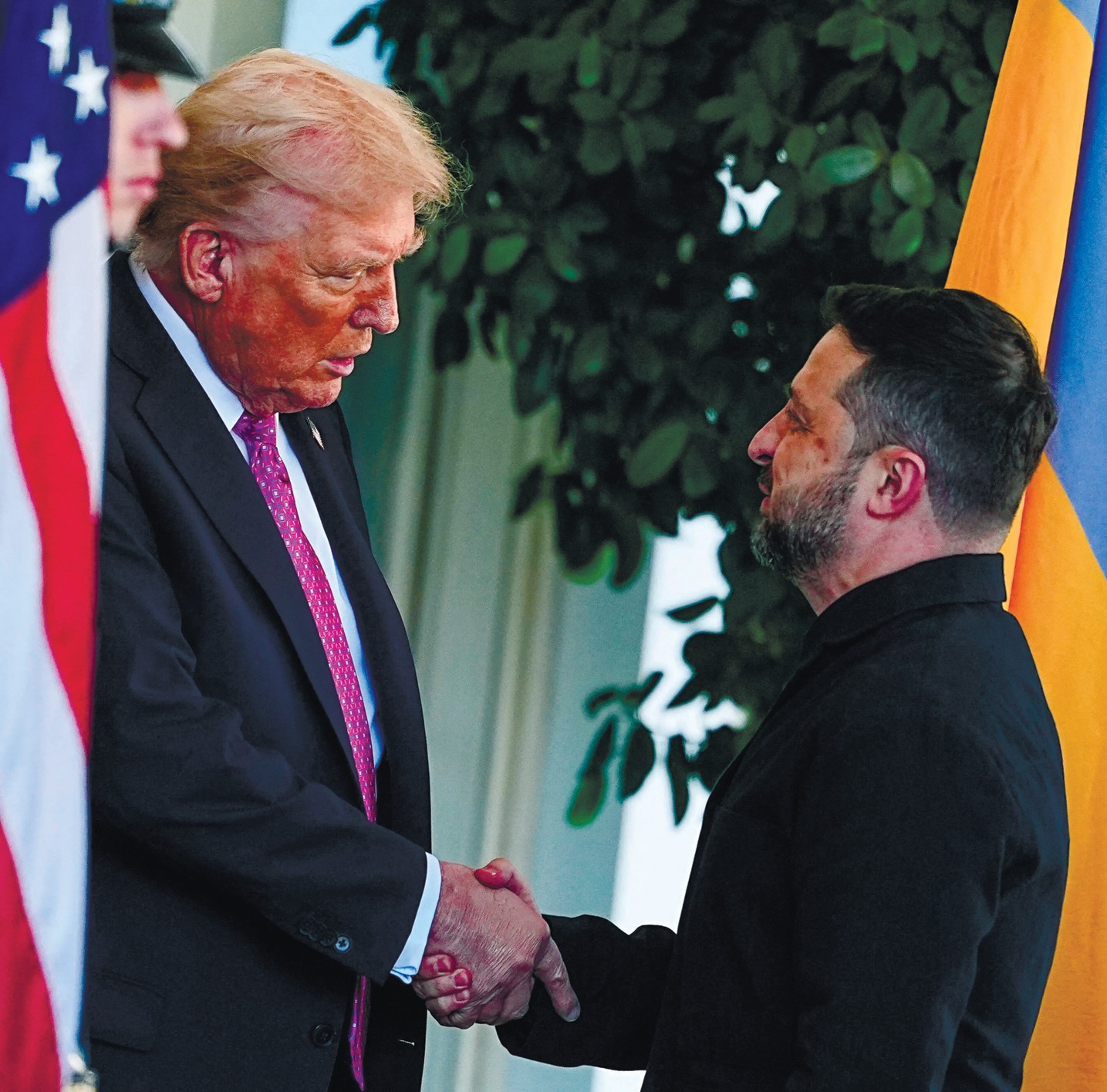
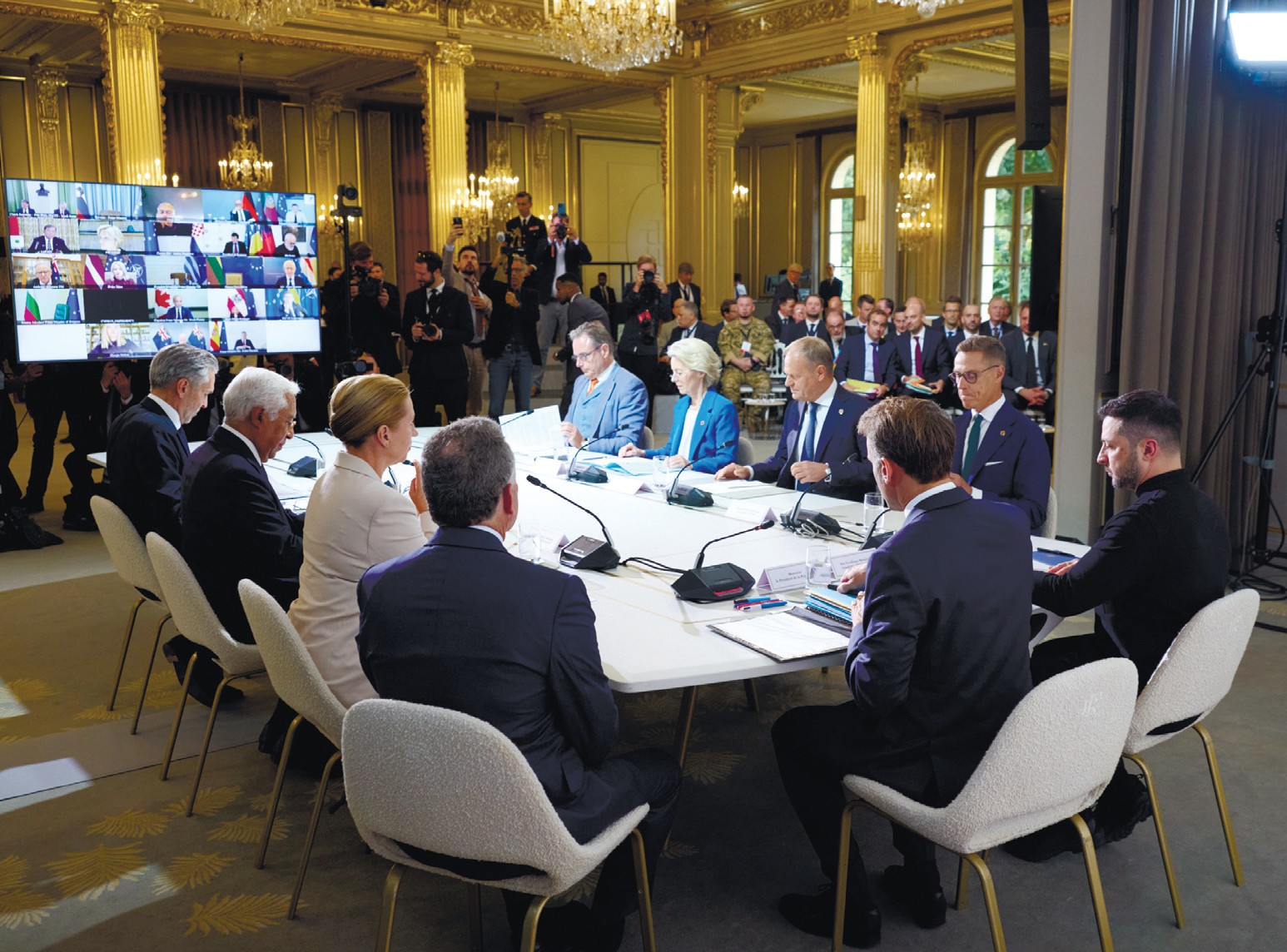
The Paris meeting of the so-called coalition of the willing on 6 January was an attempt to frame the post-war settlement for Ukraine within a political structure, following earlier closed-door discussions between Washington and Kiev. Recall that in late December, negotiations took place between US President Donald Trump and Ukraine’s President Zelenskyy at the American leader’s Mar-a-Lago residence, where the sides reportedly agreed on up to 90% of the parameters for a peace plan. However, as Zelenskyy stated, the key unresolved point remains the territorial issue – specifically Russia's demand for the withdrawal of Ukrainian troops from the part of Donetsk region controlled by Kiev.
The fact that territory is identified as the main stumbling block suggests that the conflict is no longer in a purely military phase. It is an attempt to cement a new political and territorial reality through a deal acceptable to Washington, to a lesser extent to Kiev, and at least partially to its European allies. Although the main burden of negotiations falls on the dialogue between Washington and Kiev, the Ukrainian leadership cannot disregard the interests of its European allies, on whose stance the future architecture of European security ultimately depends. At least, that is what the Europeans themselves believe. It is no coincidence that such significant attention was focused on the Paris talks.
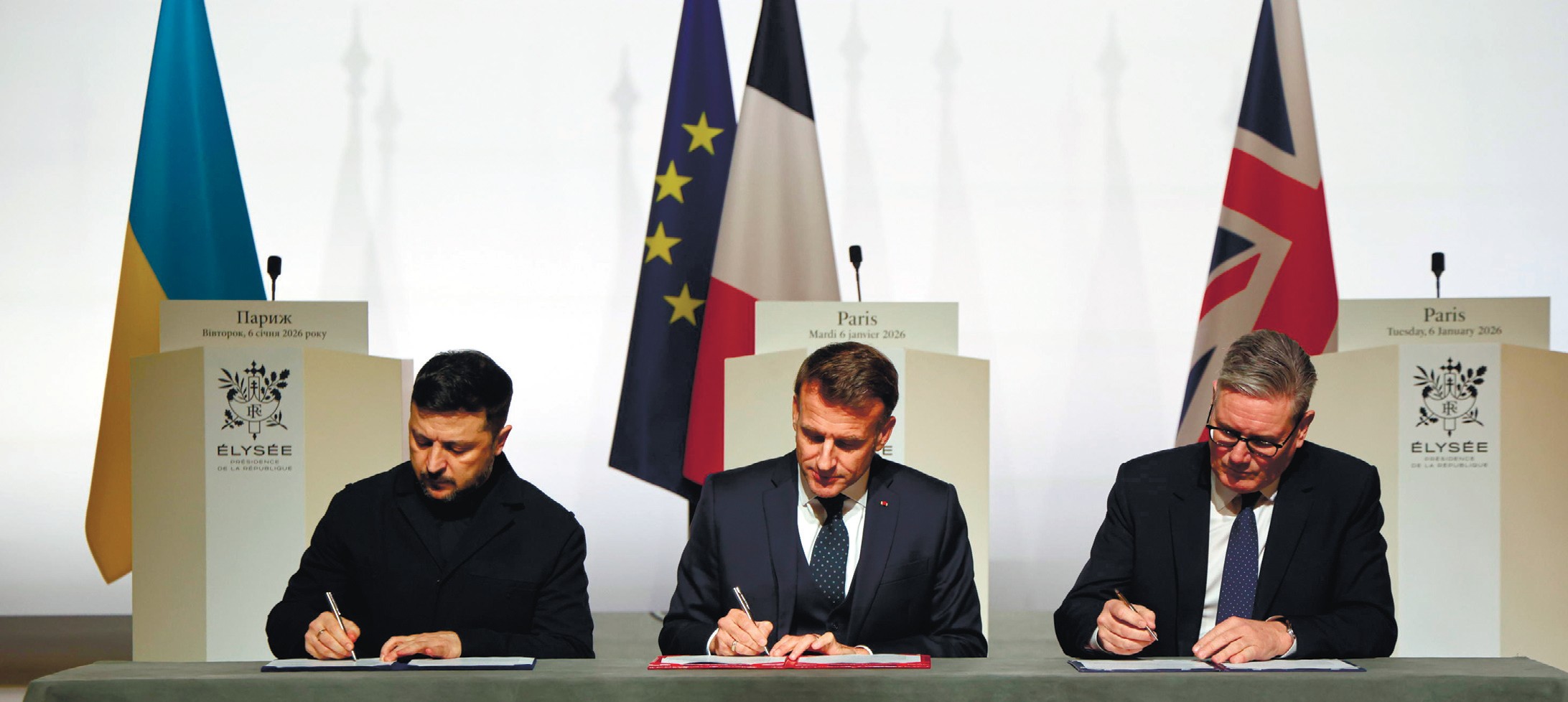
The Paris Declaration, adopted following the summit, sets out the general political picture. It affirms a commitment to a "just and sustainable peace" based on UN resolutions, recognises that Ukraine's ability to defend itself is a key element not only of its own security but of the Euro-Atlantic architecture, and expresses an intention to include security guarantees for Ukraine as an integral part of any peace agreement. On a practical level, the document outlines the contours of future guarantees. This includes participation by "coalition of the willing" countries in a US-led ceasefire monitoring and verification mechanism, the creation of a special commission to investigate violations, and the continuation of support for the Ukrainian Armed Forces as part of the overall guarantee system.
When ambitions outstrip capabilities
Notably, beneath the outwardly uniform rhetoric lies significant divergence in the positions of the participants. Donald Tusk stated plainly that the Paris Declaration only records a general political will to provide Ukraine with security guarantees, but does not contain specific commitments from individual countries, which for now remain at the draft stage. Thus, the document serves more as a framework political declaration than a legally binding mechanism.
Germany has taken an even more cautious line. Chancellor Friedrich Merz effectively ruled out sending German troops directly into Ukraine, allowing only for their deployment in neighbouring NATO countries. At the same time, he emphasised that "the solution to the conflict cannot be found in a diplomacy textbook; compromises are necessary." This signal can be interpreted as an understanding that insisting on resolving the conflict solely from the standpoint of restoring Ukraine's territorial integrity is no longer viable. Moreover, Berlin is clearly in no hurry to commit to sending its military into Ukraine without a final definition of the peace parameters for that country.
In contrast, Paris and London have shown greater determination and hastened to sign a declaration of intent with Kiev on deploying multinational forces in Ukraine. This essentially lays the groundwork not only for a potential international military presence on Ukrainian territory following a ceasefire agreement but also defines the limits of their military-political influence in the post-conflict world.
Collectively, the Paris Summit demonstrated several trends simultaneously. On one hand, there is a clear desire by the US and key European players to shift the discussion of the war in Ukraine towards a post-conflict settlement – complete with elements of international guarantees, monitoring mechanisms, and a potential multinational presence. On the other hand, the lack of specific, country-by-country commitments, disagreements over territories, and varying degrees of readiness to take risks (especially regarding the possible deployment of foreign military contingents in Ukraine) show that a unified Western position is, for now, only being formed at the level of political formulae. In the near term, the key question will be not only finalising the agreed text of the American-Ukrainian plan but also whether Moscow will agree at all to consider the proposed configuration of guarantees and peacekeeping mechanisms as a basis for a ceasefire.
The Greenland question for Ukraine
The paradox of the current situation lies not so much in the disagreements over the parameters of a Ukrainian settlement, but in the fact that against the backdrop of Europe and Kiev concentrating on finding a formula for a post-conflict arrangement, Washington is simultaneously addressing tasks of a different, strategically more long-term nature. This refers to the US attempt to cement a new balance of power in the Arctic, primarily by strengthening control over Greenland.
For the United States, Greenland has long ceased to be a peripheral concern. It is viewed as a key strategic asset, ensuring dominance in the North Atlantic, control over prospective Arctic transport corridors, and an expansion of military presence in close proximity to Russia and Northern Europe. In this context, the Ukrainian agenda objectively creates a window of opportunity for Washington. After all, European allies are absorbed in internal debates about security guarantees for Kiev and the parameters of a potential military presence in Eastern Europe, which reduces their ability to respond cohesively to a redistribution of influence in other regions.
Significantly, according to information from Politico, European capitals are considering a scenario of a sort of "security exchange": an expanded US role in Greenland in return for firmer and more concrete American guarantees on Ukraine. This approach is seen in Europe as undesirable, but in some cases – as less risky compared to alternatives, including a potential US withdrawal from the negotiation process or a revision of its line in favour of a compromise more beneficial to Moscow.
From the US perspective, involving Europeans in discussions about Greenland's future is necessary primarily to lend political legitimacy to its actions. Washington, meanwhile, retains a broad set of instruments – from enhancing military presence and pressuring Denmark to supporting the idea of expanded autonomy or even independence for Greenland. In that case, the US would gain the opportunity to negotiate directly with Greenland, bypassing Copenhagen.
Meanwhile, the attempts by the US, Europe, and Ukraine to agree on a ceasefire and a system of security guarantees appear not as an isolated process, but as part of a larger deal. While Europe is focused on the war in Ukraine, Washington is using the situation to strengthen its position in the North Atlantic and Arctic, where Greenland is of key importance.
This is precisely why the Ukrainian conflict and the Greenland question are interconnected. For the US, finding a compromise on Ukraine is not only about European security but also an opportunity to gain additional concessions from allies on other strategic fronts, including in the Arctic.
This situation is also convenient for Russia. The more US attention shifts to Greenland and the Arctic, the more room for manoeuvre Moscow has on the Ukrainian issue. If Washington begins to view Ukraine as an element of a broader deal with Europe, the European position on Ukraine could become less rigid and more amenable to bargaining.
The war continues as planned?
Yet, within Ukraine itself, from late 2025 to early 2026, a large-scale reshuffling of leadership in key segments of state and security management has been unfolding. The reshuffles in the presidential administration, the Security Service of Ukraine (SBU), the intelligence community, the defence establishment, and regional administrations reflect an attempt to adapt the governance system to a protracted war and a potential negotiation process. Particularly noticeable changes have affected the security bloc: some officials have been dismissed, others moved to the political centre, strengthening the Bankova Street's control over the special services and coordination between the military, intelligence, and diplomatic apparatus.
Regarding the actual military actions and the prospects for the negotiation process, another escalation of events—first triggered by reports of a Ukrainian attack on one of the fortified residences of the Russian president, and then by Russia's retaliatory Oreshnik strike—has again demonstrated the fragility of the emerging political agreements. Such episodes not only increase the level of mutual escalatory logic but also radically narrow the room for manoeuvre for those forces interested in a compromise resolution to the conflict. In conditions where strikes take on a symbolic and personalised character, the conflict is increasingly shifting into the realm of demonstrating political will and resolve, not just military pressure. This, in turn, complicates any attempts to institutionalise the negotiation process, as each side is forced to consider not only the balance of forces on the battlefield but also the internal expectations of its own audience, for whom concessions at such a moment could be perceived as a sign of weakness.
RECOMMEND:
 181
181

