

NEW MOVE BY THE SUPERPOWER
The US operation against President Maduro alters the global balance of power
Author: Natig NAZIMOGHLU
The capture of Venezuelan President Nicolas Maduro and his wife by US special forces has become the most sensational international event at the start of 2026. What consequences might it hold not only for the fates of the US and Venezuela, but for the entire world?
Absolute Resolve
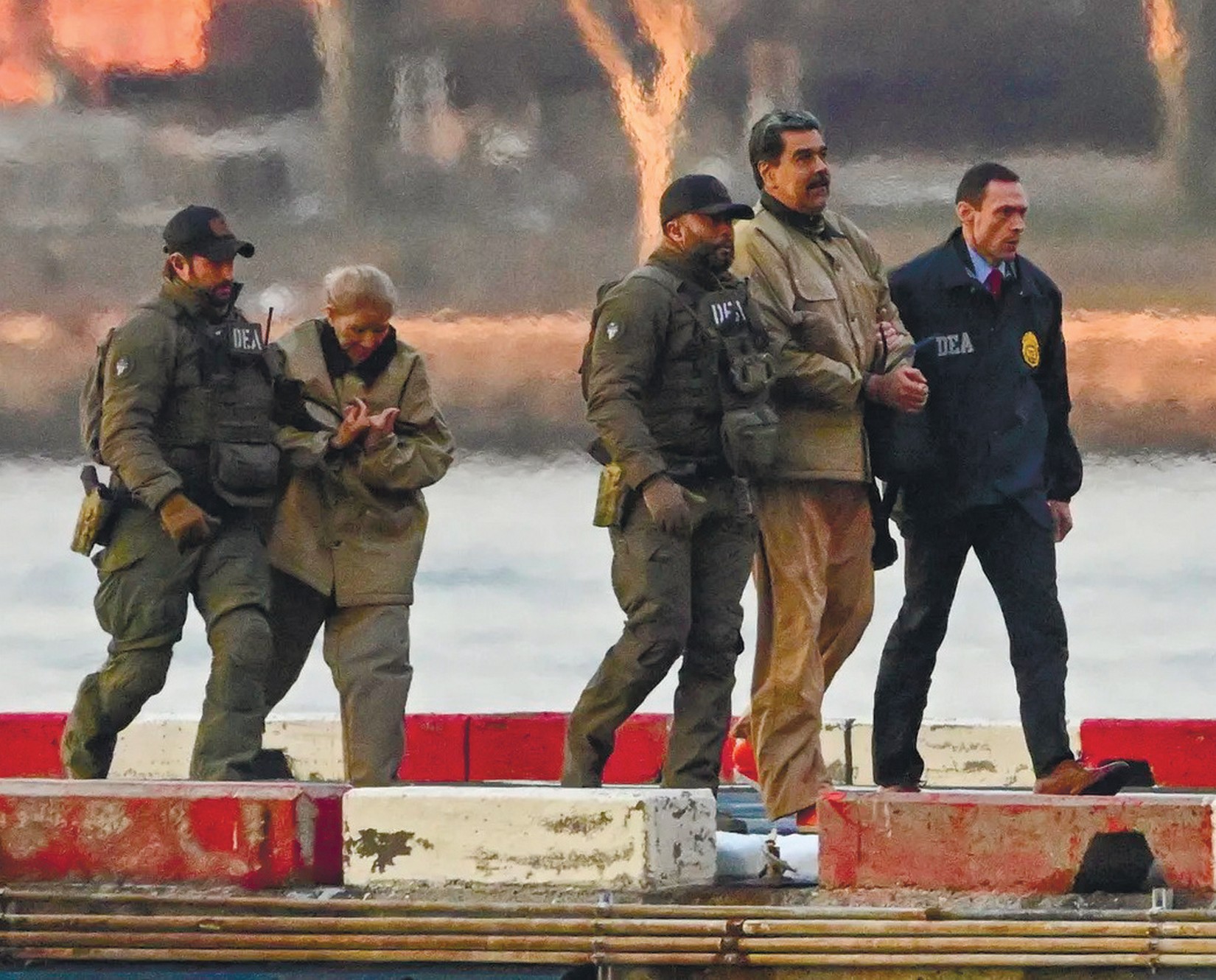
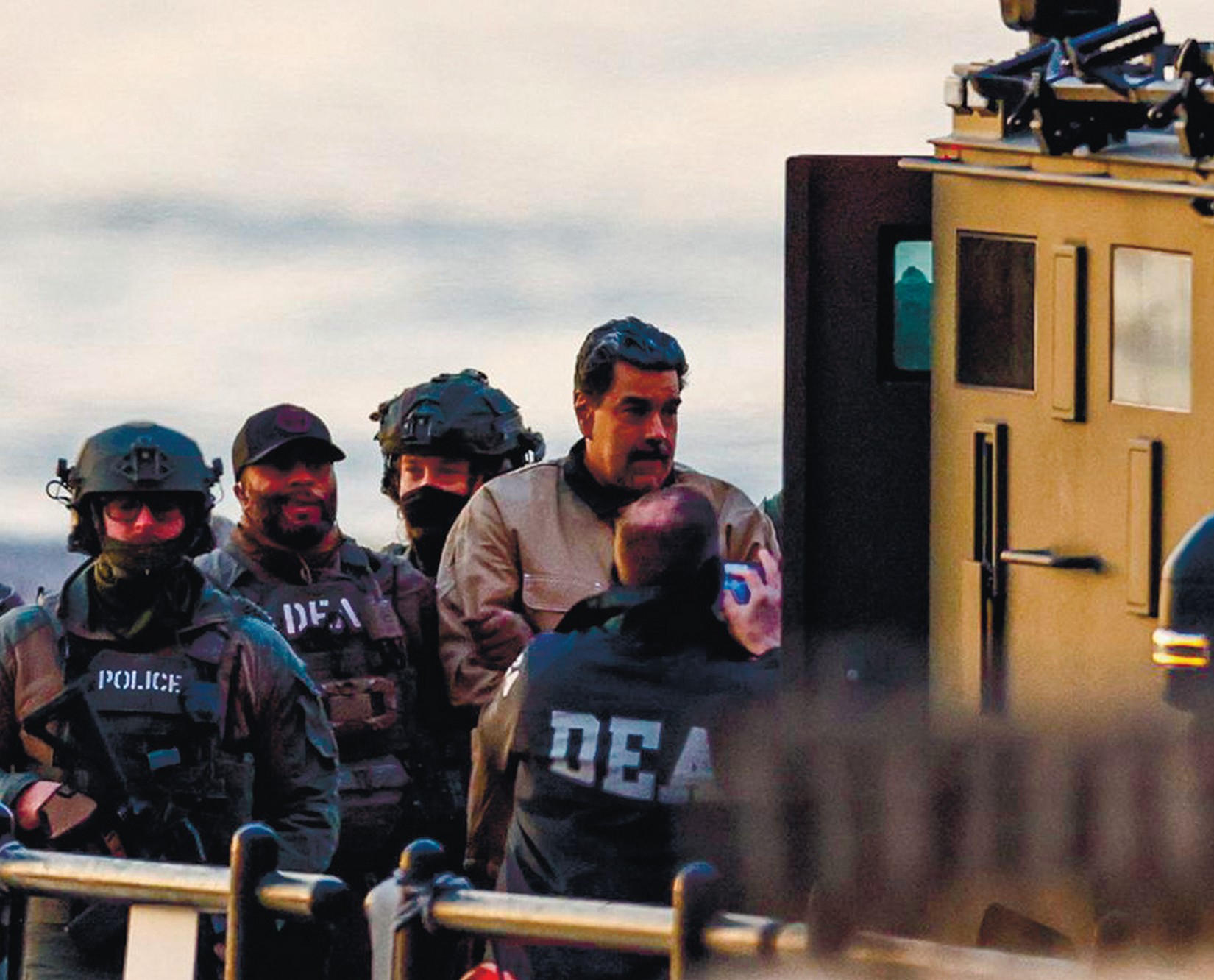
In the early hours of 3 January, the US carried out a military operation named Absolute Resolve, during which Venezuelan President Maduro and his wife Cilia Flores were seized in Caracas, transported to the US naval base at Guantanamo, and later flown to New York.
Venezuelan authorities accused Washington of striking civilian and military targets in the country. US President Donald Trump, for his part, confirmed that a large-scale attack had been launched against the Venezuelan leader—an attack whose preparations had evidently been underway for the past several months. At the very least, back in November 2025, Trump had authorised covert CIA operations in Venezuela.
Following the capture of Maduro and his wife, the American justice system charged them with narcoterrorism, conspiracy to import cocaine into the US, possession of automatic weapons, and destructive devices aimed against the United States. Appearing before a federal court in New York, Maduro rejected the charges, proclaimed his innocence and his status as the legitimate president of Venezuela, and described himself as a prisoner of war.
The next hearing is scheduled for 17 March, and until then, Maduro and Flores will remain in custody in New York. It is likely that Maduro’s defence team will challenge the legality of his arrest, demanding that international law norms be applied to him, under which he enjoys immunity as the head of a sovereign state. However, such arguments are unlikely to have any effect. All the more so because the US has a precedent for capturing the leader of another country. In 1989, the Americans conducted an operation against Panama, where the de facto leader—the commander-in-chief of the National Defence Forces, General Manuel Noriega—was seized and taken to the United States, where he stood trial on drug trafficking charges.
As with the Panamanian events, it is clear that the main reason for the United States’ dissatisfaction with the leadership of this Latin American country was its pursuit of policies without regard for the will and position of the White House. This is most vividly illustrated by President Trump’s words about Venezuela, including its natural resources, coming under US ‘management’. In other words, something to which the regime of the Bolivarian Republic, established by Maduro’s predecessor Hugo Chávez, would never agree. And although this regime still continues to exist for now, Venezuela has effectively lost its sovereign agency.
In global political circles, there is a prevailing view that the capture of Maduro was facilitated by at least some part of the Venezuelan elite, including the country’s military command. After Maduro was removed from Venezuela, Vice-President Delcy Rodríguez automatically became the interim president, to whom Trump issued an unambiguous warning that she would ‘pay a high price’—‘higher than Maduro’—if she did not cooperate with the United States.
At the same time, Trump made it clear that he had no intention, at least for the moment, of bringing the Venezuelan opposition to power. Its leader is considered to be María Corina Machado, who received the Nobel Peace Prize in 2025. In response to her expression of readiness to lead Venezuela, Trump stated that Machado lacked ‘support and respect’, on the basis of which ‘it would be very difficult for her to be a leader’. Trump completely ignores another prominent Venezuelan opposition activist—Edmundo González—whom Western political circles presented as the ‘legitimate winner’ of the 2024 presidential elections. And it seems that the US leader’s deliberate disregard for the prospect of a real change of power in a literally decapitated Venezuela is no accident. This is precisely how he needs it right now: not merely subservient to Washington, but deprived of the capacity for full governance, and thus of legitimate authority.
The Donroe Doctrine
Many global experts assert that the US operation in Venezuela contravenes the UN Charter, which prohibits the use of force against the sovereignty of another state without the sanction of the UN Security Council. There is one exception to this provision—self-defence, the right to which is also enshrined in the Charter. And although Washington cites Venezuela’s encroachment on US security through drug trafficking, there was unequivocally no aggressive act by the Latin American state against the sovereignty of the United States. Nevertheless, the reaction of leading world capitals to the capture of the Venezuelan president has been divided.
The majority of European countries and the EU itself have not dared to condemn the US for Operation Absolute Resolve. Moreover, European statements emphasised the dictatorial nature of Maduro’s rule, which, in the view of their authors, deprived him of legitimacy and, accordingly, justified Washington’s actions.
Unqualified condemnation of the American operation came from China, whose foreign ministry described it as a ‘flagrant violation of international law, the fundamental norms of international relations, as well as the purposes and principles of the UN Charter’. Beijing demanded the ‘immediate release of President Maduro and his spouse, an end to actions undermining state authority in Venezuela, and the resolution of issues through dialogue and negotiations’.
A similar position was expressed by Russia, considered one of the closest allies of the Bolivarian Republic. The latter, incidentally, has never denied Russia comprehensive political and diplomatic support. In particular, Maduro was one of the few world leaders to back Russia’s invasion of Ukraine, and during his visit to Moscow for the 9 May 2025 parade, he called Russia a ‘key power of humanity’. The two countries signed a treaty on strategic partnership and cooperation, yet on 3 January 2026, Moscow did practically nothing to protect its ally. Although the Russian Foreign Ministry characterised the US operation against Venezuela as ‘armed aggression’, it advocated ‘de-escalation of the situation through constructive dialogue’. Western experts note in this regard that, with Trump’s return to the White House, Russia has reacted ‘relatively restrainedly’ to US actions against Venezuela. There is even an opinion that ‘Russia essentially handed over Maduro earlier’.
Moscow may indeed have relinquished some of its positions on the global stage, including its alliance with Venezuela, in anticipation of a loyal attitude from the Trump administration towards Russia’s military operation against Ukraine. However, regardless of whether there was geopolitical bargaining around Venezuela or not, the current processes on the world stage extend far beyond the US operation.
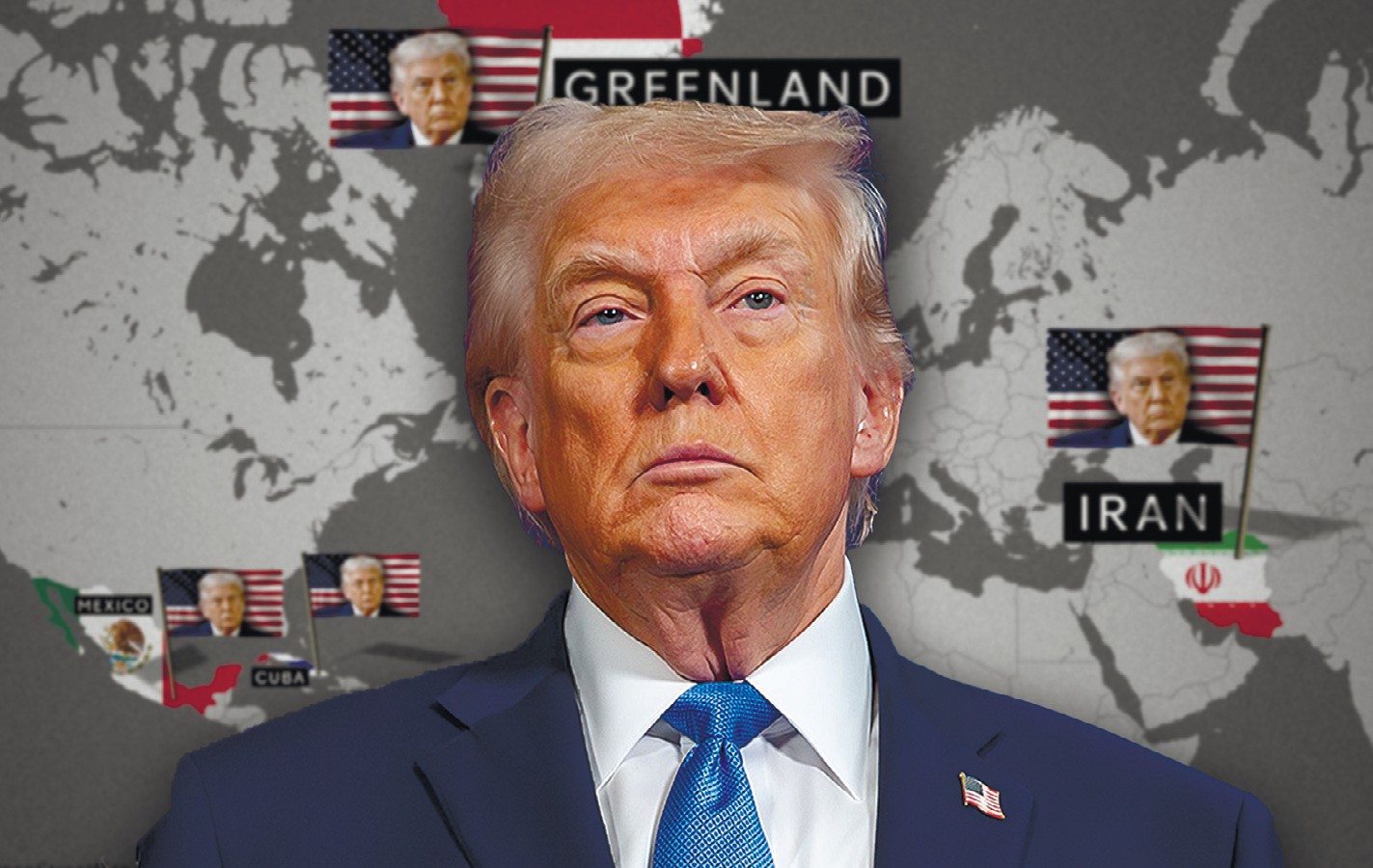
US President Trump links the capture of Maduro to the implementation of the Monroe Doctrine in modern conditions. Its essence was formulated in 1823 by the fifth US President, James Monroe, who warned European powers against interfering in the American sphere of influence in the Western Hemisphere. Today, Donald Trump positions himself as the leader who has modified this strategy into the ‘Donroe Doctrine’ (named in honour of President Trump), which, as he stated in an interview with Fox News, is intended to ensure stability and security throughout the Western Hemisphere.
Following this doctrine, the Trump administration threatens direct military intervention in countries such as Colombia, Mexico, Nicaragua, and Cuba. The latter seems to particularly concern US Secretary of State Marco Rubio, the son of Cuban immigrants who fled to the States from the regime of Fidel Castro, the founder of the socialist republic on the Island of Freedom. All these countries, viewed in Washington as insufficiently reliable from the standpoint of US interests or entirely resistant to their will, are receiving signals and threats about the need to return to the ‘true’—that is, pro-American—path.
However, the targets of Washington in the context of the ‘Donroe Doctrine’ are not only Latin American countries, but also those counted as US allies, such as Canada, which is persistently urged to become another state in the composition of ‘Greater America’, and Denmark—an unassuming European country whose sovereignty, however, extends to the world’s largest island, Greenland, located in the Western Hemisphere.
The White House does not hide its readiness to use force to seize Greenland, as the US must gain ‘more control over the Arctic region’. And Denmark’s reciprocal call for the US to stop threatening a NATO ally, along with its warning that aggression against Denmark would mean the end of the North Atlantic Alliance, is of no account.
World order is dead. Long live disorder?
All these processes point to one thing: the world order familiar to humanity is crumbling before our eyes. What has been brewing over the past decades—when international law began to be brazenly trampled by those global powers that once played a key role in establishing it—is becoming the global norm and reality. This is vividly demonstrated by the story of the American capture of the Venezuelan president and his wife. As is proven by the threats voiced daily by the United States to use force against a whole range of other countries.
Meanwhile, as the Americans eliminate their foreign policy adversaries, depriving unfriendly regimes of the ability to govern, and express readiness to encroach even on the sovereignty of their NATO allies, Russia continues methodically to destroy Ukraine.
What, then, will happen to the international system amid the bacchanalia created by global players, at the pinnacle of which the UN still looms?
One of the first to feel the crisis besetting the UN was Azerbaijan. For nearly 30 years, UN Security Council resolutions demanding the unconditional withdrawal of Armenian armed forces from Azerbaijani territory went unimplemented. The conflict itself became a hostage to the interests of great powers, each of which denied Azerbaijan the right to realise international law—to restore its territorial integrity by any means, including military.
In 2020–2023, Azerbaijan ended the Armenian occupation. However, the UN crisis shows no sign of abating. The global organisation, from which none of the world powers seeks opinion or permission for conducting any ‘special operations’, merely watches impassively as the nearly century-old world order is destroyed.
Azerbaijani President Ilham Aliyev, in his interview with local television channels, stated that in the modern world, there is no longer such a thing as international law. ‘Let everyone forget about it. There is power, there is cooperation, there is alliance, there is mutual support,’ emphasised the head of the Azerbaijani state. And this is perhaps the most honest and accurate assessment of contemporary global reality.
But what will replace the old world order? Will it be disorder, in which a war of all against all unfolds and a new division of the world begins? Or does humanity still have a chance for a new, fairer world order, the formation of which is called for by countries opposing arbitrariness on the international stage and the trampling of principles and norms of international law? Including Azerbaijan, which demands a thorough reform of the UN and the consideration of the opinions not only of great powers in world affairs...
RECOMMEND:
 213
213

