

THE IRANIAN DILEMMA
Between revolution and stability: who is rocking Tehran’s boat and why?
Author: NURANI
In the final days of the past year and the first of the current one, Iran provided the world’s screens with dramatic television footage, even sidelining the war in Ukraine. The country was engulfed by mass protests which, according to experts, were the most powerful in recent years since the 1979 anti-Shah revolution. Unrest spread to approximately one hundred cities across 27 Iranian provinces, with protesters in some areas storming government buildings.
By the start of the World Economic Forum in Davos, these protests had already been suppressed, yet the topic remained a focal point for political leaders. The situation in Iran was also addressed during Azerbaijani President Ilham Aliyev’s interview with the Euronews television channel.
In response to an enquiry from a journalist, Ilham Aliyev remarked that every nation, Azerbaijan included, must give thought to stability beyond its own borders. He noted that Azerbaijan faces no potential internal risks, as any such threats could only come from outside the country. Consequently, regional stability is a priority that is always on the government's mind. He expressed concern regarding the recent destabilisation in Iran, stating that for Azerbaijan, regional stability, predictability, and peace are the most significant assets. Having endured occupation and war, with thousands of lives lost, he concluded that stability and security are the sole path to success for any nation today.
The dangers posed by Iranian instability to Azerbaijan are quite apparent; should the situation deteriorate beyond a critical point, a wave of refugees would likely stream out of Iran. This would encompass far more than the humanitarian challenge of providing food, shelter, and medical assistance. The border would be crossed by a diverse range of individuals, including proponents of highly radical ideologies. There is a significant risk that Iranian political conflicts could migrate into refugee camps, much like Türkiye’s experience with Syrian refugees.
Furthermore, relations between Azerbaijan and Iran are following an upward trajectory, with Baku and Tehran discussing large-scale projects, including the Araz corridor—an alternative to the Zangezur route—the disruption of which would certainly be disadvantageous for Azerbaijan. It is also worth noting that the 'virus of instability' respects no national borders.
Additionally, one crucial factor must be considered: Azerbaijan was never seduced by the 'romance' of the Iranian protests and, in contrast to many Western nations, maintained a very realistic understanding of the causes, consequences, and true potential of the Iranian disturbances.
Protest ‘romance’ and harsh realities
Everything began on Sunday, December 28, 2025 (in Iran, Sunday is a working day, with the weekend falling on Friday). The national currency, the rial, fell victim to a record collapse, reaching 1,450,000 rials per US dollar. The reasons are clear: amidst sanctions, Iran is experiencing a severe shortage of foreign currency, making it increasingly difficult for the authorities to support the rial. The devaluation of the national currency, in turn, triggers a price hike for all imported goods, which are plentiful on Iranian shelves.
It is hardly surprising that major urban centres were engulfed in unrest, with small business owners being the first to take action and the Tehran bazaar serving as the focal point. Traditionally, the bazaar plays a role in Iran’s economic life that is perhaps no less significant than that of Wall Street in the US. Shops in Tehran began closing almost immediately; owners were either withholding goods or feared trouble from the protesters.
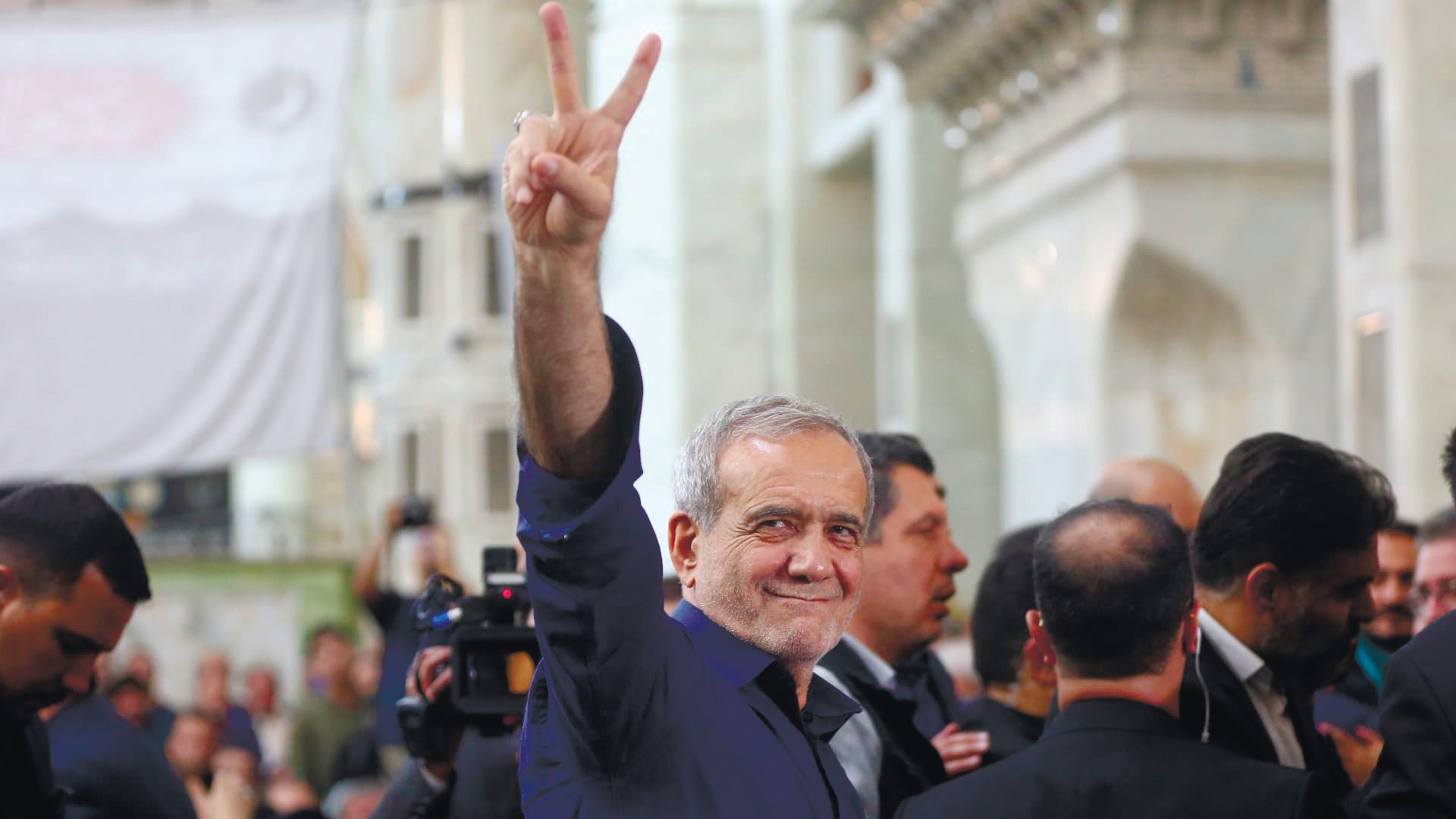
The collapse of the national currency occurred at a particularly inopportune moment for the authorities. Protests broke out on the day President Masoud Pezeshkian was due to defend his proposed budget for the upcoming financial year. Tehran implemented emergency measures: the government bill was turned down, the Governor of the Central Bank of Iran, Mohammad Farzin, resigned abruptly, and Naser Hemmati, a former Minister of Economy, was appointed to succeed him. Finally, despite a clear lack of foreign currency, the Iranian authorities initiated currency interventions to steadily lower the dollar’s exchange rate against the rial.
However, the situation continued to escalate. Newspapers, particularly in the West, were full of forecasts suggesting that the 'countdown for the ayatollahs' had begun or that 'Iran is on the brink of a new revolution'. There appeared to be some grounds for such predictions.
Nevertheless, by mid-January, the Iranian authorities managed to bring the situation under control, albeit through the use of force. It must be said that the harshness of the government’s response was not the primary reason for the strategic failure of the protests. The protesters lacked a political programme, an organisation to articulate such a programme, and a leader with sufficient authority. While such anti-government demonstrations look good in news reports and commentaries aimed at a liberal audience, they cannot bring about real change. Even if a despised regime is successfully toppled, forming a new, viable government proves to be a far more difficult task.
One must also recognise that 'the street' did not gather enough momentum to overthrow the current government. There was also a lack of support within both the ruling elite and the security services, though even this was not the most significant factor. Paradoxically, the 'national question' worked against the protesters.
‘Great Persia’ versus modern Iran
Experts have long referred to Iranian Azerbaijan as the 'cradle of Iranian revolutions', with most waves of discontent typically beginning in Tabriz and Ardabil. This time, however, the epicentre was elsewhere. Although the authorities deployed additional security forces to the cities of Southern Azerbaijan towards the end of the unrest, ethnic Azerbaijanis largely did not support the political protests. There are specific reasons for this.
At a certain stage, particularly in the West, efforts were made to promote Reza Pahlavi, the son of the former Shah, as a potential leader. He gave interviews, issued statements in support of the protesters, and claimed he was ready to return to Iran to lead a transitional government, though he was in no hurry to fulfil these promises. Western 'think tanks' perhaps viewed this as an ideal scheme: topple the despised 'mullahcracy', restore the monarchy, return the Pahlavi dynasty to the throne, and regain the glamorous, pro-Western Iran of the past. This was especially appealing given that the former Shah’s son enjoys some support among Persian nationalists, primarily consisting of educated urban youth.
Iran is a multi-ethnic state. While exact figures are unavailable, ethnic Azerbaijanis constitute a significant portion of the population, followed by Turkmens, Qashqais, Shahsevan, Kurds, and Balochs. The prospect of restoring the monarchy under the Pahlavi dynasty does not inspire them—particularly ethnic Azerbaijanis, Iran's largest national minority. This is especially true if such a restoration relies on Persian nationalists; for them, it would be a case of jumping 'out of the frying pan and into the fire'.
The current President of Iran, Masoud Pezeshkian, is an ethnic Azerbaijani. On his initiative, certain internal reforms and a liberalisation of life have already begun in the country. Naturally, the people in the cities of Southern Azerbaijan pin their hopes on Pezeshkian.
In Iranian Azerbaijan, there is a vivid memory of how the last Shah, Mohammad Reza Pahlavi, drowned the Azerbaijani national movement in blood in 1946. While his son and heir may not be legally responsible for those actions, he has offered nothing more than vague statements about how the 'interests of national minorities must be considered', providing no firm guarantees for the rights of Azerbaijanis and other peoples in the country. Meanwhile, no political force in Iran can expect success without the support of the national peripheries, especially in a revolutionary scenario. It is hardly surprising, therefore, that the gamble on Pahlavi did not pay off.
Foreign support will not help
Since the start of the protest movement, the possibility of external military intervention has been debated in the US, Israel, and other nations. Specifically, strikes against the command centres of the Islamic Revolutionary Guard Corps (IRGC) and similar targets have been considered. However, specialists advise against hasty conclusions and forecasts. Strikes on command centres were already carried out in the summer of 2025 during the '12-day war', and they did not lead to the dismantling of the current government. The chances that such strikes would topple the government now are even slimmer; in the current climate, such attacks would be a gift to official Iranian propaganda, which frequently cites the role of foreign intelligence services in inciting the protests.
While there may be exhaustion with the 'hardline Islamic regime' within Iranian society, that regime still possesses a considerable number of supporters. Among those who actively dislike the 'mullahcracy', by no means all are prepared to support American and Israeli bombing raids, let alone the political forces that such strikes would bring to power.
Furthermore, precision strikes alone are simply insufficient. To replace the Islamic Republic of Iran with a pro-Western Iran, what is required is not precision attacks, but a large-scale invasion. The US acted in this manner in Iraq and Afghanistan, and it was Afghanistan, after twenty years of military presence, that marked Washington’s greatest political failure. Parallels with the flight from Vietnam were drawn openly at the time, and images of people storming planes at Kabul airport were broadcast worldwide. The scenario of 'arriving in a country, installing a new government at bayonet point, which then opens the gates to paradise' simply did not work. Even liberal figures like Antony Blinken have had to acknowledge that the external imposition of democracy is ineffective.
At the same time, amid the war in Ukraine, Western nations simply lack both the resources and the political determination required for a full-scale invasion of Iran. Any external attempts to destabilise the situation could seriously compromise regional security and will certainly not contribute to peace.
RECOMMEND:
 188
188

