

MEGADEAL EU–INDIA
Will the agreement concluded in New Delhi have a serious impact on global politics and the economy?
Author: Natig NAZIMOGHLU
The European Union and India have signed historic agreements covering various areas of bilateral cooperation. Their implementation promises to become an important element of the ongoing restructuring of the global political and economic system.
Defence, trade and beyond
Official dialogue between the EU and India commenced in 1962, when the parties (with the first represented at that time by the European Economic Community) established diplomatic relations. In 2004, Brussels and New Delhi signed a strategic partnership agreement that expanded bilateral cooperation beyond politics and trade to include areas such as education, science, technology and the fight against terrorism. Three years later, negotiations began on a comprehensive trade and investment agreement. However, after six years, the talks reached an impasse due to disagreements over market access, intellectual property and visas for highly skilled Indian personnel.
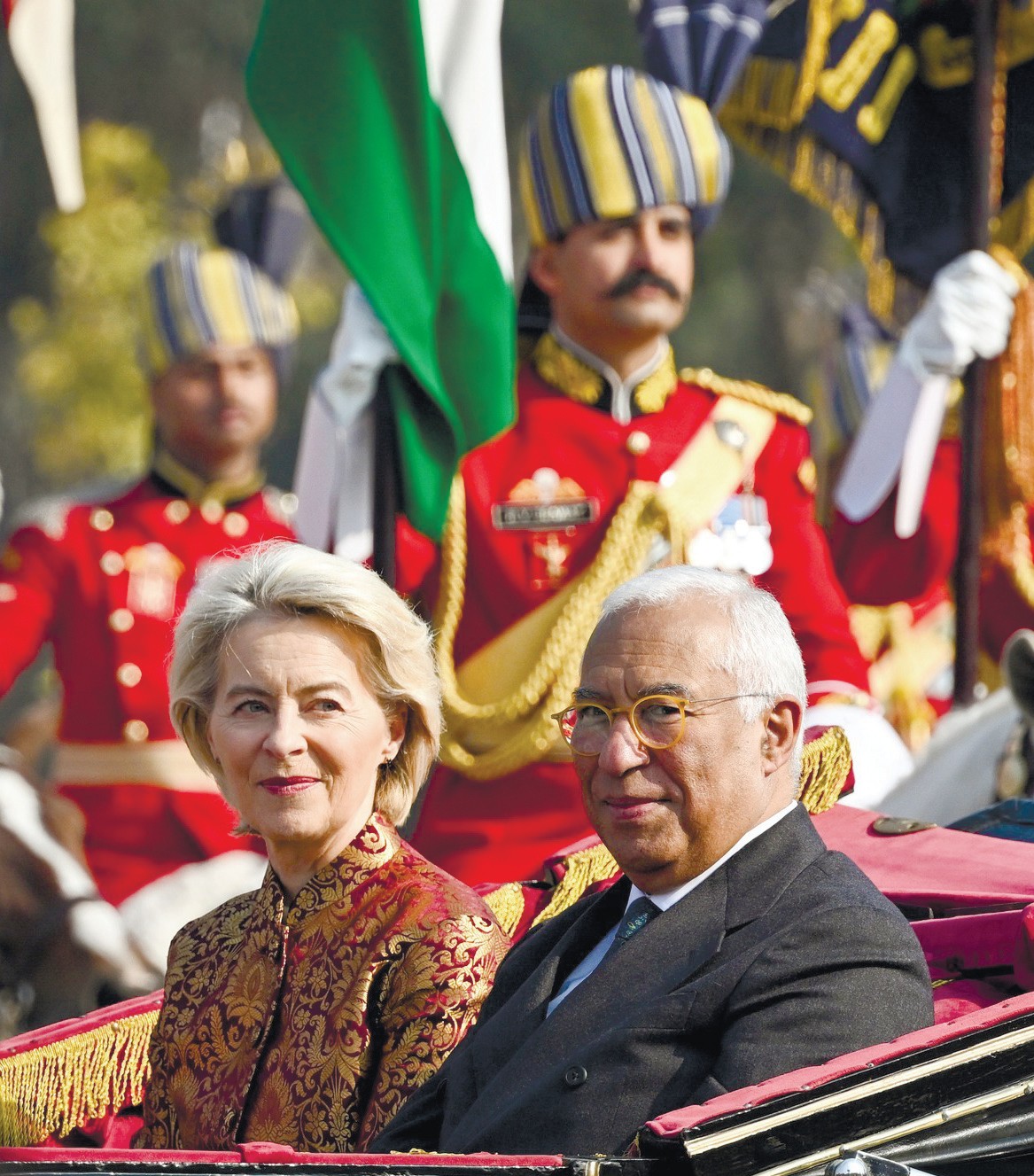
The EU-India summit in 2020 saw the establishment of a five-year cooperation roadmap, thereby generating much-needed momentum for the enhancement of dialogue between Brussels and New Delhi. In 2022, negotiations on the trade agreement resumed and, finally, in March 2025, during the visit to India by European Commission President Ursula von der Leyen, the parties announced their intention to conclude the agreement in the near future. This materialised on January 25–27 this year, when von der Leyen and European Council President António Costa took part in the celebrations marking the 77th anniversary of the Republic of India and in the 16th EU–India summit. A number of significant bilateral documents were adopted at this meeting.
The most significant of these is the free trade agreement, which will see India reduce tariffs on 96.6% of goods from the EU, while the EU will cut duties on 99.5% of Indian goods within seven years. Specifically, India will reduce tariffs on European cars from 110% to 10%, while the EU will improve market access conditions for Indian jewellery, textile products, precious stones and seafood.
Furthermore, an agreement on mobility and migration was signed, with the aim of simplifying visa procedures for students, researchers and skilled professionals. It provides for the establishment in New Delhi of an EU Legal Gateway office that will support visa applications, recognition of qualifications and access to information on European labour markets.
India and the EU also reached a consensus on cooperation in the domains of digital trade and advanced electronic signatures. It is particularly important to note the creation of a carbon adjustment mechanism. This refers to a tax on imports of goods produced with high CO2 emissions. The EU's financial assistance to India is earmarked for the decarbonisation of its steel and aluminium industries. The financial support will total €500 million.
Key milestones include the adoption of a joint comprehensive strategic agenda between the EU and India through 2030, and the signing of the first-ever security and defence partnership agreement in the history of their relations. This agreement is aimed at strengthening cooperation in such areas as maritime security, the defence industry, advanced technologies, cybersecurity, space, countering hybrid threats and combating terrorism. In addition, EU and Indian leaders welcomed the conclusion of negotiations on an information security agreement.
Consequently, the EU and India are transitioning from sectoral dialogue to systemic cooperation, thereby establishing a strategic partnership. This is yet another significant manifestation of the geopolitical and geo-economic changes unfolding on the international stage. Evidence of this can be seen in the historic European-Indian agreement, which brings together economies accounting for about 25% of global GDP. Furthermore, there is a clearly stated intention on the part of Brussels and New Delhi to create a structured interweaving of trade, technological, informational and defence agendas in their bilateral cooperation.
The US, China and others
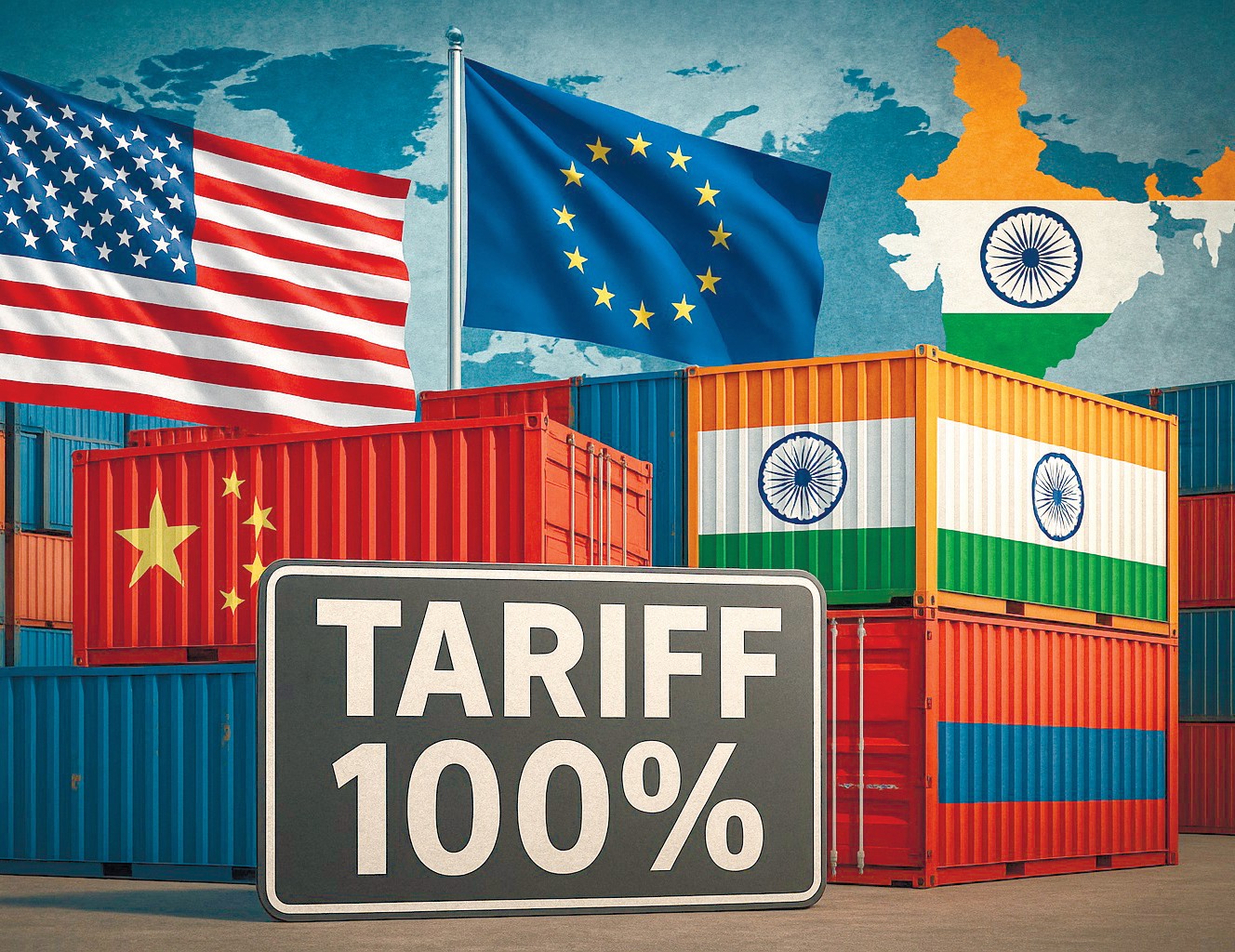
The key factor in the warming of relations between the EU and India has been the mounting pressure from the United States. In particular, the practice of raising trade tariffs pursued by the United States under the administration of President Donald Trump is of particular concern. For New Delhi, which has suffered considerable losses due to the 50% tariffs imposed by Washington in 2025 on a range of Indian goods, the trade agreement with Brussels appears to be a factor capable of mitigating the consequences of US restrictive measures. Brussels has demonstrated its ability to respond to Trump's tough trade policy, seemingly undeterred by the prospect of undermining Euro-Atlantic unity. This response has taken the form of steps as significant as a trade deal with the world's fastest-growing major developing economy.
Another significant factor in the European-Indian rapprochement is the substantial strengthening of China's role in global politics and economics. In response to this, Brussels and New Delhi have agreed to support each other in diversifying trade flows. While the EU hopes to reduce its reliance on China by establishing a joint supply chain with India, India itself is keen to use the agreement with the EU as a powerful argument demonstrating its important role in intercontinental integration, linking Europe and Asia.
The broader geopolitical context of the signed European-Indian agreements was also confirmed by statements from the leaders. On the eve of the signing, Costa emphasised that the trade agreement would serve as "a significant political signal to the global community, demonstrating India and the European Union's increased confidence in the efficacy of trade agreements over tariffs". Von der Leyen, speaking about "the creation of a free trade area covering around two billion people", described the deal already reached as "the story of two giants—the world's second- and fourth-largest economies". Her comments referred to the EU and India, which, in her words, "have chosen partnership in a genuinely mutual manner".
The President of the European Commission also emphasised the importance of the defence agreement between India and the EU. "Today, the world's two largest democracies have announced the launch of a security and defence partnership," and, in von der Leyen's view, it "will serve as a platform for closer cooperation on key strategic issues".
The Indian Prime Minister, Narendra Modi, has described the agreement with the EU as "the mother of all deals".
Meanwhile, the geopolitical significance of the European-Indian agreement is also reflected in the extremely important issue for the US and the wider West of the trade and economic isolation of Russia, which continues its war against Ukraine. Russian experts themselves acknowledge that the Brussels–New Delhi deal poses a challenge for Russia in the medium and long term. While this may not have a significant impact on Russian oil exports, it could have a substantial impact on the price competitiveness of Russian exporters compared to European suppliers in the Indian market. Overall, the free trade agreement between the EU and India is a strong indication of Russia's declining role not only in Indian foreign policy but also in the geopolitical and geo-economic balance in South Asia and the wider Indo-Pacific region.
Russia's ambitions in the Indian direction are also likely to become more complicated in light of the announcement made on 3 February by the US president regarding an agreement reached with the Indian prime minister on a trade deal. Under this deal, tariffs on Indian exports to the United States will be reduced from the previously established 50% to 18%. Trump emphasised that Modi had promised to abandon oil imports from Russia and begin purchasing it from the US and Venezuela.
Despite the significant geopolitical implications of the agreements signed by New Delhi and Brussels, and their evident connection with the processes experienced by the EU and India within the global system, it is important to note that the implementation of these documents appears to present certain challenges for some segments of the political establishment — both European and Indian.
Influential trade unions, non-governmental organisations and some political circles in European countries have expressed dissatisfaction that the EU–India free trade agreement prioritises geopolitical interests rather than social and environmental ones. They emphasise the absence in the agreement of strict and enforceable provisions on labour rights, environmental protection and climate commitments.
Labour migration from India is a separate issue in its own right. The European Commission and several governments regard it as an economically necessary and strategically preferable alternative to irregular migration, given that many EU member states are experiencing acute labour shortages, particularly in the healthcare, construction, logistics and service sectors. However, a number of countries, primarily in Eastern Europe, are resisting EU plans to regulate migration. Concerns among local socio-political circles are mainly linked to the risks that large-scale migration, including from India, may pose to the national identity of European countries.
Concurrently, human rights organisations have voiced criticism of Brussels for signing the agreement with New Delhi, citing concerns over restrictions on civil liberties and press freedom in India, as well as discriminatory policies towards religious and national minorities by the authorities.
Within India itself, critics of the agreement with the EU have voiced concern that it will expose vulnerable sectors of the country's industry and agriculture to pressure from European competitors.
Finally, in connection with the prospects for implementing the EU–India agreement, another issue has emerged that represents the Achilles' heel of contemporary European policy. The agreement will enter into force only after ratification by both the Indian and the European sides. In the latter case, the agreement must be approved by all EU member states and ratified by the European Parliament. Therefore, the same factor has led to a certain degree of scepticism. It is possible that EU countries will adopt different positions on the deal with New Delhi. In that case, it could face the same fate as the free trade agreement between the EU and MERCOSUR, the grouping of South America's largest economies. Despite extensive negotiations that lasted over 25 years and the signing of the EU-MERCOSUR agreement on 17 January this year, the document has encountered a significant obstacle in the European Parliament. The European Parliament has referred the agreement to the court for a legal opinion. This is due to the fact that it has not managed to secure approval from all EU member states, nor has it withstood the pressure from European farmers.
Nevertheless, these nuances and calculations in no way diminish the historic significance of the EU-India "megadeal". It is important to note that this is one of the clearest indicators of the geopolitical transformation sweeping the world.
RECOMMEND:
 163
163

