

DISCUSSIONS IN THE CROSSHAIRS
Will diplomatic efforts help to avert war in the region?
Author: Samir VELIYEV
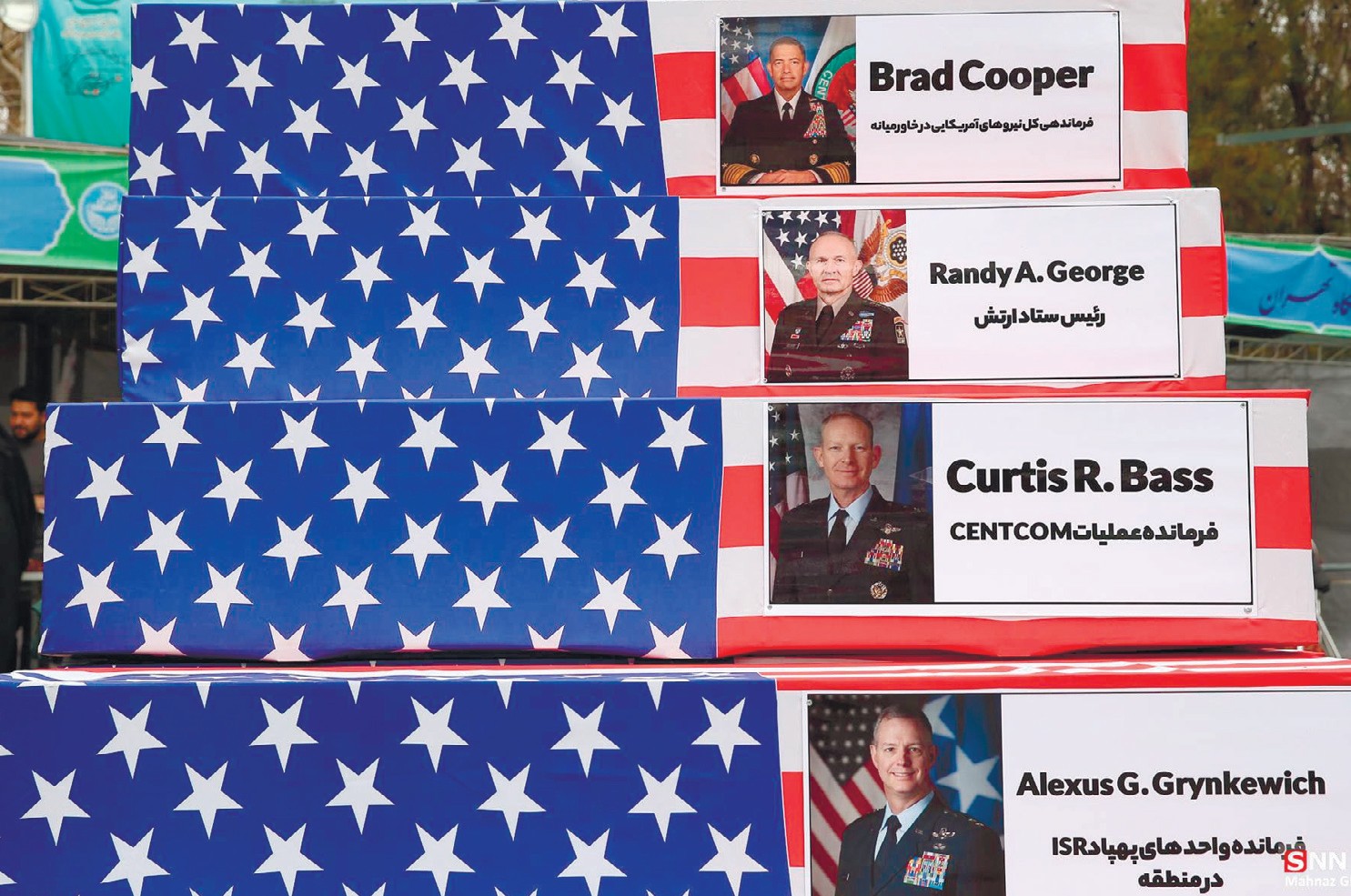
Amid the USA’s accelerated preparations for a potential military strike on Iranian territory, intensive negotiations were held between official representatives of the United States and the Islamic Republic in Oman. Their objective was to prevent a military scenario regarding Tehran in exchange for its abandonment of its nuclear programme.
It is noteworthy that the parties themselves evaluate the discussions held in Muscat differently. While Tehran characterises the preliminary results of these contacts as cautiously positive, Washington is currently speaking more of hopes. Meanwhile, Israel—considered an invisible participant in the dialogue—sees no particular prospect in it if only the nuclear programme is being discussed. Consequently, the country’s Prime Minister, Benjamin Netanyahu, flew urgently to Washington on the eve of the next round of US-Iranian negotiations to meet with US President Donald Trump and persuade him to include issues related to the Iranian missile programme and the cessation of Tehran’s support for its regional proxy forces in the talks.
Negotiations ongoing, results pending
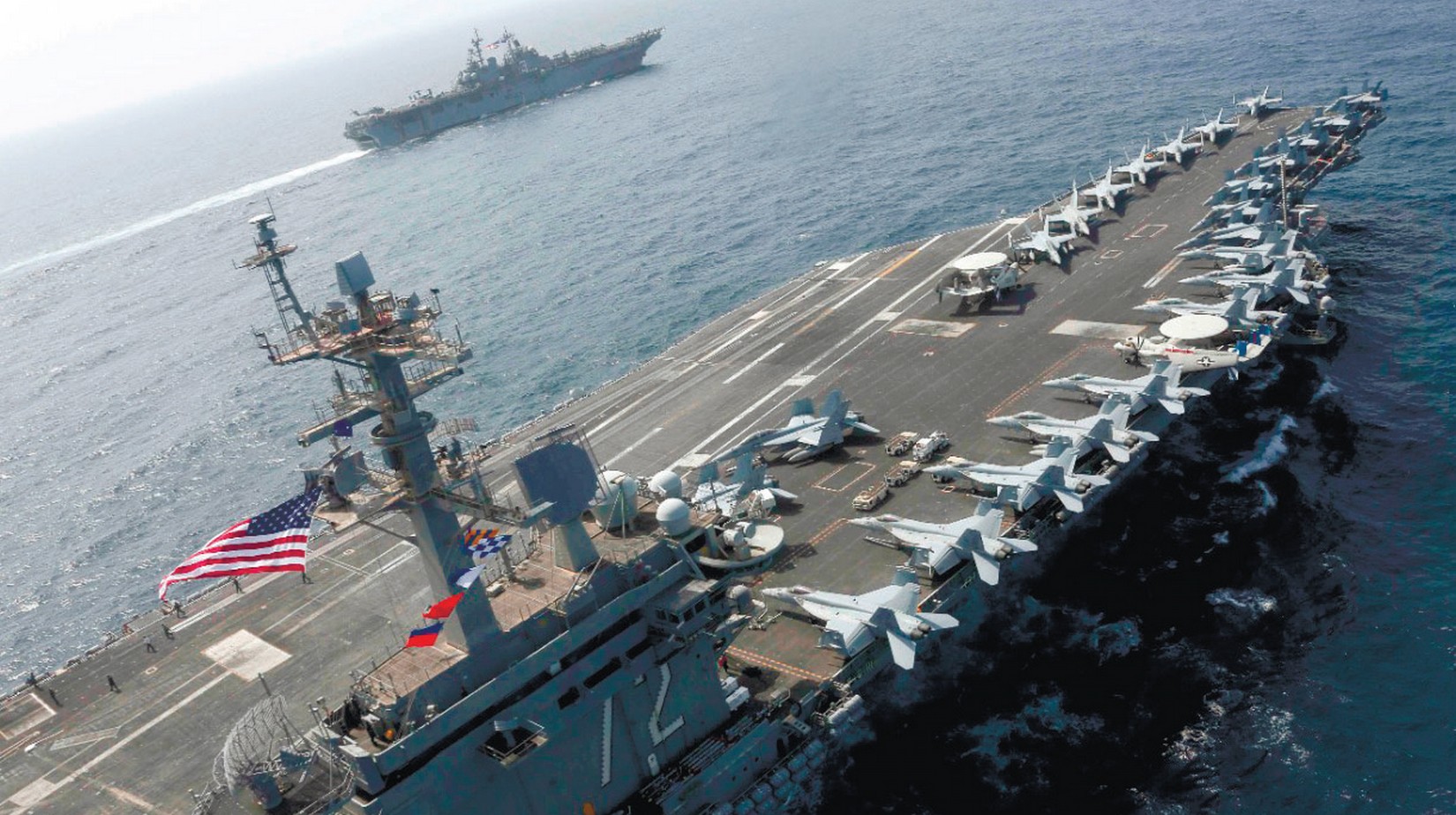
Donald Trump himself has not ruled out sending warships to the Middle East, ready to engage in combat operations should the nuclear programme negotiations fail. In an interview with Axios, the White House head warned: “An armada is heading there, and perhaps another will follow,” adding that he is “thinking about” directing a second US Navy carrier strike group toward Iran.
At the same time, the American president noted that the United States is seeking to reach an agreement with Iran in the near future. However, even he was forced to admit that the negotiations in Oman are yielding results, albeit modest ones, stating that Tehran is demonstrating “greater flexibility” than on the eve of the 12-day military escalation in the summer of 2025. This served as a message to critics that the negotiating process is not a mere imitation and possesses clear prospects. Furthermore, at his meeting with the Israeli Prime Minister, he made it clear that despite the complexities, he intends to continue negotiations with the Iranians.
The latest round of negotiations in Muscat took place on February 6, 2026. They focused primarily on matters regarding the Iranian nuclear programme—specifically, assessing the seriousness of the participants' intentions and identifying paths for further dialogue.
The Iranian side insisted that the discussion should be limited to the nuclear issue and Tehran’s right to uranium enrichment. Meanwhile, Washington sought to expand the agenda to include ballistic missiles, the opponent’s regional activities, and human rights. Iran rejected proposals to discuss its ballistic arsenal and refused to export enriched uranium, emphasising that such steps are unacceptable without significant US concessions.
For Tehran, “significant concessions” typically imply a fundamental change in American pressure policy rather than symbolic steps. This refers to the full and verifiable removal of key economic and financial sanctions, including secondary restrictions against the banking and oil sectors. This also includes legal and political guarantees regarding the irreversibility of agreements, following the US withdrawal from the deal during Donald Trump’s first term. For Tehran, it is of fundamental importance to exclude a repetition of the scenario where a new American administration unilaterally reviews obligations, to secure recognition of the right to enrich uranium on its territory within the framework of international law, and to unfreeze foreign assets. In other words, it is a matter of systemic economic and legal guarantees—not partial concessions in exchange for new unilateral restrictions.
In Tehran, there is a tendency to view contacts with Washington as a hope that the goals they have set can be achieved. At the very least, Iranian Foreign Minister Abbas Araghchi described the negotiations as a “good start” and expressed cautious optimism. He also emphasised that a mutual understanding was reached on the need to continue the diplomatic process, although no actual agreements were concluded. Omani mediators also expressed the opinion that the dialogue helped to clarify positions and create a foundation for future discussions.
Differing approaches
Despite the positive statements, experts believe that the level of mutual trust remains low, while the threat of military escalation remains high, as the United States simultaneously strengthened its military presence in the region and introduced new sanctions. Iranian analysts argue that the negotiations may have been tactical in nature, allowing the parties to buy time and avoid immediate conflict, but fundamental concessions from either side have yet to emerge.
Overall, the results achieved in Muscat are characterised as preliminary and limited, with mutual agreement to continue discussions, yet without breakthrough decisions on the core issues of the nuclear programme, sanctions, and regional security. If one strips the situation of its diplomatic fog and views the actual reality, the picture is as follows. The US position is cautiously firm and largely instrumental. Washington views the negotiations in Oman primarily as a mechanism for managing escalation, rather than an attempt at a swift return to a full-scale nuclear deal. The primary task for the US is to freeze the Iranian nuclear programme below critical thresholds—above all, regarding enrichment levels and the rate of stockpile accumulation—without committing to the systemic lifting of sanctions.
The Americans are deliberately avoiding the framework of “reviving the JCPOA” and prefer phased, reversible arrangements that can be presented as temporary de-escalation measures. Simultaneously, the US is attempting—albeit informally—to expand the negotiating agenda to include the missile programme and Iranian activity, understanding that these aspects are the most sensitive for US allies in the region. This is principally for Israel’s benefit. The military factor is being used as an element of pressure. The demonstration of readiness for a military scenario is intended to raise the negotiating price of Tehran’s concessions.
Iran’s position is significantly tougher in substance than it is in rhetoric. Tehran proceeds from the premise that negotiations are possible exclusively within the framework of nuclear themes and cannot touch upon defence matters. Iran continues to insist on the recognition of its right to enrich uranium and demands a clear link between any restrictions and a specific, measurable easing of the sanctions regime, primarily in the oil and financial sectors. Therefore, the Iranian side’s cautious optimism should not be viewed as a signal of readiness for compromise. It is, rather, an indicator that the US has not yet moved to direct ultimatums.
In a strategic sense, Tehran views the dialogue as a way to buy time, reduce the risk of an immediate strike, and establish the limits of permissible American pressure. The refusal to export enriched uranium and to allow additional inspection mechanisms remains a fundamental red line.
Neighbors against war. Israel has its own position
The reaction of regional participants against the current backdrop is telling. Despite all the differences in strategic priorities, not one of Iran’s neighbours is interested in a direct military escalation. However, the prospect of Tehran acquiring a full-fledged nuclear potential is also perceived by them as a factor of strategic destabilisation.
Israel traditionally maintains the most rigid position. Tel Aviv remains convinced that partial or phased agreements, which suggest only a temporary freeze on enrichment parameters, do not eliminate the threat, but merely postpone it. Israeli strategy is built on preventing Iran from maintaining the infrastructure that would allow it to transition to weapons-grade levels in a short timeframe. In this logic, the demonstration of American military pressure is perceived not as an excessive measure, but as a necessary element of coercion to secure real concessions.
It is no coincidence that the Israeli Prime Minister, during his emergency visit to the US, attempted to persuade his American allies not to reduce the pressure and to pursue all desired concessions. He is convinced that a soft or partial deal could provide Iran with the opportunity to return quickly to its previous programmes. Otherwise, the Israeli premier stated, Tel Aviv reserves the right to take pre-emptive action. By all accounts, his opinion remains unchanged.
Saudi Arabia and the United Arab Emirates are more pragmatic and cautious in their approach. Following the restoration of diplomatic channels between Riyadh and Tehran through the mediation of China, the priority for the Gulf states has become managed predictability. A military conflict in the immediate vicinity of their energy infrastructure carries direct risks for oil exports, investment programmes, and logistics routes through the Strait of Hormuz.
At the same time, Riyadh is strategically uninterested in Iran consolidating its status as a nuclear-threshold state. Thus, the position of the Gulf countries is dual in nature. Diplomacy is preferable, but its result must be a real limitation of Tehran’s nuclear potential.
Türkiye consistently opposes a military scenario, viewing the crisis primarily as a threat to regional economic stability and transit projects. Ankara is interested in maintaining a balance and seeks to avoid a situation where escalation between the US and Iran leads to an increased external military presence in the region and a reduction in the space for independent Turkish diplomacy. Nevertheless, the emergence of a nuclear Iran also objectively alters the strategic balance in the Eastern Mediterranean and the Middle East. In the long term, this could push Ankara toward a revision of its own defence doctrine.
Oman and Qatar are active supporters of continuing the negotiating process. For them, the priorities are the prevention of a military conflict in the waters of the Persian Gulf and the preservation of functioning trade routes. Their diplomatic activity reflects the desire of the region's small states to minimise the consequences of the confrontation between major actors.
Azerbaijan for dialogue
In this context, the viewpoint of Azerbaijan deserves special attention. Baku, sharing a land border with Iran while simultaneously maintaining a strategic partnership with the US and close military-political ties with Israel, objectively finds itself in a sensitive geopolitical configuration. Azerbaijan consistently operates on the principle of non-involvement in conflicts between third parties and adheres to a line of maintaining regional stability. For Baku, it is critically important to exclude any scenario in which the country’s territory or adjacent spaces could be drawn into the confrontation between Washington and Tehran.
On the whole, the situation forms a paradoxical yet logical framework. Iran’s neighbours do not support military escalation, as its consequences—strikes on energy infrastructure, the blockade of the Strait of Hormuz, rising oil prices, and the activation of proxy groups—would be systemic in nature. However, the prospect of Tehran securing the status of a nuclear-threshold state is perceived as a long-term threat to the strategic balance. It is for this reason that most regional actors are interested in maintaining the negotiating process, even if it proves to be protracted and incremental. In this instance, managed uncertainty is perceived by them as a less dangerous alternative to open military confrontation.
RECOMMEND:
 207
207

