

ARMENIA WITHDRAWS
How and why Yerevan is severing its strategic ties with Moscow
Author: Namig H. ALIYEV
Russia's Deputy Prime Minister Alexei Overchuk has stated that Armenia will have to choose between the European Union and the Eurasian Economic Union, as it is impossible to belong to both integration blocs simultaneously.
Armenia's distancing from Russia is no longer a matter of debate or interpretation; it is now taking shape as a political fact. This process is neither sudden nor emotional, but rather structural, unfolding over time and synchronised with regional and global developments. The statements made by Prime Minister Nikol Pashinyan in recent months have merely confirmed what has been de facto happening since 2020: Armenia is withdrawing from Russia's orbit of security, economy, and influence as a whole.
Political rupture: Russia shifts from ally to 'hostile actor'
Pashinyan's assertion that the Collective Security Treaty Organisation (CSTO) made decisions aimed at destroying Armenian statehood is not merely emotional rhetoric. In political language, an expression of this level signifies a reclassification of status.
The CSTO, initiated by Russia, has been described for the first time not as a problematic partner or an ineffective ally, but as an "existential threat." This effectively crosses a red line. After such formulations, a return to the previous model of relations is impossible without a complete change in political course or leadership.
Another important point is that Pashinyan presents this not as a personal assessment, but as a considered conclusion of the state, substantiated by "overcoming the threat" through two steps: the Prague agreement of 2022 and the suspension of participation in the CSTO. In doing so, he retrospectively legitimises the rupture.
Collapse of the Russian model of guarantees: institutional distancing
The CSTO was the cornerstone of Russian-Armenian relations. Its effective paralysis in the eyes of Armenian society following the events of 2020-2023 marked a psychological turning point. Clear perceptions were formed regarding the CSTO's stance during that period.
The CSTO's refusal to intervene during the Second Garabagh War, and subsequently during incidents when Azerbaijan was fully restoring its sovereignty and the final voluntary exodus of Armenians from the territory of Garabagh, led Yerevan to conclude that Russian security guarantees were unreliable.
The suspension of Armenia's membership in the CSTO is not a tactical protest but an effective acknowledgement of the strategic bankruptcy of the previous security system. In this scenario, withdrawal from the organisation is a matter of time and political convenience.
However, the real distancing is not about political statements and declarations. It concerns systemic institutional estrangement. This process will not be limited to military structures alone. It will encompass measures such as reducing the role of Russian border guards, revising the format of the 102nd military base's presence, and excluding Russia from all negotiation tracks.
Geopolitical choice: betting on the US and the West
Replacing Russian mediation is the Western institutional framework represented by the EU and the US, along with bilateral formats supported by Washington and Brussels. Moscow is being transformed from an "obligatory participant" into an unwelcome observer.
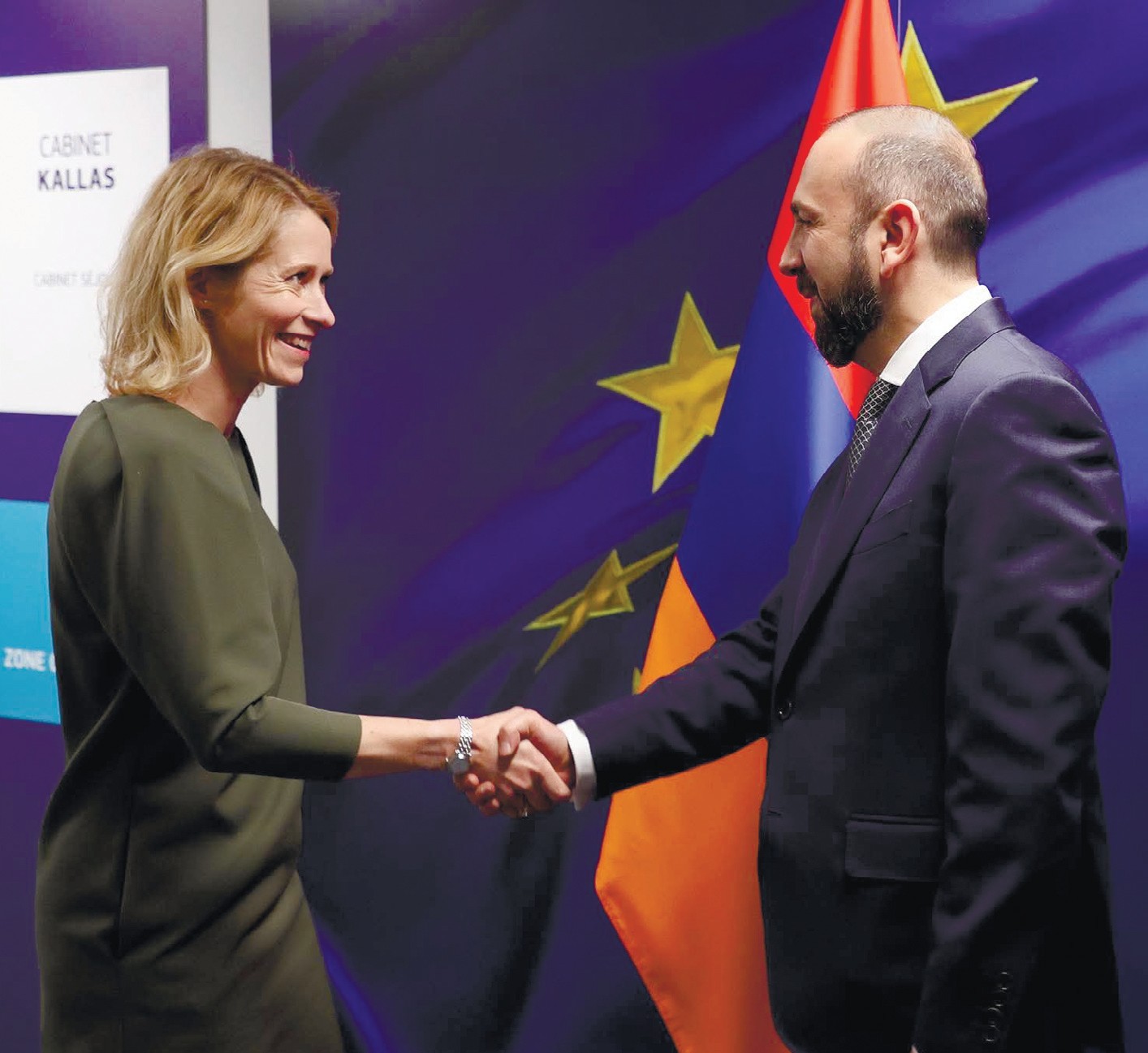
The January visit of Armenian Foreign Minister Ararat Mirzoyan to the US, the intensification of Armenian-American dialogue, and discussions on new formats of security cooperation all point to the formation of an alternative protective umbrella.
Pashinyan is not acting blindly. His rhetorical harshness towards Russia is only possible if preliminary political guarantees have already been secured. Armenia's behaviour towards Russia indicates that an understanding has been formed regarding Armenia's role in the US regional strategy. Yerevan is integrated into a broader framework for containing Iran and redistributing influence in the South Caucasus.
The TRIPP route project and, more generally, US activity in the region represent the starting point for Armenia's new security architecture, one in which, as we can see, there is no place for Russia.
Russia's reaction to Armenia's withdrawal
There has been no direct official recognition from the Russian authorities, in the form of a formal statement, that "Armenia is withdrawing from Russia's influence." However, Foreign Minister Sergey Lavrov stated that Moscow may reconsider relations if Armenia continues its drift away from alliance.
Russian officials have been critical of Yerevan's steps towards the West (the EU, the EU mission instead of the CSTO) and have warned of risks to the bilateral relationship. Lavrov himself had previously stated that Armenia's aspiration for membership or closer ties with the EU is incompatible with maintaining participation in the Russian-led Eurasian Economic Union. The Russian Foreign Ministry has also repeatedly criticised the Armenian authorities' statements about closer cooperation with the European Union and warned of possible negative consequences of such a rapprochement. This reflects Moscow's position that Yerevan's Western orientation could complicate relations. Hence Lavrov stated that Moscow may reconsider relations if Armenia continues its drift away from the alliance.
Russia persistently links Armenia's security to its alliance with Russia and believes that withdrawing from certain cooperation formats is detrimental to Yerevan. Deputy Foreign Minister Mikhail Galuzin mentioned that the situation should not be viewed as an inevitable withdrawal of Armenia from Russia's influence, but warned that "preoccupation with Western factors and wavering over CSTO membership" could lead to the loss of Armenia as an ally (he did not name specific actors).
Meanwhile, his colleague Alexander Pankin stated that no one intends to automatically expel Armenia from the CSTO, even if Yerevan has problems paying its membership fees. He emphasised that "modalities of interaction" are being discussed, but did not acknowledge Armenia's withdrawal as an inevitable event.
At the same time, the uncertainty of the alliance's future is indicated by official remarks about the "impossibility of excluding Armenia" (which reflects Moscow's anxiety over the cooling of relations).
A rare moment of converging interests and new guarantees
The paradox of the current moment is that Armenia is distancing itself from Russia simultaneously with Azerbaijan. For Baku, this is linked to the plane crash and Russia's inappropriate behaviour. Yerevan, as a disillusioned ally, is seeking new guarantors.
Historically, Azerbaijan and Armenia could have built a stable regional configuration either through an external arbiter or jointly. Today, the second option appears realistic for the first time: a peace agenda, mutual recognition of borders, minimisation of external interference, and the establishment of transport and communication projects.
Any attempt by Yerevan to deviate from the peace agenda would return the region to a state of conflict and Armenia to the status of an aggressor country. Awareness of this is a rare factor of rationality currently present on the Armenian side.
The classic formula "two bears cannot live in one den" applies literally in this case. The US is entering the region not as a partner of Russia, but as its replacement. In this logic, the Russian presence in Armenia becomes superfluous and a source of conflict.
Therefore, the question is no longer "if," but when and in what form Russia will be asked to leave: gently or harshly, gradually or through a crisis.
Armenia is not simply distancing itself from Russia; it is reshaping its own state strategy. This process is irreversible under the current political course. It is painful, risky, but deliberate.
The South Caucasus is entering a new era where old guarantees, former alliances, and inertial structures no longer function. And those who fail to adapt to this reality risk being left behind.
RECOMMEND:
 238
238

