

LEADERSHIP AND RECOGNITION
Ilham Aliyev receives international recognition for his efforts towards peace and regional stability
Author: Elchin HUSEYNOV
In early February, Abu Dhabi, a prominent humanitarian and political centre in the Middle East, hosted the Zayed Award for Human Fraternity ceremony. Azerbaijani President Ilham Aliyev was among the key figures at the event, whose participation was seen not as a mere protocol gesture but as a political signal. In a period where the global agenda is shifting towards increased dialogue, identity, and post-conflict peace, the presence of the Azerbaijani leader on such a platform demonstrates that Baku is no longer merely responding to global events, but rather playing an active role in shaping them.
The award and a new historical dimension of the world
The Zayed Award for Human Fraternity was established in 2019 in Abu Dhabi on the initiative of the Organisation for Human Fraternity and under the patronage of the rulers of the UAE. The Document on Human Fraternity was signed during the meeting between Pope Francis and Grand Imam of Al-Azhar Ahmed al-Tayeb. This meeting was a historic event, and the document is a declaration calling for peace, respect, and mutual recognition among people of all cultures and faiths. The award is named after Sheikh Zayed bin Sultan Al Nahyan, the founder of the UAE, whose humanitarian mission and ideas of tolerance symbolize its values.
Since its inception, it has evolved into an annual international award, accompanied by a financial prize of $1 million. It honours those who make a significant contribution to strengthening human solidarity, intercultural dialogue, tolerance, and peaceful coexistence. Throughout the years, the award has been bestowed upon prominent religious leaders and global figures whose endeavours align with the prize's mission. Pope Francis and Grand Imam Ahmed al-Tayeb were the first honourees for their signature on the Document on Human Fraternity. Subsequently, UN Secretary-General António Guterres, King Abdullah II and Queen Rania of Jordan, as well as international organizations and activists, have been honoured with this award.
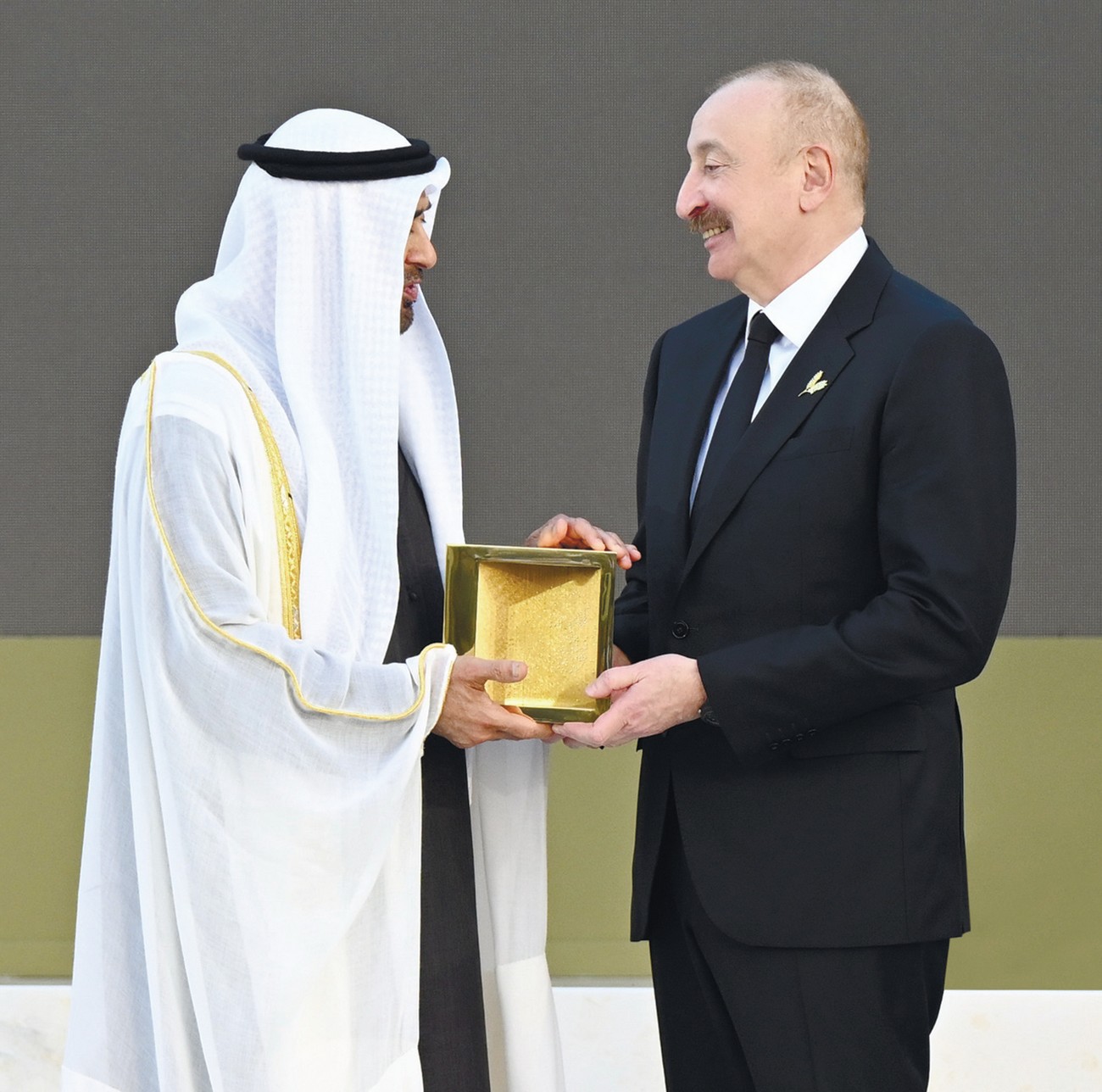
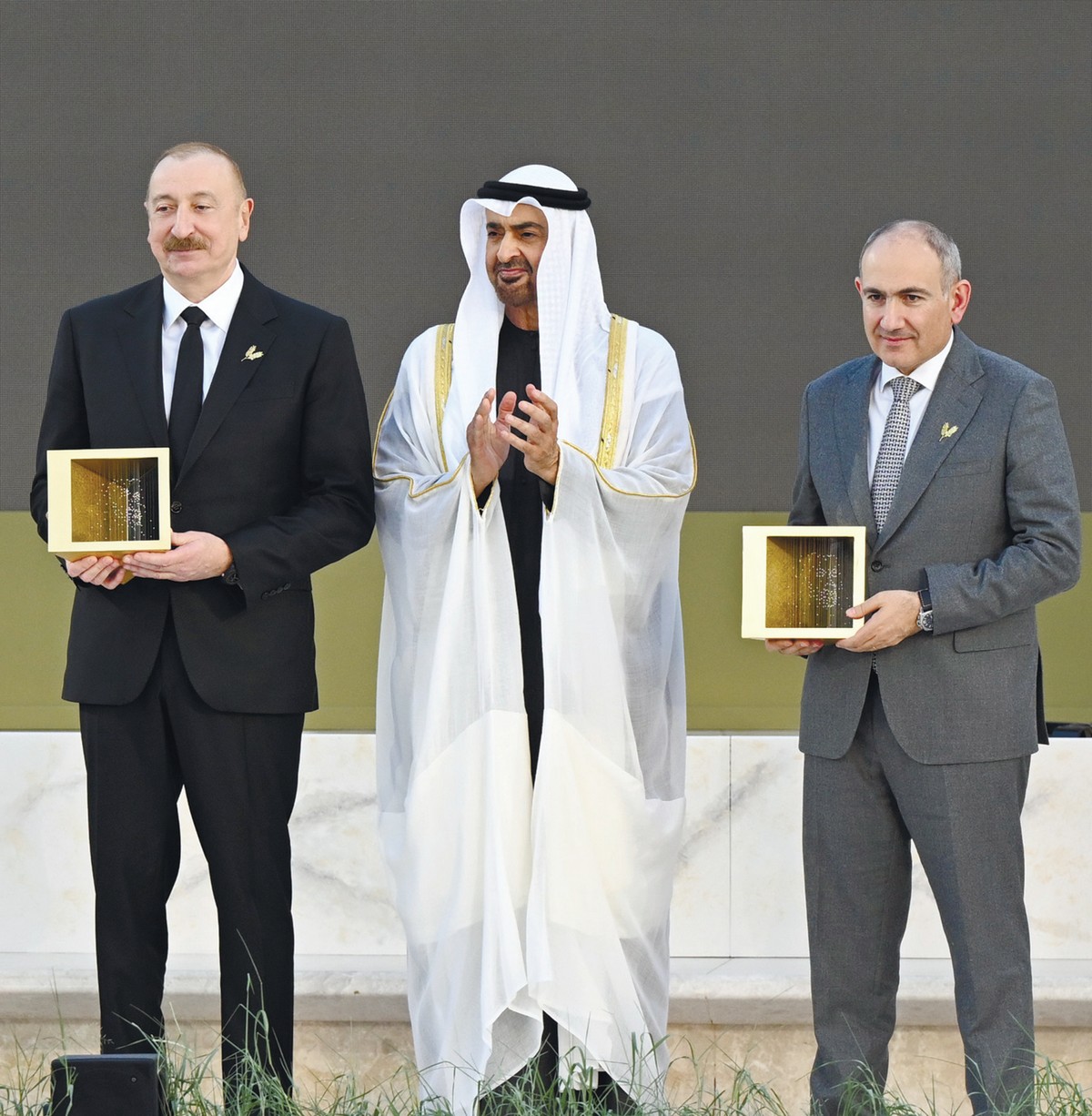
In 2026, the award assumed a new historical dimension when it was presented to Azerbaijani President Ilham Aliyev, Armenian Prime Minister Nikol Pashinyan, and Afghan human rights activist Zarqa Yaftali. The international jury's decision regarding the leaders of Azerbaijan and Armenia was based on the fact that the peace agreement signed in August of last year in the United States was an important milestone in resolving the long-standing conflict in the South Caucasus. The agreement serves as an example for other regions seeking stability and dialogue. In this context, Ilham Aliyev and Nikol Pashinyan were recognised not only as heads of state, but also as co-authors of the peace process. This demonstrated that after decades of confrontation, it is possible to build lasting peace through negotiations and compromise.
The Zayed Prize has been awarded to Ilham Aliyev, emphasising the regional and global significance of his activities, which extend beyond national politics. During the proceedings in Abu Dhabi, the President of Azerbaijan made the following observation: "Peace and stability in our region can only be achieved through constructive dialogue, respect for national sovereignty and the willingness to compromise. Azerbaijan is ready to be a partner that seeks solutions, not confrontation."
These words reflect the main principle of Ilham Aliyev's foreign policy in recent years: a combination of a firm stance on national interests and pragmatic, balanced diplomacy. This strategy enabled the successful conclusion of an agreement with Armenia in August 2025, signed in the United States, marking a rare instance of a constructive settlement of a complex and long-standing conflict.
Ilham Aliyev's attendance at the Zayed Prize ceremony is a strategic move with far-reaching geopolitical implications. For neighbouring countries in the South Caucasus and the Middle East, this suggests that Azerbaijan is open to dialogue and advocates stability, while remaining a staunch defender of its national interests. International observers have noted that the joint recognition of Aliyev and Pashinyan as laureates of the award demonstrates the importance of compromise and shared responsibility, and shows the world that even long-standing conflicts can be resolved through negotiation and mutual concessions.
For major global players such as the US, the EU and the Gulf countries, this is a signal that Azerbaijan is not just a regional mediator, but an active participant in the emerging security and diplomatic order in Eurasia. This is how Baku is demonstrating its ability to be a platform not only for economic and energy cooperation, but also for constructive political dialogue, which strengthens its influence on the international stage.
International support for peace
The Zayed Prize award ceremony was attended by leaders and representatives of countries from the Middle East, Europe and Asia, as well as official delegations from international organisations, including the UN and the League of Arab States. Their participation highlighted the award as a global platform for promoting peace and dialogue, and the awarding of the leaders of Azerbaijan and Armenia symbolised a constructive approach to conflict resolution.
Secretary General of the Prize Committee Mohamed Abdelsalam stated: "Today, we honour those who have the ability to transform historical contradictions into opportunities for dialogue and cooperation. Leaders who are capable of signing peace agreements set an example for the entire world to follow."
Ilham Aliyev expressed his gratitude for the award, stating that Baku and Yerevan are learning to coexist peacefully. "I can tell you, it is a special feeling. We have never lived in peace since we became independent, and we are learning quickly. The last six months, since the historic summit in Washington hosted by US President Donald Trump, have been months of partnership, cooperation, and movement toward long-lasting and enduring peace."
Ilham Aliyev expressed his gratitude for the recognition bestowed upon him by the jury committee and the international community, stating that it was "very encouraging": "I think that our example should be learned and taken as a roadmap for those who are still at war. Our example demonstrates that peace is possible despite long-lasting conflict, suffering, and mutual distrust. Peace is possible when there is strong political will from both sides and when this process is supported by friendly countries and the international community."
Armenian Prime Minister Nikol Pashinyan has said that he views the award as an act of support from the international community. It was noted that the jury's decision clearly strengthens peace in the region, and that the parties will continue their efforts to ensure peace and build further.
During his address to the ceremony participants, Turkish President Recep Tayyip Erdogan stressed the significance of the award as a means of promoting peace and stability. "It is my hope that the awards presented since 2019 will contribute directly to peace and stability throughout the world... I hope that this award will benefit all of humanity."
Kazakhstan President Kassym-Jomart Tokayev has stated that the progress made by Azerbaijan and Armenia towards a peace agreement is a pivotal moment of historic significance. This demonstrates that even long-standing conflicts can be resolved through the use of dialogue, responsibility and restraint.
During his address, Pope Leo XIV stated: "Through the Zayed Award for Human Fraternity, we pay tribute today to those who have translated these values into “authentic testimonies of human kindness and charity”. Our laureates—His Excellency Ilham Aliyev, President of the Republic of Azerbaijan, His Excellency Nikol Pashinyan, Prime Minister of the Republic of Armenia, and Ms Zarqa Yaftali—are sowers of hope in a world that too often builds walls instead of bridges."
Meeting between Aliyev and Pashinyan in Abu Dhabi
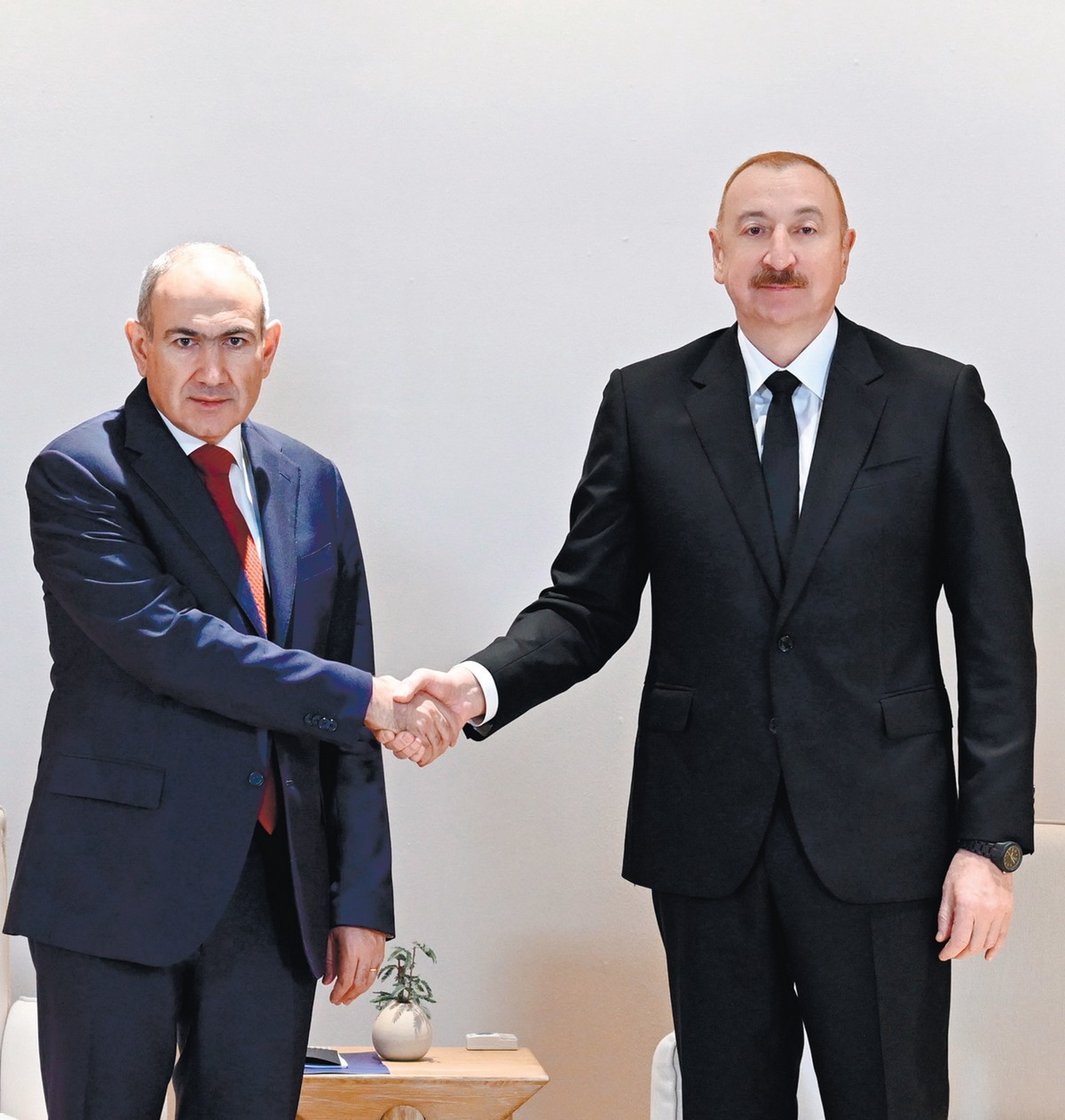
As part of the awards ceremony in Abu Dhabi, the leaders of Azerbaijan and Armenia met again. The recent developments represent a significant progression in the process of establishing formal diplomatic relations between the two countries, a process that was initiated at the Washington Peace Summit with the participation of the US President, Donald Trump.
The parties noted the positive dynamics of the implementation of the agreements, emphasising that the societies of both countries are already feeling the practical benefits of peace on the ground. Notable achievements include the launch of bilateral trade, the export of Azerbaijani oil products to Armenia, and the transit of grain and other goods through Azerbaijani territory. These steps demonstrate that the peace process is going beyond formal agreements and beginning to yield tangible economic results.
A key part of the meeting was the discussion of expanding confidence-building measures, with the parties agreeing to continue exchanges of visits by civil society representatives and to develop transport infrastructure projects, including TRIPP. This approach demonstrates that the normalisation strategy integrates political dialogue with specific economic and social initiatives, enhancing the sustainability of the progress achieved.
Abu Dhabi confirmed the willingness of the leaders of Azerbaijan and Armenia to maintain constant contact and develop bilateral cooperation. This will create conditions for long-term stability in the South Caucasus. For the international community, this event is a signal that regional conflicts can be resolved through consistent diplomatic steps and pragmatic agreements, and that Azerbaijan is an active participant in this process.
Therefore, the presentation of the Zayed Prize for Human Fraternity to Ilham Aliyev at the ceremony serves to reinforce Azerbaijan's reputation as a nation that is able to proactively influence the regional and global order, rather than merely passively observe it. It emphasises Aliyev's personal authority as a leader who can balance a robust defence of national interests with diplomatic aptitude, demonstrating openness to dialogue and compromise. For the international community, this is a signal that Azerbaijan has become a key player in the processes of stabilising the South Caucasus and promoting peaceful coexistence in this strategically important region.
On the world map, it appears as a nexus of civilisations and interests. This small yet influential country has gained respect on all continents for its contributions and efforts in the diplomatic arena. Ilham Aliyev's leadership, as demonstrated by the receipt of this prestigious award, is transforming Azerbaijan into a regional hub for peace and cooperation, underscoring the pivotal role of engagement and building bridges in enhancing the country's global standing.
RECOMMEND:
 216
216

