

IMPORT VERSUS LOCALISATION
New automotive geography: Azerbaijan's place in a changing industry

Author: Aghasaf NAJAFOV
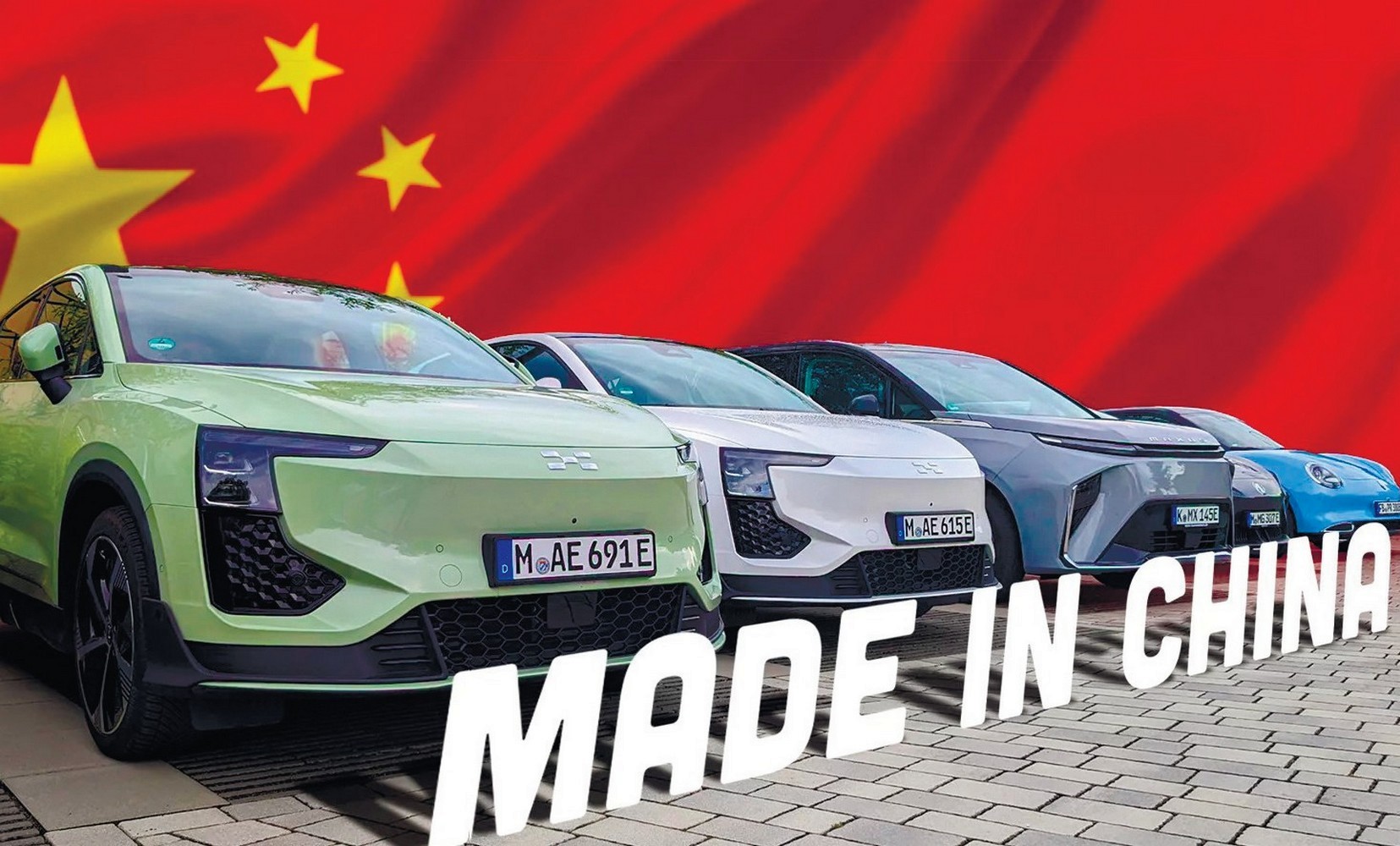
In recent years, China has overtaken the leading automotive companies in the United States, Japan, Korea and the European Union to become the global leader in passenger car production. At the end of last year, Chinese companies accounted for approximately a third of global car production. All of the aforementioned factors have been accompanied by rising component prices, a shortage of microchips and increased production costs, which have had a significant impact on the price of passenger cars.
In contrast, the automotive industry is thriving in countries that previously lacked a strong automotive sector. For instance, passenger car production in Central Asia and Azerbaijan increased by 71.1% in January of this year.
Rearrangement of market positions
The global car production sector experienced a significant downturn during the pandemic, due to logistical pauses that led to a shortage of semiconductor chips and electrical equipment. This has had a knock-on effect on the cost of steel, polymer components and other parts, making them considerably more expensive. These issues were also experienced in 2022-2023, particularly in European countries, where the energy crisis, recession and inflation led to a surge in production costs, resulting in a substantial increase in the prices of new cars. This has further accelerated the disintegration of the global automotive industry. The slight upturn in production in 2004 can be attributed to preferential financing and support from the US government, Western countries and the EU. This was partly due to a build-up of demand following a three-year slump in sales.
Since the second half of last year, there has been a severe shortage of microchips, which has had a significant impact on the smartphone, computer and consumer electronics markets, and this year has had a considerable effect on the automotive industry. Major memory chip manufacturers — Samsung, SK Hynix and Micron — are actively reorienting their production to meet the needs of data centres, artificial intelligence and neural networks. This has resulted in the automotive sector being given lower priority.
Over the past five years, China has secured absolute leadership in the automotive sector, overtaking the world's leading automotive companies. This is due to its large capacities in metallurgy, polymer production and an independent semiconductor industry.
In 2025, China produced 34.53 million of the 88.716 million passenger and commercial vehicles produced worldwide. The United States currently holds second position in the global market, with a market share of 18.4%. It is followed by India in third place with 5.1%, Japan in fourth place with 4.9%, and Germany in fifth place with 3.2%. Renowned car manufacturers have experienced a decline in market share for several consecutive years: the United Kingdom has fallen to seventh place, Italy to ninth, and the Republic of Korea, despite having advanced car companies, has dropped to tenth place.
It is noteworthy that against the backdrop of tariff wars and the deglobalisation of the world market, there has recently been active development of car manufacturing in local clusters in developing countries that were not market leaders in the past. Examples include Brazil and Canada, which rose to 6th and 7th place in the world in terms of car production, with growth rates of 2.7% and 2.8% respectively last year. The developing markets of Vietnam and Thailand are showing very good dynamics, and passenger car assembly is successfully advancing in Central Asian countries. In 2025, 457,900 passenger cars were produced in Uzbekistan (a 6.7% increase on 2025), while Kazakhstan's automotive industry set a historic record, producing over 171,100 vehicles of all types (a 17.8% increase on 2025).
Local market dynamics
In recent years, Azerbaijan has been developing its own automotive assembly sector, with three passenger car manufacturing facilities currently operational within the country. Since 2010, budget cars have been assembled from inexpensive Chinese components at the NAZ-Lifan plant in the Nakhchivan Autonomous Republic. In 2018, Azermash OJSC launched production of the Khazar passenger car line in the Neftchala industrial district from components supplied by the Iranian company IranKhodro. The most promising project is the Azerbaijani-Uzbek joint venture in the Hajigabul industrial district, where a number of Chevrolet models have been assembled for four years.
The Azerbaijani Ministry of Economy is currently evaluating additional projects for the organisation of car assembly. Vietnam, in particular, is regarded as a promising partner in this regard, given the presence of major automotive manufacturers such as Toyota, Hyundai and Mitsubishi. The Vietnamese company VinFast, which manufactures electric cars, is another notable player in this field. In 2025, VinFast set a record by producing a total of 175,099 electric vehicles. There is a strong possibility that their assembly in our country will prove to be a highly lucrative venture.
In a move aimed at attracting global car manufacturers, the head of state approved amendments to the Tax Code. These amendments, set to take effect from 1 May 2023, will exempt the production of passenger cars and the sale of locally assembled cars in retail outlets from VAT in Azerbaijan for a period of 10 years. Furthermore, until 1 January 2031, the import of raw materials, components and spare parts necessary for the assembly of cars will be exempt from VAT.
These significant advancements have led to a marked increase in industry production, which reached its peak in 2024. According to the State Statistics Committee, the production of passenger cars in the country reached 5,998 units during the reporting year, marking a substantial increase of 55% compared to the previous year. Unfortunately, it was not possible to maintain this momentum. Last year, 4,038 passenger and commercial vehicles were assembled, less than a third below the 2024 figures. However, this situation may change, given the sharp start at the beginning of this year. In January, 402 passenger cars were produced in Azerbaijan, which is 71.1% more than the previous month.
The basis of imports
The demand for local automotive products is largely determined by the purchasing decisions of ministries and government agencies. Companies and individual entrepreneurs providing taxi services are showing considerable interest. It is important to note that in recent years, domestic car manufacturers have faced significant competition from Chinese cars and rising imports, particularly in the second-hand sector.
According to data from the State Customs Committee, in 2025, 123,319 vehicles of various purposes were imported into Azerbaijan, worth over $2.4 billion, which is 34.3% and 29.4% more than in 2024, respectively. Imports of passenger cars and other motor vehicles intended mainly for passenger transport increased by 38.1% to 113,840 units. Hybrid cars, which combine an internal combustion engine with an electric motor, are experiencing the highest demand. In 2025, Azerbaijan imported 73,678 hybrid cars worth more than $1.428 billion, which is twice as much in value terms and 2.8 times more in terms of quantity compared to the previous year.
It is interesting to note that demand for imported cars has remained consistent this year. In January, 7,591 cars of various purposes were imported into the country for a total value of $176.542 million.
Furthermore, the majority of imports are used cars: the increasingly expensive products of the world's leading automotive brands are becoming out of reach for many consumers.
At the end of March 2023, new restrictions were adopted in the country to prevent the supply of unsafe and technically worn-out cars. The Cabinet of Ministers has recently passed a resolution that puts a limit on the import of passenger cars (petrol and diesel) that are more than 10 years old into Azerbaijan. Consequently, over the past three years, prices for imported cars of well-known brands with low mileage have increased by at least 25%.
It is evident that sales of new imported cars from well-known Japanese, Korean, American and European brands are gradually declining, while sales of Chinese passenger cars are showing an upward trend. For comparison, last year it was possible to purchase a brand new Chinese mid-range car on the local market with just over ₼20,000. A few years ago, this amount would only have been sufficient to purchase a used Korean or German car with significant mileage and often in need of repairs.
Since the middle of last year, there has been a significant decline in prices for new Chinese cars on the domestic car market. Experts attribute this to excessive market saturation due to cars imported through 'grey' schemes, which created an oversupply and put pressure on prices. According to the insights provided by the esteemed car market expert, Yasin Mustafayev, a significant proportion of Chinese cars entering the local market are being imported by unofficial importers. This accounts for more than 70% of the total, with only 30% being sold through dealerships, directly from the factory and with a full warranty.
This situation gives rise to questions regarding the extent to which Chinese car dumping is consistent with the state policy of localising car assembly and clustering this industry in our country.
RECOMMEND:
 183
183