

STRICT DEADLINE
While Washington and Tehran teeter on the edge, aircraft carriers take up positions
Author: Samir VELIYEV
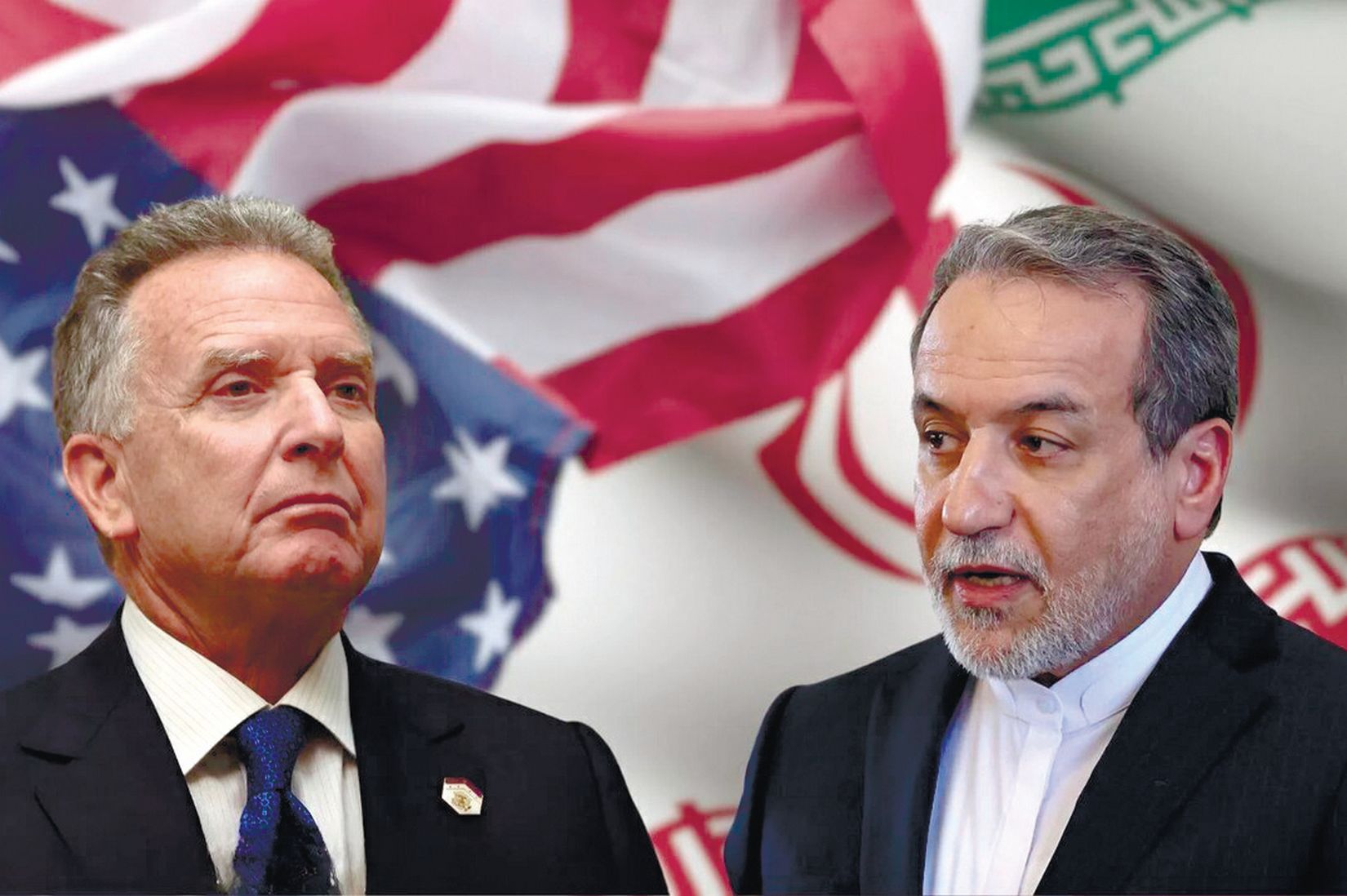
On 26 February, the third round of indirect negotiations between the US and Iran on the latter's nuclear programme concluded in Geneva. The talks took place in a building belonging to the Omani embassy, with the participation of Oman's foreign minister. As previously, Rafael Grossi, Director General of the International Atomic Energy Agency (IAEA), who was in attendance at the talks, met with Oman's Foreign Minister Badr al-Busaidi, who spoke of "substantial progress."
"We have concluded the day marked by significant progress," he wrote on the social network X. According to al-Busaidi, following consultations in the capitals of the countries involved, the dialogue will resume soon. Discussions at a technical level have been relocated to Vienna.
However, not all assessments were as optimistic. Axios journalist Barak Ravid reported, citing an unnamed source, that American negotiators were dissatisfied. He noted that US President's special representative Steve Witkoff and Donald Trump's son-in-law Jared Kushner expressed disappointment with what they heard during the meeting with Iranian negotiators.
It should be noted that just prior to the talks, the Trump administration imposed a new package of sanctions against individuals and companies accused of assisting Iran's ballistic missile programme, drone production, and sales of sanctioned oil. The US is pursuing a consistent approach in its efforts to increase pressure on Tehran to reach an agreement. However, this approach appears to be less effective than anticipated.
The devil lies in the details
In recent weeks, the US has been increasing its military presence in the Middle East, despite ongoing negotiations with Iran. Following two rounds of intensive negotiations, no substantial progress has been made.
The primary point of contention remains the uranium enrichment levels and the control measures over the process. Iran is willing to consider proposals that would involve reducing enrichment levels and sending a proportion of the enriched uranium abroad. This would be done in order to reduce risks and enhance IAEA monitoring. In exchange, it insists on lifting economic sanctions and recognising its right to peaceful enrichment.
At the same time, Tehran has consistently declined to engage in discussions regarding its missile programme and its provision of support for regional armed groups within the scope of these talks. This approach has been characterised as a "red line" in the industry. It is imperative that dialogue centred exclusively on nuclear issues, without addressing other strategic aspects that Washington seeks to include on the agenda.
On the American side, there is tough rhetoric alongside a desire to keep diplomatic channels open. US officials have emphasised the seriousness of the challenges facing the negotiations, but have also indicated that President Donald Trump reserves the option to continue talks and to resort to military options should progress fail.
Deadline as an ultimatum
Prior to the third round of talks in Geneva, Trump gave Iran a deadline of between 10 and 15 days to reach a nuclear agreement. He stated that this time should be sufficient for a deal and warned that otherwise "really bad things" would happen — implying serious consequences, possibly including military action or increased pressure on Iran.
This statement was made in the context of a significant deployment of US military forces in the Middle East, which has increased pressure on Iran and reinforced the perception of the deadline as a genuine ultimatum. In response, Tehran issued a warning that it would not initiate military action, but would deliver a "decisive and proportionate response" to any US aggression.
It appears that both Washington and Tehran are tempering expectations for the talks. While the official position is that they continue, it is evident that both sides are preparing for the worst-case scenario.
In addition to the US increasing its military presence in the region through the deployment of additional forces and the demonstration of readiness for decisive action, Iran is also taking steps that indicate preparation for potential military conflict.
According to The New York Times, Iran's supreme leader, Ali Khamenei, has instructed planners to prepare for contingencies involving his death or loss of control over governing the country during a war with the US. It has been reported that certain authorities have been assigned to a select group of trusted officials, and a system of succession has been implemented to ensure the continuity of government in the event of contact with Khamenei being lost or him becoming vulnerable. Various leaders have been asked to designate multiple potential deputies for emergencies.
According to reliable sources, the key coordinating authority has been assigned to Iranian Security Council Secretary Ali Larijani. His influence has noticeably grown in recent months. His current responsibilities include internal security, liaison with allies, and participation in nuclear programme negotiations. This does not imply religious succession, but rather constitutes a temporary political coordination measure during crises.
Further tension was caused by reports from Axios indicating that the US was considering various action plans against Iran, including the possible removal of Khamenei and his son. Although unconfirmed officially, such reports are likely to intensify the pressure and psychological warfare atmosphere.
It is important to recognise that such contingency plans in Tehran may not be recent developments. During last year's escalation with Israel – when Israeli strikes targeted Iranian military leadership – it is likely that Iran considered contingency plans to ensure governance could continue if its highest political and spiritual leaders were targeted.
The result is a dual picture: negotiations formally continue while both sides prepare for potential escalation. This is indicative of a deep mutual distrust and suggests that diplomacy is proceeding under significant military pressure.
Weak hopes for talks
With regard to military preparations, these are becoming increasingly systematic and multi-layered. This is no longer about isolated troop movements or routine rotations; it is about creating a comprehensive strike architecture in the region.
According to reports from Western media outlets, the US has notably increased its air groupings at military bases in Jordan and Saudi Arabia. The Financial Times cites satellite imagery analysis and data from Tel Aviv University researchers showing that at least 66 combat aircraft are stationed at the Jordanian base, including 18 fifth-generation F-35 fighters, 17 multi-role F-15s, and eight A-10 attack aircraft. We have also observed the presence of EA-18 electronic warfare planes and transport aircraft. This formidable force facilitates strikes, as well as the suppression of air defences, operation escorting, and robust logistics support.
Satellite analysis also revealed an increase in E-3 AWACS long-range radar aircraft at a Saudi Arabian airbase, alongside more C-130 and C-5 transport planes. This indicates the presence of centralised air operation control systems and preparation for possible troop movements.
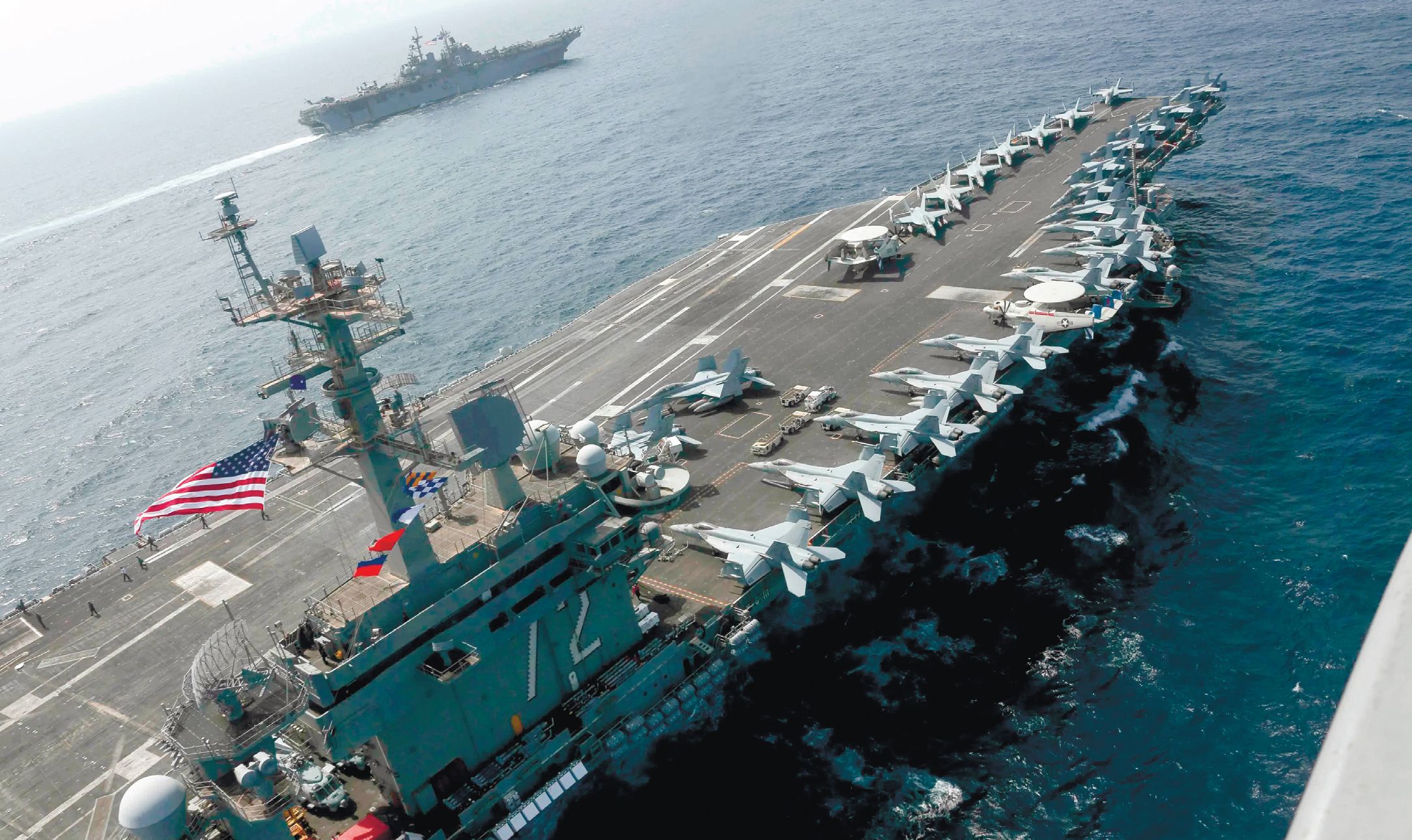
Another escalation factor is the deployment of two US Navy aircraft carrier strike groups to the region. The presence of the carrier significantly increases the range of American air power and provides an autonomous strike platform that is independent of ground-based infrastructure. Carrier groups consist of deck aviation as well as escort ships that are equipped with cruise missiles and air defence systems. This forms a powerful maritime component for potential operations.
A multi-layered pressure configuration is formed by ground-based air groupings and carrier strike groups working in unison. According to several publications, Washington is in the process of amassing significant air-sea power capable of conducting operations against Iran over several weeks, if required.
Even if some moves aim at deterrence and demonstrating resolve during talks, their scale and composition reveal readiness for rapid transition from diplomatic pressure to forceful scenarios if negotiations fail.
As early as January, the White House stated it was considering use of force against Iran while hoping for a “fair and equitable” deal requiring Tehran’s full renunciation of nuclear weapons. Thus Washington keeps both diplomatic and military options open.
Tehran prepares for the worst
Iranian authorities have made it clear that there is no intention of developing a nuclear bomb, and have repeatedly stressed that their nuclear programme is for peaceful purposes. However, Tehran has also demonstrated a willingness to pursue military advancement by systematically enhancing its capabilities.
Recently, Iran tested new weapons during "Smart Management of the Strait of Hormuz" exercises. The Islamic Revolutionary Guard Corps navy has successfully tested the Sayyad-3G shipborne surface-to-air missile system for the first time. This vertical launch system has a claimed range of up to 150 km and is capable of establishing a regional air defence "umbrella" to protect naval task forces.
Given the strategic importance of the Strait of Hormuz, these developments carry both military and geo-economic significance; control over the region's airspace directly relates to the security of global energy supply routes.
Tehran is also in the process of modernising its air defence system. According to the information that is currently available, a confidential deal was signed with Russia in December 2025. This deal was valued at around €500 million and covered the delivery of approximately 500 modern portable Verba surface-to-air missile systems with 9M336 missiles, as well as Maugli-2 targeting systems. These systems are scheduled to be delivered during the 2027–2029 period. These deliveries are intended to enhance protection against low-flying targets such as drones, cruise missiles, and low-altitude aircraft.
Furthermore, as potential threats grow, the IRGC's role intensifies – especially regarding operational command over missile and naval forces. Indicators such as increased exercises, mobilisation readiness, and shifts in authority within security forces suggest that they are preparing for crisis management in the event of strikes on Iranian territory.
This has led to a scenario of mutual pressure: the US has expressed a readiness for military action in the event of talks failing, while Iran has increased its military capabilities, developed air defence systems, and strengthened its naval forces around the Strait of Hormuz – a vital route for global oil trade.
Continuing negotiations still offer some albeit faint hope that peace in the region will be maintained at least temporarily.
RECOMMEND:
 155
155

