

MANOEUVRES AROUND THE RAILS
Armenia in search for new logistics formulas; Russia reminding Armenia of concessions; Azerbaijan waiting for commitments to be fulfilled
Author: NURANI
It appears that the peace process between Baku and Yerevan is currently on an official pause. It has been observed by some that the parties have made significant progress. It is understood that there is a degree of calm on the border at present. Negotiations in Washington in August 2025 ended with an unprecedented breakthrough, in that the text of a peace treaty was initialled. The TRIPP project has officially been launched. It is also worth noting that Azerbaijan has recently taken steps to ease restrictions on the transit of goods to Armenia through its territory, which may be seen as a positive development.
The region is now awaiting the appropriate steps to be taken by Yerevan. First and foremost, this means amending the constitution, the preamble of which, let us recall once again, contains direct claims to Garabagh. However, it is important to recognise that this is not a quick process. It is my understanding that Armenia has not yet presented a draft of the new constitution, nor set a date for a constitutional referendum. Until then, it seems that Baku officials and public organisations are reluctant to consider the possibility of a peace treaty.
It is also worth noting that positive developments were observed at the Board of Peace summit in Washington, attended by Azerbaijani President Ilham Aliyev and Armenian Prime Minister Nikol Pashinyan. There was no official meeting between them. However, international and regional news agencies were able to capture a handshake between Aliyev and Pashinyan. An informal conversation took place on the sidelines. Apparently, Azerbaijan is still willing to engage in dialogue, but it is awaiting some kind of concrete steps from Yerevan.
Expert dialogue with precedents and more
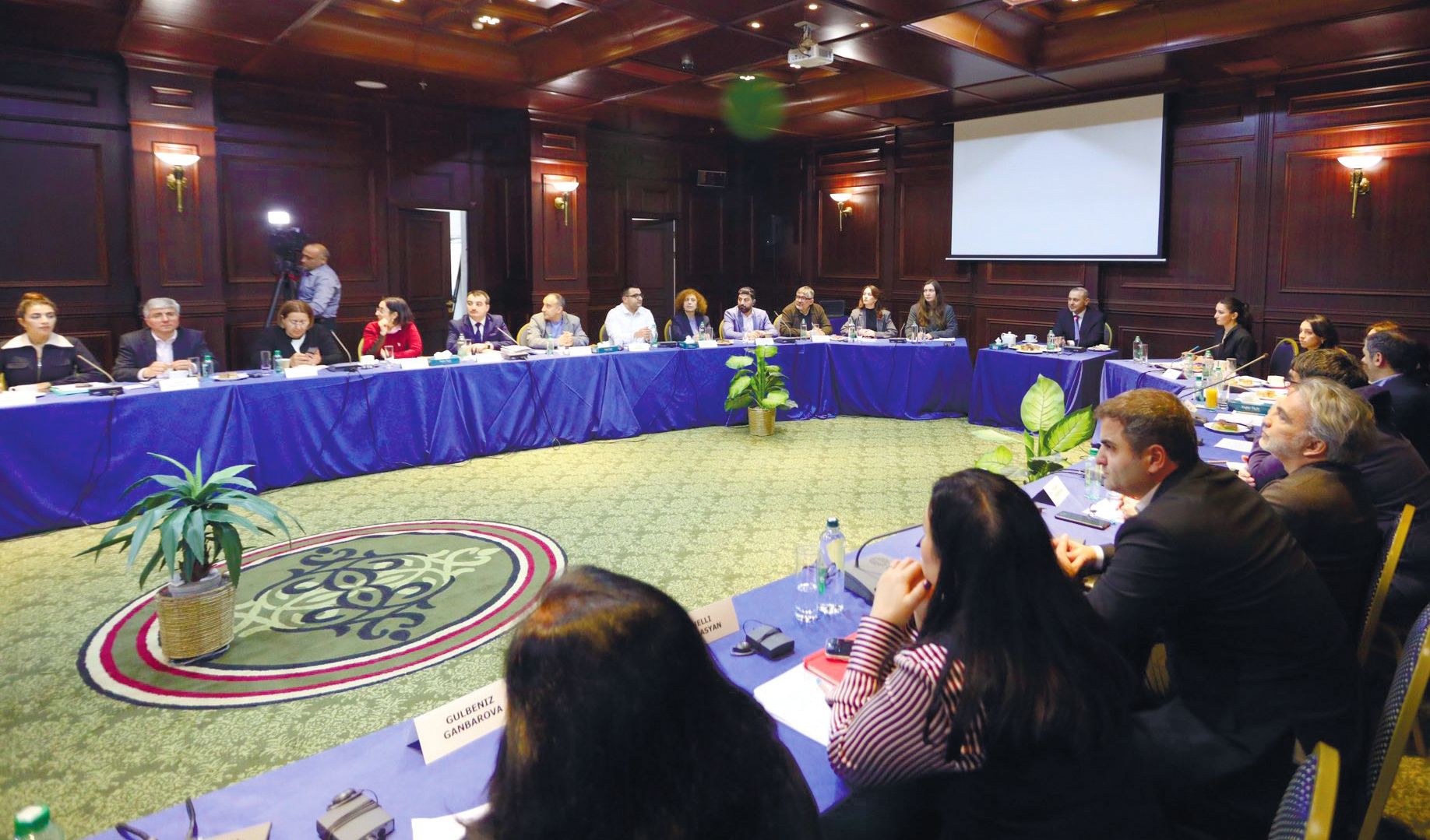
Against this backdrop, one of the most notable media events was undoubtedly the latest round of constructive dialogue between civil activists and experts from Azerbaijan and Armenia, entitled 'Bridge of Peace'. Azerbaijani representatives proceeded across the border at a section where a temporary border checkpoint had been established. The total duration of their stay in Armenia was approximately 35 hours. This included travel to and from the hotel, as well as time for rest and participation in plenary sessions, among other activities. The dialogue unfolded in an expanded format, with approximately 30 individuals participating on this occasion. The meeting of experts was attended by a member of the Armenian government...
The participants could not all agree on some issues. The Azerbaijani side thinks this is quite logical. They say that there are too many problems that have built up over the years of conflict. They agreed to keep meeting and prepare new projects to help overcome the effects of the war. As the information that has been made public shows, the main focus is on restoring communication and transport links.
It is clear that the discussion between the experts is very encouraging. The meetings that have taken place as part of the 'Bridge of Peace' project have already done a number of things for the first time. First, let's remember that a plane from AZAL landed in Yerevan for the first time since the conflict began, and a plane from an Armenian airline landed in Baku. The people at the last meeting crossed the border by land, and there is no doubt that the return visit of Armenian specialists will take place in the same way. It's also really good that new people are getting involved in the process. But let's be realistic. Only a few dozen people took part in this discussion. So there is no point in talking about how big the process is. Experts can prepare projects, give their assessments, and discuss certain issues, but that's it. We should not expect 'people's diplomacy' to completely melt the ice, influence public opinion and seriously advance the peace process. Also, some of the ideas that were discussed were not clear.
Railway infrastructure and political barriers
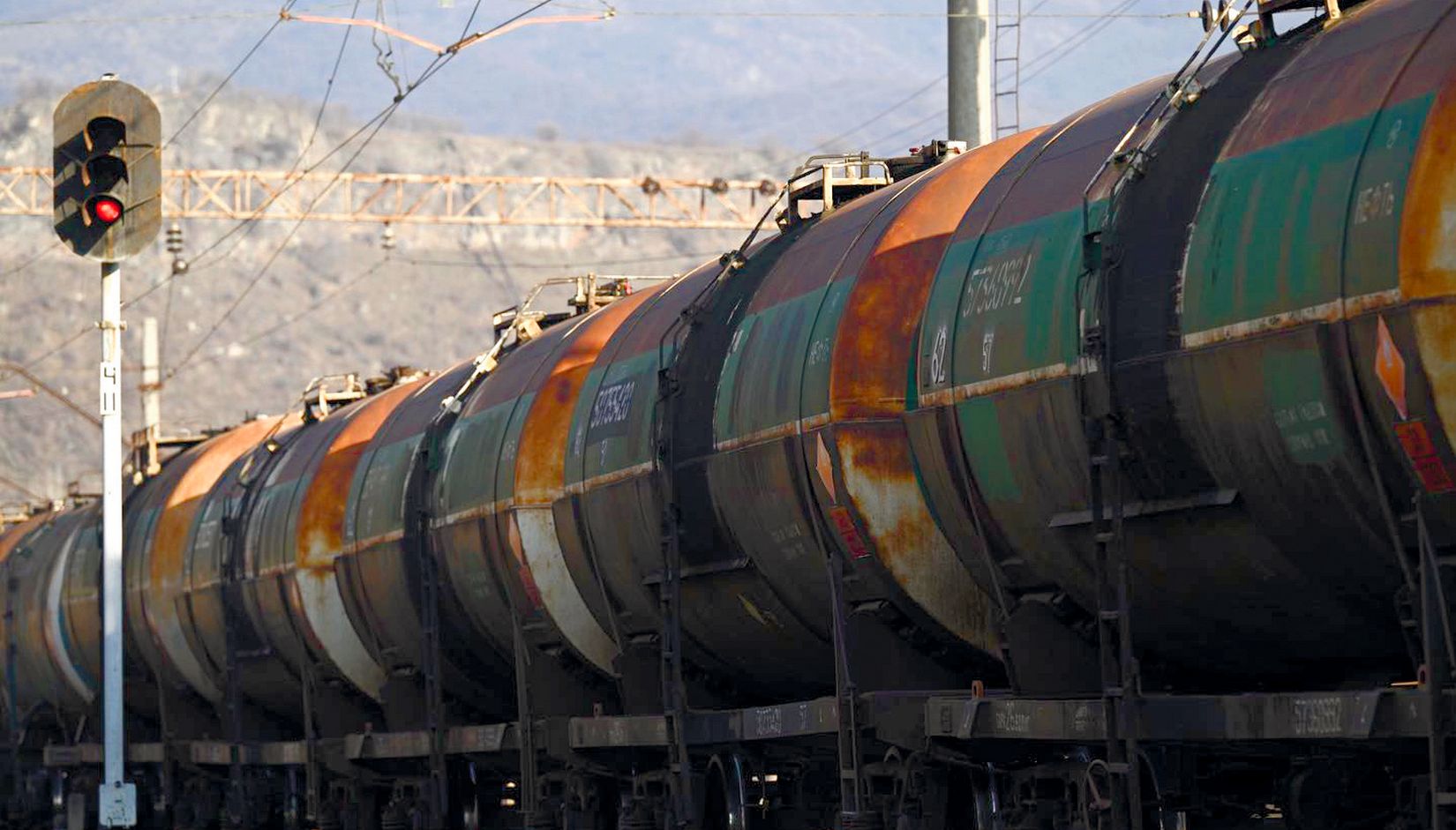
At the meeting, experts also talked about how to get trains going again between the two countries. The Armenian side suggested restoring the Gazakh-Ijevan section, where the main railway line connecting Armenia with Azerbaijan and Georgia ran during the Soviet era. Gas pipelines are also laid there. Before, there was a pipeline here that supplied Azerbaijani gas to Armenia. They also hope to fix it so they can start supplying gas again.
The Armenians also suggested building a railway to Nakhchivan via Georgia. To do this, they think it is important to repair the section from Yerevan's Yerevani to Azerbaijan's Sadarak. This would also allow Georgia to travel through Armenia to reach Iran. The Yerevani-Sadarak section is only 6-7 km long, and the construction of the railway under the TRIPP project will take several years.
At first, all this seems very positive and is in line with the peace process, were it not for certain circumstances. It is clear that Yerevan wants to build a direct railway to Azerbaijan, but not one that goes through Nakhchivan via Western Zangezur.
This is a very important and sensitive issue for Armenia. During the Soviet era, it had the best railway logistics in the region, but then it became cut off from the rest of the transport network. The railway to Iran passes through Julfa in Azerbaijan. Several attempts have been made to build a railway to Iran through Western Zangezur, or Syunik in Armenian, over the years of conflict, but nothing has been achieved. It is a long, expensive and complicated process. At the same time, Azerbaijan is successfully promoting the construction of the Astara-Astara-Rasht section, which threatens to leave Armenia out of the picture. There is also no railway connection with Russia. The old railway line went through Sukhumi, but it has been blocked because of the occupation of Abkhazia. Today, Azerbaijan has allowed goods to pass through its country on their way to Armenia, but these goods still have to go through Georgia, which costs more.
This shows that TRIPP needs to be put into effect as soon as possible. But...
Armenian manoeuvres and Russian shouts
On 10 November 2020, mainland Azerbaijan, Nakhchivan and Meghri all agreed to have transport links between them. It was said that Russian soldiers would provide security. These soldiers guard the border between Iran and Armenia and have set up a border zone regime there. But even after five years, and before the talks in Washington and the start of the TRIPP project, nothing has changed. What's more, at a government level rather than an expert one, Armenia had already offered Azerbaijan other options. These roads crossed almost all of Armenia, with no security measures in place, and were closed for a lot of the year because of bad weather. Azerbaijan did not like this idea. And now it has resurfaced. Nikol Pashinyan asked Russia to help fix the railway lines that go to Armenia's borders with Azerbaijan and Türkiye. As you probably know, the Armenian railway system is managed by Russian Railways. He then suggested selling the concession to a friendly country.
The prime minister is doing the same thing: he wants to open the roads and make public transport available, but he doesn't want to open TRIPP. The point is that the railway's equipment was not just taken apart and sold to Iran as scrap metal when Kocharyan and Sargsyan were in power.
Russia was quick to react. The first response came from Maria Zakharova, the official representative of the Russian Foreign Ministry. She said Pashinyan's statement was 'strange' and 'unacceptable'. She added that the Armenian railway network has been managed by the South Caucasus Railway CJSC for more than 20 years. "During this time, it has always met all the terms of the agreement, and it has also spent a lot of money on things like train tracks and trains. I'm not sure if Yerevan remembers this, but these investments haven't been paid back yet. I'll have to check with the company to be sure. It provides lots of jobs, which is also worth considering for those in Armenia who want to speak out on this issue." Translation: Russia is supporting the Armenian railways, which are losing money because they are isolated.
After Zakharova, Russian Security Council Secretary Sergei Shoigu also spoke about this topic: "A system that has been built up over almost 20 years could simply collapse overnight. Of course, no 'friendly countries' will take responsibility for this. I hope that when making important decisions, the Armenian leadership will always put its citizens' interests first."
This can be seen as a fairly open threat. Yes, it would be easy for Russia to stop the Armenian railways from operating. And it wouldn't require any sneaky, distracting tactics to do so. This is happening just before the parliamentary elections in Armenia. Moscow is very clear about its attitude towards Pashinyan. But Shoigu has spoken for the first time about the possibility of infrastructure pressure on Yerevan. Also, it's not just the railway that could be affected.
If there is a breakdown in the system, Pashinyan's main advantage before the election—travelling through Azerbaijan by rail—will be cancelled. This means it will be very difficult for Yerevan to respond to Russian pressure.
RECOMMEND:
 186
186

