

THE NUREMBERG LESSON FOR THE SOUTH CAUCASUS
Repentance as a condition for peace: the legal assessment of Armenian aggression is inevitable

Author: Namig H. ALIYEV
From an interview with Azerbaijani President Ilham Aliyev on France 24:
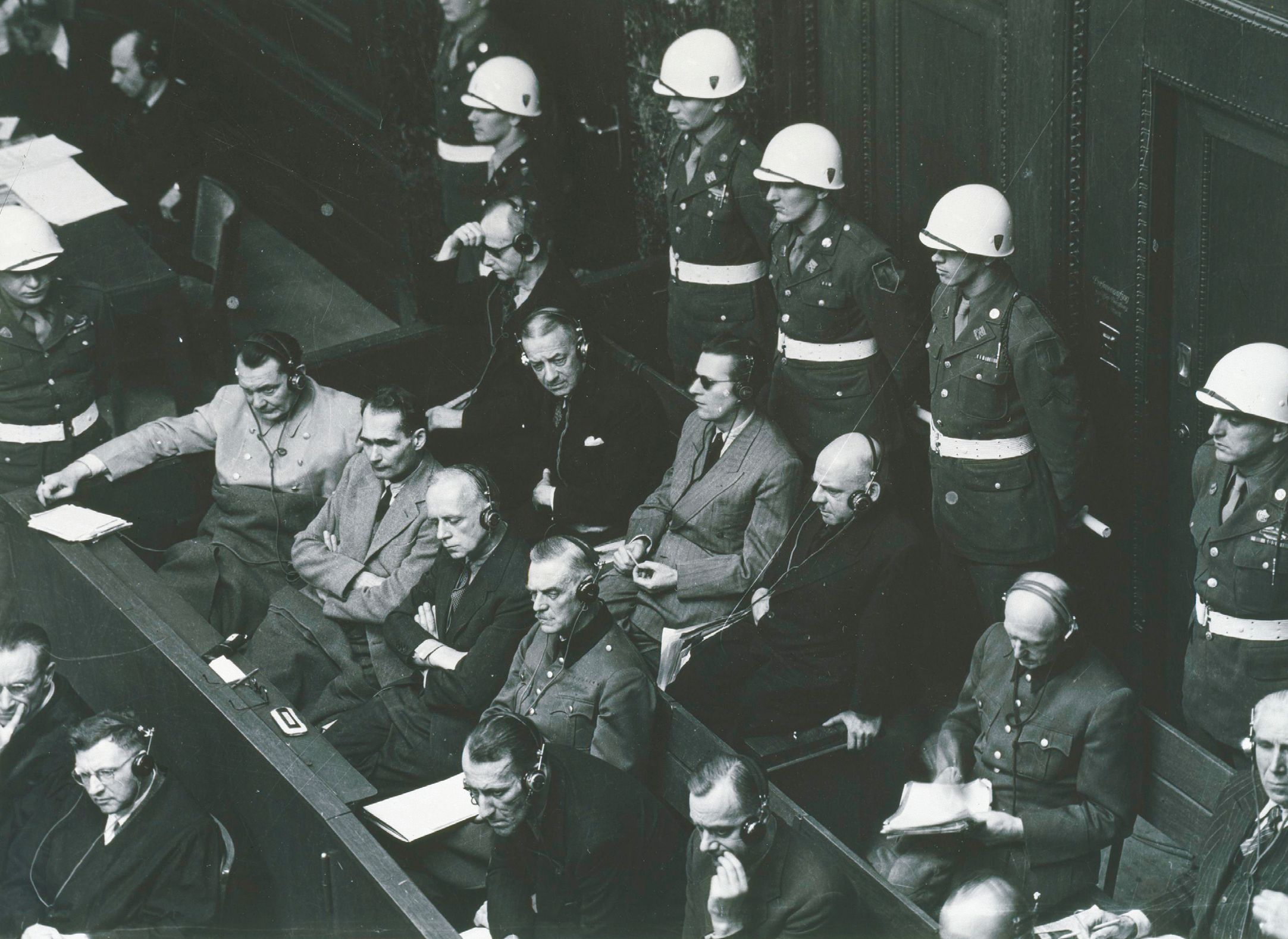
"These people committed serious crimes against humanity. Imagine the Nuremberg trials after World War II, and two months after all those Nazi leaders were sentenced to death, someone comes and asks for their release. [...] Their crimes were even worse than what the Nazis did during World War II."
The two high-profile criminal trials of war criminals that concluded in February in Azerbaijan were neither ordinary judicial episodes nor a formal full stop in the long chronicle of the conflict.
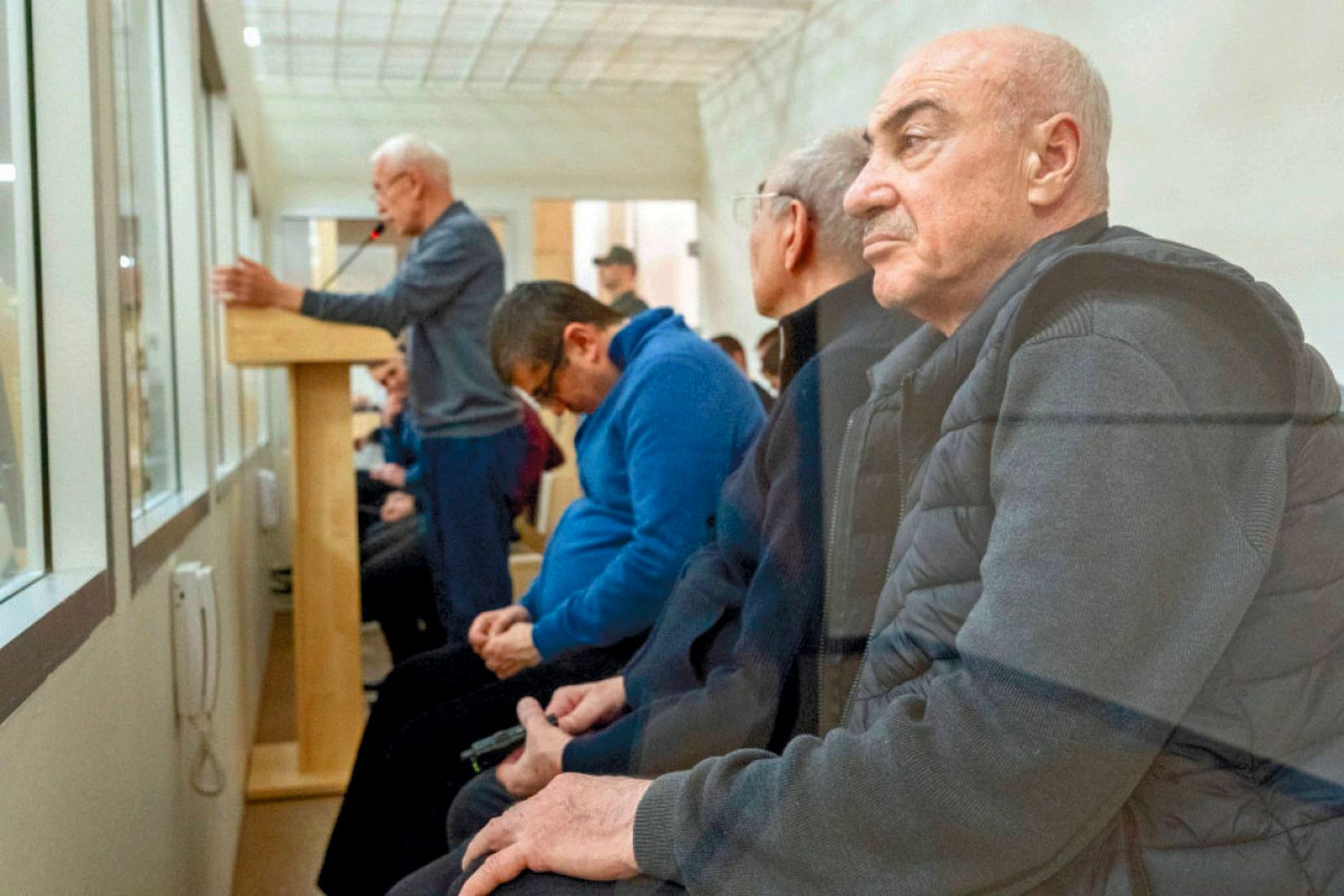
On February 17, 2026, the Baku Military Court ruled to sentence the former head of the illegal separatist regime in the occupied territories of Azerbaijan, Ruben Vardanyan, to 20 years' imprisonment, with the first 10 years to be served in prison and the remainder in a strict-regime correctional facility. He was charged under articles of the Azerbaijani Criminal Code including crimes against peace and humanity, war crimes, terrorism, financing of terrorism, and other grave offences.
Earlier, on February 5, sentences were handed down to 15 members of the former separatist regime in Garabagh. Five individuals received life imprisonment: Araik Harutyunyan, Levon Mnatsakanyan, David Manukyan, David Ishkhanyan, and David Babayan. Arkadi Ghukasyan and Bako Sahakyan received 20-year prison sentences, and the remaining eight separatists received sentences ranging from 15 to 19 years.
The conclusion of these trials, which lasted over a year, can be seen as the formation of a new legal reality following decades of Armenian aggression, occupation, and systematic war crimes against Azerbaijan and its people. This is a historic act of justice. It is the legal codification of a truth that has been obvious for decades: Armenia's aggression against Azerbaijan, the occupation of its territories, mass war crimes, and crimes against humanity are not a matter of interpretation but an established fact.
This is not about "versions of events" or a "conflict with two points of view." It is about internationally recognised borders of Azerbaijan, thirty years of occupation, the fate of hundreds of thousands of internally displaced persons, the Khojaly genocide, the destruction of hundreds of towns and villages, and the annihilation of cultural and religious heritage. These are facts confirmed by documents, numerous witness testimonies, and court decisions. Attempts to free criminals guilty of these acts under the banner of humanism are nothing more than political manipulation.
Court trial as a form of historical responsibility
The conviction of specific individuals is only the beginning. A legitimate question remains in the public consciousness: why are former Armenian leaders Levon Ter-Petrosyan, Robert Kocharyan, and Serzh Sargsyan, former Defence Minister Seyran Ohanyan, and commander of Armenian militants Vitaly Balasanyan still at large?
It was during their political and military leadership that decisions were made leading to prolonged occupation and severe humanitarian consequences. History knows many examples where political leaders tried to shelter behind their status or the passage of time, hoping that responsibility would dissolve in the past. However, international law consistently asserts a different principle: there is individual responsibility for war crimes and crimes against humanity.
The first Baku trial dealt with key figures of the illegal separatist regime that existed in the occupied territories of Azerbaijan. Arkadi Ghukasyan was one of the early leaders of the occupation regime, present at the inception of the separatist project's political formation. Bako Sahakyan was the long-standing "president" of the self-proclaimed entity, during whose tenure the institutionalisation of the occupation, exploitation of natural resources, and strengthening of military infrastructure on Azerbaijani lands continued. Araik Harutyunyan was his successor, under whose leadership the separatist administration actively engaged in military provocations and coordinated actions with armed structures. The trial involved over a dozen other defendants as well.
These individuals were not "symbolic figures." They shaped and maintained a system built on violence, the expulsion (ethnic cleansing) of the indigenous population, and the destruction of material heritage. Their responsibility is not only political but also legal.
The case of Ruben Vardanyan, the last head of the separatist regime who positioned himself as a philanthropist and humanitarian figure, carries a particularly symbolic meaning. His biography was long perceived as demonstrating how financial resources and international connections could serve as a kind of immunity.
However, the investigation established that his activities extended far beyond charity. Vardanyan became one of the main political-financial patrons of the illegal regime during its death throes, assisting in its preservation and legitimisation on the international stage. The court demonstrated that neither capital nor loud declarations about a "humanitarian mission" can serve as a cover when it comes to supporting illegal separatist structures and undermining the sovereignty of another state.
His case is of fundamental importance. It clearly shows that financing, political lobbying, and informational support for illegal structures, including military ones—especially when transitioning to actually leading them—is not "civic activism" but a form of complicity in unlawful, criminal activity.
Parallels with Nuremberg and Tokyo
After World War II, the international community created legal mechanisms to assess the crimes of the Nazi and militarist regimes—the Nuremberg and Tokyo trials.
Arguments were heard then too about "political motivation," about "victors' justice," about the need to "move on without seeking the guilty." But it was these tribunals that laid the foundation of the modern system of international criminal law.
The main principle of Nuremberg is simple and clear: individuals who make decisions and issue orders bear individual responsibility. Neither position, nor status, nor ideology grants exemption from trial.
Azerbaijan, exercising its right to national justice for crimes committed on its territory, acts in the logic of this historical precedent. This is not about revenge, but about the legal recording of crimes and individual responsibility.
As Azerbaijani Presidential Aide Hikmet Hajiyev emphasised, the court decisions represent the logical conclusion of a long-standing phase of the conflict. And this conclusion is occurring precisely within the legal framework.
Who is trying to rewrite reality? Double standards and moral blindness
Almost immediately after the court decisions were announced, forces seeking to present the accused as "political prisoners" became active.
Attempts to portray the convicted as victims or to question the decisions of the Azerbaijani court raise a legitimate question: where were all these voices when Azerbaijani cities were being destroyed and civilians were dying under the leadership of these individuals?
Human rights cannot be selective. It is impossible to ignore the suffering of hundreds of thousands of Azerbaijani refugees for decades and then suddenly express concern for the fate of individuals convicted of serious crimes.
The reaction of some international structures, particularly Amnesty International, as well as a number of Armenian lobby organisations in Europe and the US, certain deputies in foreign parliaments, the European Parliament, and media figures who traditionally promote a one-sided agenda, has been telling. Russian public commentators have also not remained silent—Vladimir Solovyov, Semyon Bagdasarov, Margarita Simonyan, Sergey Kurghinyan, and others.
Objectivity is not an artificial balance between aggressor and victim. Objectivity is the recognition of facts.
Statements in defence of the convicted in the public sphere have also come from former Armenian leaders—Ter-Petrosyan, Kocharyan, and Sargsyan—as well as former military commanders, including Ohanyan and Balasanyan.
It was during their political and military leadership that the aggression against Azerbaijan began and the consolidation of the occupation regime took place. Attempts to distance themselves from the consequences of their own decisions appear as an effort to evade historical responsibility.
Public memory recalls Levon Ter-Petrosyan's 1993 speech before 'Yerkrapah' militants, infused with radical Nazi rhetoric. Serzh Sargsyan's interviews come to mind, including one given to Thomas de Waal, as do the accusations alive in Armenian society regarding Robert Kocharyan's alleged involvement in the tragic 1999 parliament events. Against this backdrop, their desire to defend the convicted becomes obvious—and thereby to push further into the future their own prospect of facing trial.
Repentance as a path to peace
Azerbaijan and Armenia are moving towards peace. The removal of territorial claims against Azerbaijan from Armenia's constitution will open the way for signing a peace agreement. However, genuine, sincere normalisation of relations is impossible without acknowledgment of guilt.
The history of Europe after World War II showed that genuine normalisation of relations between former adversaries is possible only through repentance and the acceptance of responsibility. Attempts at denial, the glorification of occupation participants, or presenting them as "fighters" only delay the region's progress toward sustainable peace.
Armenia must traverse this difficult but necessary path. As long as the country fails to provide a state-level and moral assessment of these events, talk of "reconciliation" will ring hollow. To acknowledge the aggression. To acknowledge the occupation. To acknowledge the war crimes. To give a political and moral assessment of the Khojaly genocide. Only then can dialogue about the future be built not on mutual accusations, but on a historical foundation cleansed of lies.
The trials in Azerbaijan have marked the beginning of a legal reckoning. But lasting peace in the region is possible only when the truth is acknowledged—without reservations, without double standards, without attempts to pass off criminals as victims.
Today, Azerbaijan has taken its step—the step of a state governed by the rule of law. The trials have confirmed: the restoration of territorial integrity is accompanied by the restoration of justice. And no matter how many attempts are made to revise the obvious, facts remain facts.
Without accountability, there is no peace. Without repentance, there is no reconciliation. History has already delivered its verdict—now it is the turn of those who still try to deny it.
RECOMMEND:
 215
215

