

OPERATION MENCHO
The capture of the most wanted drug lord triggered hundreds of blockades and pushed Mexico to the brink of crisis
Author: Irina KHALTURINA
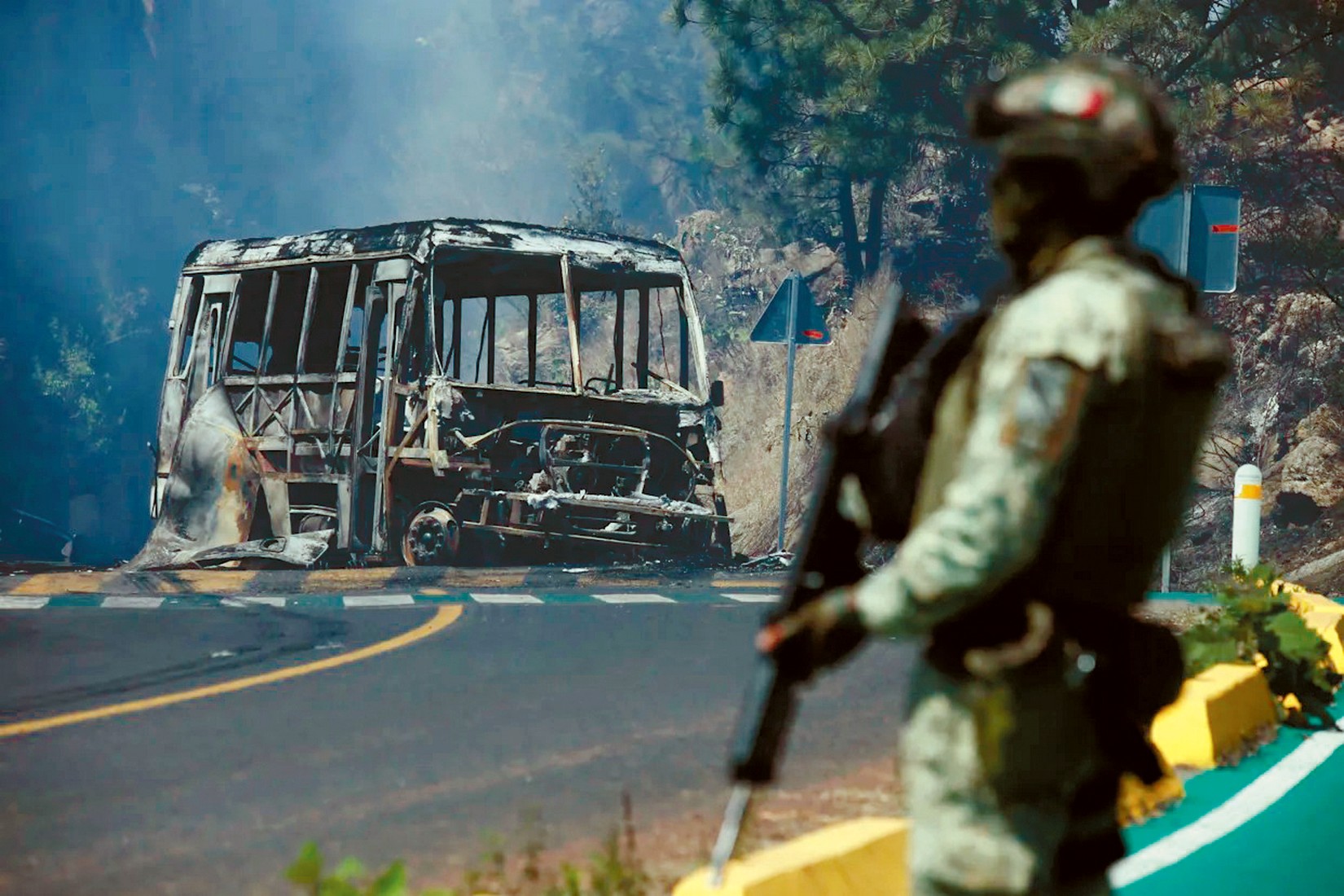
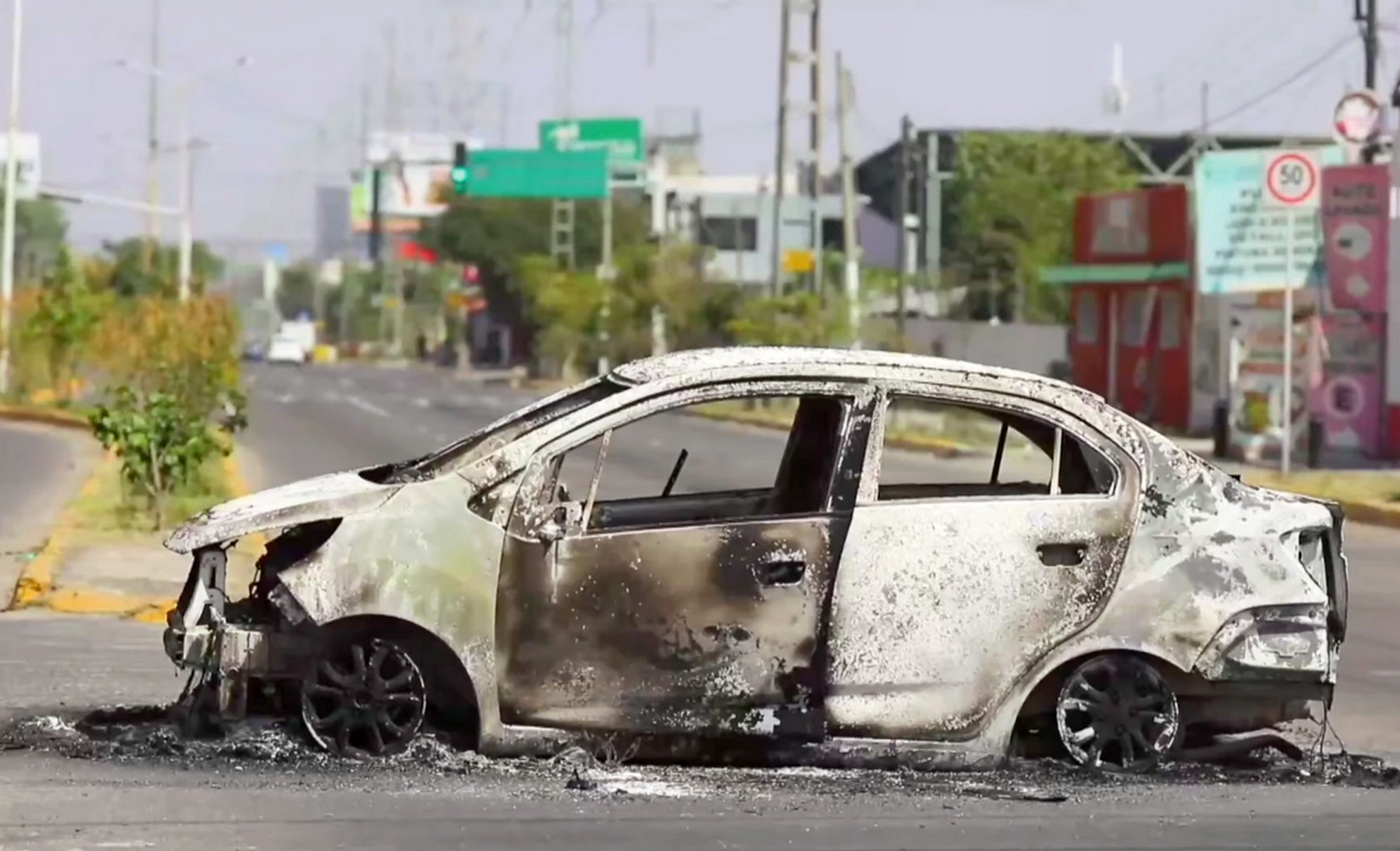
At the end of February, a situation of chaos spread across 20 of Mexico's 32 states within a matter of hours. There was significant disruption to key highways as dozens of buses and lorries were set ablaze on the roads. From Michoacán to Guanajuato, cities were effectively cut off from one another, and logistics across a vast territory were completely disrupted.
As in disaster movies
Guadalajara, the country's second-largest metropolitan area, with an agglomeration of more than 5 million people, was virtually deserted, as can be seen in scenes from disaster films. Armed groups set fire to petrol stations and vehicles in the city centre, while the governor of Jalisco, Pablo Lemus Navarro, urged residents to stay indoors and suspended all public transport.
The chaos also affected the popular Pacific resort of Puerto Vallarta, where dozens of domestic and international flights were cancelled. The US Embassy in Mexico City has issued a warning urging citizens to shelter in safe locations. The situation was further exacerbated by the circulation of fake news on social media.
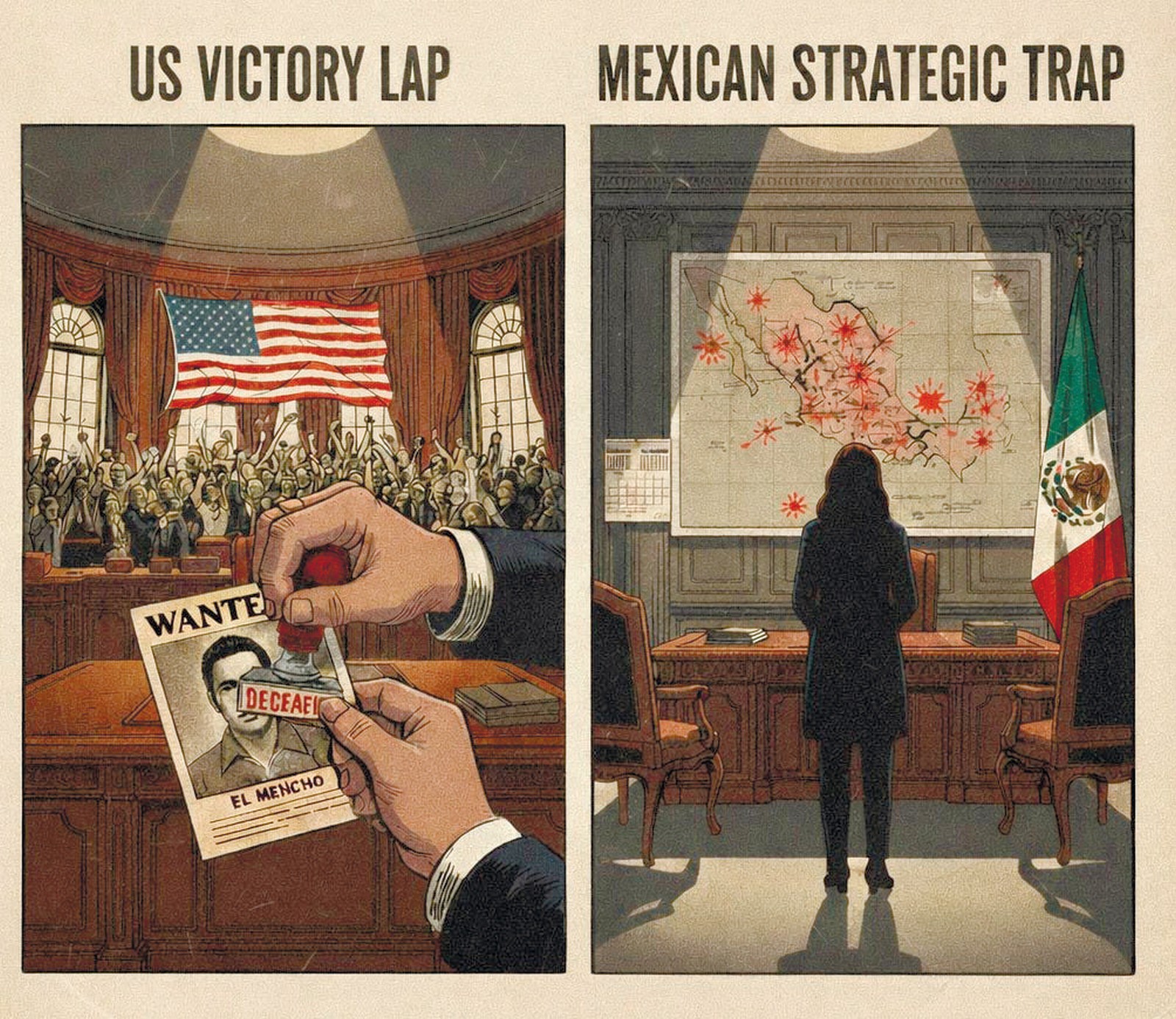
This was not the scenario of a disaster film, but rather the reality experienced by many Mexicans after, on the morning of 22 February, the country's authorities – supported by US intelligence – carried out an operation to eliminate 59-year-old Nemesio Rubén Oseguera Cervantes, known as El Mencho, the founder and leader of the Cartel Jalisco New Generation (CJNG) and one of the most wanted criminals in the world. The operation was conducted by Mexican special forces in a mountainous area of Jalisco state, near the small town of Tapalpa, which is located 130 km south-west of Guadalajara. In response, cartel militants immediately activated a pre-prepared scenario of narco-blockades. Following careful consideration, the authorities have announced that they will be dismantling more than 250 cartel roadblocks and restoring order to the situation. However, this course of action resulted in significant destruction and the tragic loss of 25 National Guard servicemen.
The Jalisco New Generation Cartel has evolved into a sophisticated and influential organisation, extending its reach far beyond that of a criminal enterprise. In certain areas, it has effectively established a state within a state by bribing municipal authorities and local police, integrating with local businesses, and even providing social support in certain communities, acting both as an employer and as a "protector" against competitors or the authorities. In order to defend its position, the cartel employs tactics akin to guerrilla warfare, ranging from the use of drones equipped with explosives and improvised mines to attempts to shoot down military aircraft. In recent years, the group has become not only one of the wealthiest and most ruthless in Mexico, but also a symbol of a new, even more aggressive—and, one might say, technologically advanced—era of Mexican cartels. CJNG has been found to launder its drug trafficking and extortion revenues through the hotel and tourism sector, embedding the criminal economy directly into the formal services and real estate sectors. In such conditions, large-scale security operations against the cartel in economically vital western states inevitably translate into political and economic crises: they paralyse tourism and logistics, damage investment and public finances, and thus any escalation by Mexico City entails significant domestic costs.
Despite these challenges, the Mexican authorities made the decision to remove the CJNG leader in the face of mounting pressure from Washington. This pressure included threats of unilateral measures, such as military strikes on Mexican territory. Following Donald Trump's return to the White House, the US has adopted a more assertive stance towards Mexico, asserting that the country is "controlled by cartels". In February 2025, the US government designated CJNG as a foreign terrorist organisation. This move granted Washington access to the full range of counterterrorism tools, including criminal prosecution for any 'material support' to CJNG worldwide, as well as asset freezes and secondary sanctions against foreign banks working with the organisation.
Observers also point out that, for Mexico’s leadership, a final argument may have been the Pentagon’s operation to capture Nicolás Maduro in Venezuela, which demonstrated the Americans’ readiness for expeditionary actions in Latin America. In its statement, the Mexican government condemned the use of unilateral force, yet clearly drew its own conclusions.
Moreover, the US actively reinforced its demands with economic measures. Last year, the Trump administration imposed 25 per cent tariffs on virtually all imports from Mexico, linking them to requirements to curb flows of migrants and drugs. In other words, the administration made it clear that Mexico’s access to the US market would depend not only on trade parameters but also on how firmly it acts against fentanyl, migration and the cartels.
Incidentally, this year the US, Mexico and Canada must decide whether to confirm the extension of the free trade area for another 16 years or to initiate a gradual phase-out of the agreement. At the same time, it should be noted that bilateral relations between Mexico City and Washington are at their peak, and Trump has shown clear sympathy for Sheinbaum’s leadership, praising her firmness and willingness to cooperate.
Potential “El Menchos” and the system
Over the past year, Mexico has deployed thousands of troops to the border, extradited dozens of high-ranking drug traffickers to the US, and authorised expanded US reconnaissance flights over its territory. Ultimately, this enabled the CIA—relying on a combination of communications intercepts, geolocation analysis and an agent network—to provide “decisive” intelligence on El Mencho’s whereabouts. Following the drug lord’s elimination, Trump personally called Sheinbaum to congratulate her and discuss the operation—a gesture that was perceived in Mexico as a sign of respect. In this way, Mexico’s president managed to demonstrate that her country is capable of conducting high-precision operations independently and does not require US troops on its soil.
However, this appears to be only a tactical success. With El Mencho’s death, CJNG has not collapsed, and it is far from the only drug cartel in the country. The outbreak of chaos following the leader’s killing was a classic demonstration of force. The fact that the situation stabilised relatively quickly means little. First, it creates opportunities for other cartels or splinter groups to fill the vacuum, potentially leading to fierce clashes over territory, as occurred after the arrest of the Sinaloa cartel leader El Chapo exactly 10 years ago. Second, El Mencho is not the first cartel leader to be eliminated—and will clearly not be the last. Striking at the boss does not dismantle the system, as Mexico has hundreds of thousands of potential “El Menchos”. He was born in 1966 into a poor rural family in Michoacán, grew up in poverty, dropped out of school after primary education, worked on plantations, then illegally crossed into the US, where he was arrested for drug-related offences. He served nearly three years in an American prison and was deported back to Mexico, where he gradually rose through the ranks of the criminal world.
Such a biography is a textbook example of how systemic poverty, lack of education and limited opportunities drive people into crime. As long as cartels pay such young people more than any legal employer, and as long as they offer tangible protection, status and at least some prospects, all other measures—whether by the Mexican authorities or by the US—will prove ineffective. Only genuine investment can make a difference: quality education, jobs in the legal economy, youth programmes, support for agriculture and efforts to reduce inequality. Otherwise, the system will continue to produce new “El Menchos”.
Drugs as commercial cargo
A further issue is the systemic integration of drug cartels into Mexico's port economy. As indicated in various US government reports, approximately 70-80% of documented cocaine shipments from South America to the United States are transported through the Eastern Pacific corridor. The states of Jalisco, Michoacán, Colima and Nayarit are among Mexico's most economically active macro-regions, particularly in terms of import and export flows linked to the Asia-Pacific region and North America. Key Pacific ports are located here, including Manzanillo, Lázaro Cárdenas and Puerto Vallarta. In these locations, criminal organisations develop effective methods of concealing their activities despite the high volume of goods. The most straightforward approach is to incorporate drugs into commercial shipments. For instance, ports function as conduits for the importation of precursors for synthetic drugs, which are then disguised as legal food additives or industrial solvents. Consequently, global supply chains are intricately linked to billions of dollars in drug trafficking. Furthermore, drug cartels continue to refine their technical capabilities, for instance by using unmanned vessels such as remotely operated "narco-submarines".
It is evident that the use of military force to combat cartel violence in Mexico has significant limitations. This approach can be likened to the mythological tale of the hydra, where the severed head is said to regenerate, thus necessitating the repeated application of the same method. Raúl Zepeda Gil, a development studies lecturer at the University of Oxford, wrote in The Conversation in 2024 that "reducing violence in Mexico will require a reassessment of militarisation and of the socio-economic model that contributes to instability in the labour market".
In recent years, tackling poverty in Mexico has been one of the government’s key priorities, particularly under President Claudia Sheinbaum. One can only hope that a hard-line security approach, combined with socio-economic measures, will produce the desired results. For now, however, the Global Organised Crime Index ranks Mexico third out of 193 countries. This carries risks on an international scale, given the growing global instability, Mexico’s size, its significance within Latin America, and its proximity to the US.
RECOMMEND:
 168
168