

OPEN WAR
On the nature of the Pakistani-Afghan conflict
Author: Natig NAZIMOGHLU
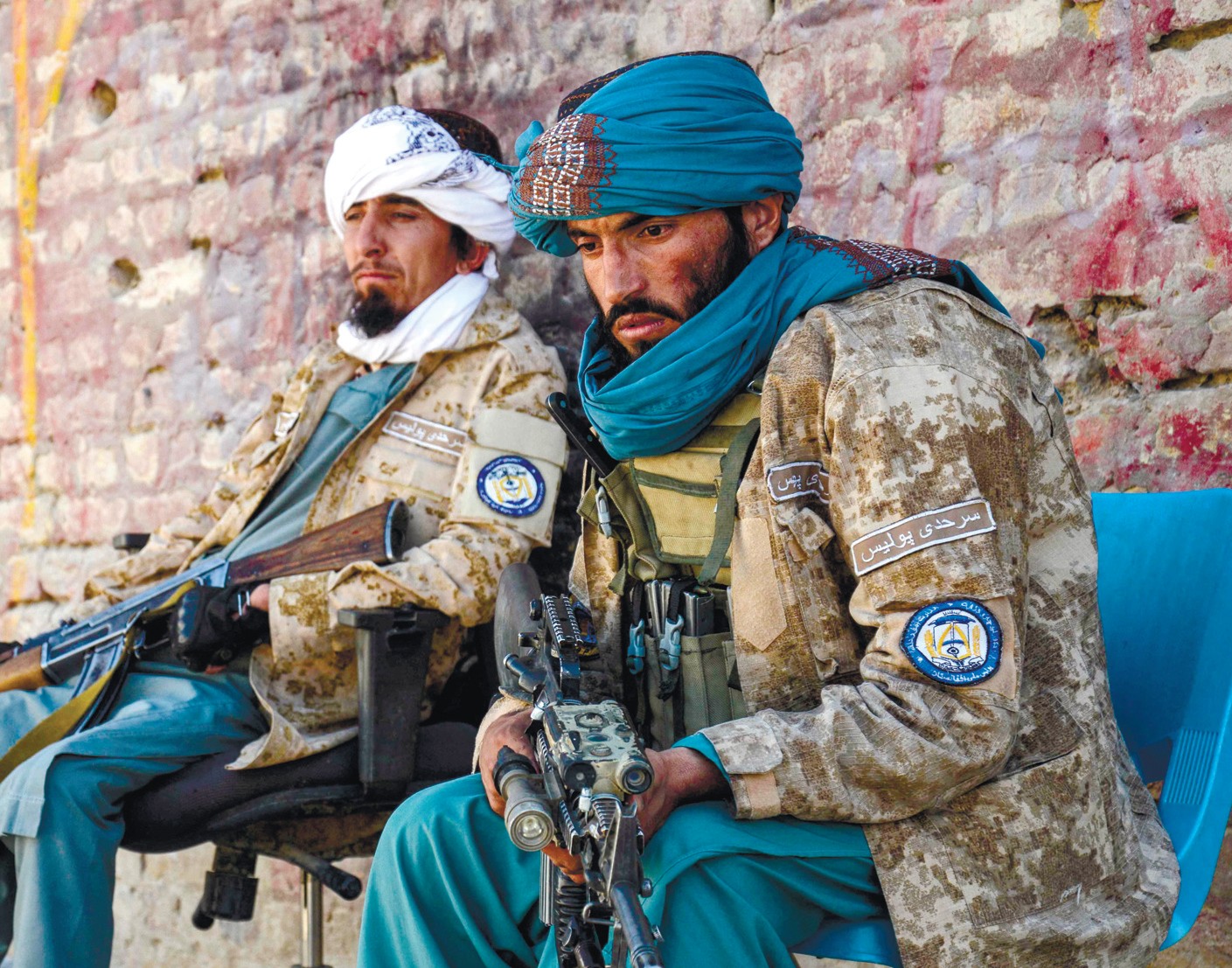
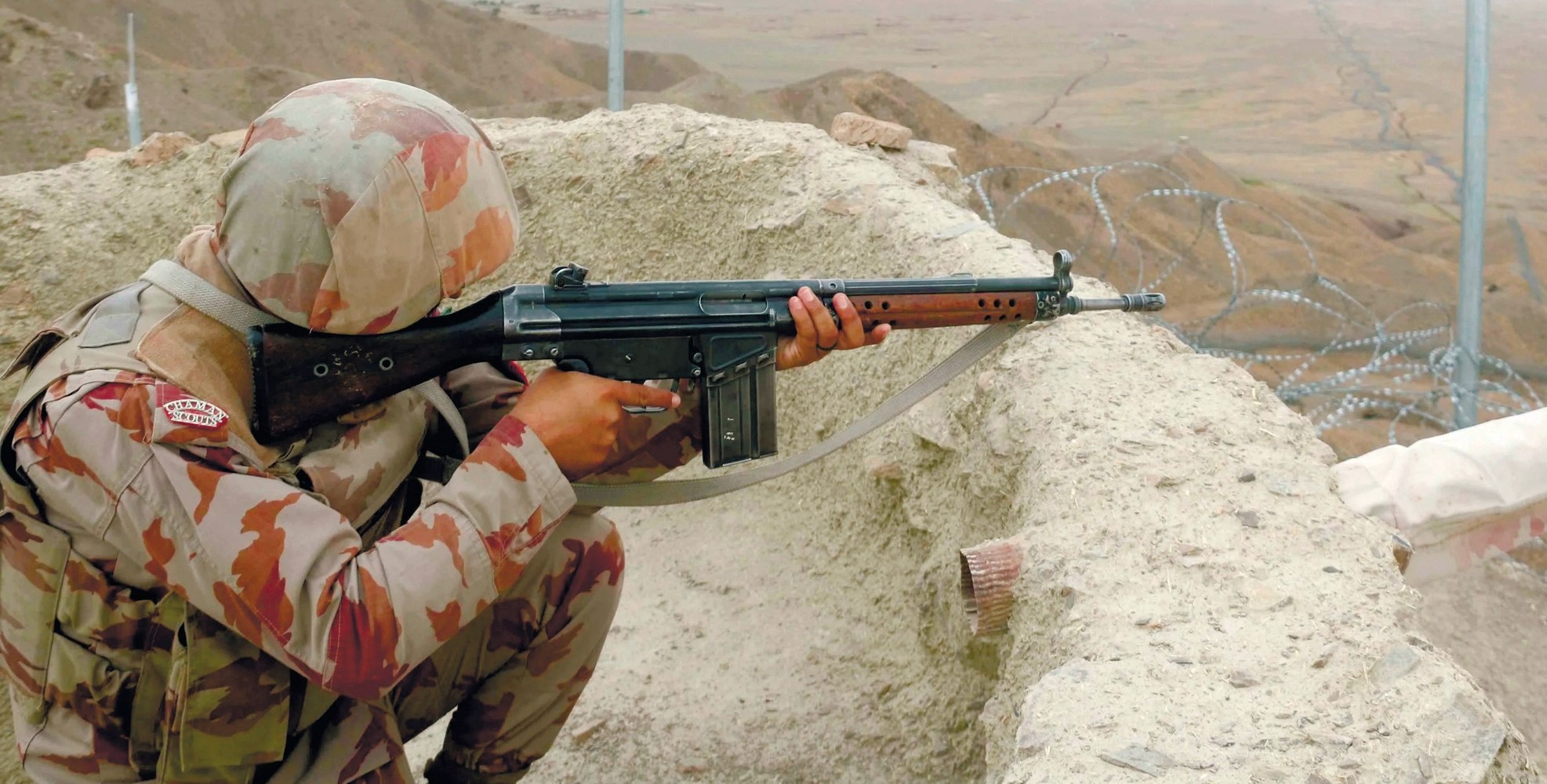
The armed conflict between Pakistan and Afghanistan has become a major source of global tension. While not yet escalating into a full-scale war, the ongoing military confrontations between these nations are exerting a significant negative influence on the overall security landscape in South and Central Asia.
The Durand Line
The Pakistan-Afghanistan conflict is a complex issue with many dimensions. The Durand Line's origins can be traced back to the colonial period, specifically to the late 19th century when, following the Anglo-Afghan Wars, a border was established between British India and Afghanistan. This border is now known as the Durand Line, named after the diplomat Henry Mortimer Durand who, in 1893, signed an agreement with Emir Abdurrahman Khan to delineate the respective territories of Britain and Afghanistan. Following the establishment of independent Pakistan in 1947, Afghanistan did not recognise this border, which divided the territory inhabited by the Pashtun tribes. A mutually recognised Pakistan-Afghan border, stretching 2,640 km, was never established. Notwithstanding, this did not invariably have a detrimental effect on relations between the two states.
During the Soviet intervention in Afghanistan, Pakistan provided support for the liberation movement that had swept through the neighbouring Muslim country. When the radical Taliban movement seized power in Afghanistan in 1996, Pakistan was among the few countries to officially recognise the new Afghan government. It continued to support the government after the Taliban returned to power in 2021—following 20 years of a pro-American regime operating under the military presence in Afghanistan of the US- and NATO-led coalition. However, a serious rift soon emerged between Islamabad and Kabul.
The immediate cause of the conflict was the parties' differing stances on the Tehrik-e Taliban Pakistan (TTP)—essentially the Pakistani branch of the Taliban. The Afghan Taliban has expressed support for the initiative, providing territory in Afghanistan for the establishment of training camps and supply points. Islamabad opposes this, as the TTP has officially declared its aim to establish a regime in Pakistan modelled on the Emirate proclaimed by the Afghan Taliban. Furthermore, Pakistan is also defending its territorial integrity, as the Taliban, whose main social base consists of Pashtuns, advocates for the autonomy of the Pakistani province of Khyber Pakhtunkhwa, which is populated by them.
Islamabad claims that the TTP regularly carries out terrorist attacks on Pakistani territory from its base in Afghanistan, whilst Kabul makes no effort to curb such activities. Despite these efforts, the parties have been unable to reach an agreement. Consequently, armed clashes have occurred periodically along the Afghan-Pakistani border, with a notable escalation since 2024.
In October 2025, border clashes between Pakistan and Afghanistan came to an end following a ceasefire agreement brokered by Qatar and Türkiye. The fragility of this agreement was confirmed in late February 2026, when the most extensive fighting broke out along the Durand Line.
Each party accused the other of initiating the hostilities. In any event, the exchange was a reciprocal one: Afghan forces targeted Pakistani army positions, captured border posts and struck targets near nuclear infrastructure. In response, the Pakistan Air Force attacked military targets in Kabul, the Afghan provinces of Kandahar and Paktia, and seven militant camps along the border. There have been numerous fatalities on both sides, including civilians. The situation has escalated to such a degree that Pakistan has officially declared a state of 'open war' with Afghanistan.
Islamabad has cited yet another factor that has provoked the current fighting. Specifically, its primary competitor is India.
The alliance between the Taliban and India
Commenting on Pakistan's military activity, its Defence Minister, Khawaja Muhammad Asif, stated that "the cup of patience has run over", as the Taliban have turned Afghanistan into a "colony" and a "puppet" of India.
Indeed, in recent months there has been an unprecedented rapprochement between Kabul and New Delhi. Last October, the Afghan Foreign Minister, Amir Khan Mutaki, visited India. This visit was significant as it led to the restoration of diplomatic relations, as well as agreements on aid to Kabul in the economic and healthcare sectors. It is also important to note the following statements: Mutaki described India as a "close friend" and expressed solidarity with it on security matters. Concurrently, Islamabad accused Afghanistan of 'waging a proxy war for Delhi'.
India's close cooperation with the Taliban is not aligned with Pakistan's interests. It has been noted that prior to the intensification of Taliban contacts with India, Pakistan had sought to avoid escalating its existing differences with the Taliban into the military-political sphere. However, the rapprochement between Kabul and New Delhi is a red line for Islamabad, as this development poses a threat to Pakistan's security and territorial integrity. It is therefore no coincidence that he accuses India of using the Taliban government in Afghanistan, and the TTP, which is linked to it, of fuelling separatist movements in Pakistan.
It is interesting to note that the Taliban, who are regarded as extremists and so-called Islamist jihadists by many global centres and states, have found common ground with the nationalist government of Narendra Modi, which is currently in power in India. This is the very government that is frequently accused of pursuing a harshly discriminatory and repressive policy towards Muslims living in India. The formation of this partnership, led by Indian Prime Minister Modi and Taliban leader Haibatullah Akhundzada, is based on mutual interests. The basis of this partnership is the confrontation with Pakistan.
By drawing closer to India, which is Pakistan’s traditional rival, the Taliban are keen to weaken the latter’s position in the regional configuration and, of course, to achieve objectives related to the activities of the TTP and the situation in the Pakistan-Afghanistan border region. As for India itself, its strategic calculation is also clear: to use radical Islamist groups against Pakistan. Pakistan, for its part, is demonstrating a firm resolve to resist the Indian-Taliban alliance. This includes powerful military operations, as demonstrated by the current escalation, which has gone beyond the Durand Line and also included strikes deep into Afghanistan. Strikes which, incidentally, were ‘strongly condemned’ by India.
A ceasefire is possible. What about peace?
It is evident that if the Pakistan-Afghanistan conflict escalates into a full-scale war, the Taliban will not emerge victorious. Pakistan is home to one of the most powerful armies in the world, as well as a nuclear arsenal. At the same time, the probability of a significant military conflict between Islamabad and Kabul is extremely remote. It is likely that any escalation will be primarily limited to border incidents.
It is evident that neither the Taliban, who must be aware that such a war could significantly diminish their influence in Afghanistan and potentially result in its collapse, nor Pakistan, grappling with significant socio-economic challenges and confronted with a diverse array of terrorist threats (not only from the TTP, but also from the 'Islamic State'), are willing to take such a risk. In light of these developments, Pakistan has issued a formal diplomatic statement indicating its intention to de-escalate tensions with Afghanistan, emphasising that the use of nuclear weapons is not a course of action that would be pursued under any circumstances. Both parties are keen to develop trade and economic relations further, as demonstrated by Pakistan's position as one of Afghanistan's foremost trading partners, particularly in the purchase of Afghan coal.
It appears that hostilities will cease entirely and a new ceasefire agreement will be reached. However, this is unlikely to signal the prospect of a lasting peace between them, given the continuing disagreements on key issues of the conflict. First and foremost, this is due to the lack of compromise on the territorial issue, as Afghanistan—under both previous and current administrations—refuses to recognise the Durand Line as the official border between the two states.
It is also improbable that Kabul will withdraw its support for the TTP. Such a move would inevitably result in a significant rift within the Taliban movement itself. There is a risk of dissidents joining the Afghan branch of the so-called Islamic State (Wilayat Khorasan) group, which could have the most disastrous consequences for the Taliban's rule in Afghanistan. However, in the case of Pakistan, no excuses can be made in this matter. Consequently, Islamabad has issued a firm response, ruling out the possibility of negotiations with Afghanistan until the Taliban government ceases its support for the TTP.
The intractable problem of Afghan refugees deserves separate mention. According to Islamabad, Pakistan has provided refuge to five million Afghans over the past decades. In a move to tighten its migration policy, Islamabad has introduced strict controls on crossings of the Afghan-Pakistani border. Furthermore, observers have noted the deportation of millions of Pashtuns, a development which is said to be driving increased support for radicals within the Pashtun community.
These developments are contributing to the ongoing confrontation between Pakistan and Afghanistan. At the same time, the primary objective for all parties is to ensure that the situation does not escalate. It is important to note that any outbreak of violence could escalate into large-scale military action, as demonstrated by the current tense phase in Pakistan-Afghanistan relations.
RECOMMEND:
 134
134

