

UNAVOIDABLE PARTNERSHIP
Europe’s energy security, the new geopolitics of Eurasia and Azerbaijan’s growing role
Author: Ilgar VELIZADE
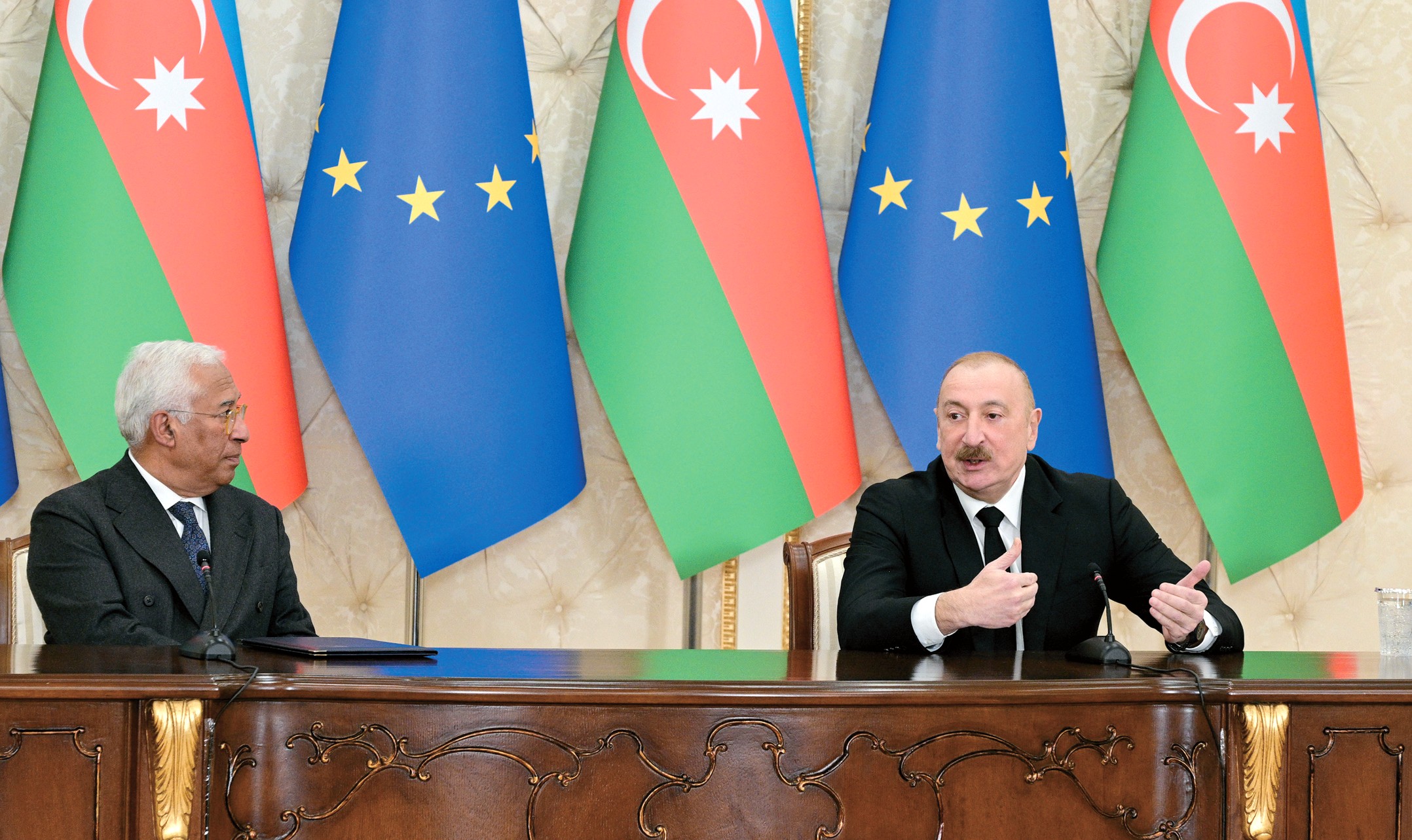
Growing international tensions, increasingly complex regional dynamics and worsening conditions in global energy markets are pushing the European Union to act proactively and strengthen ties with long‑standing, reliable partners. It is in this context that European Council President António Costa’s official visit to Azerbaijan should be viewed.
Betting on gas and electricity
Costa's discussions with the President of Azerbaijan, Ilham Aliyev, occurred in the context of ongoing uncertainties in the European energy market, compounded by the ongoing conflict with Iran. In recent years, Azerbaijan has increased its gas deliveries to Europe significantly. Furthermore, the energy memorandum signed between the European Union and Azerbaijan in 2022 provides for a further gradual expansion of export volumes.
During the meeting with the President of the European Council, President Ilham Aliyev stated that Baku expects to increase direct gas supplies to the European Union by an additional approximately 10 billion cubic metres per year over the next two to three years through the development of a new gas field.
During the talks, the Azerbaijani head of state emphasised that energy cooperation between the two countries is sustainable and has the potential for further expansion. He stated that "Azerbaijan has already proven that it is a reliable partner for Europe in the energy sector" and added that the country "is ready to increase gas supplies to European consumers as demand grows". This wording reflects Baku's ambition to cement its role as a long-term energy supplier to the European market.
The President of the European Council has stated that cooperation with Azerbaijan is a key component of the strategy to enhance EU energy security. He noted that "the European Union regards Azerbaijan as an important partner in ensuring stable and diversified energy supplies", emphasising the significance of cooperation in the context of ongoing geopolitical developments.
A distinctive feature of the Azerbaijani direction is that this is not merely one of many energy suppliers. Azerbaijan today remains effectively the only Asian country supplying natural gas to the EU via a direct pipeline system linking the Caspian region with European markets. At a time when most alternative sources of gas for Europe are tied either to maritime LNG supplies or to traditional European and Middle Eastern routes—both subject to considerable risks—the Caspian direction holds great strategic value.
This is precisely why cooperation with Baku is increasingly viewed in Brussels not only as an element of supply diversification but also as part of the emerging new energy architecture of Europe, in which the significance of Caspian resources and transport corridors is steadily growing.
In the longer term, the focus is on tangible infrastructure initiatives aimed at exporting “green” electricity generated in the region to Europe. In particular, the development of the Caspian‑Black Sea energy corridor is under discussion, which would involve transmitting electricity from Azerbaijan to Georgia and then via a submarine cable across the Black Sea to Romania and the EU markets. The project envisages the construction of a high‑voltage submarine cable approximately 1,100–1,200 km in length with a capacity of around 1,000 MW, allowing for the annual transmission of about 4–5 billion kWh of electricity to Europe.
At the same time, Azerbaijan is developing large‑scale renewable energy projects. According to government estimates, the wind energy potential in the Caspian Sea alone exceeds 150 GW, while in the coming years the country plans to bring several large solar and wind plants online with a total capacity of only around 3–4 GW.
For the EU, such projects fit into the strategy of energy transition and the gradual increase of low‑carbon generation. For Azerbaijan, they open up the possibility of diversifying its energy export structure by complementing traditional gas supplies with electricity generated from renewable sources, thereby strengthening its position in the emerging system of energy and transport corridors between the Caspian region and Europe.
Looking for effective modes of cooperation
At the same time, Costa’s visit also reflects a broader political context. The strengthening of energy cooperation between the EU and Azerbaijan is taking place amid the ongoing geopolitical realignment in Eurasia triggered by the war in Ukraine and shifting global energy flows. As a result, Azerbaijan’s political role as an EU partner is gradually increasing.
During the talks in Baku, António Costa specifically raised the issue of preparing a new framework agreement intended to define the long‑term parameters of strategic cooperation. According to Costa, Brussels attaches great importance to this document and expects it to be finalised in the foreseeable future. He noted that the EU views the agreement as the basis for “a deeper and more comprehensive form of partnership” that could encompass the economy, energy, transport corridors and political dialogue.
However, the fact that work on this document has been ongoing for almost a decade raises many questions. Negotiations on a new comprehensive agreement, which began as early as the mid‑2010s and were intended to replace the existing basic partnership and cooperation agreement from the 1990s, have not yet culminated in the signing of a final document. As a result, the institutional framework of EU‑Azerbaijan relations remains effectively incomplete.
Against this backdrop, there is a certain contrast with the pace of Baku’s relationship development with several other major international partners. Over the same period, Azerbaijan has concluded a number of strategic and fundamental agreements with leading global and regional players. These include, in particular, a strategic partnership with China, a declaration of allied interaction with Türkiye, a deepening of the strategic dialogue with the US, and an agreement on allied interaction signed with Russia as early as 2022. All these documents form a fairly dense network of Azerbaijan’s international commitments and strategic cooperation formats.
In this context, the protracted nature of the negotiations between Baku and the EU objectively weakens the institutional position of the European direction in Azerbaijan’s foreign policy. Despite intensive energy cooperation and the country’s growing role in ensuring European energy security, the absence of a signed framework agreement creates an impression of a certain asymmetry: economic and energy cooperation is developing quite actively, while the formal legal basis for strategic partnership remains incomplete.
This is why Costa’s mention of the future agreement during the talks can be seen as a signal of Brussels’ desire to accelerate this process and give relations with Azerbaijan a more stable institutional character. Amid the ongoing restructuring of energy and transport links between Europe and Eurasia, and the transformation of the political relationship system in Eurasia, the existence of such a document could solidify Azerbaijan’s role as one of the EU’s key partners in the South Caucasus and the wider Caspian region.
Relations in a post‑conflict reality
Despite the remaining institutional gaps in the treaty‑based legal framework of relations, the European Union continues to demonstrate interest in gradually integrating Azerbaijan into its political and economic space. This approach is evident both in the statements of European representatives and in the expanding formats of interaction between Baku and European structures. In Brussels, Azerbaijan is increasingly viewed not only as an energy partner but also as an important participant in the broader architecture of European security and regional stability.
The geographic location of the region adds further strategic value to this interaction. The South Caucasus, and with it Azerbaijan, are increasingly regarded in Brussels as an important transport and political gateway for the EU to Central Asia. Key routes linking European markets with the Caspian basin and beyond to the countries of Central Asia pass through this region, which significantly enhances Azerbaijan’s importance in the emerging system of Eurasian transport and energy corridors.
This largely explains Brussels’ desire to engage Baku more actively in pan‑European political formats as well. A symbolic milestone in this rapprochement could be the hosting of the European Political Community summit in Baku in 2028. This format, created on the initiative of European states to discuss security and political coordination on the continent, brings together EU countries and a broad range of European partners outside the Union. By choosing Baku as the venue for a future summit, European structures are effectively signalling their readiness to regard Azerbaijan as an active participant in the pan‑European political dialogue.
This factor acquires particular importance in the context of the emerging post‑conflict agenda in the South Caucasus. After the end of the Garabagh conflict, it is effectively Azerbaijan that sets the main parameters of the regional agenda, putting forward initiatives aimed at normalising relations, opening transport links and forming a new system of economic interaction in the region. Such an approach generally finds support from the European Union, which has an interest in the long‑term stabilisation of the South Caucasus and the development of infrastructure links between the region and European markets. This point was also reflected in the text of the joint press statement by the President of Azerbaijan and the President of the European Council. It notes support for efforts aimed at establishing a peaceful, stable and interconnected South Caucasus, as well as the importance of advancing a peace agenda between Azerbaijan and Armenia. The sides emphasised that a sustainable settlement and normalisation of relations between the states of the region can create conditions for opening transport links, expanding economic cooperation and forming a new system of regional interconnectedness.
The statement also indicates that the development of infrastructure and transport projects is an important element of strengthening regional stability, because expanding economic ties and increasing the level of interdependence between the countries of the region help reduce conflict potential and foster a more sustainable model of interaction in the South Caucasus.
Thus, António Costa’s visit to Baku confirmed Azerbaijan’s growing strategic importance for the European Union as a key energy partner, an important transit hub between Europe and the Caspian region, and one of the participants in the emerging new architecture of economic and political interconnectedness across the Eurasian space.
RECOMMEND:
 166
166

