

GLOBAL DIALOGUE IN BAKU
The Global Baku Forum brings together leaders, experts and institutions to seek solutions to global crises
Author: Elchin HUSEYNOV
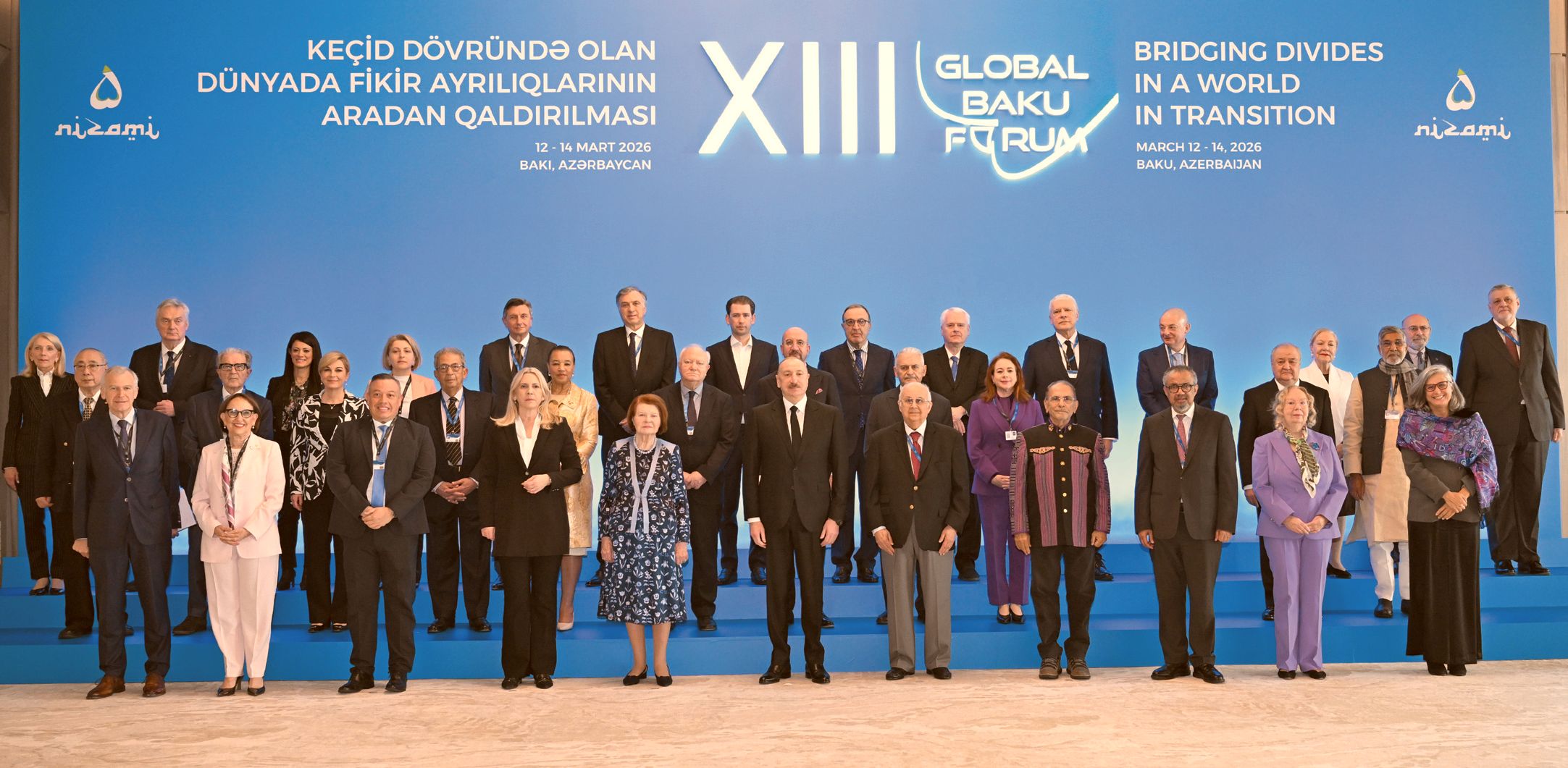
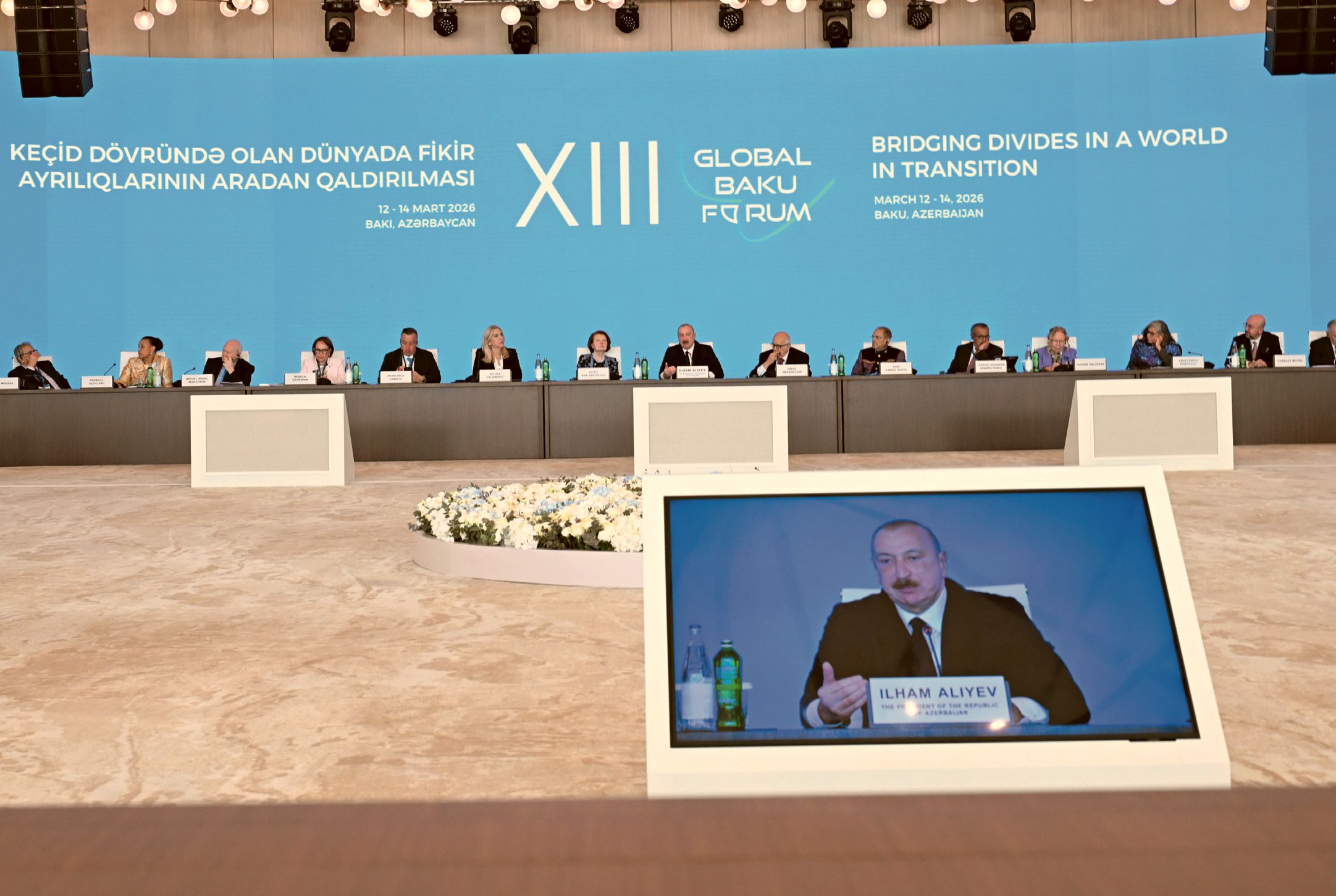
The 13th Global Baku Forum, organised by the Nizami Ganjavi International Centre under the patronage of Azerbaijani President Ilham Aliyev, took place at the Gulustan Palace from 12 to 14 March. For several days, the country’s capital became one of the main venues for discussing global crises—from geopolitical conflicts to economic and climate challenges. It was attended by around 400 representatives from various countries, including high-ranking politicians.
Since its inception, the forum has established itself as a prestigious international platform for dialogue between political leaders, diplomats, experts and representatives of international organisations. Every year, it brings together current and former heads of state and government, as well as prominent public figures, in Baku to discuss the most pressing issues in global politics.
The theme of this year’s meeting is ‘Bridging Divides in a World in Transition’. Discussions will focus on the transformation of the international relations system, new geopolitical challenges, issues of global security and sustainable development, and the search for mechanisms for dialogue amid growing global tensions.
Key messages from President Aliyev
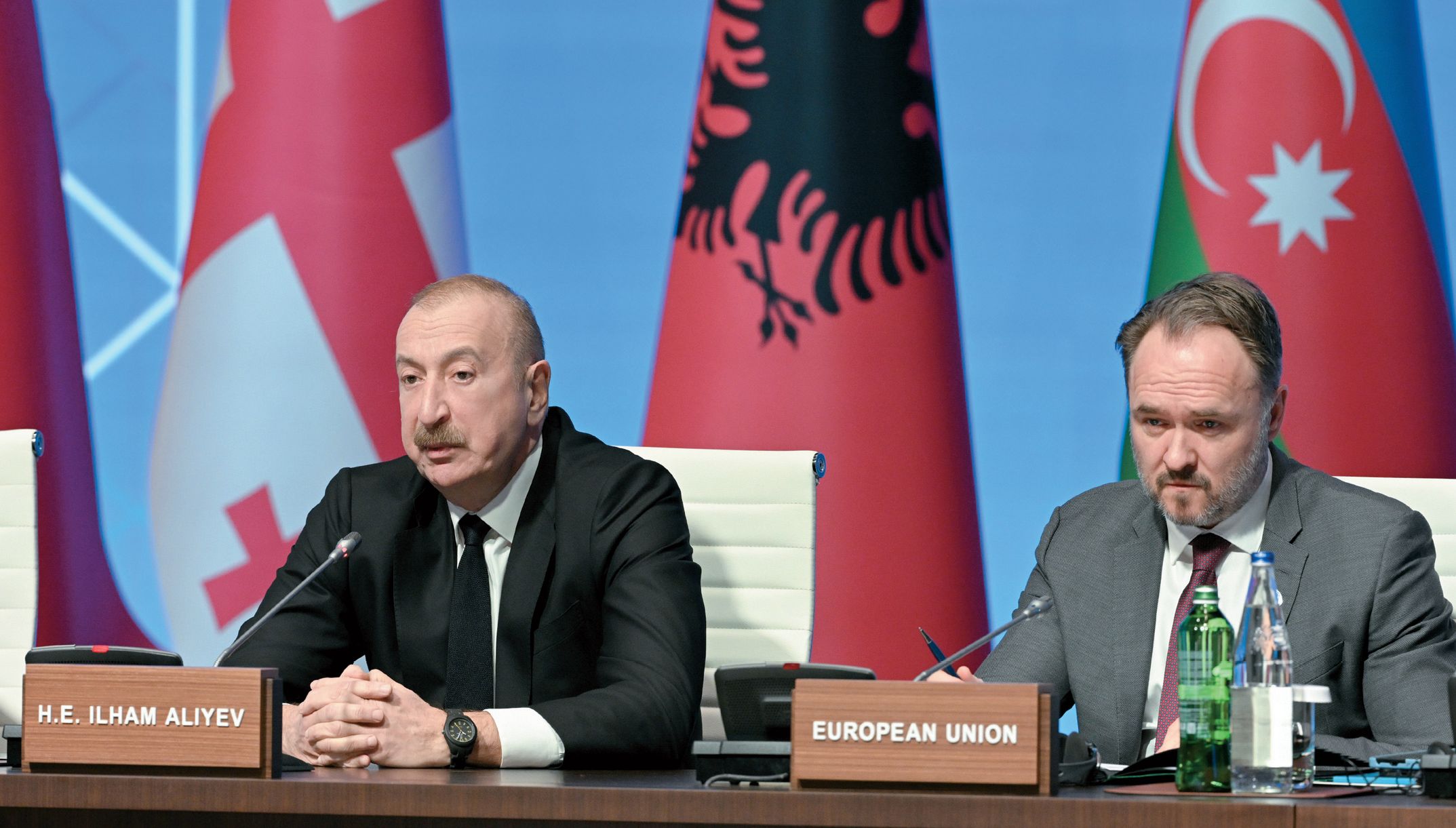
Opening the forum, Ilham Aliyev outlined the key themes of the international agenda and shared his country’s experience on security, conflict resolution, energy and transport connectivity.
Speaking about the current international situation, the President of Azerbaijan noted that security issues are now of paramount importance for all states. “I believe it is now clearer than ever before that issues of security, stability and safety must be at the top of any country’s agenda, because without this, everything else is utterly meaningless,” he stated.
A significant part of the speech was devoted to Azerbaijan’s experience in resolving a protracted conflict and restoring territorial integrity. According to the President, this experience could be useful to the international community. “We liberated the occupied territories by force and achieved peace through political means,” Ilham Aliyev stated, recalling the restoration of the country’s sovereignty after nearly thirty years of occupation.
The President also touched upon the process of normalising relations with Armenia, emphasising that the transition from conflict to peace had taken place in a relatively short period of time. “The period from the last bloody clash in September 2023 to peace in August 2025 was less than two years. I think this is an unprecedented speed of normalisation,” he said.
According to him, the peace achieved has not only a political but also a practical dimension: “We have achieved peace with Armenia not only on paper but also on the ground. Calm reigns along our borders; there is no longer any gunfire, and there are neither casualties nor losses.” Ilham Aliyev also noted that Baku advocates direct dialogue between the parties to the conflict without the involvement of external mediators. “We have achieved peace with Armenia… by insisting that there be no mediators,” he pointed out, adding that the prolonged mediation by the OSCE Minsk Group had not yielded practical results.
Particular attention in the speech was paid to energy security issues. It was stated that instability in global energy markets creates additional challenges for both consumers and producers. Azerbaijan remains a reliable supplier of energy resources and continues to expand its export markets: “Exactly a year ago, when we last met, the number of countries receiving Azerbaijani gas was 12. Over the past year, that number has risen to 16.” The development of energy cooperation is becoming a vital component of national and international security.
Alongside energy, the Head of State also mentioned transport connectivity and the growing importance of international transport corridors. “Today, we are an indispensable partner in relation to the ‘East-West’ and ‘North-South’ corridors,” he said, recalling that Azerbaijan has actively invested in the development of logistics infrastructure.
The Middle Corridor: Eurasia’s strategic bridge
As part of the forum, participants held a series of panel sessions. The forum provided a platform for discussing pressing issues of global and regional security, multilateral cooperation, energy and climate security, as well as transport and infrastructure connectivity.
Notable among these were the sessions ‘Global Security and the Balance of Power: Respect for International Law, New Issues, New Challenges’ and ‘Multilateralism in Crisis: A New Perspective on Global Cooperation’. The discussions among participants demonstrated Azerbaijan’s significance as an international platform for exchanging experience and coordinating efforts on key issues of world politics, the economy and sustainable development. The panel sessions not only brought together diverse perspectives but also highlighted the role of dialogue and cooperation in overcoming global challenges and ensuring stability and security on the international stage.
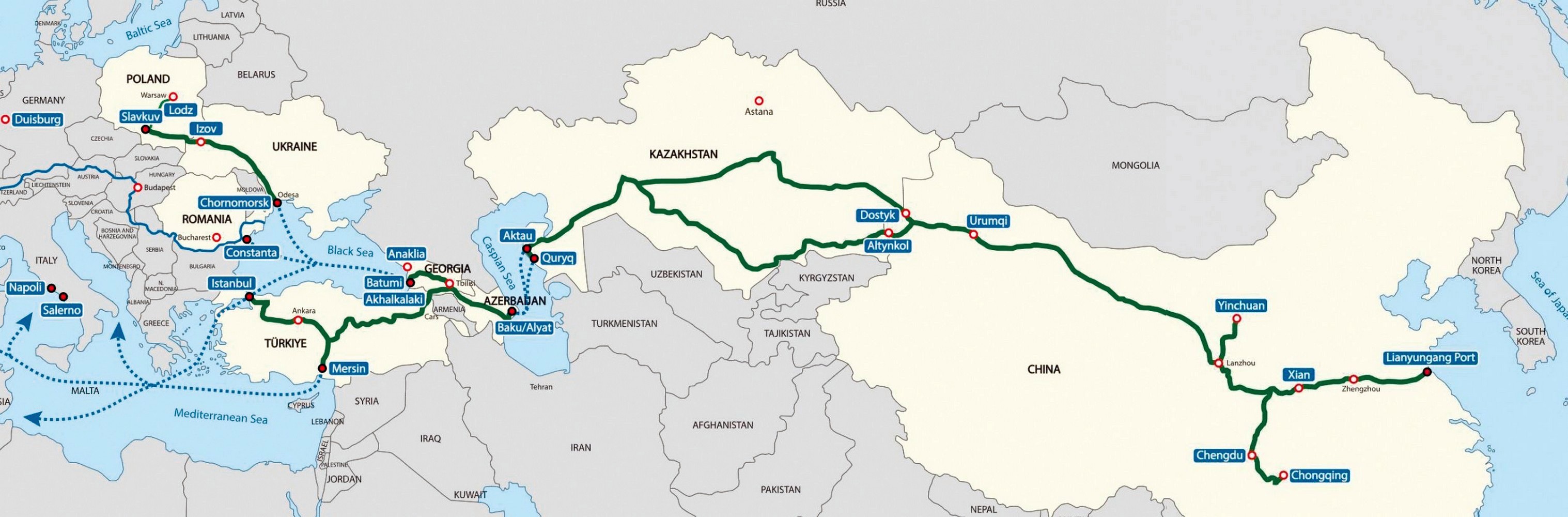
One of the main topics of discussion was the Middle Corridor—a project linking Central Asia, the South Caucasus and Europe, and serving as a tool for stability, economic independence and regional cooperation. Azerbaijan’s Minister of Economy, Mikayil Jabbarov, emphasised: ‘For the first time in 35 years, peace and stability have been achieved in our region, and borders have been opened… The Middle Corridor is one of the main pillars of our common policy, uniting Central Asia and the South Caucasus into a single entity.’
Ana Birchall, Adviser to the President of Romania, noted that “the Middle Corridor is not merely an infrastructure project, but a strategic instrument of stability… transit volumes through the corridor have increased by 150% in a single year, and transit time from Asia to Europe has been reduced from 45 to 20 days.” Binali Yıldırım, Chairman of the Council of Elders of the Organisation of Turkic States, added: “Today, the Middle Corridor is considered a safe and reliable transport route between Europe and Asia. The Zangezur Corridor is also part of it… The development of the Middle Corridor also ensures stability and security in the region.”
Rashid Alimov, former Secretary-General of the Shanghai Cooperation Organisation, emphasised that “Central Asia is becoming a key element of the Middle Corridor and a bridge between East and West, North and South… The region is transforming into a reliable bridge connecting the largest markets of Eurasia.” In turn, Abdulaziz Kamilov, an adviser to the President of Uzbekistan, remarked: “Uzbekistan advocates the creation of a multi-tiered partnership system, including transport routes that will ensure connectivity between the countries of East Asia, the Middle East and Europe.”
Former Prime Minister of Kyrgyzstan, Jomart Otorbaev, reported that, overall, around $40 billion has already been invested in the development of this corridor, and investment will continue to grow. According to him, the Middle Corridor is demonstrating rapid growth—in the first half of last year, container traffic along this route increased by 93%.
Thus, the Middle Corridor is now regarded as a strategic instrument for sustainable development, regional integration and safe transit between Europe and Asia, and the success of the initiatives is confirmed by the growth in freight volumes, increased investment and the involvement of countries in Central Asia and the South Caucasus.
China: a stable player
One of the central themes of the discussions was China’s role in global governance. The panel discussions revealed that Beijing occupies a strategic position, offering its ideas and approaches amidst the current global turbulence.
Mikayil Jabbarov believes that economic trade in the region needs to be expanded using effective tools. Former Slovenian President Borut Pahor said that China “is actively involved in addressing global issues and is currently one of the countries benefiting from the current geopolitical period. Beijing does not seek radical changes to the world order, but is focused on its own development, remaining a stable and predictable state and a supporter of international law.”
Wu Hongbo, China’s Special Representative for European Affairs for 2019–2025, also expressed his view: “Alongside its own modernisation process, against the backdrop of the current turbulence and uncertainty in the world, China seeks to offer its ideas and approaches to global governance… The rule of international law is of paramount importance… I believe no country in the world wants a return to the law of the jungle.”
Eldor Aripov, Director of the Institute for Strategic and Interregional Studies under the President of Uzbekistan, emphasised China’s strategic role in Central Asia: ‘Last year, trade turnover between China and the Central Asian states reached a record level of $106 billion, which is almost double the figure for 2021… China’s role in the region continues to grow.” According to him, China is actively strengthening cooperation with the countries of Central Asia and is the region’s largest investor: “Last year, the volume of Chinese investment reached $40 billion.”
Joseph Mondl, a former director of the Centre of Competence for China at the University of St Gallen and an economist, noted: “Today there are numerous international initiatives, yet states act in accordance with their own interests. Countries of the Global South do not view China as a rival, and Beijing is implementing specific infrastructure and economic projects.”
COP: global cooperation under pressure
Lively discussions also took place during the panel session entitled ‘The Fight to Preserve the COP’. After all, the climate agenda is more relevant than ever, and preserving the COP’s role as a universal platform for global cooperation is a critically important element.
Mukhtar Babayev, the Azerbaijani President’s Special Representative on Climate Change and President of COP29, stated that “against a backdrop of conflicts and wars, states are increasingly channelling resources towards defence and security, whilst the fight against climate change is taking a back seat”. The main factor in the implementation of climate programmes is funding, but “the issue of fulfilling commitments made within the framework of international climate forums remains no less important”. Babayev pointed out that the practical implementation of COP29’s decisions on $300 billion in funding, as well as the $1.3 trillion roadmap, “remains in doubt today”, as “some countries are backing away from this decision”.
Former Moroccan Foreign Minister and COP22 President Salaheddine Mezouar noted that “climate change is a global problem, and global problems require global cooperation”. He believes that consensus-based decision-making ensures legitimacy but slows progress, and proposed using “coalitions of the willing” to accelerate the practical implementation of commitments.
Murat Kurum, Turkish Minister of Environment, Urbanisation and Climate Change and President of COP31, stated that his country “has taken significant steps in the fight against climate change. We will endeavour to share our accumulated experience at COP31. Joint work with Australia is continuing as part of preparations for the conference.”
Former Bulgarian President Petar Stoyanov drew attention to the impact of global conflicts on climate processes: “We must uphold the principle of simplicity in governance. Populism is detrimental to these processes. We must understand that this runs counter to the interests and development of millions of people. It leads to global problems, including climate change. Middle powers wield influence in their regions; their support is vital in the context of multilateralism.”
The UN and the challenges of multilateralism: the need for reform
At the Baku Forum, particular attention was paid to the role of the UN and its ability to respond to contemporary global challenges. The panel discussion revealed that many experts consider reforms necessary to enhance the effectiveness of its work.
The Director-General of the World Health Organisation (WHO), Tedros Adhanom Ghebreyesus, noted that the UN faces the need to adapt to modern realities: “The WHO has been working to make the world a safer place. States are committed to multilateralism. However, the rules are changing, and these changes must be reflected in the UN’s activities. Some working methods still remain at the level of the Second World War, within the framework of the old rules.”
Ghebreyesus called on countries to step up their preparedness for future pandemics and to strengthen cooperation. He pointed out that military spending in 2025 reached $2.7 trillion, which is 30 times the amount needed to eradicate hunger by 2030. Gebreyesus drew attention to the need to be prepared to repel an attack from an “invisible enemy”. He was referring to a pandemic such as COVID-19, which is estimated to have “claimed the lives of 20 million people—more than any war in modern history—and cost the global economy over $10 trillion”.
Meanwhile, Binali Yıldırım, Chairman of the Council of Elders of the OTG, pointed to the UN’s limited effectiveness in resolving contemporary conflicts: “The UN has 194 members, yet when it comes to the Security Council, we hear serious criticism and numerous complaints. For many years, the organisation has carried out very important missions. However, in recent years it has failed to achieve success in resolving the wars and conflicts taking place around the world.” Existing problems must be resolved so that the UN can respond more effectively to global challenges.
Former President of the UN General Assembly Srdjan Kerim emphasised the need for coordinated work across all the organisation’s structures: ‘The UN system brings together a multitude of agencies, programmes, specialised bodies and secretariats, each with its own management and funding system. This diversity is a strength of the organisation, but without effective coordination there is a risk of duplication of functions, inefficiency and fragmentation.”
He highlighted three key areas of reform: integrating strategic planning in the fields of peace, security, development and human rights; ensuring flexible and predictable funding; and strengthening accountability mechanisms focused on collective results. “If these measures are successfully implemented, UN reform will cease to be perceived as an endless institutional debate and will become a real step towards improving the organisation’s effectiveness,” Kerim asserts.
Hikmet Hajiyev, Aide to the President of Azerbaijan and Head of the Foreign Policy Department of the Presidential Administration, stated that there is a serious crisis in matters of peace and security: “This is directly linked to the UN Security Council. The Council is also showing weakness on the issue of global security.”
Mr. Hajiyev added that for Azerbaijan, multilateralism is important not only in words but also in deeds: “Within the Non-Aligned Movement, opinions on this matter were contradictory. However, during Azerbaijan’s chairmanship, the organisation paved the way for cooperation between different countries. At COP29, thanks to Azerbaijan’s effective chairmanship, very important decisions were also adopted. Azerbaijan also plays an active role in the Organisation of Turkic States. Our country plays a significant role in the establishment and expansion of the organisation.”
The 13th Baku Global Forum demonstrated that the world of modern global governance requires not words, but concrete action. From energy and transport security to climate initiatives and reforms of international institutions—only coordinated steps by countries and organisations can turn challenges into opportunities. Baku has once again become a crossroads of ideas, where politics, economics and strategy meet with practice, and dialogue is transformed into real solutions for a stable and secure world.
RECOMMEND:
 176
176

